Shop on Lazada
Magic The Gathering products
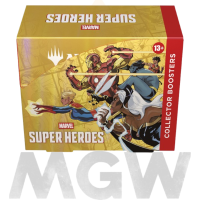
(Ready Stocks) MTG Magic The Gathering Marvel Super Heroes English Collector Booster Box Factory Sealed
$706.39
Buy on Lazada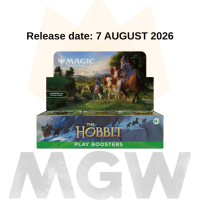
(Ready Stocks) Magic: The Gathering The Hobbit Play Booster Box Brand New Factory Sealed
$241.50
Buy on Lazada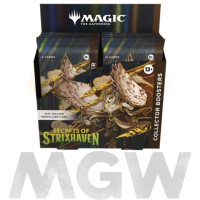
(Ready Stocks) MTG Magic The Gathering Secrets Of Strixhaven English Collector Booster Box Factory Sealed
$766.76
Buy on Lazada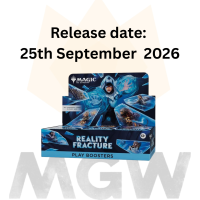
(Ready stocks) Magic: The Gathering Reality Fracture Play Booster Box Brand New Factory Sealed
$195.62
Buy on Lazada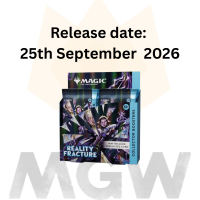
(Ready Stocks) Magic: The Gathering Reality Fracture Collector Booster Box Brand New Factory Sealed
$711.07
Buy on Lazada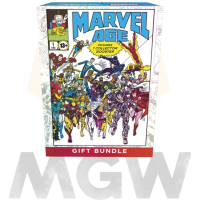
(Ready Stocks) MTG Magic The Gathering Marvel Super Heroes English GIFT Bundle Factory Sealed
$126.19
Buy on Lazada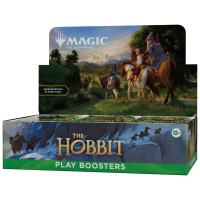
MTG: The Hobbit Play Booster Box
$200.00$235.00
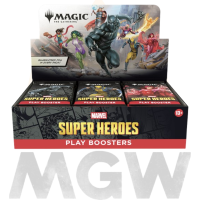
(Ready Stocks) MTG Magic The Gathering Marvel Super Heroes English Play Booster Box Factory Sealed
$206.48
Buy on LazadaAbout Magic The Gathering
Magic The Gathering (commonly abbreviated MTG or simply Magic) is recognised as the world’s first and most influential trading card game (TCG). Created by mathematician and game designer Richard Garfield and published by Wizards of the Coast in 1993, the game integrates strategic deck-building, fantasy storytelling, collectible cards, and competitive gameplay. Today, it stands as one of Hasbro’s flagship brands and has evolved into a global entertainment franchise encompassing tabletop games, digital titles, novels, comics, merchandise, and multimedia projects.1
Overview
Magic The Gathering is a collectible trading card game in which players assume the role of powerful spellcasters known as Planeswalkers. Participants construct customised decks from thousands of unique cards and battle by casting spells, summoning creatures, and utilising magical artifacts and enchantments to reduce their opponent’s life total from 20 to 0 in most formats.
Unlike traditional card games that utilise fixed decks, Magic The Gathering introduced several key innovations:
- Collectible randomised booster packs
- Custom deck construction
- Continuous release of new card expansions
- Organised competitive play
- Rich fantasy storytelling connected across multiple worlds
These elements established the foundational template for the modern trading card game industry.2
History
Creation
Richard Garfield originally designed Magic The Gathering whilst completing his Ph.D. in mathematics, envisioning a portable strategy game that attendees could enjoy between events at conventions. Wizards of the Coast published the game in August 1993. The initial print run, known as Limited Edition Alpha, sold out almost immediately and surpassed all commercial expectations.3 The title quickly became a worldwide phenomenon, inspiring hundreds of subsequent collectible card games.
Acquisition by Hasbro
In 1999, Hasbro acquired Wizards of the Coast, establishing Magic The Gathering as one of its core entertainment brands. Since the acquisition, the franchise has expanded into digital gaming, esports, novels, comic books, board games, licensed crossover products, and multimedia entertainment projects. It has become one of Hasbro’s highest-performing brands, generating over $1 billion annually in recent years.4
Core Gameplay
Each player uses a deck of cards representing magical resources and spells. During gameplay, participants cast:
- Creatures
- Sorceries
- Instants
- Enchantments
- Artifacts
- Planeswalkers
- Lands
The primary objective is typically to defeat the opponent by reducing their life total to zero, although specific cards and formats introduce alternate victory conditions.5
The Five Colors of Magic
The identity of Magic The Gathering revolves around five colours of mana, each representing distinct philosophies and mechanics.
| Color | Philosophy | Strengths |
|---|---|---|
| White | Order, justice, protection | Healing, armies, defense |
| Blue | Knowledge, logic, control | Counterspells, card draw |
| Black | Power, ambition, sacrifice | Removal, resurrection |
| Red | Freedom, emotion, chaos | Direct damage, speed |
| Green | Nature, growth, instinct | Large creatures, mana acceleration |
Many decks combine multiple colours to access broader strategic options.
Card Types
Cards in Magic The Gathering fall into several distinct categories:
- Land: Produces mana
- Creature: Attacks and blocks
- Instant: Can be played at almost any time
- Sorcery: Played during the player’s main phase
- Artifact: Magical objects
- Enchantment: Ongoing magical effects
- Planeswalker: Powerful allies with loyalty abilities
- Battle: A newer card type representing conflicts6
The Multiverse
A defining feature of Magic The Gathering is its expansive fictional universe known as the Multiverse. This setting consists of countless worlds called planes, each possessing unique cultures, creatures, and magical systems. Notable examples include:
- Dominaria: The original world
- Ravnica: A planet-wide city
- Zendikar: An adventure world
- Innistrad: Gothic horror setting
- Theros: Inspired by Greek mythology
- Kamigawa: Inspired by Japanese folklore
- Ixalan: Featuring dinosaurs and pirates
Each expansion set typically explores one of these planes through both card design and narrative.7
Planeswalkers
Planeswalkers are powerful beings capable of travelling between planes. Some of the franchise’s most iconic characters include Jace Beleren, Chandra Nalaar, Liliana Vess, Nissa Revane, Ajani Goldmane, and Teferi. These characters frequently drive the overarching narrative of the game.
Expansions
Magic The Gathering releases several major expansion sets annually. Each set introduces new mechanics, new cards, story progression, limited draft environments, and products tailored for both collectors and competitive players. Since 1993, tens of thousands of unique cards have been released across hundreds of products.8
Formats
The game offers multiple ways to play, catering to different preferences and collection sizes. Popular formats include:
- Standard
- Pioneer
- Modern
- Legacy
- Vintage
- Commander (EDH)
- Pauper
- Draft
- Sealed
Commander has emerged as one of the game’s most popular casual multiplayer formats.
Organised Play
Magic The Gathering maintains a long history of competitive play. Major organised play structures include local game store events, Regional Championships, the Pro Tour, the Magic World Championship, and the Magic Spotlight Series. Competitive players qualify for higher-level tournaments through organised events held worldwide.
Digital Games
The franchise has expanded significantly into digital platforms, primarily through Magic: The Gathering Arena and Magic Online. MTG Arena is specifically designed for modern digital play whilst preserving official game rules.9
Universes Beyond
One of the most significant recent initiatives for Magic The Gathering is Universes Beyond, which features collaborations with other major entertainment franchises. Crossovers have included The Lord of the Rings: Tales of Middle-earth, Warhammer 40,000, Doctor Who, Fallout, and Marvel. These releases integrate the core gameplay of Magic The Gathering with characters and settings from established external intellectual properties.10
Community
Magic The Gathering supports one of the largest tabletop gaming communities globally. Players participate through local game stores, Friday Night Magic (FNM) events, MagicCon conventions, online communities, professional tournaments, and content creation. According to Hasbro, the game has attracted more than 50 million players worldwide and is available in over 150 countries.11
Cultural Impact
Magic The Gathering is widely regarded as one of the most influential tabletop games ever created. Its cultural contributions include:
- Inventing the modern trading card game genre
- Inspiring numerous collectible card games, including Pokémon and Yu-Gi-Oh!
- Helping establish organised competitive tabletop gaming
- Building a vast fantasy universe spanning thousands of characters and stories
- Continuing to influence game design, digital card games, and collectible hobbies worldwide
Key Facts
- Full name: Magic The Gathering
- Abbreviation: MTG
- Created by: Richard Garfield
- Publisher: Wizards of the Coast
- Parent company: Hasbro
- First released: August 1993
- Genre: Collectible/Trading Card Game (TCG)
- Players: 2+ (depending on format)
- Cards released: Tens of thousands across more than three decades
- Availability: Physical cards and digital platforms
- Primary setting: The Magic Multiverse, a collection of interconnected fantasy planes12
References
- MAGIC: THE GATHERING | Hasbro, Inc.
- How to Play | Magic: The Gathering
- What Is MTG | Magic: The Gathering
- Hasbro is summoning a live-action Magic: The Gathering ‘universe’
- Magic: The Gathering | Official site for MTG news, sets, and events
- Hasbro Stock Gets the ‘Magic’ Touch
- Everything announced at MagicCon Amsterdam 2026, from new sets to returning favorites
- Magic: The Gathering Rules Questions – Magic: the Gathering
- Inside the growth of Magic: The Gathering. | Hasbro
- Venturing Outward with the New Magic Logo | MAGIC: THE GATHERING
- Raising a New Banner | Magic: The Gathering
- MAGIC: THE GATHERING | Hasbro, Inc.