Shop on Lazada
Marc Jacobs products
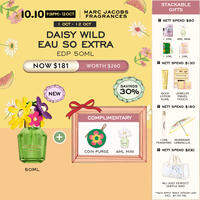
NEW LAUNCH! Marc Jacobs Fragrances Daisy Wild Eau So Extra EDP Launch Set - 100ml | 50ml | Creamy Banana Juicy Pear Nectar | Fruity Floral Perfume + Complimentary Gifts
$181.00$260.00

Marc Jacobs Fragrances Daisy Wild Eau so Intense 30ml | 50ml | 100ml
$207.00$230.00
![[With Complimentary Engraving] Marc Jacobs Fragrances Daisy EDT Signature Gift Set (Daisy EDT 100ml + Body Lotion 75ml + 10ml Travel Spray ) | WORTH $295](https://sg-live.slatic.net/p/587bcde2754504fa84e25c00f5db5367.jpg_200x200q80.jpg)
[With Complimentary Engraving] Marc Jacobs Fragrances Daisy EDT Signature Gift Set (Daisy EDT 100ml + Body Lotion 75ml + 10ml Travel Spray ) | WORTH $295
$150.00$200.00
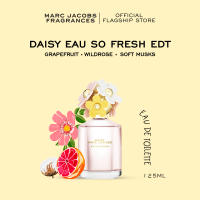
Marc Jacobs Fragrances Daisy Eau So Fresh Eau de Toilette (30ml | 75ml | 125ml)
$189.00$210.00
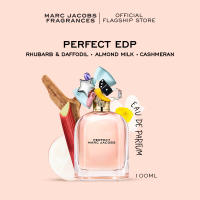
Marc Jacobs Fragrances Perfect EDP Complete Scent Collection Gift Set (MJ Perfect EDP 100ml + Perfect EDP 10ml Penspray + Perfect 5ml Mini + Perfect Candle 70g + Marc Jacobs Tote Bag)
$245.00$400.00
![[Limited Edition] Marc Jacobs Fragrances Daisy Murakami Pink Eau de Parfum for Women 50ml | Ambery Perfume](https://sg-live.slatic.net/p/34140197e85c5f24a3a8e1ae2ebd344b.png_200x200q80.jpg)
[Limited Edition] Marc Jacobs Fragrances Daisy Murakami Pink Eau de Parfum for Women 50ml | Ambery Perfume
$171.00$180.00
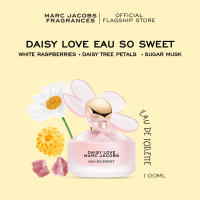
Marc Jacobs Fragrances Daisy Love Eau So Sweet Eau de Toilette (30ml | 50ml | 100ml)
$180.00$200.00
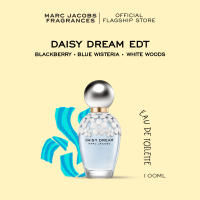
Marc Jacobs Fragrances Daisy Dream Eau de Toilette (4ml | 30ml | 50ml | 100ml)
$190.00$200.00
About Marc Jacobs
Marc Jacobs is an American luxury fashion house established in New York by designer Marc Jacobs. Recognised for a deliberately playful, eclectic, and youthful approach to design, the brand has become one of the most prominent names in contemporary American luxury. Its product universe encompasses ready-to-wear, handbags, small leather goods, footwear, eyewear, fragrances, jewellery, watches, and cosmetics.1
The brand is defined by its commitment to individuality, cultural references, irony, and experimentation, operating on the premise that luxury fashion need not be overly serious.
Basic information
| Brand | Marc Jacobs |
| Founder | Marc Jacobs |
| Founded | 1984 |
| Origin | New York City, United States |
| Industry | Luxury fashion |
| Key products | Ready-to-wear, handbags, shoes, accessories, fragrances, beauty |
| Creative Director | Marc Jacobs |
| Major former owner | LVMH |
| Current ownership transition | LVMH announced an agreement to sell the brand to WHP Global, with G-III Apparel Group participating |
| Positioning | Luxury / contemporary luxury |
| Brand character | Playful, rebellious, eclectic, youthful, artistic, unconventional |
The brand’s history is generally traced to 1984, when Marc Jacobs and his longtime business partner Robert Duffy established Marc Jacobs International.2
2026 ownership update
In May 2026, LVMH announced it had entered into a definitive agreement to sell Marc Jacobs to WHP Global. G-III Apparel Group is also involved in the planned ownership structure and operating business. The transaction was announced as subject to customary closing conditions and expected to close before the end of 2026; this ownership transition is distinct from the brand’s historical LVMH era. Marc Jacobs is set to remain Founder and Creative Director.3
The founder: Marc Jacobs
Marc Jacobs was born in New York City on April 9, 1963. He attended the High School of Art and Design before entering Parsons School of Design in New York.4
At Parsons, Jacobs quickly distinguished himself, receiving major student honours and becoming known for oversized hand-knitted sweaters and an unusually confident approach to fashion. He graduated in 1984.5
His early career was strongly connected to the New York fashion scene. He worked at the boutique Charivari, where he gained exposure to emerging designers and fashion culture. His relationship with designer Perry Ellis also proved pivotal to his career development.6
Jacobs subsequently became one of the most influential American designers of his generation.
Foundation of the brand
Marc Jacobs launched his eponymous fashion business in the 1980s. The company’s philosophy was built around two relatively simple ideas: a love of fashion and a commitment to quality.7
The significance of Marc Jacobs lies in his interpretation of luxury fashion, which differed markedly from many traditional European houses. Rather than concentrating exclusively on formal elegance, traditional craftsmanship, historical luxury codes, or conventional notions of sophistication, Jacobs frequently combined:
- Streetwear
- Americana
- Punk
- Grunge
- Preppy clothing
- Youth culture
- Vintage references
- Pop culture
- Art
- Music
- Irony
- Deliberately “ordinary” garments
This synthesis became one of the defining characteristics of the brand.
The Perry Ellis grunge moment
One of the most significant chapters in Marc Jacobs’s career occurred before the modern Marc Jacobs brand fully took shape.
In 1992, whilst working as the womenswear designer for Perry Ellis, Jacobs presented a collection inspired by grunge, incorporating flannel shirts, loose silhouettes, knitwear, boots, and an intentionally unpolished aesthetic.8
The collection became controversial because it brought a subcultural, youth-oriented aesthetic into high fashion. Whilst critics and fashion insiders recognised its importance, Perry Ellis’s management did not embrace the direction, and Jacobs was subsequently dismissed.
Ironically, the controversy helped establish his reputation as a designer willing to challenge conventional ideas of what luxury fashion should look like. The 1992 grunge collection is now considered one of the landmark moments in modern American fashion.
The rise of Marc Jacobs
Following the Perry Ellis episode, Jacobs increasingly focused on his own label. His independent brand became associated with a distinctive New York sensibility: sophisticated but not excessively formal, luxurious but often irreverent.
A particularly important characteristic was his ability to take something that might normally be considered uncool, ordinary, childish, nostalgic, or unfashionable and transform it into something desirable. This became a recurring Marc Jacobs formula:
Ordinary clothing → exaggerated proportions → luxury materials → unexpected styling → cultural relevance
This approach helped distinguish the brand from traditional European luxury houses.
Louis Vuitton era
In 1997, Marc Jacobs was appointed Artistic Director of Louis Vuitton’s fashion division, a position he held until 2013.9
This appointment was enormously important for both Jacobs and Louis Vuitton. Whilst Louis Vuitton was already famous for its leather goods and monogram canvas, Jacobs helped transform the fashion side of the company into a major cultural force.
During his tenure, Louis Vuitton became known for major collaborations with contemporary artists and designers, including:
- Stephen Sprouse
- Takashi Murakami
- Richard Prince
- Yayoi Kusama
Jacobs demonstrated that a heritage luxury house could combine historical identity with contemporary art and popular culture. His Louis Vuitton period also helped establish him as a global luxury-fashion designer, rather than simply a successful New York designer.
LVMH and Marc Jacobs
LVMH became a major financial and strategic partner of Marc Jacobs in the late 1990s. LVMH acquired a majority stake in the business in 1997 and remained its principal owner for nearly three decades.10
This relationship provided Marc Jacobs with access to:
- International retail infrastructure
- Luxury manufacturing expertise
- Global distribution
- Financial resources
- International marketing
- The broader luxury ecosystem
Under LVMH, Marc Jacobs developed into a global brand rather than remaining primarily a New York fashion label.
Marc by Marc Jacobs
One of the brand’s most significant expansions was Marc by Marc Jacobs, launched in 2001. The concept was to make the Marc Jacobs universe more accessible and youthful whilst retaining the designer’s distinctive aesthetic. LVMH described the launch as the addition of a second major line to the brand.11
Marc by Marc Jacobs became particularly important during the 2000s and early 2010s, offering:
- Clothing
- Bags
- Shoes
- Accessories
- Watches
- Lifestyle products
It also helped introduce Marc Jacobs to a much wider audience. The line was eventually discontinued after the 2015 fall/winter collection, with the main Marc Jacobs brand subsequently absorbing much of its positioning.13
Handbags
Handbags have become one of the most commercially important categories for the brand. Marc Jacobs handbags typically emphasise a combination of recognisable design, strong hardware, playful proportions, and contemporary styling.
The Snapshot
The Snapshot is one of the brand’s best-known modern handbags. It is characterised by compact rectangular proportions, double-compartment construction, prominent zipper details, a broad guitar-style strap, and recognisable Marc Jacobs branding. It helped establish the brand as a major player in contemporary designer handbags.
The Tote Bag
The Marc Jacobs Tote Bag became one of the company’s most recognisable products following its introduction in 2019. The brand describes it as an archival-inspired signature that has been repeatedly reinterpreted across seasons.14
Its appeal derives partly from its relatively simple construction and highly visible branding. It represents an important shift in the luxury handbag market, demonstrating that a designer bag need not look formal or traditional to achieve iconic status.
The Sack Bag
Another recognisable design is the Sack Bag, which reflects the brand’s preference for relaxed, slightly unconventional shapes. Official brand history currently highlights the Tote, Snapshot, Sack, and Dual bags as important chapters in its handbag legacy.15
Fragrance
Fragrance constitutes another major pillar of the Marc Jacobs identity. The most famous fragrance family is Daisy. The original Daisy fragrance launched in 2007, and the line subsequently expanded into numerous variations.16
Daisy is particularly recognisable for its:
- Floral identity
- Youthful positioning
- Playful bottles
- Oversized flower-shaped caps
- Feminine and optimistic visual language
The fragrance helped Marc Jacobs establish a strong presence beyond fashion, reinforcing its status as a multi-category lifestyle brand.
Marc Jacobs Beauty
Marc Jacobs entered the cosmetics sector with Marc Jacobs Beauty, which launched in the 2010s. The original beauty business became well known for bold packaging, high-performance makeup, dramatic colours, and luxury positioning.
Although the original line was discontinued in 2021, Marc Jacobs Beauty returned in 2026 with a relaunch featuring products such as mascara, eyeliner, eyeshadow, blush, bronzer, highlighter, and lipstick.17
This makes 2026 a notable year in the brand’s history, as Marc Jacobs simultaneously experiences a corporate ownership transition and a beauty comeback.
Heaven by Marc Jacobs
In 2020, Marc Jacobs launched Heaven, a younger and more experimental label. Heaven deliberately explores:
- Youth culture
- Nostalgia
- Gender-fluid styling
- Alternative fashion
- Internet culture
- Vintage references
- 1990s/2000s aesthetics
Vogue described it as a polysexual line drawing heavily on teenage fashion nostalgia and Marc Jacobs’s own archive.18
Heaven demonstrates another facet of the brand: whilst the main label functions as a luxury fashion house, Heaven operates closer to youth culture and subcultural fashion.
Design philosophy
The Marc Jacobs aesthetic resists reduction to a single silhouette. Instead, its philosophy can be summarised through several recurring principles.
Individuality
Marc Jacobs strongly emphasises individual expression over strict adherence to fashion rules. The brand’s official description highlights individuality, authenticity, and fearless self-expression.19
Contradiction
Jacobs frequently juxtaposes opposing ideas:
- Expensive + ordinary
- Elegant + ugly
- Feminine + masculine
- Childish + sophisticated
- Traditional + rebellious
- Glamorous + casual
This tension is central to his design language.
Cultural observation
Jacobs has historically drawn inspiration from his surroundings, including music, film, art, nightlife, youth movements, celebrities, street culture, vintage fashion, and contemporary social culture.
Humour
Unlike some luxury houses that depend heavily on seriousness and exclusivity, Marc Jacobs often employs humour and irony. A Marc Jacobs product may intentionally appear exaggerated, strange, nostalgic, or even slightly ridiculous; this is intrinsic to the brand’s identity.
The “ugly-chic” philosophy
One of Jacobs’s most influential contributions to fashion is his willingness to render traditionally unattractive elements fashionable. Examples include oversized clothing, deliberately awkward proportions, chunky footwear, kitschy prints, unfashionable colour combinations, grunge, nerdy styling, and childish references.
The underlying philosophy is:
If something is interesting enough, it does not have to be conventionally beautiful.
This approach has influenced generations of designers and helped make “ugly” or deliberately awkward fashion commercially desirable.
New York identity
Despite its enormous international influence, the brand remains fundamentally New York. The company’s official history describes Marc Jacobs as a New York-founded brand built around playful defiance and culture-defining creativity.20
This New York identity is reflected in its combination of downtown culture, luxury, streetwear, art, nightlife, music, vintage, and individuality. It therefore differs from the traditional image of a Parisian luxury house. A useful shorthand is:
Marc Jacobs = New York attitude translated into luxury fashion.
Relationship with celebrities and artists
Celebrity culture has always been integral to Marc Jacobs. One particularly significant relationship is with filmmaker and designer muse Sofia Coppola. Coppola and Jacobs have collaborated personally and artistically since the 1990s; she appeared in early Marc Jacobs handbag advertising, and the brand has repeatedly associated itself with artists, filmmakers, musicians, actors, and other cultural figures.21
This reflects a broader philosophy: Marc Jacobs does not treat fashion as an isolated industry. Instead, fashion exists alongside cinema, music, photography, art, celebrity, nightlife, and popular culture.
Awards and recognition
Marc Jacobs is one of the most decorated American fashion designers. Major achievements include:
- 1987: CFDA Perry Ellis Award for New Fashion Talent
- 1987: Youngest recipient of the CFDA Womenswear Designer of the Year Award
- Multiple CFDA Womenswear Designer of the Year awards
- Multiple CFDA Accessory Designer of the Year awards
- 2002: CFDA Menswear Designer of the Year
- 2011: CFDA Geoffrey Beene Lifetime Achievement Award
Parsons describes Jacobs as one of the fashion industry’s most decorated designers.22 His importance extends beyond commercial success to substantial impact on fashion history.
Brand image
The Marc Jacobs brand can be understood through a set of recurring keywords:
| Characteristic | Meaning |
|---|---|
| Playful | Fashion is allowed to be fun |
| Rebellious | Challenges conventional luxury |
| Eclectic | Mixes different cultural references |
| Youthful | Frequently engages with youth culture |
| New York | Strong downtown American identity |
| Artistic | Strong relationship with art and photography |
| Nostalgic | Frequently revisits earlier decades |
| Unpredictable | Regularly changes aesthetic direction |
| Unisex / fluid | Often challenges traditional gender boundaries |
| Luxury | High-end fashion and accessories remain central |
| Accessible | Certain products, especially bags and fragrances, broaden the audience |
The brand officially describes itself as rebellious, unpredictable, original, unique, and authentic.23
Marc Jacobs vs. traditional luxury
Marc Jacobs occupies a distinctive position within the luxury industry. It possesses the infrastructure and prestige associated with luxury fashion, yet its visual language is often far more playful than that of traditional luxury brands.
| Brand type | Typical emphasis |
|---|---|
| Traditional heritage luxury | Craftsmanship, heritage, exclusivity |
| Minimalist luxury | Restraint, materials, silhouette |
| Streetwear luxury | Youth culture, logos, sneakers |
| Marc Jacobs | Culture, individuality, irony, experimentation |
This distinction allows Marc Jacobs to simultaneously produce a sophisticated runway collection, a highly commercial handbag, a playful fragrance, and a deliberately unconventional youth collection.
The LVMH era
LVMH’s nearly 30-year relationship with Marc Jacobs was crucial to the brand’s development. According to LVMH, the group acquired a majority stake in 1997 and supported the brand’s international expansion. The company eventually achieved a global presence across fashion, leather goods, footwear, fragrance, and other categories.24
LVMH’s historical profile lists approximately:
- 280 Marc Jacobs stores
- 1,300 employees
- Presence in 60 countries
These figures describe the brand’s global footprint during the LVMH era.25
The 2026 ownership transition
The 2026 sale represents the most significant corporate development in Marc Jacobs’s history. On May 14, 2026, LVMH and WHP Global announced a definitive agreement under which WHP Global would acquire Marc Jacobs from LVMH.26
G-III Apparel Group is participating alongside WHP Global. The planned structure involves:
WHP Global + G-III Apparel Group → Marc Jacobs
WHP Global and G-III will form a joint venture to own the brand’s intellectual property, whilst G-III will operate significant portions of the business under a licensing arrangement.27
Crucially, Marc Jacobs himself is staying. He is expected to continue as Founder and Creative Director, maintaining responsibility for the brand’s creative vision and runway collections.28 This is therefore a change in corporate ownership, not a departure of the designer.
Significance of the sale
The sale is significant because Marc Jacobs spent almost 30 years inside one of the world’s largest luxury conglomerates. The next phase represents a different business model:
- LVMH model: Luxury conglomerate → direct strategic ownership → luxury infrastructure
- WHP/G-III model: Brand intellectual property → licensing/brand management + specialised operations
This structure could allow Marc Jacobs to expand more aggressively into licensing, international distribution, accessories, beauty, collaborations, lifestyle products, and youth-oriented categories, whilst keeping Marc Jacobs himself at the centre of the creative identity.
Product universe
The Marc Jacobs universe broadly includes:
Fashion
- Women’s ready-to-wear
- Men’s fashion
- Outerwear
- Knitwear
- Dresses
- Denim
- Tailoring
- Casualwear
Leather goods
- Handbags
- Tote bags
- Crossbody bags
- Small leather goods
- Wallets
Shoes
- Boots
- Sneakers
- Loafers
- Sandals
- Heels
Accessories
- Eyewear
- Jewellery
- Watches
- Hats
- Belts
- Scarves
Beauty
- Makeup
- Mascara
- Eyeliner
- Eyeshadow
- Lip products
- Blush
- Bronzer
- Highlighter
Fragrance
- Daisy
- Daisy variants
- Other Marc Jacobs fragrances
Youth / alternative fashion
- Heaven by Marc Jacobs
The brand’s breadth supports its classification as a fashion house and lifestyle brand, rather than simply a clothing label.29
Important labels and projects
| Name | Role |
|---|---|
| Marc Jacobs | Main luxury fashion label |
| Marc by Marc Jacobs | Former diffusion/contemporary line, discontinued in 2015 |
| Heaven by Marc Jacobs | Youth-oriented, gender-fluid/alternative line launched in 2020 |
| Marc Jacobs Beauty | Cosmetics line, relaunched in 2026 |
| Daisy | Major fragrance family |
| Bookmarc | Marc Jacobs bookstore/lifestyle concept |
| Marc Jacobs accessories | Bags, shoes, eyewear, jewellery, watches, etc. |
Importance in fashion history
Marc Jacobs’s significance extends beyond commercial success. He helped demonstrate that American fashion could be culturally influential at the highest level of luxury.
He also helped legitimise several concepts now common in fashion:
- Grunge can become luxury
- Street culture can influence high fashion
- Celebrities can become creative collaborators
- Nostalgia can drive luxury products
- Fashion can deliberately be ironic
- “Ugly” can become desirable
- Gender boundaries can be challenged
- A designer brand can function simultaneously as fashion, entertainment, art, and pop culture
His influence is evident in the way modern luxury brands increasingly combine fashion, culture, celebrity, collaborations, social media, and youth culture.
Cultural legacy
Perhaps the most important aspect of Marc Jacobs’s legacy is his ability to make fashion feel culturally alive. He rarely approached clothing merely as a technical exercise. Instead, his collections often asked:
What are people interested in right now?
What did young people wear before it became fashionable?
What is considered ugly?
What is considered cool?
What happens when luxury takes something ordinary and exaggerates it?
That mindset allowed Marc Jacobs to repeatedly reinvent himself. His career has traversed New York youth culture → grunge → American sportswear → luxury fashion → Louis Vuitton → handbags → fragrance → beauty → nostalgia → internet/youth culture without becoming disconnected from its original identity.
Overall assessment
Marc Jacobs is a New York-based American luxury fashion house founded by designer Marc Jacobs in 1984. The brand is distinguished by its eclectic combination of luxury fashion, youth culture, grunge, streetwear, pop culture, nostalgia, art, and irony. It developed from a highly influential New York label into an international fashion and lifestyle business encompassing clothing, handbags, footwear, accessories, fragrances, and beauty. Its nearly three-decade relationship with LVMH played a major role in its international expansion. In 2026, LVMH announced an agreement to sell the brand to WHP Global, with G-III Apparel Group participating in the new ownership and operating structure, whilst Marc Jacobs remains Founder and Creative Director.12
The brand’s core identity is creative freedom. If Chanel is associated with timeless refinement, Hermès with craftsmanship, Louis Vuitton with travel and luxury heritage, and Prada with intellectual modernism, Marc Jacobs is particularly associated with New York individuality, cultural experimentation, irony, and playful rebellion. This has allowed the brand to remain relevant for more than four decades.
References
- Marc Jacobs, ready-to-wear, shoes – Fashion & Leat… – LVMH
- LVMH and WHP Global Announce Definitive Agreement for the Acquisition
- LVMH and WHP Global Announce Definitive Agreement … – LVMH
- Marc Jacobs – CFDA
- Marc Jacobs | Parsons School of Design
- Parsons to Honor Marc Jacobs – CFDA
- Marc Jacobs – Bags, Fashion & Career
- About Marc
- Marc Jacobs News, Collections, Fashion Shows, Fashion Week Reviews, and More | Vogue
- Marc Jacobs, prêt-à-porter, souliers – Mode & Maro… – LVMH
- Marc Jacobs
- WHP Global
- Marc Jacobs, prêt-à-porter, souliers – Mode & Maro… – LVMH
- Marc Jacobs, prêt-à-porter, calzature – Moda e Pel… – LVMH
- Marc Jacobs, prêt-à-porter, calzature – Moda e Pel… – LVMH
- LVMH to Sell Marc Jacobs to WHP Global, G-III Venture
- WHP Global Acquires Marc Jacobs Brand from LVMH
- LVMH to Sell Marc Jacobs to WHP Global
- LVMH sells Marc Jacobs to WHP Global
- About Marc
- About Marc
- LVMH Sells Marc Jacobs to WHP
- History of Heaven
- About Marc
- Marc Jacobs – fashionabc
- Marc Jacobs | Fashion Designer Biography
- Marc Jacobs – blackwiki
- Marc Jacobs,成衣,鞋履 – 时装与皮革制品 – LVMH
- Marc Jacobs | BoF 500 | The People Shaping the Global Fashion Industry