Shop on Lazada
Maserati products
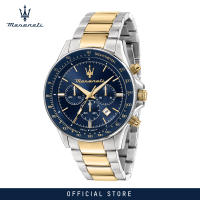
【Online Exclusive】Maserati 44mm Mens Chronograph Quartz Watch R8873640017
$280.17$565.00

【2 Years Warranty】MASERATI Velocita 43mm Mens Quartz Watch R8873652002 Japan Movement
$554.00
Buy on Lazada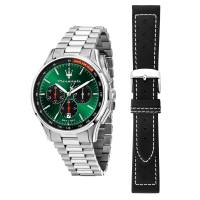
【2 Years Warranty】 Maserati Sorpasso 42mm Mens Quartz Watch Luminous Dial Hands with Stainless Steel and Black Leather Strap R8873624002
$418.77$604.00
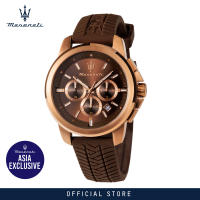
【Asia Exclusive】【 2 Years Warranty】 Maserati Successo 44mm Brown Silicone Strap Mens Chronograph Quartz Watch R8871621039
$254.70$359.00
![[2 Years Warranty] Maserati Sfida Black Silicon Band Quartz Chronograph 44mm Mens Watch R8871640002 With Luminous Dial Hands](https://sg-live.slatic.net/p/a105079ed880129ffc95ca9e18ce1491.jpg_200x200q80.jpg)
[2 Years Warranty] Maserati Sfida Black Silicon Band Quartz Chronograph 44mm Mens Watch R8871640002 With Luminous Dial Hands
$244.00$409.00
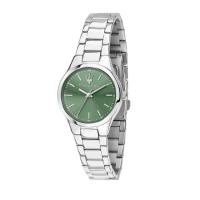
【2 Years Warranty】 Maserati Attrazione 30mm Womens Quartz Watch Luminous Dial Hands R8853151508
$214.42$302.00
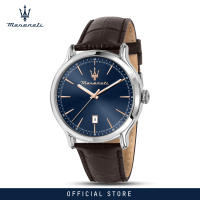
【2 Years Warranty】 Maserati Epoca 42mm Blue Sunray Dial Mens Quartz Watch R8851118016 with Luminous Hands
$196.02$319.00

Maserati Jewels 22cm Mens Stainless Steel Ceramic Bracelet JM221ATZ01 (Adjustable)
$120.78$196.00
About Maserati
Maserati S.p.A. is an Italian manufacturer of luxury and performance automobiles headquartered in Modena, Italy. Established in Bologna on 1 December 1914 by the Maserati brothers, it stands as one of Italy’s oldest surviving luxury car marques. The brand is distinguished by its synthesis of Italian design, grand touring capability, motorsport heritage, craftsmanship, and high-performance engineering. Today, Maserati operates under the direction of Stellantis N.V. 1
The marque is instantly identifiable by its Trident emblem, which draws inspiration from the Fountain of Neptune in Bologna. In 2026, Maserati marks 100 years of the Trident, a symbol that first appeared on the Tipo 26 racing car in 1926. 2
Maserati at a glance
| Attribute | Information |
|---|---|
| Full name | Maserati S.p.A. |
| Founded | 1 December 1914 |
| Founders | Alfieri, Ettore and Ernesto Maserati |
| Original location | Bologna, Italy |
| Headquarters | Modena, Italy |
| Industry | Automotive |
| Products | Luxury cars, sports cars, grand tourers, SUVs |
| Parent company | Stellantis N.V. |
| Famous emblem | Trident |
| Brand nationality | Italian |
| Motorsport origins | Grand Prix / sports-car racing |
| First Maserati-built car | Tipo 26 (1926) |
| Famous road cars | Ghibli, Quattroporte, GranTurismo, MC20, Grecale |
| Current-era models | Grecale, GranTurismo, GranCabrio, MCPURA, MC20 and derivatives |
| Official website | Maserati |
Origins
The history of Maserati is rooted in the Maserati family, specifically the brothers Alfieri, Ettore, Ernesto, Bindo, and Mario. The pivotal figure in the company’s formation was Alfieri Maserati, who, alongside his brothers Ettore and Ernesto, founded Società Anonima Officine Alfieri Maserati in Bologna on 1 December 1914. Initially, the enterprise functioned as a workshop specialising in automobile repair and mechanical work. 3
The brothers shared a profound fascination with:
- Automobile engineering
- Mechanical design
- Speed
- Racing
- Engine development
This background is significant because Maserati was born from motorsport rather than luxury car manufacturing. Its original identity was fundamentally that of a racing and engineering concern. The company remained based in Bologna until 1939, when operations shifted to Modena, the city that remains synonymous with the marque today. 4
The Maserati brothers
The Maserati narrative is distinctive due to the varied roles played by different family members.
Alfieri Maserati
Alfieri Maserati was the central founder and served as one of the company’s principal engineers and drivers. He was deeply involved in the development of Maserati’s early racing cars before his premature death in 1932, after which his brothers continued the company’s development.
Ettore Maserati
Ettore focused primarily on the technical and mechanical aspects of the business, helping to manage operations during its formative years.
Ernesto Maserati
Ernesto emerged as one of the most significant engineers and racing drivers in the company’s early history, playing a crucial role in developing Maserati’s Grand Prix cars.
Bindo Maserati
Bindo joined the firm in 1932 following Alfieri’s death and subsequently became a key member of the organisation. 5
Mario Maserati
Mario differed from his siblings in that his primary interest lay in art rather than engineering or racing. Ironically, he became responsible for perhaps the most enduring element of Maserati’s visual identity: the Trident logo.
The Trident logo
The Maserati Trident ranks among the most recognisable symbols in the automotive world. According to historical accounts, Mario Maserati drew inspiration from the statue of Neptune in Bologna’s Piazza Maggiore, where the god carries a three-pronged spear, or trident. 6
This choice was particularly apt as Neptune represented:
- Strength
- Power
- Authority
- The sea
- Mythology
Furthermore, Neptune was traditionally associated with horses, creating an indirect link to horsepower and racing. 7 The Trident was officially introduced in 1926 on the Maserati Tipo 26.
Red and blue colour scheme
The familiar oval badge eventually adopted red and blue, colours historically associated with Bologna, reflecting the deep connection between the city’s identity and Maserati’s origins. 8 In 2026, Maserati celebrates the 100th anniversary of the Trident.
The Tipo 26: The first Maserati
The Tipo 26 marked a crucial milestone in the marque’s history. Developed in 1926, it was the first car built entirely by Maserati and the first to bear the Trident badge. 9 It made its debut at the Targa Florio in Sicily on 25 April 1926, driven by Alfieri Maserati with Guerino Bertocchi serving as riding mechanic.
The result was highly significant:
1st in its 1,500 cc class and 8th overall.
This victory established a fundamental tenet of Maserati’s identity: the company was created to compete. 10
Motorsport heritage
Motorsport is arguably the foundation of Maserati’s brand identity. During the pre-war era, Maserati competed against manufacturers such as Bugatti, Alfa Romeo, Mercedes-Benz, and Auto Union, achieving particular success in European Grand Prix racing.
Its racing history includes:
- Victories in major European Grand Prix events
- Multiple Targa Florio victories
- Victories at the Indianapolis 500
- Formula 1 victories
- The 1957 Formula 1 World Championship
- Later success with the MC12 in FIA GT racing
Notably, Maserati won the Indianapolis 500 in 1939 and 1940, while its racing cars achieved four consecutive Targa Florio victories from 1937 through 1940. 11
Formula 1
Maserati was a significant manufacturer in the early years of Formula 1. Its greatest achievement came in 1957, when Argentine legend Juan Manuel Fangio secured the World Championship driving a Maserati 250F. The 250F subsequently became one of the most celebrated Grand Prix cars of the 1950s. Official records credit Maserati with nine Formula 1 victories and Fangio’s 1957 World Championship as cornerstones of its racing legacy.
Transition to road cars
Maserati eventually expanded beyond pure racing machinery, adopting a distinctive philosophy: build a road car that retains the spirit of a racing machine. Rather than competing directly with mass-market luxury manufacturers, Maserati cultivated a niche centred on:
- High-performance grand touring
- Elegant Italian styling
- Powerful engines
- Long-distance comfort
- Exclusivity
- Motorsport-derived technology
This approach produced some of the most renowned Italian performance cars of the 20th century.
The Maserati 250F
The Maserati 250F warrants special mention. Built for Grand Prix competition during the 1950s, it became a defining racing car of its era. Its elegant proportions, front-engine layout, and competitive success helped establish the visual language now associated with classic Maserati. Its most famous driver was Juan Manuel Fangio, who used a 250F to win the 1957 World Championship.
The 1960s: Emergence as a luxury GT brand
During the 1960s, Maserati increasingly focused on road-going grand tourers. This marked a significant shift from producing cars designed primarily for racing to creating automobiles that combined performance, luxury, comfort, and Italian style. A pivotal model was the Maserati 3500 GT, which established the template for the modern Maserati: a sophisticated Italian luxury automobile capable of serious performance. This GT philosophy remains central to the company today.
The Quattroporte
The name Quattroporte translates literally to “four doors” in Italian and has become one of Maserati’s most important model designations. Introduced in the 1960s, the original Quattroporte effectively created the category of the high-performance luxury four-door sedan. By combining the attributes of a luxury sedan with those of a sports car, Maserati established a nameplate that continues to define the brand.
The Citroën era
Maserati faced considerable financial and corporate challenges during the 1960s and 1970s. In 1968, the company came under the control of Citroën. This period brought technological experimentation, resulting in vehicles such as the Citroën SM, which utilised a Maserati V6 engine. However, the relationship ultimately ended amidst severe financial difficulties. This era illustrates a recurring theme in Maserati’s history: the company’s repeated survival through ownership changes while striving to preserve its distinctive Italian identity.
Alejandro De Tomaso era
Following the Citroën period, Maserati came under the control of Alejandro De Tomaso. Strategy shifted towards producing more accessible performance cars, most notably the Biturbo, introduced in the early 1980s. While the Biturbo’s complex engineering and reliability reputation make it a controversial chapter among enthusiasts, it significantly expanded Maserati’s market and established the company’s association with twin-turbocharged performance engines.
Fiat, Ferrari and the modern era
Maserati subsequently entered the Fiat corporate sphere. In the late 1990s, it was placed under the control of Ferrari, creating a notable relationship between two historic Italian marques. During this period, Maserati received substantial investment and modernisation, developing cars that were more competitive with premium German and British manufacturers while retaining their Italian character. Key products of this transformation included the 3200 GT, Spyder, Coupé, Quattroporte, and later the GranTurismo.
The Maserati GranTurismo
The GranTurismo became one of Maserati’s signature models, embodying the classic Italian Gran Turismo philosophy: a beautiful, fast car designed for rapid long-distance travel in luxury. Maserati’s modern identity has often been built around this concept rather than purely track-focused sports cars, making the GranTurismo representative of the brand’s core values.
The MC12
Introduced in the 2000s, the MC12 is one of Maserati’s most spectacular modern cars. Heavily influenced by motorsport, it was developed in conjunction with Maserati’s return to international GT racing. The racing version achieved immense success, securing six international FIA GT championships between 2005 and 2010. 12
The MC12 is also noted for its dramatic styling, featuring extremely long rear bodywork, a large rear wing, a mid-mounted V12 engine, carbon-fibre construction, and very limited production numbers. It is now considered one of the most collectible modern Maseratis.
Return to Stellantis
Maserati’s period under Ferrari control eventually ended, and the company returned to the broader Fiat Chrysler Automobiles (FCA) structure. FCA later merged with the French PSA Group to create Stellantis in 2021. Maserati is now part of Stellantis alongside brands including Alfa Romeo, Fiat, Abarth, Lancia, Peugeot, Citroën, DS, Opel, Jeep, Dodge, and Chrysler. Ferrari is no longer part of Stellantis. Maserati remains an independent brand within the portfolio.
The MC20
The MC20 represents Maserati’s return to producing a genuine mid-engined supercar. The name denotes MC (Maserati Corse) and 20 (2020). Its most significant technological feature is the Nettuno V6, a 3.0-litre twin-turbocharged engine with advanced combustion technology derived from Maserati’s motorsport and engineering development. The MC20 demonstrates that Maserati continues to view itself as a performance-car company, not merely a manufacturer of luxury sedans or SUVs.
The Grecale
The Grecale marks Maserati’s expansion into the compact luxury SUV segment. Positioned below the larger Levante, it provides the brand with a competitor in a critical global market segment. The Grecale combines SUV practicality with Maserati styling, luxury interiors, performance-oriented powertrains, and all-wheel drive. The latest range introduced in 2026 includes updated Grecale versions, including models powered by the Nettuno V6. 13
The Levante
The Levante, named after a Mediterranean wind, was Maserati’s first SUV. Strategically vital given the global market’s shift towards SUVs, it allowed Maserati to compete directly against vehicles such as the Porsche Cayenne, BMW X5, Mercedes-Benz GLE, Range Rover Sport, and Bentley Bentayga. The Levante helped transform Maserati from a specialised GT manufacturer into a broader luxury automobile brand.
Current model range
As of 2026, Maserati’s range centres around several key families:
- Grecale: Compact/midsize luxury SUV
- GranTurismo: Flagship modern grand tourer
- GranCabrio: Convertible version of the GranTurismo concept
- MC20: Mid-engined supercar
- MCPURA: Evolution of the high-performance mid-engined concept, available as a coupe and convertible (MCPURA Cielo)
- GT2 Stradale: Road-going performance model linked to the GT2 racing programme
The current configurator lists the Grecale, GranTurismo, GranCabrio, MCPURA, MCPURA Cielo, GT2 Stradale, MC20, and MC20 Cielo among available models. 14
Electrification: Folgore
Maserati has entered the electric era under the Folgore name, meaning “lightning” in Italian. This designation applies to its electric performance vehicles. The electrification strategy includes electric versions of the GranTurismo, GranCabrio, and Grecale. Folgore represents an attempt to preserve the traditional combination of luxury and performance while transitioning to electric propulsion. Product updates in 2026 include improvements to the Folgore range. 15
Brand differentiation
Maserati occupies a unique position in the luxury car market. Its identity is built upon several core concepts:
- Italian design: Emphasis on proportions, exterior styling, and craftsmanship.
- Grand touring: Traditional focus on the ability to travel quickly and comfortably, distinguishing it from purely track-focused brands.
- Motorsport heritage: A history born in racing that remains central to its identity.
- Exclusivity: Production volumes are considerably lower than those of mass-market premium manufacturers.
- Emotional character: Emphasis on engine sound, dramatic styling, tactile controls, distinctive interiors, and Italian craftsmanship over mere technology or practicality.
Engine technology
Engine technology has always been central to Maserati. Historically, the company has produced inline-six, V6, V8, and V12 engines, as well as turbocharged, supercharged, and naturally aspirated racing units. Some engines were developed or produced through relationships with other Italian manufacturers. The modern Nettuno V6 represents the current high-performance philosophy and powers cars such as the MC20 and newer performance models.
Acoustic identity
Engine sound is a vital component of Maserati’s brand identity. Older models, particularly those with V8 engines, became famous for their distinctive exhaust note, contributing to the marque’s association with Italian automotive emotion. For many enthusiasts, brand positioning can be broadly stereotyped as follows:
- Ferrari: Extreme performance
- Lamborghini: Drama
- Porsche: Engineering precision
- Aston Martin: Elegance
- Bentley: Luxury
- Maserati: Elegant performance and grand touring
Comparison with Ferrari
While Maserati and Ferrari share historical connections, their identities differ significantly.
| Maserati | Ferrari |
|---|---|
| Grand touring emphasis | Extreme sports-car emphasis |
| Luxury + performance | Performance + racing |
| More understated | More aggressive |
| Strong sedan/SUV history | Primarily sports cars/GTs |
| Trident | Prancing Horse |
| Modena | Maranello |
| Stellantis | Ferrari N.V. |
| Strong GT tradition | Strong Formula 1 identity |
Maserati’s ideal customer traditionally seeks a fast, luxurious, and distinctive Italian car suitable for everyday driving and long-distance touring.
Comparison with Porsche
Maserati and Porsche occupy overlapping segments but approach them differently. Porsche is generally associated with engineering precision, usability, and motorsport-derived technology. Maserati places greater emphasis on Italian design, exclusivity, luxury, and emotional character. While a Porsche may appeal to those seeking technical optimisation, a Maserati typically appeals to those seeking emotional distinctiveness.
Design philosophy
Maserati’s design language traditionally emphasises a long bonnet, low rooflines, short front overhangs, flowing bodywork, a large grille, the distinctive Trident, triple side air vents, and elegant proportions. The three side vents are particularly iconic, serving as a visual reference to the Trident. 16 The large front grille has evolved over decades but maintains a strong vertical emphasis with the Trident prominently centred, providing an instantly recognisable face.
Headquarters and Modena
Although born in Bologna, Maserati has been strongly associated with Modena since 1939. The company’s headquarters are located at Viale Ciro Menotti 322, 41121 Modena, Italy. 17 Modena is a global centre of Italian automotive culture, situated in the Emilia-Romagna region known as Italy’s Motor Valley. This geographic association is integral to the brand’s identity.
Brand personality
Maserati can be described as Italian, elegant, sporting, exclusive, emotional, grand touring, craftsmanship-focused, and possessing racing heritage. The brand historically occupies the space between luxury automobile and sports car.
Notable models
Racing cars
- Tipo 26
- 4CM
- 8CM
- 250F
- 450S
- Tipo 61 “Birdcage”
- MC12 GT1
- Maserati GT2
Classic road cars
- A6
- 3500 GT
- Sebring
- Mistral
- Ghibli
- Bora
- Khamsin
- Indy
- Biturbo
- Shamal
Modern cars
- 3200 GT
- Spyder
- Coupé
- Quattroporte
- GranTurismo
- GranCabrio
- Ghibli
- Levante
- MC12
- MC20
- Grecale
- MCPURA
Racing achievements
Key milestones in Maserati’s racing history include:
- 1926: Tipo 26 wins its class at the Targa Florio
- 1937–1940: Four consecutive Targa Florio victories
- 1939: Indianapolis 500 victory
- 1940: Indianapolis 500 victory
- 1957: Juan Manuel Fangio wins the F1 World Championship with Maserati
- 2005–2010: MC12 wins six FIA GT international championships
- 2023 onward: Maserati GT2 returns the brand to closed-wheel competition 18
This history underscores that the Trident originated as a racing symbol.
Cultural significance
Maserati has long been associated with Italian sophistication, celebrities, luxury lifestyles, motorsport, fashion, high society, and European grand touring. Relatively low production volumes and distinctive styling have maintained an image of exclusivity. Unlike brands emphasising mass recognition, Maserati’s appeal has traditionally relied on knowing the brand.
Brand essence
At its core, Maserati represents a specific Italian interpretation of luxury. The traditional formula is performance + elegance + craftsmanship + Italian design + racing heritage. Its ideal automobile is neither a pure race car nor a traditional limousine, but a luxury performance machine capable of crossing continents at high speed—the essence of the Gran Turismo philosophy.
Centenary celebrations
2026 is a significant year for Maserati, marking 100 years of the Trident since its debut on the Tipo 26 at the 1926 Targa Florio. The anniversary is being celebrated with updates to the Grecale, GranTurismo, and GranCabrio families. 19 Current strategy combines three directions:
- Traditional luxury GTs: GranTurismo and GranCabrio
- Modern performance cars: MCPURA, MC20, and GT2 Stradale
- Luxury SUVs and electrification: Grecale and Folgore models
This approach aims to preserve Maserati’s historical identity while adapting to the modern luxury car market.
Summary
Maserati is an Italian luxury and performance-car manufacturer founded in Bologna in 1914 by Alfieri Maserati and his brothers. Originally a racing and engineering company, Maserati became famous during the 1920s–1950s for Grand Prix competition, including Juan Manuel Fangio’s 1957 Formula 1 World Championship. Its iconic Trident logo, designed by Mario Maserati and inspired by Bologna’s Fountain of Neptune, first appeared on the Tipo 26 in 1926. Over the following century, Maserati evolved from a racing-car manufacturer into a producer of luxury grand tourers, sports cars, sedans and SUVs, creating legendary models such as the 250F, 3500 GT, Ghibli, Quattroporte, GranTurismo, MC12 and MC20. Today, based in Modena and operating under Stellantis, Maserati continues to position itself as an Italian luxury-performance brand centered on design, craftsmanship, grand touring and motorsport heritage, while expanding into electrification through its Folgore range. 20
Key facts
- Founded: 1914, Bologna 🇮🇹
- Home: Modena 🇮🇹
- Symbol: Trident 🔱
- Born from: Racing 🏁
- Specialty: Italian luxury performance
- Signature philosophy: Grand Touring
- Famous engine eras: V6, V8, V12 and modern Nettuno V6
- Most famous racing car: 250F / MC12
- Most famous luxury nameplate: Quattroporte
- Most famous GT: GranTurismo
- Modern supercar: MC20 / MCPURA
- Modern SUV: Grecale
- Electric identity: Folgore ⚡
- Parent company: Stellantis
- 2026 milestone: 100 years of the Trident 21
References
- A History of Innovation – Excellence since 1914 | Maserati
- Maserati Celebrates Its 111th Anniversary: The Story of the Trident | Maserati US
- Maserati logo: origin of the Trident logo | Maserati US
- The Maserati Trident logo: a century of design and racing | Maserati
- Maserati Story
- Maserati: 100 years today | Maserati | Stellantis Media
- Maserati: 111th Birthday ahead of the Year of the Trident | Maserati | Stellantis Media
- The New Maserati Range Debuts in the Year of the Trident | Maserati GB
- NEW MASERATI GRANTURISMO, GRANCABRIO, AND GRECALE | Maserati | Stellantis Media
- Maserati Build and Price | Maserati MY
- Die neue Maserati Modellreihe debütiert im Jahr des Dreizacks | Maserati AT
- New Maserati GranTurismo, GranCabrio and Grecale | Maserati | Stellantis Media
- The New Maserati Range Debuts in the Year of the Trident | Maserati
- Maserati Trident centenary celebrated in heart of Motor Valley | Maserati | Stellantis Media
- Road Testing Continues for Maserati GranTurismo, GranCabrio, and Grecale | Maserati | Stellantis Media
- First 100 Hundred Years of the Maserati Trident, an Iconic Logo Between the Racetrack and Legend | Maserati | Stellantis Media
- The first hundred years of the Maserati Trident, an iconic logo between the racetrack and legend | Maserati | Stellantis Media
- I primi cent’anni del Tridente Maserati, un logo iconico tra pista e leggenda | Maserati | Stellantis Media
- Maserati Logo History (1926–Today): Every Redesign Explained
- Maserati: 111th Birthday ahead of the Year of the Trident | Maserati | Stellantis Media
- Maserati GranTurismo and GranCabrio Range Come Home: A New Chapter Begins in Modena | Maserati | Stellantis Media