Shop on Lazada
McFarlane Toys products
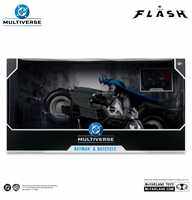
Mcfarlane Toys DC Multiverse Batman and Batcycle (Flash Movie)
$90.00$100.00
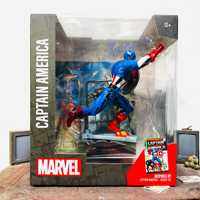
(1:10th Scale) Mcfarlane Toys Marvel Collection Captain America Statue (#100 Issue Cover)
$49.90
Buy on Lazada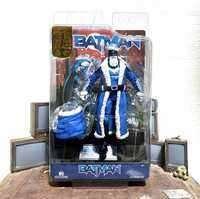
Mcfarlane Toys DC Multiverse Bat Batman Santa Blue (Gold Label)
$45.00$49.90
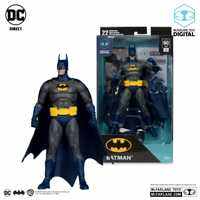
Mcfarlane Toys DC Multiverse Digital Wave Batman (No Man’s land)
$44.90
Buy on Lazada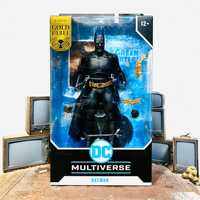
Mcfarlane Toys DC Multiverse Batman Begins Fear Toxin Batman (Gold Label)
$44.90
Buy on Lazada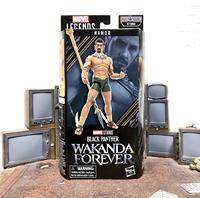
Hasbro Marvel Legends Wakanda Forever Namor
$42.90$44.90
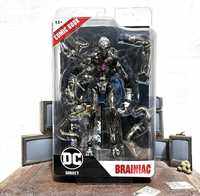
Mcfarlane Toys DC Direct Page Punchers Multiverse Ghost of Krypton: Brainiac
$39.90$49.90
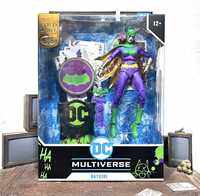
Mcfarlane Toys DC Multiverse Batgirl 3 Jokers (Jokerised)(Gold Label)
$42.00$44.90
About McFarlane Toys
McFarlane Toys is an American toy and collectibles manufacturer best known for highly detailed action figures, statues, and licensed merchandise based on comic books, films, television series, video games, sports, and popular entertainment franchises. Founded in 1994 by comic-book artist Todd McFarlane, the company originally emerged from his desire to produce action figures based on his own comic creation, Spawn. Over the following three decades, it evolved from a small independent toy maker into a major international collectibles brand.1
Overview
| Category | Information |
|---|---|
| Company | McFarlane Toys |
| Founded | 1994 |
| Founder | Todd McFarlane |
| Industry | Toys, action figures, collectibles |
| Headquarters | Tempe, Arizona, United States |
| Major products | Action figures, statues, playsets, vehicles, collectibles |
| Best known for | Spawn, DC Multiverse, Movie Maniacs, licensed collectibles |
| Parent/ownership | Privately held |
| Current CEO | Todd McFarlane |
| Official website | mcfarlane.com |
McFarlane describes itself as a design-driven company distinguished by its emphasis on sculptural detail, paint applications, articulation, and presentation. Its headquarters are located in Tempe, Arizona, with additional offices in Los Angeles, Las Vegas, and Montreal.1
History
Origins
The history of McFarlane Toys is intrinsically linked to Todd McFarlane’s career as a comic-book artist. McFarlane gained prominence during his tenure on The Amazing Spider-Man at Marvel Comics, where his distinctive art style helped redefine the character’s visual identity. He subsequently co-founded Image Comics in 1992 and created Spawn, a supernatural superhero series that became one of the most successful creator-owned comics of the era.
As Spawn achieved commercial success, several toy manufacturers expressed interest in producing action figures based on the property. However, McFarlane sought greater creative control over the design and quality of the merchandise. Consequently, he established his own toy company in 1994, initially to produce figures based on Spawn.
The first Spawn figures were released in December 1994. The initial assortment featured characters such as Spawn, Clown, Violator, Tremor, Overtkill, and Medieval Spawn, along with various accessories.
Market influence
McFarlane Toys entered the market when action figures were predominantly marketed as children’s toys. The company instead targeted older children, teenagers, comic-book fans, and adult collectors, prioritising sculptural detail and display value over traditional play patterns.
Early McFarlane figures were notable for:
- Highly detailed sculpts
- Elaborate costumes and character designs
- Sophisticated paint schemes
- Enhanced articulation
- Character-specific accessories
- Display-oriented packaging
- Darker, more mature subject matter
The company has described its early approach as combining intricate design and articulation with relatively accessible price points.12
Spawn and corporate identity
Spawn remains the franchise most fundamentally associated with McFarlane Toys. The original 1994 line effectively established the company’s identity; rather than producing generic superhero figures, McFarlane Toys emphasised the visual qualities of the source comic artwork.
The first series included not only conventional figures but also vehicles and playsets such as the Spawn Alley Action Playset, Spawn Mobile, and Violator Monster Rig.2
Over subsequent years, Spawn expanded into an extensive product family encompassing numerous versions of the titular character and supporting cast, including:
- Medieval Spawn
- Violator
- Clown
- Overtkill
- Gunslinger Spawn
- Redeemer
- Malebolgia
- Various alternate costumes and incarnations
The Spawn line continues to be a significant component of the company’s portfolio.3
Expansion into licensed properties
Following its establishment through Spawn, McFarlane Toys expanded significantly into licensed properties. The company’s licensing portfolio has included characters and franchises from:
Comics
- Spawn
- DC Comics
- Marvel
Film and television
- Movie Maniacs
- Avatar
- The Walking Dead
- Game of Thrones
- Rick and Morty
- Various Warner Bros. properties4
Video games
McFarlane has described its partnerships as spanning film, television, comic books, video games, and other entertainment sectors.6
DC Multiverse
One of McFarlane Toys’ most significant modern product lines is DC Multiverse. Launched following the company’s partnership with DC, it became a major successor to earlier DC action-figure ranges. The concept leverages DC’s extensive library of characters and their alternate iterations.
Modern DC Multiverse figures generally stand approximately 7 inches tall and feature extensive articulation. DC has described the line as offering approximately 22 points of articulation, alongside accessories, display bases, and collectible character cards.13151617
Characters represented in the range include:
- Batman
- Superman
- Wonder Woman
- The Flash
- Green Lantern
- Aquaman
- Joker
- Harley Quinn
- Darkseid
- Nightwing
- Various comic-book, film, and television versions
The line is particularly popular among collectors because McFarlane can draw from decades of DC continuity, allowing for the production of both mainstream and obscure interpretations.14
Marvel
McFarlane Toys returned to Marvel in a significant capacity in 2024, announcing a collaboration centred initially on highly detailed posed figures inspired by artwork from renowned comic artists. The initial collection included characters such as Spider-Man, Wolverine, Iron Man, and Deadpool, with products planned in 1:10 and 1:6 scales.5
This relationship is notable given Todd McFarlane’s personal history with Marvel; prior to creating Spawn, he was one of the most influential Spider-Man artists of his generation. This provides McFarlane Toys with a unique connection to the characters it produces, as its founder is a historically significant comic-book artist whose work helped define their visual identities.
Movie Maniacs
Movie Maniacs is another historically important McFarlane Toys line. Introduced in 1997, it brought characters from horror and other film genres into the realm of highly detailed collectible figures.6
The concept helped establish McFarlane as a company capable of translating cinematic characters into collector-oriented action figures. The line has included characters from:
- Horror films
- Science fiction
- Action films
- Cult classics
- Television and entertainment franchises
Modern Movie Maniacs products continue to emphasise an approximately 6-inch scale, environmental bases, scenic backdrops, and collectible cards.6
Product philosophy
McFarlane Toys’ reputation is largely built upon sculpting and visual detail. Rather than adhering to a single universal scale, the company employs different scales and formats depending on the specific property and product line.
Common formats include:
6–7 inch action figures
The company’s traditional collector/action-figure format, generally featuring substantial articulation and accessories.
1:10 scale statues and posed figures
Products emphasising sculpting and presentation over traditional action-figure play.
1:6 scale collectibles
Larger premium-format figures intended primarily for collectors.
Vehicles and playsets
Vehicles, dioramas, bases, and play environments produced alongside figures.
Stylised collectibles
An increasing expansion beyond conventional action figures into stylised, display-oriented products.7
Articulation
Articulation has historically been a defining characteristic of McFarlane Toys. Early figures helped popularise the concept that action figures could simultaneously be playable, highly articulated, extremely detailed, and suitable for display.
Modern products frequently utilise specialised articulation systems designed to provide a broad posing range while maintaining the character’s aesthetic integrity. For example, DC Multiverse figures have been marketed with Ultra Articulation and up to 22 moving parts.7
Packaging and presentation
McFarlane products generally place considerable emphasis on presentation. Depending on the line, packaging may include:
- Character artwork
- Character biographies
- Collectible cards
- Transparent display windows
- Scenic backgrounds
- Environmental bases
- Numbered editions
- Special finishes
- Exclusive variants
The collectible card system became particularly associated with McFarlane’s DC Multiverse releases.8
Collectors and variants
Although McFarlane Toys originally produced action figures suitable for play, its products increasingly target the collector market. Collectors commonly distinguish releases according to:
- Character
- Costume
- Comic-book appearance
- Film appearance
- Scale
- Edition
- Packaging
- Exclusive retailer release
- Paint variation
- Accessories
- Limited editions
The company has also utilised special categories such as Gold Label, which are generally associated with more exclusive or specialised releases. This collector-oriented approach allows McFarlane to compete in a market overlapping with both traditional toy companies and specialty collectible manufacturers.
Important franchises
Notable properties associated with McFarlane Toys include:
| Franchise | Type |
|---|---|
| Spawn | Comics / Original IP |
| DC Multiverse | Comics / Superheroes |
| Marvel | Comics / Superheroes |
| Movie Maniacs | Movies / Horror |
| Mortal Kombat | Video games |
| Assassin’s Creed | Video games |
| Five Nights at Freddy’s | Video games |
| Fortnite | Video games |
| The Walking Dead | Comics / TV |
| Game of Thrones | Television |
| Rick and Morty | Animation |
| Avatar | Film |
| NBA | Sports |
The exact licensing portfolio changes over time; this list should be viewed as representative rather than exhaustive. McFarlane’s official catalog and announcements document its broad range of licenses.14
Sports figures
McFarlane Toys has maintained a significant presence in sports collectibles. The company has produced figures representing athletes from leagues including the NBA, with releases sometimes featuring individual players, uniforms, trophies, and collector-oriented packaging.
Sports figures allowed McFarlane to apply its detailed sculpting approach to real-world individuals rather than fictional characters.9
Company and ownership
McFarlane Toys remains a privately held company. Todd McFarlane continues to serve as founder and CEO. The company has also expanded its ownership group and leadership; official corporate information identifies Stephan Tetrault, a veteran of the toy industry, as part of the ownership group.10
The company’s main headquarters are located in Tempe, Arizona, USA. It also maintains offices in Los Angeles, Las Vegas, and Montreal.11
30th anniversary
McFarlane Toys celebrated its 30th anniversary in 2024. The company characterised the milestone as three decades of innovation in the action-figure and collectibles industry, emphasising that it had remained privately owned throughout its history.1
The anniversary demonstrated the company’s evolution from its original 1994 Spawn figures into a global licensed-collectibles business.
Expansion beyond traditional action figures
McFarlane Toys has increasingly expanded its definition of what constitutes a collectible. In 2026, the company announced the acquisition of exclusive rights to the Q-Fig brand. Q-Figs are stylised, scene-based collectibles that differ considerably from traditional articulated action figures. McFarlane announced plans to relaunch Q-Figs with properties including DC, Marvel, and Spawn.7
This illustrates a broader strategy wherein McFarlane operates across multiple segments of the fan-collectibles market rather than functioning exclusively as an action-figure manufacturer.
Design legacy
McFarlane Toys’ primary influence on the toy industry lies in helping make highly detailed, collector-oriented action figures mainstream. Early products demonstrated that a figure could be marketed simultaneously as a toy and as a collectible piece of character sculpture.
Its visual philosophy emphasised:
detail + articulation + character accuracy + presentation
This approach influenced the wider action-figure market, prompting competitors to produce figures with more sophisticated sculpting, paint applications, articulation, accessories, and collector-oriented packaging. McFarlane describes its early innovations in articulation, colouring, and design as having helped establish a new standard for the category.12
Relationship with Todd McFarlane
Unlike many major toy companies, McFarlane Toys is strongly identified with its founder. Todd McFarlane’s influence is evident in several aspects of the company:
- Spawn provided the original intellectual property.
- His comic-book background influenced the company’s visual aesthetic.
- His interest in detailed character design shaped product development.
- His status as a collector and creator helped connect the company to fandom.
- His continued involvement keeps the company closely connected to comics and entertainment.
This makes McFarlane Toys unusual among major manufacturers, as its corporate identity is directly connected to a specific creator and his artistic career.
Reception and reputation
Among collectors, McFarlane Toys is particularly recognised for sculpt quality and visual fidelity.
Strengths
- Excellent sculpting
- Strong character likenesses
- Detailed costumes and accessories
- Wide variety of licenses
- Strong comic-book aesthetic
- Frequent character variants
- Attractive display presentation
- Competitive pricing compared with premium statue companies
Common criticisms
- Articulation can sometimes be restricted by sculpt design
- Quality control may vary between releases
- Some figures prioritise appearance over posing
- Large numbers of variants can make collecting expensive
- Different lines may use different scales, reducing collection uniformity
These characteristics position McFarlane figures in a middle ground between traditional toys and premium collectibles.
Comparison with other manufacturers
McFarlane is often compared with companies such as Hasbro, Mattel, Bandai, NECA, and MAFEX/Medicom.
| Company | General reputation |
|---|---|
| McFarlane Toys | Detail-oriented, collector/action figures |
| Hasbro | Large-scale mainstream toy lines and collectibles |
| Mattel | Major mainstream toy manufacturer and licensed collectibles |
| Bandai | Anime, Japanese properties, premium collectibles |
| NECA | Detailed movie, horror, gaming collectibles |
| MAFEX | Highly articulated premium collector figures |
McFarlane’s niche is particularly strong in comic-book characters, western superhero properties, Spawn, and licensed entertainment collectibles.
Defining characteristics
Key characteristics of McFarlane Toys include:
1. Spawn as foundation
The company was created specifically to produce figures based on Todd McFarlane’s Spawn.13
2. Detail as signature
McFarlane has built its reputation around elaborate sculpting and paintwork.
3. Bridging toys and collectibles
Its products helped popularise the concept of action figures as serious display collectibles.
4. Extensive licensing
The company has worked with major comic, film, television, gaming, and sports properties.14
5. DC Multiverse as modern pillar
DC figures have become one of the company’s most recognisable contemporary product families.15
6. Continued expansion
The Marvel collaboration and Q-Fig acquisition demonstrate ongoing expansion into different collectible formats.7
Legacy
More than 30 years after its founding, McFarlane Toys has become one of the most recognisable names in the action-figure and pop-culture collectibles industry. Its history can be divided into several stages:
- 1994 — Foundation: Todd McFarlane establishes the company and launches Spawn figures.
- 1990s — Innovation: McFarlane develops a reputation for unusually detailed, mature, collector-oriented action figures and introduces lines such as Movie Maniacs.
- 2000s — Licensing expansion: The company broadens its portfolio into numerous entertainment and sports properties.
- 2010s — Collector-market growth: Video games, film, television, sports, and comics become increasingly important catalogue components.
- 2020s — Major superhero and entertainment licenses: DC Multiverse becomes a flagship line while the company expands into Marvel and numerous other properties.
- 2024 — 30th anniversary: McFarlane celebrates three decades in the action-figure industry.1
- 2026 — Collectibles expansion: The company announces its acquisition of the Q-Fig brand, further expanding beyond traditional articulated figures.7
In summary, McFarlane Toys is a collector-focused American toy company founded by comic-book creator Todd McFarlane in 1994, famous for transforming his Spawn character into highly detailed action figures and subsequently becoming a major producer of licensed comic-book, movie, television, video-game, and sports collectibles.16
References
- GROUNDBREAKING MCFARLANE TOYS CELEBRATE 3OTH YEAR OF INNOVATION IN THE TOY INDUSTRY
- McFarlane Toys – Bandai
- DC MULTIVERSE McFarlane Toys Sweeps | DC
- BATMAN (‘90s Justice League) McFarlane Toys DC Multiverse Action Figur – DC Shop
- Marvel | McFarlane Toys Press Release
- McFarlane Toys Expands Their Movie Maniacs Brand and Digital Presence With Nostalgic Characters from NBCUniversal
- McFarlane Toys | Toy of the Year 2026 FINALIST
- Mortal Kombat Klassic | Press Release
- Persona 3 | McFarlane Toys Press Release
- McFarlane Toys and Hasbro Licensing Agreement Announcement
- McFarlane Toys and Warner Bros. Discovery Global Consumer Products Announcement
- Spawn, McFarlane.com :: The home all things Todd McFarlane
- SUPERGIRL (2026 Movie) McFarlane Toys DC Multiverse Action Figure – DC Shop
- McFarlane Toys | DC
- BATMAN (The New 52) McFarlane Toys DC Multiverse Action Figure – DC Shop
- SUPERMAN RETURNS McFarlane Toys DC Multiverse Action Figure – DC Shop
- THE DARK KNIGHT McFarlane Toys DC Multiverse Deluxe Theatrical Edition – DC Shop