Shop on Lazada
Michelin products
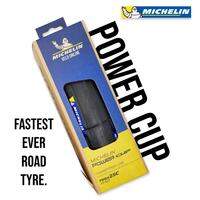
Michelin Power Cup Folding Tyre road bike clincher 700c 25mm 28mm 30mm Singapore Local Stock
$84.57$85.00
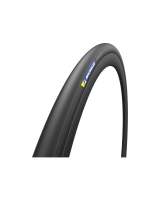
MICHELIN POWER CUP COMPETITION LINE Clincher Road Bike Tyre For Cycling
$86.72$120.00
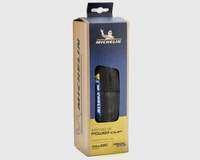
Michelin Power Cup Tubeless Ready Folding Tyre road bike clincher 700c 25mm 28mm 30mm Singapore Local Stock
$88.13$170.40
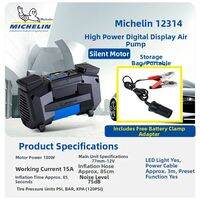
Michelin | Mini Portable Car Air Pump
$190.39$375.57
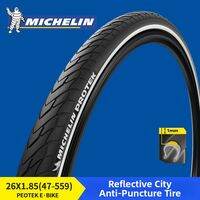
Michelin | Anti-puncture Bicycle Tires 26 inch 700C
$42.71$45.46
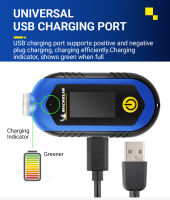
Michelin M2209 Digital Tire Pressure Gauge Backlight LCD Tyre Air Monitoring Meter Tread Depth Detection 150PSI High Precision Handheld Tester Tool for Car Truck
$23.58$38.30
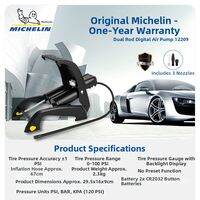
Michelin | Portable High-Pressure Air Pump
$50.41
Buy on Lazada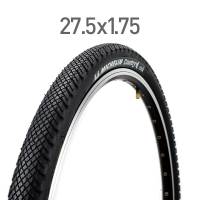
【Free shipping】Michelin Mountain Bike Tires 26*1.75/2.0 27.5*1.75/2.1 Country Rock Marathon Bike Tires CountryDRY2 29x2.1 Cycling Tires Bike Accessories
$48.57$88.02
About Michelin
Michelin is a French multinational corporation best known for manufacturing tyres, though its operations now extend to engineered materials, connected mobility, speciality tyres, and travel and hospitality experiences through the MICHELIN Guide. Established in 1889 in Clermont-Ferrand, France, by brothers André Michelin and Édouard Michelin, the company has grown into one of the world’s leading tyre and mobility technology groups.1 The name Michelin is also synonymous with the MICHELIN Guide and its renowned restaurant stars, although the tyre business and the guide operate as distinct pillars within the broader brand ecosystem.
Basic information
| Item | Information |
|---|---|
| Full name | Compagnie Générale des Établissements Michelin / Michelin |
| Common name | Michelin |
| Founded | 1889 |
| Founders | André Michelin, Édouard Michelin |
| Headquarters | Clermont-Ferrand, France |
| Industry | Tyres, engineered materials, mobility, technology and travel experiences |
| Main product | Tyres |
| Major markets | Passenger cars, trucks, motorcycles, bicycles, aircraft, agriculture, mining, construction and motorsport |
| Major brand icon | Bibendum, the “Michelin Man” |
| Restaurant brand | MICHELIN Guide |
| Current CEO / Managing Chairman | Florent Menegaux |
| Countries with employees | 63 |
| Employees | About 129,800 |
| Production facilities | 128 |
| 2025 sales | €26.0 billion |
| 2026 H1 revenue | €12.7 billion |
According to corporate disclosures, Michelin employs approximately 129,800 people across 63 countries and operates 128 production facilities. Revenue for the first half of 2026 stood at €12.7 billion.2
Origins
Michelin’s history is rooted in Clermont-Ferrand in central France. In 1889, André and Édouard Michelin assumed control of a family business originally focused on rubber products and agricultural machinery. Recognising that the nascent automobile industry would transform transport, they understood that superior tyres were essential to this evolution.3 With fewer than 3,000 automobiles in France at the time, motoring remained largely experimental. Consequently, Michelin’s strategy extended beyond selling tyres; the brothers sought to make road travel safer, easier and more practical. A pivotal early innovation was the removable pneumatic bicycle tyre, which established the company’s reputation for engineering and applied innovation.4
Bibendum: The Michelin Man
A defining feature of the brand is its mascot, Bibendum, widely known as the Michelin Man. Created in 1898, Bibendum is among the oldest continuously used corporate mascots globally.5 The concept originated in 1894 when the Michelin brothers observed a stack of tyres at an exhibition in Lyon that resembled a human figure. André Michelin later refined the idea with French artist Marius Rossillon, who worked under the pseudonym O’Galop.6
Early depictions of the character differed significantly from the modern iteration, showing a figure composed of tyres holding a goblet filled with nails and broken glass. The accompanying Latin slogan, “Nunc est bibendum”, translates roughly to “Now is the time to drink”. This implied that the Michelin tyre could “drink” or absorb road obstacles, giving rise to the name Bibendum.7 Over subsequent decades, the character evolved from an imposing advertising symbol into the friendly, rounded white figure recognised worldwide today.
The MICHELIN Guide
From travel aid to culinary authority
One of Michelin’s most notable achievements is the creation of one of the world’s most influential restaurant guides by a tyre manufacturer. First published in 1900, the MICHELIN Guide was originally intended not as a luxury dining review, but as a practical handbook for motorists. Early editions included maps, tyre-changing instructions, petrol station locations, hotel listings, repair facilities and places to eat. The underlying logic was strategic: encouraging automobile tourism would increase driving distances and, consequently, tyre consumption.8 The guide was initially distributed free of charge.
In 1920, Michelin began charging for the publication, expanded its restaurant and hotel listings, and removed paid advertising to ensure editorial independence.9 The company subsequently introduced anonymous inspectors who visit establishments without identifying themselves, a practice that remains a cornerstone of the guide’s credibility.
Michelin Stars
The first Michelin stars were awarded in 1926. Initially, restaurants received only a single star, but in 1931, Michelin introduced the three-tier hierarchy that remains in use today, with criteria formally published in 1936.10 The current system is defined as follows:
- ★ One Star: High-quality cooking that is worth stopping for.
- ★★ Two Stars: Excellent cooking that is worth a detour.
- ★★★ Three Stars: Exceptional cuisine that is worth a special journey.
Michelin emphasises that stars are awarded to restaurants rather than individual chefs. Inspectors assess food based on five universal criteria: quality of ingredients, mastery of cooking techniques, harmony of flavours, the chef’s personality expressed through the cuisine, and consistency over time and across visits. Factors such as décor, table setting and service do not influence star ratings.11
Tyre innovations
Michelin’s corporate history is intrinsically linked to advancements in tyre technology.
Removable bicycle tyre
In its formative years, Michelin pioneered a practical removable pneumatic bicycle tyre, demonstrating how pneumatic technology could enhance transport efficiency and comfort.12
Radial tyre
Perhaps the company’s most significant technological contribution was the development of the radial tyre, launched in 1946. This design fundamentally altered tyre construction and became the dominant standard for modern road vehicles, offering greater durability, improved fuel efficiency and enhanced overall performance.13
Aircraft and speciality tyres
Michelin subsequently diversified into specialised applications, producing tyres for aircraft, heavy trucks, mining vehicles, agricultural machinery, construction equipment, motorcycles, bicycles and motorsport. The company maintains that it develops tyres for virtually every major form of wheeled or tyre-based mobility.14
Motorsport
Motorsport serves as a critical testing ground for Michelin’s technological capabilities. Racing demands simultaneous optimisation of grip, durability, braking, cornering stability, heat resistance, wet-weather performance and energy efficiency. Michelin has competed in various disciplines, particularly endurance racing. Events such as the 24 Hours of Le Mans function as technological laboratories, accelerating developments in tyre longevity and performance that eventually benefit consumer road vehicles.15 This reflects a core corporate philosophy where motorsport experimentation generates engineering knowledge applicable to commercial products.
Beyond tyres: Engineered materials
While tyres remain the core business, Michelin increasingly positions itself as a manufacturer of engineered materials, composites and experiences. A modern tyre comprises over 200 different components, including natural and synthetic rubber, polymers, silica, carbon black, steel, textile reinforcements and specialised chemical compounds. Accordingly, the company’s expertise spans chemistry, physics, metallurgy, polymer science, manufacturing engineering and data science.16
This technical capability is leveraged in sectors including aerospace, construction, energy, healthcare, industrial materials, transportation and connected fleet services. Michelin refers to this diversified portfolio as Polymer Composite Solutions.17
Product categories
Passenger car tyres
This category encompasses tyres for petrol, diesel, hybrid and electric vehicles, as well as SUVs, sports cars, luxury vehicles and classic cars. Product families include performance, touring, all-season and EV-specific ranges.18
Truck and commercial tyres
Michelin supplies tyres for trucks, buses, long-haul transport, urban transit and commercial fleets. For operators, factors such as durability and rolling resistance directly impact operating costs.
Motorcycle and bicycle tyres
The company manufactures tyres for road motorcycles, scooters and racing applications. Bicycle tyres connect Michelin to its historical origins, covering road cycling, mountain biking, gravel riding, commuting and competition.
Aircraft tyres
Designed to withstand extraordinary loads and temperatures, aircraft tyres represent highly specialised engineering products developed for commercial and other aviation applications.19
Mining, agriculture and construction
Michelin produces large-format speciality tyres for mining and heavy construction, which are significantly larger and more technically complex than standard automotive tyres.
Sustainability
Sustainability is integral to Michelin’s long-term strategy. The company aims to increase the proportion of recycled and renewable materials in its tyres, targeting 40% sustainable materials by 2030 and 100% by 2050. This approach considers the entire lifecycle, from raw material extraction and manufacturing to transport, usage and recycling.20 Achieving these targets requires balancing competing engineering demands, as enhancing one characteristic, such as durability, can affect grip, rolling resistance or manufacturability.
The MICHELIN Guide today
The MICHELIN Guide has evolved into a global hospitality and travel brand covering restaurants and hotels across numerous destinations via print and digital platforms. Inspectors are described as anonymous, independent and professionally trained.21 Beyond the traditional 1–3 Star system for exceptional cooking, the guide now includes additional distinctions:
- Bib Gourmand: Recognises restaurants offering high-quality food at good value. The award is named after Bibendum.22
- MICHELIN Green Star: Highlights restaurants demonstrating notable commitments to sustainability.
These distinctions enable the guide to cover a spectrum ranging from affordable local eateries to elite fine-dining establishments.
Presence in Thailand
Michelin maintains a significant presence in neighbouring Thailand, which is relevant to Singaporean travellers and the regional culinary landscape. The MICHELIN Guide Thailand was launched to showcase the country’s diverse food culture, spanning street food to fine dining. Using the same anonymous inspection methodology and international criteria, the guide has drawn global attention to Thai cuisine while recognising establishments outside traditional luxury dining, including street-food vendors.23 This expansion underscores the guide’s cultural significance beyond its original function as a motoring aid.
Corporate strategy
Michelin’s contemporary strategy involves diversifying beyond tyres while retaining them as a technological foundation. Expertise in rubber, polymers, composites, manufacturing and data is applied across multiple industries. The corporate vision describes Michelin as a manufacturer of “life-changing composites and experiences.”24 Activities are organised into three pillars:
- Tyres: The traditional core business.
- Engineered materials: High-performance composites and polymers for specialised industries.
- Experiences and digital services: The MICHELIN Guide, connected fleet solutions and mobility-related services.
Financial overview
Michelin remains a major global industrial group. For 2025, the company reported €26.0 billion in sales, €2.9 billion in segment operating income, and €2.1 billion in free cash flow before mergers and acquisitions. Results were impacted by lower volumes, currency fluctuations and competitive pressures.
In the first half of 2026, revenue reached €12.7 billion, with segment operating income of €1.45 billion and free cash flow before M&A of €282 million. The company maintained its objective of increasing segment operating income at constant exchange rates and scope compared to 2025.25
Brand identity
The Michelin brand simultaneously represents multiple domains. To motorists, it signifies tyres; to engineers, it denotes materials science and innovation; to racing enthusiasts, it represents high-performance motorsport; to travellers, it implies maps and hospitality recommendations; and to gastronomes, it equates to culinary excellence. Historians also associate the brand with Bibendum as an enduring corporate icon. This multifaceted identity allows an industrial manufacturer to serve as a symbol of mobility, engineering and gastronomy.
Factors in Michelin’s influence
Several interconnected strategies explain Michelin’s sustained prominence:
- Innovation: Prioritising technical solutions over price competition, exemplified by the radial tyre.26
- Brand building: Humanising a technical product through Bibendum.
- Demand creation: Stimulating travel and tyre usage through the MICHELIN Guide.
- Motorsport: Utilising racing as a visible demonstration platform.
- Diversification: Transferring materials expertise to non-tyre industries.
- Reputation: Consistently associating the brand with quality, safety and reliability.27
Timeline
| Year | Event |
|---|---|
| 1889 | André and Édouard Michelin establish the Michelin company |
| 1890s | Michelin develops removable pneumatic bicycle-tyre technology |
| 1894 | Michelin brothers conceive the idea behind Bibendum |
| 1898 | Bibendum officially appears |
| 1900 | First MICHELIN Guide published |
| 1920 | MICHELIN Guide becomes a paid publication |
| 1926 | First MICHELIN Star awarded |
| 1931 | One-, two- and three-Star hierarchy introduced |
| 1936 | Michelin publishes criteria for its Stars |
| 1946 | Michelin introduces radial-tyre technology |
| 20th century | Global expansion into automotive, truck, aviation, agriculture and speciality tyres |
| 21st century | Increased focus on sustainability, digital services, connected mobility and advanced materials |
| 2020s | Accelerated diversification beyond tyres through Polymer Composite Solutions |
| 2026 | Continued implementation of Michelin in Motion 2030 strategy |
Historical dates are derived primarily from Michelin’s corporate publications.
Distinction between Michelin and Michelin Stars
A common misconception is that Michelin is primarily a restaurant-rating organisation. In reality, it is fundamentally a French industrial and technology company with tyres as its historical core. The guide originated as a marketing initiative to support motorists. The progression from tyre manufacturing to culinary authority represents one of the most successful examples of brand extension in business history.
Unique brand positioning
Michelin can be characterised as a French engineering company that transformed tyre expertise into a powerful brand spanning mobility, technology, travel and gastronomy. Its strength lies in combining industrial engineering, branding, motorsport, travel and food culture. Bibendum represents the consumer-facing personality, tyres provide the industrial foundation, motorsport demonstrates technical ambition, and the MICHELIN Guide embodies cultural influence. Together, these elements distinguish Michelin from conventional manufacturers.28
References
- About Us
- A technological leader working for mobility | Michelin
- Financial information at June 30, 2026 | Michelin
- The Michelin Story: The power to reinvent yourself again and again
- Michelin equips everything that drives | Michelin
- Bibendum at 120: The Michelin Man As You Have Never Seen Him Before
- The History of the Michelin Man :: Michelin North America, Inc.
- The Michelin Man
- Unveiling the original Michelin Man | MICHELIN UK
- The MICHELIN Guide | Explore
- Explore 120 Years of Excellence with the MICHELIN Guide
- History of the MICHELIN Guide
- About The MICHELIN Guide
- What is a MICHELIN Star?
- Designing and Industrializing Innovative Materials | Michelin
- Tires that make the difference | Michelin
- Tires that make the difference | Michelin
- Technological Leadership | Michelin
- Michelin is growing beyond the tire | Michelin
- Michelin Group | World’s leading manufacturer of life-changing composites and experiences.
- Financial information at December 31, 2025 | Michelin
- Powerful brand | Michelin
- Results and Sales | Michelin
- “Extreme is our area of expertise”: specialty tires are powering the Michelin Group’s performance and growth | Michelin
- Results for “Registration” – Publications 2026 | Michelin
- Information financière au 31 décembre 2025 | Michelin
- Group Management 2026 evolution
- What are the MICHELIN Guide distinctions? | Michelin Guide Apps