Shop on Lazada
Moko products

MoKo Case for All-New 11″ Kindle Scribe 2025(3rd Generation) & Kindle Scribe Colorsoft 2025(1st Gen) - Slim Folio Premium PU Leather Cover with Pen Clasp & Auto Sleep Wake
$20.92$33.60

Moko Case for Remarkable Paper Pro 11.8 Inch 2024 Lightweight Book Folio Cover with Buckle Pen Clasp for Remarkable Paper Pro Color Tablet Support Auto Wake/Sleep
$20.14$31.30

MoKo 2-Pack Matte Screen Protector Fits Fits Kobo Libra Colour 7 Inches 2024/Kobo Libra 2 E-Reader 7″ 2021 Premium PET Anti-Glare Screen Protective Film Screen Protector
$4.90$9.40
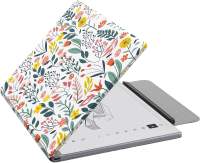
MoKo for Remarkable 2 Tablet Case Lightweight Ultra-Thin Case with Wide Pen Protective Clasp Smart Tablet Cover Folio for Remarkable Tablet 2 10.3″ 2020 Release
$23.82$43.21

Moko Case Fit for Remarkable Paper Pure 10.3 2026 with Clasp Gray | Slim Lightweight Hard Back Shell Folio Cover with Magnetic Clasp Design to Hold The Pen Support Auto Wake Sleep
$21.21$32.40
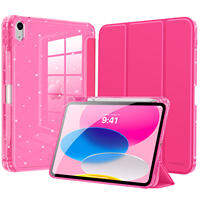
MoKo Glitter Case for iPad (A16) 11th/10th Gen 2025/2022 Bright Pink | Trifold Stand Folio Case Sparkly Glitter Smart Cover with Pencil Holder Auto Wake/Sleep Soft Flexible TPU bling Cover
$18.57$27.90
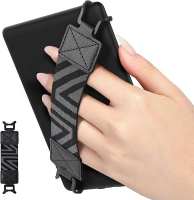
MoKo Security Hand-Strap for 6-8″ Kindle eReaders Fire Tablet - Kindle/Kobo/Voyaga/Lenovo/Sony Kindle E-Book Tablet High-Elasticity Versatile Hand Strap Lightweight Finger Grip Holder
$3.54$7.90

MoKo 360° Rotating Case for 7″ Kindle Paperwhite 12th Generation 2024 & Kindle Colorsoft 2024/2025 Clear Back Detachable Magnetic Protective Adjustable Stand Cover with Auto Wake/Sleep
$15.92$24.90
About Moko
Moko is a Georgian luxury accessories and fashion brand established in Tbilisi, Georgia, in 2017 by designer and creative director Nana Akubardia. The label is recognised for synthesising references to ancient civilisations and Georgian cultural heritage with contemporary luxury design. Products are handcrafted in the Moko atelier, primarily utilising natural leather and distinctive natural stones.1
Rather than producing conventional mass-market fashion accessories, Moko positions itself around the creation of timeless, individual objects. A defining characteristic of the brand is its use of an exclusive construction technique developed internally, which the company describes as having no direct analogues in the industry.1
Brand profile
| Category | Information |
|---|---|
| Brand name | Moko |
| Founded | 2017 |
| Founded in | Tbilisi, Georgia |
| Founder / Creative Director | Nana Akubardia |
| Industry | Luxury fashion / accessories |
| Main products | Leather bags and accessories |
| Primary materials | Natural leather, natural stones |
| Design approach | Historical and cultural references interpreted through contemporary design |
| Manufacturing | Handcrafted in the Moko atelier |
| Distribution | Direct-to-consumer / worldwide online shipping |
History
Moko was established in Tbilisi in 2017. From its inception, the brand’s identity has been intrinsically linked to the cultural and archaeological heritage of Georgia and the wider ancient world. Rather than simply reproducing historical motifs, Moko integrates them into modern accessories.1
A notable example is the FW2020/21 “BARBOLI” collection. According to Moko, this collection was inspired by ancient Georgian diadems discovered in Georgia and dating to approximately the 4th–3rd centuries BCE. Their embossed ornaments served as a source for Moko’s designs, with the Sun serving as an important recurring symbol. The collection’s name, Barboli, refers to a sun goddess in the mythology of the Svaneti region of western Georgia.1
This relationship between archaeology, mythology, symbolism and modern fashion remains one of the clearest elements of Moko’s design philosophy.
Design philosophy
Moko describes its work as a “journey through time”, bringing the heritage of ancient civilizations into contemporary luxury objects.1 Its design language is broadly characterised by several key principles:
- Historical inspiration: Motifs and ideas derived from ancient cultures and Georgian heritage.
- Contemporary interpretation: Historical references are transformed rather than presented as literal reproductions.
- Material individuality: Natural stones are selected for their individual shapes and internal textures, meaning pieces can have naturally occurring differences.
- Hand craftsmanship: Products are made in the brand’s own atelier rather than presented as anonymous mass-market accessories.
- Sculptural character: Materials and construction are used to make accessories function as distinctive visual objects.
- Individuality: Moko explicitly frames its accessories as expressions of the wearer’s individuality.1
Materials and craftsmanship
The use of natural leather and unique stones is fundamental to Moko’s product identity. The company emphasises that each stone is different in shape and internal texture, giving individual pieces a degree of natural variation.1
Moko also states that its accessories employ an exclusive technique developed by the brand. This proprietary approach is part of what differentiates Moko from conventional leather-accessory manufacturers.1 Consequently, Moko’s products are better understood as craft-oriented luxury accessories than as purely trend-driven fashion items.
Product categories
The brand is particularly associated with bags and leather accessories. Its online store operates internationally, with the company offering worldwide delivery.1
Rather than building its identity around a broad product catalogue, Moko’s proposition centres on distinctive accessories whose material, construction and visual symbolism are intended to carry much of the brand’s identity.
Cultural identity
One of Moko’s most significant characteristics is its connection to Georgian cultural heritage. Georgia possesses a rich archaeological and artistic history, and Moko uses this heritage as creative material. The BARBOLI collection illustrates this approach particularly well: ancient Georgian diadems, solar imagery and Svaneti mythology were translated into contemporary fashion objects.1
This gives Moko a distinct positioning compared to luxury brands whose visual language is primarily derived from European haute couture traditions. Its identity is instead built partly around Georgian history, mythology and archaeological symbolism.
Founder: Nana Akubardia
Nana Akubardia is the designer and creative director credited by Moko as the founder of the brand. She established Moko in Tbilisi in 2017 and is responsible for its creative direction.1
The close relationship between founder and brand is important to understanding Moko: the company’s public identity is strongly centred on its design concept, craftsmanship and cultural references rather than on a large corporate structure.
International presence
Although Moko originated in Georgia, the brand operates an international online store and provides worldwide shipping. Current shipping information states that orders outside Georgia generally take around 8–10 working days after acceptance, although delivery conditions can vary.1
The company also maintains dedicated channels for press and wholesale inquiries, indicating that it operates beyond a purely local Georgian retail market.1
Brand positioning
Moko occupies a niche between Georgian design heritage, contemporary fashion, artisan craftsmanship and luxury accessories. Its differentiation comes less from traditional luxury-brand signals such as large logos or extensive monogramming and more from materials, construction, symbolism and storytelling.
In simplified terms, the Moko concept can be summarised as ancient cultural references combined with contemporary design and handcrafted natural materials. This makes the brand particularly relevant to consumers interested in independent luxury designers, artisanal accessories, Georgian fashion and culturally inspired contemporary design.
Distinctive characteristics
- Georgian origin: Moko is explicitly rooted in Tbilisi, Georgia, giving it a geographic and cultural identity that distinguishes it from internationally dominant luxury-fashion capitals.1
- Ancient-history inspiration: Collections can draw directly from archaeological objects, mythology and ancient Georgian symbolism.1
- Natural materials: The use of natural leather and individually distinctive stones means that material variation becomes part of the aesthetic rather than something to eliminate.1
- Handmade production: Pieces are handcrafted in the brand’s own atelier, reinforcing its positioning as an artisan-oriented luxury brand.1
- Proprietary technique: The brand claims an exclusive technique developed specifically for its accessories, contributing to its recognizable construction and product identity.1
- Strong storytelling: Rather than treating products purely as fashion commodities, Moko connects collections to historical narratives, mythology and cultural symbols.
Retail and customer service
Moko sells directly through its official website and accepts PayPal as a payment method according to its current payment information.1
The company currently states that unused items can generally be returned within 14 days of delivery, subject to its return conditions. It does not currently offer direct exchanges; customers are instructed to place a new order and return the original item instead.1
Disambiguation
It should be noted that “Moko” is not a unique company name. There is a separate Chinese technology company called MOKO Technology (also known as MOKO SMART), founded in Shenzhen in 2006 and focused on electronics manufacturing and IoT products.2 The Georgian fashion brand discussed above should not be confused with MOKO SMART.