Shop on Lazada
Mothercare products
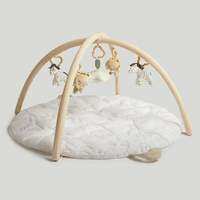
Mothercare Unisex Safari Playmat & Arch
$129.00
Buy on Lazada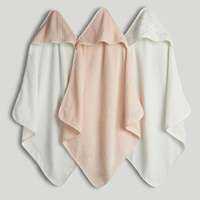
Mothercare Cuddle And Dry Muslin Hooded Towel (3 Pack) - Assorted Colours
$39.90
Buy on Lazada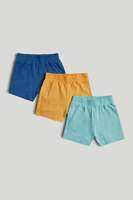
Mothercare Baby Boy Beach Life 3 Pack Short
$33.90
Buy on Lazada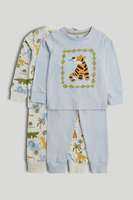
Mothercare Boy 2 Pack Safari Pyjamas
$39.90
Buy on Lazada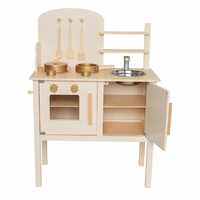
Jabadabado Kitchen Cream
$199.00
Buy on Lazada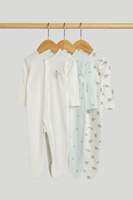
Mothercare Baby Unisex 3 Pack Elephant Sleepsuits
$39.90
Buy on Lazada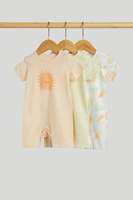
Mothercare Baby Unisex 3 Pack Beach Rompers
$35.90
Buy on Lazada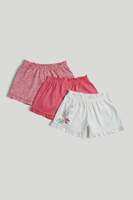
Mothercare Girl Island Charm 3 Pack Jersey Shorts
$33.90
Buy on LazadaAbout Mothercare
Mothercare is a British-origin global brand specialising in products for expectant mothers, babies, young children and parents. Founded in the United Kingdom in 1961, it began as a specialist retailer of maternity clothing, pushchairs and nursery furniture before expanding internationally through franchise partnerships.1 Following the administration of its UK retail business in 2019, Mothercare reorganised around Mothercare Global Brand Limited (MGB), shifting its focus to brand ownership, product design, sourcing, licensing and international franchising rather than direct retail operations.2
Overview
| Field | Information |
|---|---|
| Brand name | Mothercare |
| Origin | United Kingdom |
| Founded | 1961 |
| Founders | Selim Zilkha and Sir James Goldsmith |
| First store | Surrey, England |
| Industry | Retail / consumer goods / parenting |
| Main customers | Expectant mothers, parents, babies and young children |
| Core categories | Maternity, baby clothing, children’s clothing, nursery, feeding, bathing, travel and play |
| Business model today | Global brand owner, designer, sourcing business and franchisor |
| Parent company | Mothercare plc |
| Brand-owning subsidiary | Mothercare Global Brand Limited |
| Stock market | London Stock Exchange/AIM |
| Heritage | British |
| International model | Primarily franchise partnerships |
| Global footprint | Hundreds of stores and e-commerce sites across numerous countries |
Corporate materials describe Mothercare as a global specialist brand that designs, sources and supplies products for parents and young children. Its current network operates primarily through franchise partners rather than company-owned stores.3
History
Foundation and early expansion
Mothercare was founded in 1961 by Selim Zilkha and Sir James Goldsmith, with the first store opening in Surrey, England. The original concept focused on providing specialist products for mothers-to-be and families with young children, initially offering pushchairs, nursery furniture and maternity clothing. The range subsequently expanded to include children’s clothing and a broader array of family products.4
In 1962, just one year after opening its first store, Mothercare launched a mail-order business, signalling an early ambition to serve customers beyond physical retail locations.5 By 1968, the clothing proposition had extended to children up to approximately five years old, eventually reaching ages up to eight. The company became a publicly listed entity in 1972, marking a significant stage in its corporate development.6
Corporate consolidation and international growth
During the 1980s, Mothercare became part of a larger retail group structure. It merged with Habitat in 1982 to form Habitat Mothercare plc, which subsequently merged with British Home Stores (BHS) in 1986 to create Storehouse plc.7 This period transformed Mothercare from a standalone specialist retailer into a component of a major British retail conglomerate.
International growth accelerated during this era, with the first overseas franchise store opening in Kuwait in 1983. Expansion followed into markets including Malaysia, Hong Kong, Singapore, Russia and other parts of Europe.8 The franchise model proved instrumental, allowing the brand to grow internationally without the capital burden of operating every store directly.
In 1996, Mothercare acquired Children’s World from Boots and rebranded the stores as Mothercare World.9 In 2000, following the sale of the BHS business to Philip Green, Storehouse reverted to the Mothercare name and refocused on its specialist position in parenting and children’s products.10
Acquisitions and diversification
Mothercare acquired Early Learning Centre (ELC) in 2007 for approximately £85 million. ELC was a complementary children’s brand specialising in toys and educational products, broadening Mothercare’s proposition beyond basic baby and nursery items.11 In 2010, the company further strengthened its maternity offering by acquiring the trademark and brand of Blooming Marvellous.12
UK retail crisis and restructuring
The 2010s presented significant challenges, including changing consumer habits, the rise of online retail, intense competition, high operating costs and difficult conditions in the British high-street sector. In 2018, Mothercare announced plans to close a substantial number of UK stores as part of restructuring efforts.13
These difficulties culminated on 5 November 2019, when Mothercare UK Limited entered administration. The Mothercare brand and international franchise business were transferred to Mothercare Global Brand Limited (MGB). This fundamentally altered the company’s nature; instead of operating hundreds of its own stores, Mothercare became a capital-light international brand business focused on ownership, design, sourcing, supply, licensing and franchise partnerships.14
Current operations
As of 2026, Mothercare’s business differs substantially from its historical retail model. The brand operates globally through franchise partners, with products covering clothing and essential categories including baby, nursery, feeding, bathing and play.15
Corporate disclosures indicate the network spans numerous countries through franchise stores and e-commerce platforms. While specific figures vary as partnerships evolve, historical data cites approximately 700 dedicated Mothercare stores in around 36 countries plus over 400 additional outlets, while more recent overviews reference over 450 stores across 31 countries.16 The international franchise network now constitutes the core of the business.
Business model
Mothercare’s modern model combines British heritage with global brand management, product development, sourcing and franchise retail. Rather than owning stores directly, the company works with local partners who operate retail and e-commerce operations within specific territories using the Mothercare brand and intellectual property.
This approach offers several strategic advantages:
- Lower capital requirements: Mothercare does not fund physical retail infrastructure directly.
- Local expertise: Franchisees possess knowledge of local consumers, shopping habits, regulations, real estate markets, distribution systems and cultural preferences.
- International scalability: The brand can enter multiple markets without building new retail organisations from scratch.
- Recurring revenues: Income is generated through franchise arrangements, sourcing and brand-related activities rather than solely through direct sales.
Physical retail remains the dominant channel for its international business, supported by the global franchise network.17
Products
Mothercare is positioned as a comprehensive parenting and baby specialist. Its principal categories include:
- Maternity: Products for pregnancy and expectant mothers, including clothing.
- Baby clothing: Apparel and essentials for newborns and infants.
- Children’s clothing: Apparel for young children.
- Nursery: Furniture, bedding and furnishings for baby nurseries.
- Travel: Pushchairs, strollers, car-related products and travel accessories.
- Feeding: Products for feeding babies and young children.
- Bathing: Baby bath and personal-care essentials.
- Toys and play: Items designed for child development and play.
- Home and essentials: Everyday products supporting parents and young children.
Corporate descriptions specifically identify clothing, baby and nursery products, feeding, bathing and play as principal categories.18
Target market and brand positioning
The core audience extends beyond mothers to encompass expectant parents, newborn parents and parents of young children. This broad scope allows Mothercare to develop long-term relationships with families across several years of childhood. The brand positions itself as a parenting specialist, with values centred on expertise, playfulness and evolution.19
Brand identity is strongly associated with British heritage, trust, quality, practicality, safety and comfort. The company describes its ambition as being “the most trusted and desirable baby-expert brand”, distinguishing itself from general fashion retailers by focusing on expert parenting solutions rather than merely selling baby clothes.
International expansion
Internationalisation has been central to Mothercare’s history since the first overseas franchise store opened in Kuwait in 1983.20 Over subsequent decades, the brand expanded across the Middle East, South Asia, Southeast Asia, Europe and other markets. Corporate materials emphasise that the brand is now present in numerous countries through franchise partners, including locations in major shopping malls.21
South Asia joint venture
India has historically been a significant market. More recently, Mothercare and Reliance established a joint venture covering India, Nepal, Sri Lanka, Bhutan and Bangladesh. Under this arrangement, Reliance acquired a 51% interest, while Mothercare retained 49% and granted perpetual rights to use the brand and related intellectual property in those territories.22 This structure exemplifies the modern strategy of combining global brand expertise with powerful local partners.
Early Learning Centre
Early Learning Centre (ELC), originally established in 1974 as a children’s toy and educational-products business, was acquired by Mothercare in 2007.23 The acquisition was strategically complementary, addressing the toy and learning segment alongside Mothercare’s focus on babies, maternity and nursery products. However, the modern business is now more focused on the core global Mothercare brand and international franchise operations.
Corporate structure
It is necessary to distinguish between the brand and the corporate entities:
- Mothercare plc: The publicly listed UK parent company.
- Mothercare Global Brand Limited: The key subsidiary owning the brand and conducting global franchise business.24
- Mothercare UK: Historically responsible for British retail operations; its 2019 administration led to the current franchise-focused structure.25
Overseas stores are typically operated by franchise partners rather than directly by the UK parent company.
Financial and corporate status
Mothercare plc remains an active UK public limited company with its registered office in Hemel Hempstead, England.26 Shares are traded on the AIM market of the London Stock Exchange, with corporate disclosures providing information on shareholders, financial results and regulatory announcements. Annual reports and regulatory filings continue to be published through the investor-relations website.
Key milestones
| Year | Event |
|---|---|
| 1961 | Mothercare founded by Selim Zilkha and Sir James Goldsmith |
| 1961 | First store opens in Surrey |
| 1962 | Mail-order business begins |
| 1968 | Children’s clothing becomes part of the proposition |
| 1972 | Mothercare becomes a public company |
| 1982 | Merges with Habitat |
| 1983 | First international franchise store opens in Kuwait |
| 1986 | Habitat Mothercare merges with British Home Stores |
| 1990s | International expansion accelerates |
| 1996 | Children’s World acquired from Boots |
| 2000 | Storehouse returns to Mothercare name |
| 2007 | Early Learning Centre acquired |
| 2010 | Blooming Marvellous brand acquired |
| 2018 | Major UK restructuring and store closures |
| 2019 | Mothercare UK enters administration |
| 2019 | Mothercare Global Brand established as international brand vehicle |
| 2020 | Business becomes primarily an international franchise operation |
| 2021 | Mothercare celebrates 60th anniversary |
| 2022 | Russian market terminated |
| 2023 | Boots partnership launched for UK and Ireland |
| 2024 | New South Asian joint-venture structure with Reliance |
| 2025–26 | Continued focus on international franchising and brand growth |
Historical milestones are drawn primarily from corporate history and annual-report materials.
Competitive position and strengths
Mothercare operates in a competitive landscape comprising specialist baby retailers, children’s fashion brands, department stores, online marketplaces and general retailers. Rather than competing solely on price, the brand leverages specialisation and trust, positioning itself as an expert destination for parenting needs.
Key strengths include a strong heritage dating to 1961, high brand recognition across generations, specialist positioning distinct from conventional fashion retail, extensive international franchise infrastructure, British brand origins and a broad product ecosystem spanning maternity, newborn, nursery, clothing, travel, feeding and play.
Challenges
Significant challenges persist, including intense online price competition, shifting retail behaviours away from large-format stores, competition from global brands and specialised baby retailers, and dependence on franchise partner capabilities. Additionally, the brand must continually modernise its visual identity and marketing to remain relevant to younger parents, while addressing price sensitivity among families requiring large volumes of products.
Brand philosophy
Mothercare is built around the proposition of helping parents feel confident in caring for their children. The company emphasises expertise and trust, aiming to help parents navigate pregnancy, childbirth and early childhood. Current positioning describes its role as helping parents feel happy and confident, drawing on British heritage and specialist knowledge. This philosophy positions the brand as a parenting specialist rather than merely a clothing retailer.
Historical significance
Mothercare represents a notable example of a traditional physical retailer transforming into an international brand-licensing and franchising business. Its evolution encompasses four stages: establishment as a British specialist retailer (1961); integration into larger retail conglomerates (1980s–2000); international expansion via franchising (1980s–2010s); and transition to a capital-light global franchise model following UK retail collapse (2019–present). This final transformation defines the modern Mothercare business.
Summary
Mothercare is a British-founded parenting and children’s brand established in 1961 by Selim Zilkha and Sir James Goldsmith. Originally a specialist UK retailer of maternity clothing, nursery furniture and pushchairs, it expanded into children’s clothing, toys and family essentials, becoming an international retail brand through franchising. After experiencing major difficulties in the UK retail market culminating in the 2019 administration of its domestic retail business, the company reorganised around Mothercare Global Brand Limited. It has since shifted toward a capital-light model centred on brand ownership, product design, sourcing and international franchise partnerships. Today, Mothercare remains a British-origin global parenting brand serving parents, babies and young children across multiple markets.
References
- Our history – Mothercare plc
- 2024/25 Annual Report
- Investor overview – Mothercare plc
- At a glance – Mothercare plc
- AIM Rule 26 – Mothercare plc
- Annual Report & Accounts 2023
- Mothercare
- Chairman’s statement – Mothercare plc
- MOTHERCARE GLOBAL BRAND LIMITED filing history – Find and update company information – GOV.UK
- MOTHERCARE PLC. overview – Find and update company information – GOV.UK
- Investors – Mothercare plc
- Downloads – Mothercare plc
- MOTHERCARE UK LIMITED persons with significant control – Find and update company information – GOV.UK
- Mothercare plc
- Mothercare plc
- Reports and presentations Archive – Mothercare plc
- 2018/19 Annual Report – Mothercare plc
- 2020/21 Preliminary Results – Mothercare plc
- MOTHERCARE GROUP LIMITED(THE) overview – Find and update company information – GOV.UK
- MOTHERCARE PLC. filing history – Find and update company information – GOV.UK
- MOTHERCARE GROUP LIMITED(THE) filing history – Find and update company information – GOV.UK
- mothercare.ro
- About Mothercare | Trusted Baby Care Since 1961
- About us | Mothercare
- Ποιοι είμαστε | Mothercare
- About Mothercare | Trusted Baby Care Since 1961