Shop on Lazada
Nixon products
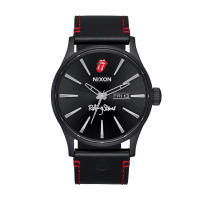
Nixon Rolling Stone Sentry Leather 42mm Mens Watch - All Black (A1354001)
$448.00
Buy on Lazada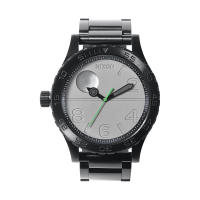
Nixon Star Wars Death Star 51-30 51mm - Black Case & Bracelet ( A172SW2383 )
$768.00
Buy on Lazada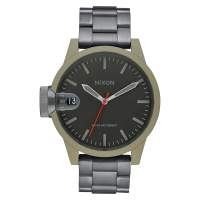
Nixon Chronicle 44 - Sage/Gunmetal (A4412220)
$202.50$675.00
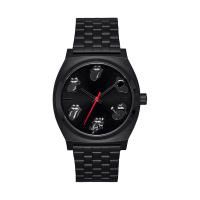
Nixon Rolling Stone Thalia Leather 38mm Mens Watch - All Black (A1360001)
$448.00
Buy on Lazada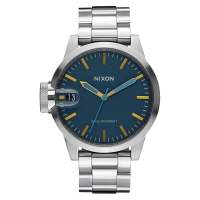
Nixon Chronicle 44 - Navy / Brass (A4412076)
$578.00
Buy on Lazada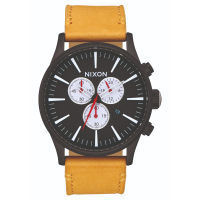
Nixon Sentry Chrono Leather 42mm Mens Watch - All Black / Gold (A4052448)
$455.00
Buy on Lazada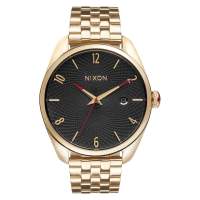
Nixon Bullet - All Gold / Black (A418510)
$418.00
Buy on Lazada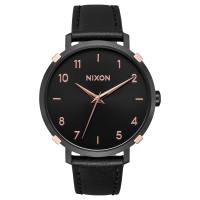
Nixon Arrow Leather 38mm - Black/Rose Gold/Cage (A10913221)
$248.00
Buy on LazadaAbout Nixon
Nixon is an American watch and lifestyle accessories brand recognised for merging California action-sports culture with fashion-forward industrial design. Founded in 1997 by Andy Laats and Chad DiNenna, the company originally produced watches for surfers, skateboarders and snowboarders seeking alternatives to conventional sports timepieces. Nixon remains headquartered in Carlsbad, California, and distributes its products internationally.1
Overview
| Item | Details |
|---|---|
| Brand | Nixon |
| Company | Nixon, Inc. |
| Founded | 1997 |
| Founders | Andy Laats, Chad DiNenna |
| Origin | Encinitas, California, USA |
| Current base | Carlsbad, California, USA |
| Industry | Watches, accessories, lifestyle |
| Core identity | Surf / skate / snowboard / California lifestyle |
| Main products | Watches, bags, wallets, leather goods and accessories |
| Distribution | Global; products sold in over 90 countries |
| Brand philosophy | “Think Sideways” |
Nixon defines its corporate philosophy as “Think Sideways”, a principle that encourages questioning conventional solutions and approaching design from alternative perspectives. The brand’s narrative emphasises originality, independent thinking, creative culture, athletes, artists and makers.2
Origins
Nixon was established during the 1990s in Southern California, a period when surfing, skateboarding and snowboarding were evolving into influential lifestyle cultures. Both founders brought complementary experience from the action-sports industry.
Andy Laats
Andy Laats possessed an engineering background from Cornell University and had worked as a snowboard product manager at Burton. He was also pursuing an MBA at Stanford when the concept for Nixon was developed.
Chad DiNenna
Chad DiNenna, a Southern California native, studied communications at California State University, Long Beach, and worked in publishing at TransWorld Media.
Their combined expertise in product engineering and media marketing proved fundamental to shaping Nixon’s eventual identity.3 The founders sought to address a specific gap in the market: traditional sports watches did not adequately reflect the style and culture of their wearers. Rather than treating the watch solely as a technical instrument, Nixon approached it as a personal accessory and cultural object.
Original concept and launch
Nixon launched its inaugural collection in 1997, initially targeting specialty surf, skate, snow and fashion retailers. The first release comprised seven watch models distributed through approximately 200 retail outlets. The company secured close to US$1 million in early venture financing to capitalise the business.4
The brand’s early value proposition diverged from prevailing market norms by prioritising personal expression over generic utility. Key design elements included unusual case shapes, bold colours, fashion-oriented bracelets, distinctive dials and functionality tailored to action sports. This approach was supported by unconventional marketing and close relationships with athletes and creatives, positioning Nixon at the intersection of horology, fashion accessories and action sports.
California and action-sports DNA
California remains central to understanding Nixon’s identity. Unlike brands rooted in traditional Swiss watchmaking, Nixon emerged from a culture encompassing surfing, skateboarding, snowboarding, music, streetwear, art and youth culture. Consequently, the brand approaches watches differently from heritage manufacturers such as Rolex, Omega or Seiko.
While traditional watch brands typically prioritise the timepiece before the lifestyle, Nixon places lifestyle first, treating the watch as an expression of that culture. This does not imply a neglect of engineering; the company has developed numerous proprietary design features. However, cultural relevance and design aesthetics are considered as vital to the brand’s identity as horological specifications. Nixon continues to define its community around athletes, musicians, makers, artists and activists, with its California heritage extending to streets, mountains and oceans globally.5
Growth during the 2000s
Following its launch, Nixon expanded rapidly. A European subsidiary was established around 2000, and by 2005, the company reportedly offered approximately 90 watch models and employed 60 staff, with annual sales growth reaching roughly 55%.6
Crucially, Nixon extended its range beyond timepieces to become a comprehensive lifestyle brand. Product categories grew to include bags, wallets, leather goods, headphones and other audio products. Throughout this diversification, the underlying aesthetic remained consistent: functional products with a strong visual identity.
Acquisition by Billabong
In 2005, Billabong International, the major Australian surf and action-sports corporation, agreed to acquire Nixon. Contemporary reports valued the initial consideration at approximately A$73 million (US$54 million), plus a potential deferred payment.7
This acquisition integrated Nixon into a broader action-sports corporate ecosystem. Strategically, the move leveraged Billabong’s established relationships with surfers, skateboarders, snowboarders, specialty retailers and consumers, while Nixon contributed a premium accessories and watch business to the portfolio.
Return to independence
In 2012, Nixon returned to independent ownership following a transaction involving Billabong and Trilantic Capital Partners. The resulting ownership structure allocated approximately 48.5% to Trilantic, 48.5% to Billabong and 3% to Nixon management, including the founders. The transaction valued Nixon at roughly US$464 million.8
This milestone demonstrated that a niche action-sports watch company could evolve into a substantial global lifestyle business.
Design differentiation
Nixon’s primary differentiator is its design language rather than mechanical watchmaking prowess. The brand does not typically compete with luxury Swiss manufacturers on prestige, complications or traditional haute horlogerie. Instead, it distinguishes itself through several key pillars:
- Design: Watches often feature recognisable proportions, large cases, unusual bezels, bold indices and distinctive bracelets.
- Cultural relevance: The brand actively collaborates with athletes, musicians, artists and cultural figures.
- Function: Many models are engineered for active lifestyles, offering water resistance and chronograph capabilities.
- Personality: Timepieces are intended to communicate aspects of the wearer’s identity, particularly through limited editions and collaborations.
Signature models
Nixon has produced numerous watches throughout its history and maintains a Product Archive documenting discontinued models.9 Several families remain particularly significant.
Time Teller
The Time Teller is arguably Nixon’s most recognisable everyday watch. Featuring a relatively simple three-hand design, it has been produced in a vast array of materials, colours and finishes. The model exemplifies Nixon’s ability to transform a straightforward timepiece into a fashion object.
51-30
The 51-30 is a signature oversized model, with its name referencing its 51 mm case and 300-metre water resistance. Its deliberately large, aggressive appearance is strongly associated with the brand’s action-sports identity. The 51-30 Chrono has become a visual icon, frequently serving as a platform for special editions and collaborations.10
Sentry
The Sentry represents a more restrained aspect of the brand. Compared to the 51-30, Sentry models generally offer a cleaner, more versatile aesthetic, making the brand accessible to consumers who appreciate Nixon’s design language without seeking an overtly extreme sports look.
Banks
Dating back to 2005, the Banks is identified by Nixon as an OG silhouette. Over the years, this model has accumulated a dedicated collector following.11
The Don
The Don was one of Nixon’s original seven models. Upon entering retail in 1998, it occupied the top end of the collection. Its stainless-steel bracelet was deliberately more refined than the nylon or rubber straps commonly associated with sports watches at the time. Features such as a raised bezel and water resistance were incorporated to ensure the watch remained wearable in active environments without sacrificing style.12
Engineering philosophy
Although Nixon is not a traditional haute-horlogerie manufacturer, engineering remains integral to its identity. A notable example is the patented Locking Looper system, a closure mechanism using a looped band design rather than a conventional pin-and-tuck arrangement. Invented by Andy Laats and Kirk James, it received U.S. Patent No. 6,830,166.13
This innovation reflects the practical application of the “Think Sideways” philosophy: taking a familiar product and rethinking one of its fundamental components.
Collaborations
Collaborations form a significant part of Nixon’s contemporary identity. Beyond standard watch-industry partnerships, the brand works with cultural properties and creative communities, including Metallica, Nirvana, The Rolling Stones, Bones Brigade, various visual artists, and professional surfers, skateboarders and snowboarders.
For instance, Nixon’s 2025 recap highlighted a returning Metallica collection, Nirvana editions and a Bones Brigade Time Teller project.14 These initiatives reinforce Nixon’s positioning as a cultural and lifestyle watch brand rather than merely a timekeeping manufacturer.
Athletes and team culture
Nixon has historically placed considerable emphasis on its team roster. Rather than simply hiring celebrities for advertising, the brand builds relationships within surf, skate and snow communities, selecting individuals based on their backgrounds, skills and personal styles.15
Notable team members have included John John Florence, Caity Simmers, Zion Wright and Leila Hurst. This team helps maintain credibility within the communities that originally fostered the brand.
Women’s watches
Despite a historical association with male-dominated action sports, Nixon has maintained a substantial women’s collection since its early years. Models such as the SiSi date back to the Y2K era, followed later by the Time Teller and Frankie.16 This reflects the brand’s broader transition from a niche surf watch company to a general lifestyle accessories label.
Design language
Nixon’s visual language can be characterised as bold, Californian, industrial, youthful and functional. Typical characteristics include:
- Oversized proportions: Large cases are a recurring trait, particularly in models like the 51-30.
- Strong geometry: Cases and bezels often feature deliberately angular or substantial forms.
- High-contrast dials: Large indices and hands are frequently used to ensure readability.
- Fashion-oriented colourways: Black, gold, silver, bronze and bright colours are common.
- Bracelet experimentation: Straps and bracelets are treated as integral design components rather than mere attachments.
- Limited editions: Special colours, graphics and collaborations allow for continual refreshment of established silhouettes.
Market positioning
Nixon is best understood as a premium lifestyle and accessories watch brand rather than a traditional luxury watchmaker. It does not compete with brands such as Rolex, Patek Philippe, Audemars Piguet, Vacheron Constantin or A. Lange & Söhne on the basis of mechanical complexity, heritage or prestige.
Instead, its competitive set comprises brands where design, lifestyle and cultural identity are paramount. Depending on the model, Nixon occupies various points on the accessible-to-premium fashion watch spectrum. Its value proposition centres on distinctive design, recognisable culture and practical functionality, rather than traditional Swiss craftsmanship or luxury status.
Movements and watchmaking
Throughout its history, Nixon has utilised both quartz and automatic mechanical movements. Quartz movements align well with the brand’s philosophy due to their accuracy, reliability, low maintenance, accessible pricing and suitability for everyday use.
While Nixon has produced automatic and mechanical watches, the movement is rarely the primary driver of purchase. Consumers typically choose models like the 51-30 for their styling, size, functionality and cultural resonance rather than as alternatives to traditional Swiss mechanical chronographs.
Current brand philosophy
Nixon’s current corporate messaging continues to centre on “Think Sideways”. This entails deliberately reconsidering norms and pursuing new design approaches, with the team remaining central to the process.17 This philosophy explains many enduring brand traits, including unusual designs, action-sports functionality, oversized cases, unconventional straps, collaborations and the blending of sport with street culture.
Nixon today
As of 2026, Nixon remains based in Carlsbad, California, operating as a global lifestyle and accessories brand. While watches remain the core offering, the product range includes bags, leather goods and other accessories, with distribution reaching more than 90 countries.18
The company continues to introduce new designs alongside historical revisits. Releases in 2025, for example, included new variations of established silhouettes, special collections and collaborations, while the product archive preserves decades of past designs.19
Place in watch culture
Nixon occupies a unique position between several distinct categories. It is not a traditional watchmaker rooted in Swiss horology, nor is it simply a fashion brand, as many models are genuinely engineered for water, sport and outdoor use. Furthermore, it has moved beyond being merely a surf brand to encompass fashion, music, art and general lifestyle, yet it remains distinct from luxury brands focused on exclusivity.
Ultimately, Nixon is a California-born lifestyle watch brand that uses action-sports culture as its foundation and design as its primary language.
Historical timeline
- 1997: Andy Laats and Chad DiNenna establish Nixon in Encinitas, California.20
- 1997–98: First seven watches enter the market through specialty retailers.21
- 2000: Nixon expands into Europe.22
- 2005: Company grows to approximately 90 models and 60 employees; Billabong agrees to acquire Nixon.23
- 2006: Nixon becomes part of Billabong’s corporate portfolio.24
- 2012: Nixon returns to independent ownership involving Billabong and Trilantic Capital Partners.25
- 2010s: Identity increasingly develops around surf, skate, snow, music, art and lifestyle collaborations.
- 2020s: Continued expansion of collaborations and classic model revisits while maintaining California and action-sports identity.26
- 2025–26: Ongoing release of new collections, collaborations and heritage reissues alongside global distribution.27
References
- About Nixon – Nixon US
- Nixon (company)
- About Nixon – Staging
- Billabong Acquires Nixon Inc… | SGB Media Online
- Nixon Product Archive | Nixon Watches from the Past – Nixon US
- What Happened at Nixon in 2025: Reminiscing on the Year’s Greatest Hit – Nixon US
- INTERVIEW w/ Chad & Andy: Reminiscing on the Re-Released Nixon Don – Nixon US
- Oh, the Patented Locking Looper? Yeah, We Invented That – Nixon US
- A Brief History of Women’s Watches in the Nixon Lineup – Nixon US
- A Brief History of the Analog Watch: From Pocket to Wrist – Nixon AU
- Who Owns Nixon Watches? Founders, Billabong & Trilantic – LegalClarity
- Nixon Watch Guide – Design, Durability & How to Choose
- What Happened at Nixon in 2025: Reminiscing on the Year’s Greatest Hit – Nixon AU
- What Happened at Nixon in 2025: Reminiscing on the Year’s Greatest Hit – Nixon EU
- Eine kurze Geschichte der Damenuhren im Nixon-Sortiment – Nixon EU
- Looking Back at Nixon in 2024 – Recapping the Year’s Greatest Hits – Nixon AU
- Company:Nixon – HandWiki
- Everything You Need to Know About Nixon Watches
- Nixon co-founder Chad DiNenna talks watches – Boardsport SOURCE
- Nixon Watches
- Billabong Expands Accessories Offerings, Acquires Nixon Inc. | California Apparel News
- Nixon
- Nixon Watches: History, Origin & Models (est. 1997) | WatchTraderHub
- About Nixon Watches
- FAQ | Questions & Responses – Nixon US
- All Nixon Men’s Watches | Analog & Digital Watches for Men – Nixon US
- Nixon US | Watches for Men & Women | Team-Designed, Custom-Built