Shop on Lazada
Nordic Ware products
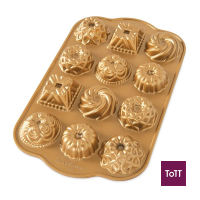
Nordic Ware Bundt® Charms Pan
$52.90$75.30
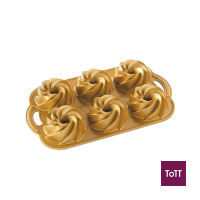
Nordic Ware Heritage Bundtlette Pan
$67.90$96.70
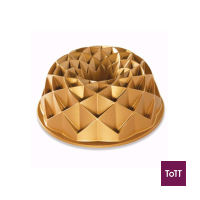
Nordic Ware Jubilee Bundt Pan
$64.90$92.60
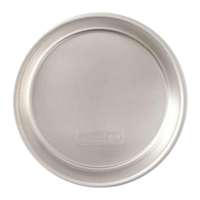
Nordic Ware Round Cake Pan 6″ - By ToTT
$19.80$26.40
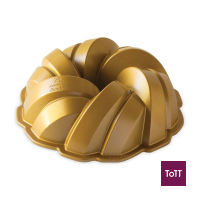
Nordic Ware Cast Aluminium 75th Anniversary Braided Bundt Pan
$67.90$96.70
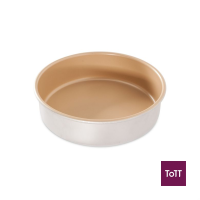
Nordic Ware Naturals® Nonstick 9″ Round Cake Pan
$30.90$43.70
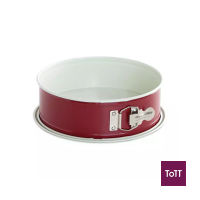
Nordic Ware 9 Leak Proof Springform Pan Assorted Colors
$42.70
Buy on Lazada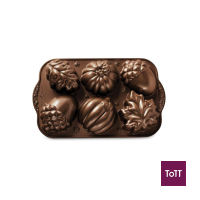
Nordic Ware Autumn Treats Pan
$65.90$93.70
About Nordic Ware
Overview
| Category | Information |
|---|---|
| Brand | Nordic Ware |
| Founded | 1946 |
| Founders | H. David “Dave” Dalquist and Dorothy “Dotty” Dalquist |
| Headquarters / principal factory | Minneapolis, Minnesota, United States |
| Ownership | Family-owned |
| Industry | Kitchenware, cookware and bakeware |
| Best known for | Bundt® pans |
| Major product areas | Bakeware, cookware, Bundt pans, microwave cookware, outdoor/grillware, kitchen accessories |
| Manufacturing | Majority of products made in Minneapolis |
| Notable trademark | Bundt® |
| Current milestone | 80 years in business in 2026 |
Nordic Ware is an American, family-owned kitchenware manufacturer best known for creating the Bundt® pan, one of the most recognisable baking-pan designs in the world. Founded in Minneapolis, Minnesota, in 1946, the company has remained closely associated with American manufacturing and continues to produce the majority of its products at its Minneapolis factory.1 As of 2026, Nordic Ware is celebrating its 80th anniversary.1
The company describes itself as a multi-generational family business, with more than 400 kitchenware products manufactured at its Minneapolis facility.1
History
Founding: 1946
Nordic Ware emerged in the years immediately following World War II. According to the company’s own history, Dave and Dotty Dalquist founded the business in Minneapolis in 1946 with approximately $500, initially operating from the basement of their home.1
The original business focused heavily on Scandinavian-inspired cookware, reflecting the Dalquists’ heritage and the substantial Scandinavian-American population in Minnesota. Early products included:
- Krumkake irons
- Rosette irons
- Ebelskiver pans
- Platte Panne pans
- Other speciality Scandinavian cooking equipment
The company states that its first Krumkake iron was developed in 1948.
Historical clarification
A slight discrepancy exists between Nordic Ware’s modern corporate history and the Smithsonian’s archival description of the company’s origins.
The Smithsonian describes the business as beginning in 1946 as “Plastics for Industry”, founded by brothers Dave and Mark Dalquist, who initially made foundry patterns and industrial plastic products. In 1950, the brothers acquired Northland Aluminum Products, whose existing product line included items sold under the Nordic Ware name.2
Nordic Ware’s present-day corporate history, meanwhile, emphasises Dave and Dotty Dalquist as the founders of the kitchenware business. Both accounts describe the same broader Dalquist family enterprise; the difference largely reflects whether the history traces the original industrial company or the subsequent kitchenware brand.1
The Birth of the Bundt Pan
Nordic Ware’s defining invention arrived around 1950.
Dave Dalquist developed a cast-aluminium, fluted tube pan inspired by European cake moulds. The design featured a hole in the centre, allowing heat to reach the middle of the cake while producing the distinctive ring shape associated with Bundt cakes.
Dalquist coined and trademarked the name “Bundt” for the product.2
The pan was not an immediate sensation. It initially appealed particularly to communities familiar with European-style baking, but its fortunes changed dramatically in the 1960s.
The 1966 Turning Point
The most significant event in Nordic Ware’s commercial history occurred during the 1966 Pillsbury Bake-Off.
Ella Helfrich, a baker from Texas, entered a Tunnel of Fudge Cake made in a Nordic Ware Bundt pan. The cake won second place in the competition and attracted enormous attention to the distinctive pan.2
This transformed the Bundt pan from a relatively specialised piece of cookware into a mainstream American kitchen product.
The Smithsonian notes that the Bundt pan had become America’s best-selling speciality cake pan by 1960, with its popularity accelerating substantially after the 1966 Bake-Off.
Nordic Ware subsequently worked with Pillsbury on Bundt cake mixes and promotional campaigns. By 1970, Pillsbury was licensing the Bundt name for cake mixes and offering pans alongside mixes, giving Nordic Ware enormous national exposure.2
This partnership is considered a classic example of how product design, recipe culture and food marketing can combine to create a household brand.
Nonstick Technology
Another important technological milestone occurred in 1964.
Early Bundt pans generally required careful greasing and flouring to prevent cakes from sticking to their elaborate surfaces. Nordic Ware became one of the early licensees of Teflon, the nonstick coating developed by DuPont.
The Smithsonian notes that Nordic Ware introduced Teflon-coated Bundt pans during the 1960s and that sales subsequently surged.
This development was particularly important because the elaborate geometry of Bundt pans made easy release much more difficult than with ordinary flat cake pans.
Expansion Beyond Bundt Pans
Although Bundt pans made Nordic Ware famous, the company has never been exclusively a cake-pan manufacturer.
Over the decades, it expanded into several categories:
Bakeware
- Baking sheets
- Half sheets
- Cake pans
- Loaf pans
- Pie pans
- Muffin/cupcake pans
- Speciality cake moulds
- Natural aluminium bakeware
Cookware
- Frying pans
- Skillets
- Sauce pans
- Dutch ovens
- Griddles
- Woks
- Roasters
- Cookware sets
Microwave products
Nordic Ware developed microwave-specific cookware during the rise of microwave cooking in the 1970s and 1980s. The company is credited with developing the first microwave oven turntable and subsequently created products such as the Micro-Go-Round®.2
Outdoor cooking
The company also expanded into:
- Grill pans
- Griddles
- Campfire cookware
- Outdoor smokers
- Seafood and grilling accessories
Kitchen accessories
Its modern product range also includes various baking, preparation, serving and storage accessories.1
Famous Product Lines
Bundt®
The Bundt® range is Nordic Ware’s signature product family.
The company has produced the classic fluted Bundt design alongside increasingly elaborate forms, including architectural and decorative designs. Examples include:
- Original/classic Bundt
- Cathedral Bundt
- Castle Bundt
- Rose-shaped Bundt
- Heart-shaped Bundt
- Festival Bundt
- Anniversary and limited-edition designs
The Smithsonian’s collection includes several Nordic Ware Bundt pans, illustrating how the company turned a functional baking vessel into a form of decorative kitchen design.2
Nordic Ware states that Bundt pans can now be found in more than 75 million households worldwide.1
Naturals®
Naturals® is Nordic Ware’s major natural-aluminium bakeware line.
Rather than focusing on decorative cakes, Naturals products are designed for everyday baking and roasting, particularly:
- Cookies
- Roasted vegetables
- Sheet-pan meals
- Bread
- Pastries
- General oven cooking
The company emphasises the heat-conducting properties of aluminium and the durability of its bakeware.1
Modern cookware
Nordic Ware has also moved into more conventional stovetop cookware, including ceramic nonstick collections such as Basalt™, Verde™ and Cardamom™.
Its current cookware portfolio includes aluminium and aluminised-steel products as well as ceramic nonstick cookware. Nordic Ware states that its newer ceramic nonstick surfaces are made without PFAS, PTFE or PFOA.1
Manufacturing Philosophy
One of Nordic Ware’s major differentiators is its continued commitment to U.S. manufacturing.
The company states that the majority of its products are manufactured in its Minneapolis facility, where it handles much of the process from design through production and packaging. It currently reports that more than 400 products are manufactured at the factory.1
This is particularly notable in the kitchenware industry, where a large proportion of cookware and bakeware manufacturing has moved overseas.
Nordic Ware consequently positions itself around several core principles:
- American manufacturing
- Long product life
- Engineering and functional design
- Family ownership
- Craftsmanship
- Innovation
- Heritage
Design Philosophy
Nordic Ware’s design identity is somewhat unusual compared with ordinary cookware brands.
A conventional baking-pan company might focus primarily on function. Nordic Ware has historically combined function with sculptural design.
The Bundt pan is the clearest example. Instead of simply baking a cake efficiently, the pan creates a finished cake with an architectural appearance. The shape itself becomes part of the presentation.
This philosophy led Nordic Ware to produce pans based on:
- Buildings
- Flowers
- Geometric patterns
- Seasonal motifs
- Holidays
- Cultural imagery
- Anniversary designs
The Smithsonian describes this evolution as part of Nordic Ware’s strategy of producing increasingly creative and unusual Bundt designs.
Nordic Ware and American Food Culture
Nordic Ware’s historical significance extends beyond cookware.
The Bundt pan became intertwined with American home baking culture, especially through the interaction of pan, recipe, cake mix, advertising, television and magazine exposure, and family tradition.
The 1966 Tunnel of Fudge Cake was particularly important because it demonstrated that a specialised pan could become a cultural phenomenon when connected with a popular recipe and national food-marketing campaign.2
The Smithsonian has consequently preserved Nordic Ware products and company records as part of American material and food history. Its Nordic Ware archive includes extensive marketing, engineering, financial and historical records covering the company’s development.2
Smithsonian Recognition
Nordic Ware has an unusually strong presence in American museum collections for a kitchenware manufacturer.
The Smithsonian’s National Museum of American History holds Nordic Ware objects including:
- Original Bundt pans
- Classic Bundt pans
- Teflon-coated Bundt pans
- Cathedral Bundt pans
- Festival Bundt pans
- U.S.A. Pan products
The Smithsonian also holds a substantial archive of Nordic Ware corporate records.2
The company’s products are therefore considered not merely commercial kitchen utensils but artefacts representing American manufacturing, food culture, entrepreneurship and design history.
Sustainability and Modernisation
Nordic Ware has increasingly incorporated sustainability into its manufacturing strategy.
According to the company, its Minneapolis operation has invested in:
- A large solar installation
- Factory expansion
- A new distribution and shipping centre
- More locally and regionally sourced materials
- New ceramic nonstick technologies
- PFAS-free ceramic coatings
The company’s timeline records a solar array consisting of 838 panels installed during its 2021–2023 factory-development period.1
Its recent cookware development has also included ceramic nonstick coatings marketed without PFAS.1
Brand Positioning
Nordic Ware occupies a distinct position in the kitchenware market. It is simultaneously:
- A heritage brand: Its history stretches back to 1946.
- A specialist baking brand: The Bundt pan remains its most famous product.
- An American-made brand: Much of its production remains in Minneapolis.
- A design-led brand: Its speciality pans are often decorative as well as functional.
- A mass-market brand: Its products are widely distributed rather than being limited to professional chefs or luxury retailers.
- A family business: Unlike many large kitchenware brands, Nordic Ware remains family-owned and operated.1
Defining Characteristics
If the brand were reduced to a few defining characteristics, they would be:
1. The Bundt pan
This is unquestionably the company’s signature invention and the product most responsible for its fame.
2. American manufacturing
Nordic Ware has retained substantial manufacturing operations in Minneapolis for decades.
3. Scandinavian heritage
The company’s earliest products were inspired by Scandinavian cooking traditions.
4. Decorative engineering
Nordic Ware frequently treats cookware as an opportunity for industrial design and visual creativity.
5. Longevity
The brand strongly emphasises durable products intended to remain in kitchens for many years.
6. Recipe-driven marketing
Nordic Ware historically understood that cookware becomes much more successful when paired with recipes and food culture.
7. Family ownership
The company has remained a multi-generational family enterprise.1
Timeline
| Year | Milestone |
|---|---|
| 1946 | Dave and Dotty Dalquist establish their kitchenware business in Minneapolis |
| 1948 | Krumkake iron becomes one of the early products |
| 1950 | Dave Dalquist develops and trademarks the Bundt® pan |
| 1950s | Bundt pan enters the American market |
| 1964 | Nordic Ware licenses Teflon technology |
| 1966 | Tunnel of Fudge Cake brings national attention to the Bundt pan |
| 1970 | Pillsbury begins major Bundt-related cake-mix promotion |
| 1970s–80s | Nordic Ware expands into microwave cookware |
| 1990s | Outdoor/grillware becomes an important product category |
| 2000s | Naturals aluminium bakeware and creative Bundt designs expand |
| 2007 | Nordic Ware objects and records become part of Smithsonian collections |
| 2021–23 | Factory expansion and major solar installation |
| 2023–24 | New ceramic nonstick cookware technologies introduced |
| 2026 | Nordic Ware celebrates its 80th anniversary |
The dates above combine Nordic Ware’s own historical timeline with Smithsonian archival records.1
Cultural Legacy
Perhaps the most remarkable aspect of Nordic Ware is that “Bundt” became a category of cake rather than simply a product name.
A Bundt cake is now widely understood as a particular style of ring-shaped cake, while the Bundt pan itself has become a familiar object in American kitchens.
The company’s success therefore goes beyond selling cookware. Nordic Ware helped establish an entire baking format in popular culture.
The Smithsonian’s preservation of Nordic Ware products and corporate records reflects this significance: the company provides a useful case study in how a relatively small family manufacturer used engineering, design, recipes, marketing and American manufacturing to create a globally recognisable product.2
Nordic Ware Today
Today, Nordic Ware is still headquartered and substantially manufactured in Minneapolis, Minnesota, and remains family-owned. Its product range has expanded far beyond the original Scandinavian speciality pans to encompass hundreds of products across baking, cooking, grilling, microwaving and kitchen accessories.1
Its current portfolio includes:
Bakeware
- Bundt pans
- Sheet pans
- Cake pans
- Loaf pans
- Speciality moulds
Cookware
- Frying pans
- Saucepans
- Dutch ovens
- Griddles
- Cookware sets
Outdoor
- Grill pans
- Griddles
- Campfire cookware
- Smokers
Microwave
- Pasta cookers
- Steamers
- Egg cookers
- Ramen and meal-preparation products
Accessories
- Baking tools
- Storage
- Serving products
- Kitchen gadgets1