Shop on Lazada
Osprey products
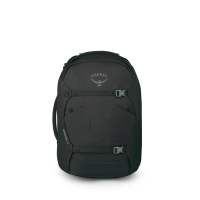
Osprey Fairview 40 Backpack
$289.00
Buy on Lazada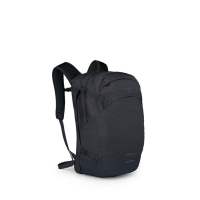
Osprey Nebula 32L Backpack
$219.00
Buy on Lazada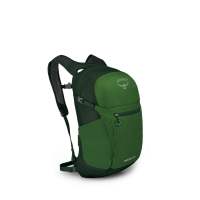
Osprey Daylite Plus 20L Everyday Backpack
$109.00
Buy on Lazada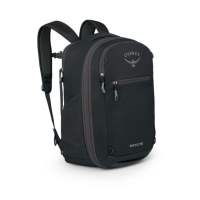
Osprey Daylite Expandable Travel Pack 26+6L
$149.00
Buy on Lazada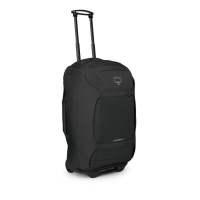
Osprey Sojourn Wheeled Travel Pack 60L
$619.00
Buy on Lazada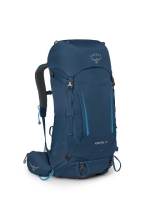
Osprey Kestrel 38 Backpack
$369.00
Buy on Lazada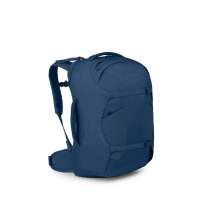
Osprey Farpoint 40 Backpack
$299.00
Buy on Lazada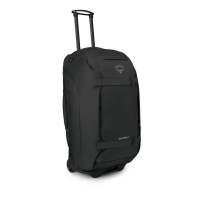
Osprey Sojourn Wheeled Travel Pack 80L
$669.00
Buy on LazadaAbout Osprey
Overview
Osprey, commonly referred to as Osprey, is an American outdoor equipment brand recognised for its technical backpacks, hiking packs, travel bags and everyday carry products. Founded in 1974 by Mike Pfotenhauer, the company evolved from a small custom backpack workshop in Santa Cruz, California, into a globally recognised specialist in pack design. Today, Osprey is part of Helen of Troy Limited, which acquired the company in December 2021 for approximately US$414.7 million. 2
| Category | Information |
|---|---|
| Brand | Osprey / Osprey Packs |
| Founded | 1974 |
| Founder | Mike Pfotenhauer |
| Origin | Santa Cruz, California, USA |
| Current base | Southwest Colorado, USA |
| Industry | Outdoor equipment, luggage and bags |
| Core products | Backpacks, hiking packs, travel bags, daypacks |
| Other products | Wheeled luggage, hydration products, accessories |
| Parent company | Helen of Troy Limited |
| Known for | Technical backpack design, fit, durability and outdoor-oriented innovation |
| Brand positioning | Premium outdoor / adventure gear |
Osprey describes its mission as: “We relentlessly innovate to ease your journey and inspire adventure.” Its stated values are innovation, integrity, quality, respect and stewardships. 1
Origins
The history of Osprey begins with founder Mike Pfotenhauer. Growing up in Oregon, Pfotenhauer was dissatisfied with the fit and functionality of commercially available backpacks. He learnt to sew from his mother and made his first backpack at just 16 years old. This early interest in building equipment himself eventually became the foundation of Osprey.
In 1974, Pfotenhauer established what became Osprey in Santa Cruz, California. He initially operated from a small retail shop at the front of his rental house, producing custom-fitted, made-to-order backpacks for backpackers and travellers. The business was highly hands-on; customers could discuss their requirements directly with Pfotenhauer, who would design and build the packs himself. This early emphasis on fit, customisation and direct interaction with users became a fundamental part of Osprey’s design philosophy. 1
Growth and milestones
Osprey’s early growth was driven less by mass production and more by technical experimentation. Key milestones in the company’s development include:
- 1974: Osprey is established in Santa Cruz.
- 1976: The company introduces a breathable mesh back panel designed to improve airflow and moisture management.
- 1977: Osprey begins offering custom-fit mountaineering packs with internal-frame construction.
- 1979: The company introduces the Outlander, expanding into travel-oriented packs.
- 1980s: Osprey begins expanding through specialist outdoor retailers.
- 1990: Production moves to a former GORE-TEX factory in Dolores, Colorado.
- 1993: Osprey introduces Isis, an early women’s-specific backpacking design.
- 1994: Pack production moves to Cortez, Colorado. 1
This period transformed Osprey from a small custom-pack maker into a specialist outdoor equipment company.
The Colorado connection
Although Osprey was founded in California, Colorado became central to its identity. In 1990, Mike Pfotenhauer and his wife and business partner Diane Wren moved production to Dolores, Colorado. Osprey established operations in a former GORE-TEX factory and developed a workforce of skilled sewing specialists, including many employees from the Navajo Nation. 1
Production subsequently moved to Cortez, Colorado, which became closely associated with the company. This relocation is significant because Osprey retained a strong connection with hands-on manufacturing and technical design even as the brand expanded internationally.
Product portfolio
Although the name Osprey is strongly associated with backpacks, the company’s product portfolio is considerably broader. Helen of Troy specifically identifies Osprey’s portfolio as covering hiking, mountaineering, skiing, climbing, mountain biking, trail running, commuting and school, in addition to adventure travel and wheeled luggage. 2
Hiking and backpacking
Hiking and backpacking represent Osprey’s traditional core. Products are designed for day hiking, multi-day backpacking, trekking, mountaineering and outdoor expeditions. These packs typically emphasise carrying comfort, ventilation, weight distribution, adjustability and organisation.
Everyday backpacks
Osprey also produces smaller packs aimed at commuting, university and school, urban use, everyday carry, cycling and active lifestyles.
Travel
Travel has been an important part of Osprey’s history since the introduction of the Outlander in 1979. Modern travel products include travel backpacks, adventure travel packs, wheeled luggage and travel accessories.
Specialised outdoor activities
The brand also develops equipment for specialised activities such as skiing and snowboarding, climbing, mountain biking, trail running and mountaineering.
Design philosophy
The central idea behind Osprey is that a backpack should work with the human body rather than simply carry things. While this concept is standard today, it has been an important distinction throughout Osprey’s history. The company developed its reputation through attention to fit, carry comfort, weight distribution, ventilation, accessibility and durability. Rather than treating a backpack simply as a container, Osprey approaches it as a piece of equipment.
Many Osprey products feature elaborate systems involving adjustable torso lengths, structured suspension, hip belts, sternum straps, ventilated back panels, load-management systems, multiple access points and specialised compartments. The company’s early history demonstrates that this emphasis on fit dates back to its custom-made packs in Santa Cruz. 1
Innovation and fit
Innovation is one of Osprey’s defining characteristics. The company has introduced numerous notable backpack-design concepts over its history, including breathable mesh back panels, adjustable suspension systems and ergonomic hip-belt designs. Its ErgoPull hip-belt closure, for example, was designed around easier tightening and improved ergonomics. 1 Osprey’s approach has generally been evolutionary rather than purely revolutionary, focusing on repeatedly improving how a backpack fits, carries, ventilates and organises equipment.
A key differentiator is the brand’s attention to body fit. A backpack weighing 15–20 kg can feel dramatically different depending on how its suspension system transfers weight between the shoulders, back and hips. Consequently, Osprey has historically offered different torso lengths, suspension systems, back-panel configurations, hip-belt designs, and men’s/unisex and women’s-specific fits. The introduction of Isis in 1993 was particularly notable as it represented an early dedicated women’s-specific pack design, helping to establish a broader industry trend towards designing outdoor equipment around different body shapes. 1
Notable product families
Osprey has produced numerous product lines over its history. Some of the most recognised families include:
- Atmos / Aura: Among Osprey’s best-known backpacking packs, associated with sophisticated suspension systems and designed for carrying substantial loads comfortably.
- Aether / Ariel: Occupying the more traditional backpacking category, with the Ariel line continuing Osprey’s long-running approach to women’s-specific fit.
- Talon / Tempest: Lighter, more versatile packs designed for activities ranging from hiking to fast-moving outdoor adventures.
- Daylite: Representing the smaller daypack and everyday end of the portfolio, illustrating Osprey’s expansion beyond hardcore backpacking into everyday outdoor and urban use.
- Farpoint / Fairview: Particularly important to Osprey’s travel identity, combining backpack-style carrying with features intended for airports, hostels, trains and longer trips.
Sustainability and the All Mighty Guarantee
Sustainability has become an increasingly important part of the company’s positioning. Osprey states its goal is to become “the most progressive, transparent and sustainable outdoor hardgoods brand worldwide.” 1 The brand’s sustainability philosophy is connected to product longevity, repairability, responsible materials, reducing environmental impact and designing products intended for long-term use. This logic is particularly relevant to backpacks: if a US$200–US$400 technical pack remains functional for many years rather than being repeatedly replaced, its environmental impact is potentially reduced.
One of Osprey’s most distinctive policies is its All Mighty Guarantee. Osprey states that it will repair any damage or defect for any reason free of charge, including products purchased decades ago. 1 This guarantee communicates confidence in durability, a commitment to repair and a long-term customer relationship. For outdoor equipment frequently subjected to abrasion, rain, dirt, rocks, airline baggage handling and heavy loads, the guarantee functions as both a customer-service programme and a statement about the brand’s philosophy towards product longevity.
Manufacturing history
Osprey has an unusual manufacturing history for a major outdoor brand. Its early products were handmade by the founder, and the company later developed production operations in Southwestern Colorado, where skilled sewing employees played an important role. 1 As Osprey grew into an international business, its manufacturing and supply chain inevitably became more global. This creates a distinct duality: Osprey’s identity is strongly rooted in American design heritage and Colorado, but the modern company operates within a global outdoor-products supply chain.
Acquisition by Helen of Troy
A major turning point occurred on December 30, 2021, when Helen of Troy Limited completed its acquisition of Osprey Packs for approximately US$414.7 million in cash. 2 Helen of Troy is a publicly traded consumer-products company whose portfolio includes brands in health, home, beauty and outdoor products. The acquisition placed Osprey alongside brands such as Hydro Flask within Helen of Troy’s broader portfolio. Importantly, Helen of Troy described Osprey as a longtime U.S. leader in technical and everyday packs, emphasising the brand’s outdoor credibility and product innovation rather than treating it as a generic luggage manufacturer. 2
Brand positioning and identity
Today, Osprey operates as a global outdoor and travel brand. Its product range spans ultralight trail running packs, daypacks, hiking backpacks, technical backpacking packs, mountaineering equipment, adventure travel packs and wheeled luggage. The brand sits at an intersection between technical outdoor equipment and mainstream travel and lifestyle products. Its official site currently emphasises activities including hiking, backpacking, day hiking, skiing and snowboarding, while continuing to develop travel and everyday products. 1
Osprey is broadly positioned as a premium technical outdoor brand. Its competitive advantage lies in a combination of ergonomics, technical design, outdoor credibility, durability, long-term repair support, product innovation and brand heritage. Competitors and adjacent brands include Deuter, Gregory, The North Face, Patagonia, Arc’teryx, Lowe Alpine and Black Diamond, although these brands have different strengths and product portfolios. Osprey’s particularly strong territory remains backpack engineering.
Key differentiators
- Backpack-first: Unlike many large outdoor brands selling clothing, footwear, tents and sleeping bags, Osprey has historically been much more specialised in carry systems and bags.
- Fit-focused: The company has spent decades developing suspension systems, body-specific fits and ergonomic carrying technologies.
- Technical but accessible: Products are technically capable but not exclusively aimed at professional mountaineers; a commuter can use an Osprey backpack just as easily as a thru-hiker uses a hiking pack.
- Long-term oriented: The All Mighty Guarantee reinforces the idea that an Osprey pack should be a long-term piece of equipment rather than disposable luggage.
- Strong heritage: The brand traces its identity directly back to a single person sewing custom backpacks in California in 1974. 1
If Osprey were described as a person, its personality would be practical, adventurous, technical, dependable and understated. It is generally not positioned as a fashion-first brand; instead, the underlying message is closer to “We build equipment so you can go farther.” This distinction explains why Osprey maintains a relatively low-key visual identity while retaining strong loyalty among outdoor users.
Cultural presence and anniversary
Osprey has become particularly recognisable among backpackers, hikers, travellers, outdoor enthusiasts, students, commuters, climbers, mountain bikers, skiers and trail runners. The brand’s products are seen in diverse environments, from multi-day treks to international airports and university campuses. This versatility is one reason Osprey has managed to expand beyond its original niche without abandoning its outdoor heritage.
In 2024, Osprey marked 50 years since its founding. The company’s anniversary messaging emphasised the continuity between its original handmade packs and its modern technical products, describing its heritage as a foundation for future innovation. 1 This highlights the most notable aspect of Osprey’s history: evolving from one person sewing custom backpacks in 1974 to a global outdoor brand with a half-century of backpack design experience in 2024, while keeping the underlying product category remarkably consistent.