Shop on Lazada
Osram products
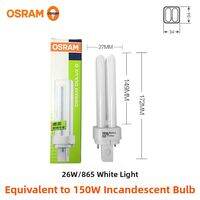
Compact Fluorescent Tube DD 2U 2Pins
$7.99
Buy on Lazada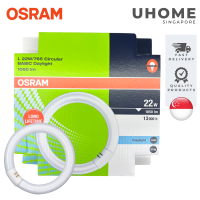
Osram T8 22w/ 32w/ 40w Fluorescent Circular Tube for ceiling light
$25.90
Buy on Lazada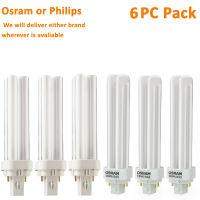
6 PC PACK | PLC- DULUX D 13W | 2 PIN | G24D | 840 | 865 | 827
$37.95
Buy on Lazada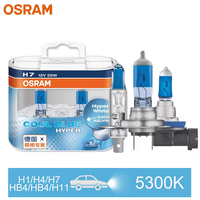
OSRAM H7 H4 H1 H11 HB3 9005 HB4 9006 Halogen Headlight Car Light Hi/Lo Beam 5300K 12V 55W Cool Blue Hyper White Bulb(2 Pieces)
$24.12$60.30
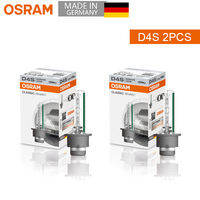
Osram | OSRAM Xenon HID CLASSIC D1S D2S D3S D4S Standard Lamps 66140 66240 66340 66440 CLC Original Car Head Light 4200K Warm White Pair
$115.00$172.51
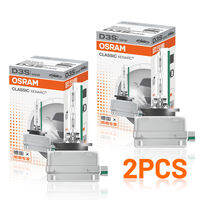
Osram | OSRAM Original D3S 66340CLC Xenon Headlight Bulbs CLASSIC HID 4200K Warm White Standard Car Lamps 35W OEM Plug and Play 1/2pcs
$122.49$183.74
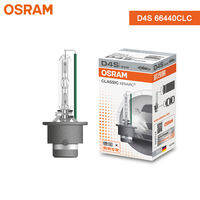
Osram | OSRAM D1S D2S D3S D4S D8S D2R D 66140 66240 66340 66440 CLC CLASSIC Original Spare Part 4200K HID Bulb Xenon White Car Headlight
$59.10$106.38
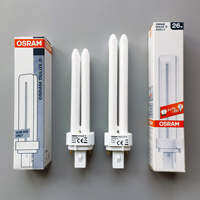
Osram 2P4P Plug And Play Tube 13W18W26W 2Pin 4Pin 2U Plug And Play Fluorescent Lamp Compact Energy Saving Fluorescent Lamp
$5.43
Buy on LazadaAbout Osram
Osram is a global lighting and photonics brand of German origin with a history dating back to the early 20th century. The name is widely associated with automotive lighting, professional illumination, lamps, LEDs, optical semiconductors and other light-based technologies. Today, the Osram brand forms part of ams OSRAM, a technology group specialising in light and sensor solutions.1
A critical distinction in understanding the modern brand is that “Osram” now functions primarily as a trademark rather than solely as the name of a standalone lighting manufacturer. Various segments of the former Osram lighting business have been separated, sold, spun off or placed under licensing agreements. Consequently, an Osram-branded bulb, automotive lamp, LED component or sensor may not necessarily be manufactured by the same corporate entity.
Basic information
| Item | Information |
|---|---|
| Brand | Osram |
| Origin | Germany |
| Brand registered | 1906 |
| Osram company founded | 1919 |
| Original industry | Electric lamps and lighting |
| Modern parent | ams OSRAM AG |
| Current headquarters of ams OSRAM | Premstaetten/Graz, Austria; co-headquarters in Munich, Germany |
| Main technological fields today | Light, LEDs, optical semiconductors, sensors, photonics |
| Major applications | Automotive, industrial, medical, consumer electronics, mobility, lighting |
| Current brand age | 120 years in 2026 |
| Official corporate website | ams OSRAM |
According to ams OSRAM, the Osram trademark was first registered in 1906, whilst the Osram company itself was established in 1919 through the consolidation of lamp businesses associated with Auergesellschaft, Siemens & Halske and AEG.2
Origin of the name
The name Osram is generally understood as a portmanteau derived from chemical elements central to early lamp technology:
- OS – osmium
- RAM – wolfram (the German term for tungsten)
Both materials were historically significant in incandescent lamp technology, particularly for filaments. The name therefore reflected the technological foundation of the company’s early business: high-performance electric light sources. The trademark was registered in 1906, initially in connection with incandescent and arc lamps.3
Origins: before Osram
The emergence of Osram was closely linked to the rapid development of electric lighting in Germany during the late 19th and early 20th centuries. Several companies were instrumental in developing and manufacturing electric lamps, most notably:
- Deutsche Gasglühlicht-Anstalt / Auergesellschaft
- Siemens & Halske
- AEG – Allgemeine Elektricitäts-Gesellschaft
These enterprises developed technologies spanning electric lamps, filaments, electrical equipment and industrial manufacturing. The Osram name emerged as a common brand during this period. In 1919, the lamp operations of these companies were consolidated into Osram GmbH KG. Historical records indicate 1 July 1919 as the founding date, with Siemens initially holding a 40% stake.
The 1920s: international expansion
During the 1920s, Osram increasingly established itself as a major international lighting manufacturer. A particularly significant development was the introduction of the BILUX lamp in 1925. BILUX was notable because a single automotive lamp could provide both low beam and high beam functions. This represented an early example of Osram developing lighting specifically tailored to automotive requirements and road safety.4
This automotive connection proved enduring; automotive lighting eventually became one of Osram’s strongest areas of expertise.
The 1930s–1950s: expansion beyond ordinary light bulbs
Technological development at Osram extended well beyond conventional incandescent lamps. During the 1930s, the company became involved in street lighting, fluorescent lighting, industrial lighting and specialty lamps. Fluorescent technology was introduced in 1936, whilst low-pressure sodium lamps were deployed to improve the efficiency of urban lighting.
In 1954, Osram introduced xenon short-arc lamps. These opened important markets in cinema projection, television, professional photography, stage lighting and high-intensity illumination. This marked a significant transition: Osram was evolving from a household light bulb manufacturer into a specialised lighting technology company.5
The 1960s: halogen lighting
A further milestone arrived with the adoption of halogen technology. Osram introduced halogen lamps to its portfolio in 1967. Capable of producing high light output from relatively compact packages, halogen lamps became particularly important for automobiles, projectors, professional lighting, photography and household applications. Halogen technology remained a mainstay of the lighting industry for decades before LEDs began replacing many traditional applications.6
The 1970s: the beginning of the LED era
The 1970s were pivotal as Osram began moving into semiconductor-based lighting. According to ams OSRAM’s historical account, coloured LEDs appeared in automotive applications around 1974, followed by early infrared LEDs in 1976.7
This represented a fundamental technological shift. Traditional bulbs create light by heating a filament or using gas discharge, whereas LEDs generate light through semiconductor physics. This distinction eventually allowed lighting to become smaller, more efficient, longer-lasting, electronically controllable and more easily integrated into digital systems.
The 1980s: energy-efficient lighting
During the 1980s, energy efficiency became an increasingly important driver of product development. Osram developed compact fluorescent products, including the DULUX family, helping to bring energy-saving lighting into homes and commercial environments.8 This period marked an important stage in the transition from traditional incandescent bulbs towards more efficient light sources.
The 1990s: white LEDs
One of Osram’s most significant technological milestones occurred in 1996 with the development of a white-converted LED. White LEDs were transformative because they made LED technology practical for a much wider range of applications. Instead of serving mainly as indicators or coloured light sources, LEDs could increasingly function as general-purpose illumination devices.9
This innovation helped drive the worldwide transition from incandescent to fluorescent/halogen and finally to LED lighting. Osram thus became one of the companies most deeply associated with the commercialisation and development of modern LED technology.
The 2000s: semiconductor lighting
During the 2000s, LED technology became increasingly sophisticated. Osram invested heavily in LED chips, semiconductor manufacturing, high-brightness LEDs, automotive LEDs, optical components, specialty lighting and display-related technologies. A notable milestone was the introduction of thin-film technology in 2001, which helped increase LED chip performance and brightness.10
This period marked Osram’s evolution from a traditional lamp manufacturer into an entity much closer to a semiconductor and photonics company.
Automotive lighting
Automotive lighting remains the area in which the Osram name is perhaps most recognisable to consumers. The brand has developed automotive products for two primary channels:
OEM applications
Lighting supplied to automobile manufacturers for installation during vehicle production.
Aftermarket applications
Products sold to consumers and workshops, including halogen headlight bulbs, HID/Xenon lamps, LED retrofit products, signal lamps, auxiliary lighting and automotive accessories.
Osram’s automotive organisation states that the brand has more than 110 years of automotive lighting history and that its products are used extensively by vehicle manufacturers worldwide.11 The brand’s automotive heritage began with the 1925 BILUX lamp and later expanded to encompass halogen, xenon, LED and sophisticated adaptive lighting technologies.12
Professional lighting
Osram has also historically been significant in professional lighting. Its technologies have been deployed in film and cinema, television studios, stage lighting, projectors, medical equipment, scientific instruments, industrial machinery and specialty illumination. The xenon short-arc lamp introduced in the 1950s was particularly influential in professional visual applications.13
Corporate restructuring
Understanding the modern Osram brand requires an appreciation of its corporate restructuring. The historical Osram business eventually became a publicly traded company known as Osram Licht AG. However, its businesses subsequently underwent major changes.
A particularly significant event was the 2016 spin-off of the general lighting business, which became LEDVANCE. LEDVANCE describes itself as having been created in 2016 through this separation.6 Consequently, the notion that Osram is a single company manufacturing every type of light bulb is no longer an accurate description of the modern industry structure.
Relationship with LEDVANCE
LEDVANCE became an independent lighting company following the spin-off. It inherited a large portion of Osram’s traditional general lighting business and developed products for residential, commercial and industrial lighting, as well as LED lamps, luminaires, smart lighting and building lighting.
However, the Osram brand retained enormous value. As a result, ams OSRAM licenses the Osram trademark to LEDVANCE for certain general lighting products. The partnership was originally established in 2016 and was extended in 2024 into the next decade.6 LEDVANCE remains an important licensee of the Osram brand for general lighting lamps.1213
Therefore, an Osram-branded household LED bulb sold today may be a LEDVANCE product using the Osram trademark under licence, rather than a product manufactured directly by ams OSRAM. This distinction is essential when researching Osram products.
Acquisition by ams
Another major transformation occurred when Austrian sensor and semiconductor company ams AG acquired Osram. The transaction was completed around 2020, and the combined organisation subsequently became ams OSRAM.14
The resulting company combined two complementary technological areas:
- Osram: light sources, LEDs, optical technologies, automotive lighting and photonics
- ams: sensors, semiconductor technology and sensing systems
Together, they created a company focused on the intersection of light and sensing.
ams OSRAM today
Today, ams OSRAM describes itself as a global leader in Digital Photonics. Its technologies cover both light generation (including LEDs, laser emitters, optical semiconductor devices, automotive lighting and specialty illumination) and light detection and sensing (including optical sensors, CMOS ICs, sensing systems and imaging-related technologies).15
The company states that its technologies serve markets including automotive and mobility, industrial, medical and health, mobile and wearables, consumer electronics, computing and lighting.16 This breadth explains why the modern Osram story extends far beyond light bulbs.
Digital Photonics
Photonics is the technology of generating, controlling, transmitting and detecting light. Whilst electronics uses electrons to carry information, photonics uses light. Modern photonics is applied in sensing, imaging, communication, distance measurement, machine vision, medical monitoring, automotive systems, augmented reality and robotics.
ams OSRAM describes its strategy as combining light and sensor technologies so that light can not only illuminate but also measure, transmit, detect and control.17 This represents the modern evolution of the Osram brand.
Modern automotive technology
Automotive lighting remains one of the most visible aspects of the Osram brand. Modern automotive technologies include LED headlights, adaptive headlights, intelligent front lighting, interior ambient lighting, rear lighting, signal lighting, laser-based lighting and digital lighting systems.18
Modern vehicle lighting is increasingly becoming an electronic and software-controlled system rather than simply a bulb. For example, individually controllable LEDs allow a vehicle to dynamically change its light distribution, making light part of the vehicle’s information and safety system. ams OSRAM is also developing technologies for newer automotive applications, including advanced interior lighting and optical systems.19
Applications beyond automobiles
The modern technology portfolio extends into numerous fields beyond automotive:
- Consumer electronics: Optical systems used in devices such as smartphones and wearables.
- Medical: Light and sensing technologies supporting physiological monitoring and medical devices.
- Industrial: Optical sensors and emitters used for automation, machine vision, measurement, robotics and industrial inspection.
- Mobile and wearables: Optical components used for sensing and biometric functions.
- AR/VR: Light-emitting and sensing technologies that are critical components of augmented and virtual reality systems.
These areas illustrate the shift from a “lighting company” towards a “light and sensing technology company”.20
Major technology categories
The brand’s history can be categorised into several technological generations:
| Era | Main Osram technology |
|---|---|
| Early 1900s | Incandescent and arc lamps |
| 1920s | Automotive lamps |
| 1930s | Fluorescent and efficient street lighting |
| 1950s | Xenon and specialty lamps |
| 1960s | Halogen |
| 1970s | LEDs and infrared LEDs |
| 1980s | Compact fluorescent / energy-saving lamps |
| 1990s | White LEDs |
| 2000s | High-performance LED and semiconductor technology |
| 2010s | Intelligent/connected lighting and optical systems |
| 2020s | Digital photonics, light + sensing |
This technological progression essentially charts the history of Osram: from making light, to controlling light, to using light as information.21
Brand reputation
Osram has historically built its reputation around German engineering, technical precision, reliability, high-quality light sources, automotive expertise, innovation and professional-grade products. ams OSRAM explicitly describes the Osram brand as being associated with quality, reliability and innovation.22
For many consumers, the brand is especially recognisable due to automotive bulbs and lighting products. For engineers and industrial customers, however, Osram represents something considerably broader: semiconductor light sources, optical technologies, sensors and photonics.
Distinguishing brand ownership and manufacturing
It is important to emphasise that Osram-branded products encountered today may originate from different corporate entities. LEDVANCE is an independent lighting company that emerged from Osram’s general lighting business in 2016. It maintains a licensing relationship with ams OSRAM allowing it to use the Osram trademark for specified general lighting products.23
In 2024, the companies announced an extension of the partnership beyond 2026 and into the following decade, covering general lighting lamps and certain luminaires.24 Therefore, when evaluating a particular Osram product, it is useful to verify who owns the trademark, who manufactured the product, who the licensee is and which market or region the product is intended for, as these answers may differ.
Brand versus company structure
The modern situation can be summarised as follows:
- Historically: Osram was a German lighting company.
- Today: Osram is a major global lighting and photonics brand.
- Corporate technology company: ams OSRAM is the company that owns the Osram brand and develops advanced light and sensor technologies.25
- General lighting: LEDVANCE is an independent lighting company that licences the Osram brand for specified general lighting products.
This distinction prevents confusion when examining modern Osram packaging and corporate information.
120th anniversary
The year 2026 marks 120 years of the Osram brand. ams OSRAM is celebrating the anniversary from the brand’s 1906 trademark registration through to its modern role in Digital Photonics. The company describes this evolution as a journey from the electric light bulb to highly integrated lighting and sensing technologies.
The anniversary theme is essentially “Making the future brighter.” The company positions Osram’s heritage not simply as historical lighting expertise but as the foundation for future technologies involving light, sensing, mobility, healthcare, robotics, AI and smart devices.
Major milestones
- 1906: Osram trademark registered.
- 1919: Osram lamp company established through the consolidation of lamp businesses associated with AEG, Siemens & Halske and Auergesellschaft.
- 1925: BILUX automotive dual-filament lamp introduced.
- 1936: Fluorescent lighting introduced.
- 1954: Xenon short-arc technology introduced.
- 1967: Halogen technology becomes an important part of the portfolio.
- 1970s: Osram expands into LED and infrared semiconductor technologies.
- 1980s: Energy-saving fluorescent products become increasingly important.
- 1996: White-converted LED development marks a major LED milestone.
- 2001: Thin-film LED technology advances brightness and performance.
- 2016: Osram’s general lighting business is spun off as LEDVANCE.
- 2020/21: ams acquires Osram and the combined company becomes ams OSRAM.
- 2024: ams OSRAM and LEDVANCE extend their Osram trademark licensing partnership.
- 2026: Osram celebrates 120 years as a brand.
Historical significance
Osram’s significance extends beyond its status as a famous light bulb brand. Its history mirrors the development of modern artificial light: from incandescent lamps to gas-discharge lamps, fluorescent lamps, halogen, LEDs, semiconductor light sources, intelligent lighting, optical sensing and digital photonics.
Osram has evolved from a company whose fundamental product was light itself into a technology ecosystem in which light can also carry information. This concept lies at the heart of modern ams OSRAM.
References
- About us | ams OSRAM
- 120 Years of the OSRAM Brand | ams OSRAM | ams OSRAM
- FAQ | ams OSRAM
- OSRAM Automotive | OSRAM Automotive
- ams OSRAM General Lighting Products Licensing Program | ams OSRAM
- ams OSRAM and LEDVANCE extend global brand partnership into the next decade | LEDVANCE
- ams OSRAM is a global leader in innovative light and sensor solutions | ams OSRAM
- 120 Years of Progress Through Light | ams OSRAM | ams OSRAM
- OSRAM Homelighting – Grounding Page
- OSRAM Homelighting – Grounding Page
- 100 Years of OSRAM Automotive | Lighting Innovation | ams OSRAM
- ams OSRAM and LEDVANCE extend global brand partnership into the next decade | LEDVANCE
- LEDVANCE
- 100 years of OSRAM Automotive | OSRAM Automotive
- OSRAM Global | Light is OSRAM
- Automotive Applications | OSRAM Automotive
- Insist on OSRAM – the No.1 in Automotive Lighting | OSRAM Automotive
- OSRAM Global | Light is OSRAM
- 120 Years of the OSRAM Brand | ams OSRAM | 艾迈斯欧司朗 ams OSRAM
- FAQ | 艾迈斯欧司朗 ams OSRAM
- ams OSRAM is a global leader in innovative light and sensor solutions | ams OSRAM
- 120 Jahre OSRAM Marke | ams OSRAM | ams OSRAM
- ams OSRAM is a global leader in innovative light and sensor solutions | ams OSRAM
- 100 years of OSRAM Automotive | OSRAM Automotive
- OSRAM Automotive | OSRAM Automotive