Shop on Lazada
Pan Macmillan products
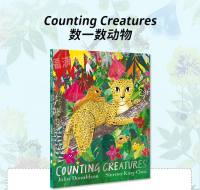
【SG Stock Authentic】Julia Donaldson picture book collection: The Gruffalo/Room on the Broom/The Snail and the Whale
$17.41$22.00
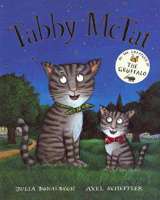
Collections of Julia Donaldson picture books for 3- to 8-year-olds including The Gruffalo Cave Baby Room on the Broom The Snail and the Whale Superworm Zog The Paper Dolls The Smartest Giant in Town Monkey Puzzle ........
$7.98$15.00
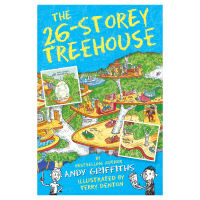
【SG Stock Authentic】The Treehouse collection:#13-91104130,117143#156,#169 Storey Treehouse Original paperback
$11.23$16.90

Agentssuit04 Sew Much Trouble - Paperback - English - 9781035068067
$23.60
Buy on Lazada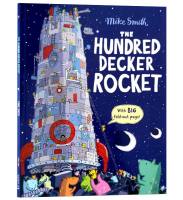
【Ready Stock】The Hundred Decker Bus/Rocket, Childrens picture book by Mike Smith Develop imagination
$12.23$13.90
![[SG STOCKS] Julia Donaldson & Axel Scheffler board books](https://sg-live.slatic.net/p/a0bab4d0101c658c4fe3ac99706ee029.jpg_200x200q80.jpg)
[SG STOCKS] Julia Donaldson & Axel Scheffler board books
$11.00$13.00

The 39-Storey Treehouse by Andy Griffiths (author) Terry Denton (illustrator) | Paperback | Pan Macmillan | 9781035044450
$22.89$29.79

The Cat Who Saved Books H Stencilled Edge - Hardcover - English - 9781035072552
$37.00
Buy on LazadaAbout Pan Macmillan
Overview
Pan Macmillan is a prominent British trade publishing company and the UK consumer publishing arm associated with the historic Macmillan name. It publishes a diverse range of titles including fiction, non-fiction, children’s books, classics, science fiction, fantasy, literary works, business books, cookbooks, and lifestyle titles. The company’s origins trace back to 1843, when Scottish brothers Daniel Macmillan and Alexander Macmillan established the Macmillan publishing house in London 1.
Today, Pan Macmillan describes itself as the fourth-largest publisher in the United Kingdom. It operates as part of the wider Macmillan Publishers group and is ultimately owned by the German family-owned Holtzbrinck Publishing Group.
| Attribute | Details |
|---|---|
| Type | Trade / consumer book publisher |
| Industry | Publishing |
| Origins | 1843 |
| Founders | Daniel Macmillan and Alexander Macmillan |
| Country of origin | United Kingdom |
| Main market | UK and international English-language publishing |
| Parent group | Holtzbrinck Publishing Group |
| CEO | Joanna Prior |
| Major imprints | Pan, Macmillan, Picador, Bluebird, Tor, Mantle, Macmillan Children’s Books, Kingfisher and others |
| Headquarters / UK registered office | Basingstoke, Hampshire, UK |
| International presence | UK, Australia, India, South Africa and connections with Macmillan businesses internationally |
Pan Macmillan maintains offices in the UK, Australia, South Africa, and India, while Macmillan USA operates as a sister company headquartered in New York.
Distinction from the wider Macmillan group
It is important to distinguish that Pan Macmillan is not synonymous with the entire Macmillan publishing empire. The name “Macmillan” refers to a broader international publishing heritage where different historical divisions have evolved into separate entities:
- Pan Macmillan is specifically associated with trade and consumer books in the UK.
- Macmillan Publishers is the wider international trade-publishing group with operations in multiple countries.
- Macmillan Education focuses on educational publishing.
- Macmillan Learning operates primarily in higher education and learning technology.
- Springer Nature encompasses major academic and scientific publishing operations historically connected with Macmillan, including Palgrave Macmillan and Nature.
Consequently, books bearing the Pan, Macmillan, Picador, or Tor logos in Britain are typically Pan Macmillan publications, even though these individual brands maintain distinct identities.
History
Origins: Macmillan & Co., 1843
The company was founded by brothers Daniel Macmillan (1813–1857) and Alexander Macmillan (1818–1896). Originally from the Isle of Arran in Scotland, they established their publishing business in London in 1843. Rising from relatively modest circumstances, their success became a significant chapter in British publishing history 1. Daniel managed the business operations, while Alexander cultivated its literary and editorial reputation.
Macmillan quickly became associated with leading Victorian writers and intellectuals. Notable authors included Lewis Carroll, Alfred, Lord Tennyson, Thomas Hardy, Rudyard Kipling, Christina Rossetti, Henry James, H. G. Wells, Charles Kingsley, and Thomas Hughes.
Early literary and scholarly significance
From the nineteenth century onwards, Macmillan developed lists covering literature, poetry, children’s books, education, science, reference, history, economics, and politics. Historically significant publications included Lewis Carroll’s Alice’s Adventures in Wonderland and major works by Tennyson, Hardy, and Kipling 2.
The company also played a pivotal role in scholarly and scientific publishing. The Macmillan tradition supported the establishment of the scientific journal Nature in 1869 and major reference works such as the Grove Dictionary of Music and Musicians 4. This combination of commercial books, literary publishing, education, and scholarship defined the wider Macmillan business.
Twentieth-century expansion
During the twentieth century, Macmillan expanded significantly beyond its original British operation. Under the influence of Harold Macmillan, the former British Prime Minister who later served as chairman, the company grew its educational, academic, and international publishing activities, establishing operations in markets across Africa, Asia, and elsewhere 5. By this period, Macmillan had evolved from a Victorian London publishing house into an international group covering trade books, education, academic publishing, scientific publishing, and reference works.
Pan Books and the creation of Pan Macmillan
The “Pan” element of the modern company has a separate lineage. Pan Books was established in 1944 and became one of Britain’s most important popular paperback publishers 3. Initially independent, it later joined a consortium involving Macmillan before becoming wholly owned by Macmillan in 1987 6. Pan was renowned for mass-market paperbacks in genres such as crime, thrillers, adventure, romance, science fiction, historical fiction, and popular non-fiction, dramatically expanding access to popular fiction in post-war Britain.
The modern entity, Pan Macmillan, emerged in 1990 when Pan merged with Macmillan’s Trade division 7. This merger combined Macmillan’s literary heritage with Pan’s mass-market paperback expertise and an increasingly international infrastructure.
Holtzbrinck ownership
In the late twentieth century, the Macmillan family publishing businesses became part of the Holtzbrinck Publishing Group, a large family-owned German media company based in Stuttgart. By 1999, the various companies founded by the Macmillan family were consolidated under Holtzbrinck ownership 8. Today, Pan Macmillan sits within this international network under the structure: Holtzbrinck Publishing Group → Macmillan Publishers → Pan Macmillan (UK trade publishing).
Imprints and brand architecture
Pan Macmillan organises its publishing activities through numerous imprints, collectively referred to as the “House of Pan Macmillan”. Each imprint possesses a distinct editorial identity, genre focus, and marketing strategy 20. Current brands include:
- Pan
- Macmillan
- Picador
- Tor
- Mantle
- Bluebird
- Macmillan Children’s Books
- Campbell Books
- Kingfisher
- Macmillan Collector’s Library
- Macmillan Business
- One Boat
- Harriman House
- First Ink
Pan
Pan is arguably the most commercially recognisable division and is described as the largest within Pan Macmillan 6. A major paperback imprint, it covers fiction and non-fiction across popular genres including crime, psychological fiction, international thrillers, historical fiction, women’s fiction, memoir, business, and celebrity autobiography. Authors associated with Pan include Ken Follett, Danielle Steel, David Baldacci, Lucinda Riley, Ann Cleeves, C. J. Sansom, Kate Morton, Olivie Blake, Louis Theroux, and Elton John.
Macmillan
The Macmillan imprint represents the continuation of the original publishing identity and is a major UK hardback publisher 7. Its list features internationally successful writers such as Ken Follett, Danielle Steel, Peter James, Lucinda Riley, Ann Cleeves, David Baldacci, C. J. Sansom, Kate Morton, Kate Mosse, Adrian Tchaikovsky, and Olivie Blake. Non-fiction authors include Elton John and Louis Theroux. While there is considerable overlap with Pan, Macmillan is particularly strong in commercial hardback publishing.
Picador
Picador is the company’s primary literary imprint, publishing literary fiction, poetry, narrative non-fiction, and culturally significant works 8. It emphasises literary quality, distinctive authorial voices, international writers, contemporary fiction, and serious non-fiction. Through Picador, Pan Macmillan maintains a strong presence in the prize-oriented literary market alongside its commercial bestsellers.
Tor
Tor is Pan Macmillan’s dedicated science fiction, fantasy, and speculative fiction imprint 9. It is an internationally recognised brand with sister operations in the United States and Germany. The UK list includes authors such as Cassandra Clare, Travis Baldree, V. E. Schwab, John Scalzi, Veronica Roth, Adrian Tchaikovsky, Olivie Blake, and T. J. Klune. Reflecting the growth of romantasy, the UK operation has also developed specialised imprints such as Tor Bramble for fantasy romance.
Bluebird
Established in 2015, Bluebird is a major non-fiction imprint focused on health, wellbeing, fitness, food, cookery, personal development, parenting, sustainability, lifestyle, and memoir 10. Notable successes include the Pinch of Nom series and books by Joe Wicks. Bluebird demonstrates the company’s ability to translate personalities and lifestyle trends into major commercial publishing programmes.
Children’s publishing
Macmillan Children’s Books is one of the UK’s best-known children’s publishers 11. Its catalogue spans babies, toddlers, young children, middle-grade readers, and teenagers. Key properties include Alice’s Adventures in Wonderland, Dear Zoo, and The Gruffalo. Associated children’s imprints include Campbell Books, First Ink, Kingfisher, Rocket Fox, and Two Hoots. Children’s publishing constitutes a major component of Pan Macmillan’s overall business rather than a peripheral activity.
Publishing portfolio
Pan Macmillan’s portfolio is notably broad, encompassing:
- Fiction: Literary fiction, romance, historical fiction, crime, thrillers, fantasy, science fiction, horror, women’s fiction, commercial fiction, and book-club fiction.
- Non-fiction: Memoir, biography, autobiography, politics, history, science, business, popular psychology, lifestyle, health, cooking, sport, and celebrity books.
- Children’s books: Picture books, board books, early readers, middle-grade fiction, young adult fiction, illustrated books, and graphic novels.
- Specialist publishing: Classics, poetry, speculative fiction, business, collector’s editions, and educational/reference-related publishing.
This breadth provides a significant competitive advantage. Historically, the Macmillan tradition published writers including Lewis Carroll, Alfred Lord Tennyson, Thomas Hardy, Rudyard Kipling, Christina Rossetti, Henry James, H. G. Wells, W. B. Yeats, and John Maynard Keynes 15. Contemporary imprints work with authors such as Ken Follett, Danielle Steel, David Baldacci, Kate Morton, Ann Cleeves, Peter James, Adrian Tchaikovsky, Olivie Blake, Louis Theroux, and Elton John 16.
Formats and international reach
Pan Macmillan publishes across multiple formats including hardbacks, paperbacks, ebooks, audiobooks, digital editions, illustrated books, special editions, and international editions. The company actively builds audiences for authors across these formats and licenses rights internationally 17. A successful title may generate revenue streams spanning print, digital, audio, translation, film/TV adaptation, and merchandise.
Although strongly identified with Britain, Pan Macmillan is not purely a UK operation. It maintains offices in the UK, Australia, India, and South Africa, and collaborates with the wider Macmillan network globally 18. Rights departments work with publishers across Europe, North America, and other territories to sell translation and publishing rights, enabling authors to become international publishing properties.
Relationship with Macmillan USA
Pan Macmillan UK and Macmillan Publishers in the United States belong to the same Holtzbrinck family but are distinct entities. Macmillan Publishers US has its own divisions and imprints, including Henry Holt, Farrar, Straus and Giroux, Flatiron Books, Celadon Books, St. Martin’s Press, Macmillan Audio, and Macmillan Children’s Publishing Group. The two sides cooperate internationally on authors, rights, and distribution while maintaining separate editorial and commercial operations.
Leadership and corporate philosophy
As of 2026, the CEO of Pan Macmillan is Joanna Prior 12. She joined in April 2022 following a long career at Penguin Random House, including thirteen years as managing director of Penguin General Books. In late 2025, she was appointed an Officer of the Order of the British Empire (OBE) for services to publishing and literacy 13. Her leadership emphasises readership, literacy, publishing sustainability, diversity and inclusion, cultural impact, and reaching new audiences. The company highlighted reading and literacy as strategic priorities during the UK’s National Year of Reading in 2026 14.
Pan Macmillan’s stated mission is to publish authors and illustrators successfully and sustainably for the widest possible readership. It views books as a means of enriching lives, building empathy, promoting understanding, encouraging reading, and contributing to cultural conversation. Three key areas for social impact have been identified: building an inclusive community, protecting the planet, and reading for life 18.
Sustainability is integral to corporate strategy, encompassing both environmental considerations and the long-term viability of the publishing business 19. Environmental issues addressed include paper sourcing, printing, transportation, packaging, waste management, unsold stock, energy use, and supply-chain management.
Market position
Pan Macmillan occupies a distinctive position in the British book industry due to several factors:
- Historical prestige: Its ancestry reaches back to 1843, providing nearly two centuries of publishing history 1.
- Commercial scale: It is currently one of the UK’s largest trade publishers.
- Genre diversity: It publishes across literary fiction, poetry, thrillers, romance, fantasy, cookery, and children’s books.
- Strong brands: Imprints such as Pan, Macmillan, Picador, Tor, Bluebird, and Macmillan Children’s Books each possess recognisable identities.
- International reach: Authors can access markets beyond Britain through international rights and the Macmillan network.
- Literary and commercial balance: The company operates simultaneously in high-literary and mass-market publishing.
In the UK market, Pan Macmillan competes with groups such as Penguin Random House, Hachette UK, HarperCollins UK, and Simon & Schuster UK. Its competitive identity is rooted in its Macmillan heritage, while its imprint structure allows it to compete across multiple categories.
| Area | Pan Macmillan strength |
|---|---|
| Commercial fiction | ★★★★★ |
| Literary fiction | ★★★★★ |
| Fantasy/SF | ★★★★★ |
| Children’s publishing | ★★★★★ |
| Commercial non-fiction | ★★★★★ |
| Paperback publishing | ★★★★★ |
| Classics | ★★★★☆ |
| Academic publishing | Not its primary focus |
| Educational publishing | Not its primary focus |
While the wider Macmillan family includes major academic and educational businesses, Pan Macmillan itself remains primarily a trade and consumer publisher. It is best understood not as a single book brand, but as a large publishing house containing a family of specialised brands backed by nearly two centuries of history 21.
References
- Our Story – Pan Macmillan
- Celebrating 70 years of Pan Paperbacks – Pan Macmillan Trade
- Pan Books
- Bloomsbury Chapter conference ‘Faithful to our task’ celebrates 175 years of Macmillan publishing – Pan Macmillan Trade
- Pan Macmillan x Springpod
- Pan – Pan Macmillan
- Macmillan – Pan Macmillan
- Picador – Pan Macmillan
- Tor – Pan Macmillan
- Bluebird – Pan Macmillan
- Macmillan Children’s Books – Pan Macmillan
- Leadership team – Pan Macmillan
- Pan Macmillan CEO Joanna Prior awarded OBE in King’s New Year Honours List – Pan Macmillan
- Pan Macmillan supports National Year of Reading in 2026 – Pan Macmillan
- “How The Pioneering Macmillan Brothers Built a Publishing Powerhouse”: Sarah Harkness of the Macmillan brothers – Pan Macmillan
- Macmillan celebrates 175 years of publishing in 2018 – Pan Macmillan Trade
- Pan Books at 70: Authors, Their Sales and International Rights Success
- About Pan Macmillan – Pan Macmillan
- Pan Books – Pan Macmillan
- UK Imprints – Pan Macmillan
- Picador – Pan Macmillan