Shop on Lazada
pechoin products
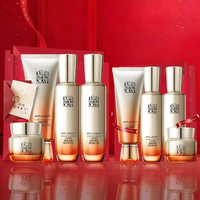
pechoin | Anti-wrinkle Firming Moisturizing Lotion Set
$135.48$166.21
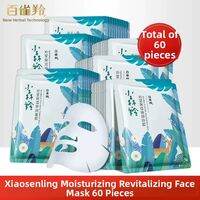
pechoin | Deep Hydration Moisturizing Facial Mask
$37.13$50.42
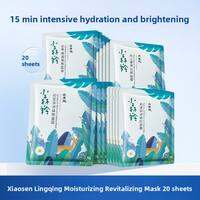
pechoin | Student Hydrating Moisturizing Whitening Nourishing Facial Mask
$14.64$35.83
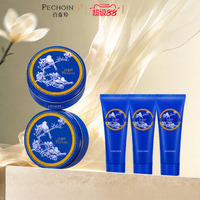
pechoin | Moisturizing Non-greasy Sensitive Skin Repairing Body Lotion
$61.71$266.27
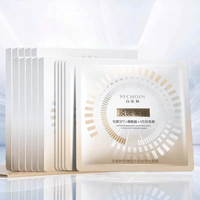
pechoin | Hydrating Tightening Anti-Aging Face Mask
$58.07$101.26
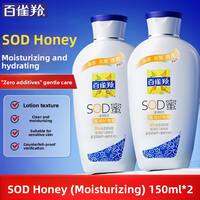
pechoin | Moisturizing Anti-Wrinkle Brightening Face Cream
$11.77$28.60
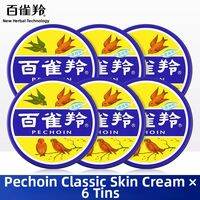
pechoin | Moisturizing Face Cream
$17.97$20.68
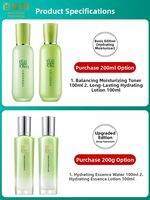
pechoin | Hydrating and Moisturizing Skincare for Men and Women with Herbal Ingredients Essence Water Essence Lotion
$39.46$51.19
About pechoin
Pechoin (百雀羚; pinyin: Bǎiquèlíng) is a Chinese skincare and cosmetics brand headquartered in Shanghai, China. Established in 1931 by Gu Zhimin (顾植民), it stands as one of the longest-running domestic skincare brands in China. The label is historically associated with traditional Chinese botanical formulations, Shanghai cultural heritage, and contemporary cosmetic science 1.
In the current market, Pechoin positions itself around the integration of “Oriental botanical wisdom” with modern technology. Its product portfolio encompasses cleansers, creams, serums, eye care treatments, and sun protection 2.
Basic information
| Field | Information |
|---|---|
| Brand name | Pechoin / 百雀羚 |
| Chinese pronunciation | Bǎiquèlíng |
| Founded | 1931 |
| Founder | Gu Zhimin (顾植民) |
| Origin | Shanghai, China |
| Industry | Cosmetics and personal care |
| Main focus | Skincare, beauty and personal care |
| Corporate entity | Shanghai Pechoin Daily Chemical Co., Ltd. (上海百雀羚日用化学有限公司) |
| Brand positioning | Chinese heritage + botanical skincare + modern technology |
| Official website | Pechoin official website |
The company’s official communications describe Pechoin as a long-established Chinese skincare brand founded in 1931, emphasising its synthesis of botanical traditions and contemporary technological innovation 3.
Name and meaning
The Chinese name 百雀羚 incorporates imagery traditionally associated with birds and nature:
- 百 — hundred
- 雀 — sparrow or bird
- 羚 — antelope
According to the brand’s historical accounts, the earlier trademark “百雀 / Peh Chao” was inspired by the concept of “a hundred birds gathering around and celebrating the phoenix”. This nomenclature was selected to convey auspiciousness, happiness, and an approachable character appealing to the mass market 4. This avian imagery remains a central component of Pechoin’s visual identity and its connection to traditional Chinese aesthetics.
Foundation in 1931
Pechoin traces its origins to 1931, when Gu Zhimin established the Fubeikang Cosmetics Company (富贝康化妆品有限公司) in Shanghai. The original factory was situated on what is now Changle Road, initially producing cosmetics such as face powder under the “Peh Chao” / “百雀” trademark 5.
By 1936, operations had relocated to Peifuli on Chongde Road, and the product range expanded to include creams and powders. In that same year, the trademarks “Peh Chao” and “Peh Chao Cream” were formally registered 6. Unlike many contemporary Chinese beauty companies that emerged during the 2000s or 2010s, Pechoin has direct roots in the pre-war Shanghai cosmetics industry.
The famous Pechoin Cold Cream
A pivotal moment in the brand’s early history occurred in 1939. Company records state that Gu Zhimin received a cold-cream formula from an associate and conducted extensive experimentation, eventually developing Pechoin Cold Cream. This is described by the company as China’s first domestically produced cold cream 7.
The product achieved significant commercial success due to its affordable pricing, moisturising and skin-protective properties, distinctive packaging, and growing reputation among Shanghai consumers. It became competitive with international products such as Nivea, establishing Pechoin as a leading Chinese cold-cream brand 8. The round blue-and-yellow metal container associated with this product remains an iconic element of the brand’s visual heritage.
Pechoin in 1930s–1940s Shanghai
The brand’s early development was intrinsically linked to the cosmopolitan culture of Republican-era Shanghai. Pechoin gained popularity among fashionable consumers, with Chinese actress Chen Yunshang (陈云裳) promoting the brand in newspaper advertisements 9.
In 1946, Pechoin participated in and sponsored the Miss Shanghai pageant, with several contestants promoting its products 10. By the late 1940s, the company reportedly employed several dozen staff members, predominantly women, who became informally known as the “Peh Chao Ladies”. This era cemented a dual identity for the brand: Shanghai glamour combined with mass-market accessibility.
Expansion outside China
During the 1950s and 1960s, Pechoin began entering international markets. The brand participated in the Leipzig Fair in Germany in the late 1950s and subsequently exported products to East Germany.
In 1960, the brand was registered in Hong Kong for a diverse range of consumer goods, including cosmetics, toothpaste, soap, cleaning products, and other personal-care items. Distribution also expanded towards markets in Malaysia and Indonesia 11. This international activity is notable as it predates the modern global expansion of Chinese beauty brands by several decades.
State-owned era and industrial transformation
Following the establishment of the People’s Republic of China in 1949, Pechoin’s corporate structure underwent substantial changes. The original business was integrated into China’s state-owned and joint public-private industrial system. In 1962, the company became associated with Shanghai Daily Chemical Factory No. 2 (上海日用化学二厂).
Despite the shifting economic and political environment affecting China’s cosmetics industry over subsequent decades, Pechoin continued product development. During the 1980s and 1990s, the brand expanded its focus beyond basic skin protection to encompass concepts of skincare, nourishment, and conditioning 12. A notable product from this period was Phoenix Pearl Cream (凤凰珍珠霜), regarded as a significant high-end daily-chemical skincare product of its time 13.
Crisis during the 1990s
The 1990s presented significant challenges for Pechoin. As China’s economy liberalised, major international cosmetic companies entered the market, offering consumers a vastly wider selection of imported beauty products.
Pechoin struggled to compete against these multinational corporations, leading to restructuring of its original business. Historical accounts describe this period as one of major decline prior to the brand’s revival as a private enterprise around the turn of the millennium 14. Consequently, Pechoin’s later success represents a brand revival rather than a continuation of uninterrupted market dominance.
Revival in the 2000s
Around 2000, Pechoin entered a new phase of development as a private company. The revitalised brand sought to transform from an old-fashioned household name into a modern Chinese beauty label.
Rather than abandoning its historical identity, Pechoin increasingly centred its marketing on Chinese culture and traditional botanical ingredients. Company histories describe the 2000s as a period when classic products returned to Chinese households and herbal skincare lines gained prominence 15. This strategic pivot became a defining characteristic of the modern brand.
The rise of “Chinese botanical skincare”
A core component of Pechoin’s contemporary positioning is herbal or botanical skincare. This concept combines traditional Chinese botanical knowledge with contemporary cosmetic formulation and research. Rather than presenting itself solely as a traditional medicine-inspired company, Pechoin frames its offerings as modern cosmetics informed by Chinese botanical traditions.
Current official positioning explicitly emphasises “东方草本智慧” (Oriental botanical wisdom) alongside modern technology 16. This differentiation distinguishes Pechoin from multinational brands whose marketing has historically focused on European or Western cosmetic heritage.
Brand aesthetics
Pechoin is widely recognised for its utilisation of Chinese visual culture. Common branding elements include birds, flowers, blue-and-white porcelain, traditional decorative motifs, jade, classical Chinese colours, Shanghai heritage references, and retro packaging.
This strategy aligns with the broader Chinese “guochao” (国潮) movement, wherein contemporary brands reinterpret traditional culture for modern consumers. Current collections explicitly incorporate blue-and-white porcelain and jade as cultural symbols; for instance, the Heritage Blue & White Porcelain collection features porcelain-inspired packaging alongside traditional floral and bird imagery 17.
Product portfolio
While primarily a skincare company, Pechoin’s historical portfolio has been broader. Contemporary categories listed on its website include:
- Cleansers
- Serums
- Creams
- Eye & lip care
- Sun protection
- Gift sets and heritage collections 18
Across its wider brand ecosystem, Pechoin operates multiple sub-lines and product families, functioning more like a multi-line beauty group than a single-product label. These include:
- Pechoin Herbs / 百雀羚草本
- Sansen / 三生花
- Flavor / 气韵
- Bluemyth / 海之秘
- Lucky Charm / 小雀幸
- Pechoin Men / 百雀羚男士
- Beili / 蓓丽
Core product philosophy
Pechoin’s current philosophy comprises three primary layers:
Chinese botanical heritage
The brand draws upon traditional Chinese approaches to botanical ingredients and herbal beauty.
Modern cosmetic science
Increasing emphasis is placed on formulation technology, ingredient research, and laboratory development rather than relying exclusively on traditional imagery. For example, the New Classics line highlights technologies such as a “5D glycerin hydration matrix” and combinations of modern skincare ingredients 19.
Chinese cultural aesthetics
Product experiences are designed to communicate Chinese cultural identity through packaging, colour palettes, imagery, and storytelling.
This combination defines the modern Pechoin proposition: heritage, botanicals, science, and Chinese aesthetics.
Target consumers
Historically, Pechoin was strongly associated with ordinary Chinese households and mature generations. Its modern strategy targets a broader demographic, including:
- Traditional Pechoin customers
- Younger Chinese consumers
- Consumers interested in C-beauty
- Consumers attracted to Chinese cultural aesthetics
- Skincare users seeking botanical formulations
- International consumers looking for Chinese beauty products
This creates a dual identity where Pechoin functions simultaneously as a heritage brand and a contemporary C-beauty brand.
Pechoin and C-beauty
C-beauty refers generally to China’s modern cosmetics and beauty industry. Pechoin occupies a distinct position within this sector as it predates the contemporary movement by many decades. While numerous well-known Chinese beauty companies emerged during the internet era, Pechoin traces its origins to 1931.
This provides the brand with nearly a century of accumulated heritage, an advantage lacking in newer C-beauty companies. The ongoing challenge involves making this heritage relevant to younger consumers without appearing antiquated.
Modernization of the brand
The brand’s revival involved updating both products and marketing language. Rather than relying exclusively on nostalgia, the company combines historical references with contemporary packaging, digital marketing, scientific claims, influencer collaborations, younger product lines, premium gift collections, and international-facing websites.
Its English-language website, for instance, presents Pechoin as a global heritage skincare brand rather than merely a domestic Chinese household product 20.
International identity
Pechoin’s international significance stems from both historical exports and the recent globalisation of Chinese beauty. The company maintains English-language and other international web properties, with product presentations designed for consumers beyond mainland China 21.
International retailers stock Pechoin products, particularly creams, serums, masks, cleansers, and botanical skincare items 22. This international appeal is closely tied to growing global interest in C-beauty and Chinese cultural aesthetics.
Corporate identity
The corporate entity operating the brand is Shanghai Pechoin Daily Chemical Co., Ltd. (上海百雀羚日用化学有限公司). The official site lists its corporate address in Huangpu District, Shanghai, identifying the company as the operator of the Pechoin brand.
It is necessary to distinguish between Pechoin / 百雀羚 as the consumer-facing brand and Shanghai Pechoin Daily Chemical Co., Ltd. as the corporate entity.
Notable achievements
Pechoin has received substantial recognition within China’s cosmetics industry. Secondary sources report that the brand was recognised as a China Well-known Trademark during the late 2000s.
The company has also invested in scientific research, with researchers receiving recognition from the International Federation of Societies of Cosmetic Chemists (IFSCC) for work involving skincare innovation and skin science. These developments reflect Pechoin’s transition from a traditional Chinese cream brand to a research-oriented modern cosmetics company.
The famous “blue jar”
The most recognisable Pechoin product image is the round blue jar or tin. This packaging represents multiple dimensions of the brand:
- Historical continuity: Connects modern products to the company’s earlier decades.
- Chinese household memory: Recognisable packaging for older Chinese consumers.
- Retro aesthetics: Integral to Pechoin’s heritage image.
- Brand recognition: Functions as a visual logo.
- Modern reinterpretation: Newer collections update the classic design using premium materials and Chinese artistic motifs.
The company continues to reference this iconic packaging in contemporary heritage collections.
Significance
Pechoin holds significance for several reasons:
One of China’s oldest beauty brands
Its 1931 founding date encompasses Republican-era Shanghai, the founding of the People’s Republic, the planned-economy period, Reform and Opening, and China’s contemporary consumer economy 23.
Survivor of industry transformation
The company navigated enormous changes in the Chinese cosmetics market, including the influx of multinational brands in the 1990s.
Example of Chinese brand rejuvenation
Its modern revival demonstrates how an old domestic brand can utilise heritage as a competitive asset rather than treating history as obsolete.
Early example of C-beauty globalization
Pechoin’s international ambitions predate the current wave of Chinese cosmetics brands entering global markets.
Brand positioning summary
Pechoin is a Shanghai-born Chinese heritage skincare brand founded in 1931 that combines traditional Chinese botanical aesthetics and cultural heritage with modern cosmetic science 24.
Timeline
| Year | Event |
|---|---|
| 1931 | Gu Zhimin establishes Fubeikang Cosmetics Company in Shanghai and begins using the Peh Chao/百雀 trademark 25. |
| 1936 | Pechoin expands its product range and registers the Peh Chao and Peh Chao Cream trademarks 26. |
| 1939 | Development of the famous domestically produced cold cream. |
| 1940s | Becomes a well-known household beauty brand in Shanghai and beyond. |
| 1946 | Participates in and sponsors the Miss Shanghai event. |
| 1950s | Participates in the Leipzig Fair and begins exporting to East Germany. |
| 1960 | Expands trademark registration and distribution in Hong Kong and Southeast Asia. |
| 1960s–70s | Operates within China’s changing state-owned industrial system. |
| 1980s–90s | Expands from basic protection toward nutritional and conditioning skincare. |
| 1990s | Faces strong competition from international cosmetics companies and undergoes restructuring. |
| 2000s | Brand revival and increasing emphasis on Chinese botanical skincare. |
| 2010s | Expands rapidly and becomes a prominent modern Chinese beauty brand. |
| 2020s | Continues repositioning as a heritage C-beauty brand combining botanical traditions, technology and Chinese aesthetics. |
| 2026 | Continues operating as a major Chinese skincare brand with domestic and international-facing product lines. |
Overall assessment
Pechoin is more than a simple skincare brand; its importance lies in the unusual continuity of its narrative. Beginning in 1931 Shanghai, it became a famous cosmetics name during the Republican era, survived mid-century economic transformation, entered international markets, struggled against foreign competition during market opening, and successfully reinvented itself as a modern C-beauty and Chinese heritage brand.
Its strongest contemporary brand assets include nearly 100 years of history, a strong Shanghai identity, recognisable blue-jar heritage, Chinese botanical positioning, modern skincare technology, distinctive Chinese visual culture, and broad consumer recognition in China.
The central tension for Pechoin remains preserving the emotional value of an old Chinese household brand while maintaining technological credibility and appeal to younger consumers. This dynamic defines Pechoin as a significant business and cultural entity beyond its role as a cosmetics manufacturer.
References
- 品牌历史 – Pechoin 百雀羚
- Pechoin 百雀羚 – 始于1931 · 科技草本美学 · 东方礼献
- Pechoin 百雀羚 – 始于1931 · 科技草本美学 · 东方礼献
- Heritage – Pechoin 百雀羚
- Pechoin
- 新经典 – Pechoin 百雀羚
- New Classics – Pechoin 百雀羚
- PECHOIN | YesStyle
- Policy – Pechoin 百雀羚
- 百雀羚 – 石头百科-维基百科
- Héritage – Pechoin 百雀羚
- Real Multi-functional – Pechoin 百雀羚
- Youth Revitalizing Rejuvenating – Pechoin 百雀羚
- 品牌科技 – Pechoin 百雀羚
- 新版首页
- Pechoin 百雀羚 – 第 2 页 – 始于1931 · 科技草本美学 · 东方礼献
- 品牌-三生花洗护-品牌故事
- Pechoin 百雀羚 – 始于1931 · 科技草本美学 · 东方礼献
- 品牌-三生花护肤-品牌故事
- Classique Renouvelée – Pechoin 百雀羚
- Pechoin
- Pechoin Explained
- PECHOIN Beauty – Shop Online | Lane Crawford
- 百雀羚(上海百雀羚日用化学有限公司旗下中国护肤品牌)_百度百科
- 바이췌링(百雀羚) 광고 사진에 관한 연구 – 여성 이미지에 나타난 광고 전략을 중심으로 –
- 바이췌링(百雀羚) 광고 사진에 관한 연구 – 여성 이미지에 나타난 광고 전략을 중심으로 –