Shop on Lazada
Penfolds products

Penfolds Koonunga Hill Cabernet Sauvignon Red Wine - Case
$145.00$216.00

Penfolds Koonunga Hill Cabernet Sauvignon Red Wine
$24.90$36.00
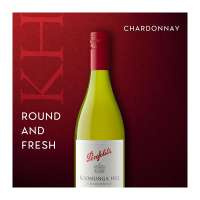
Penfolds Koonunga Hill Chardonnay White Wine
$24.90$36.00

Penfolds Koonunga Hill Shiraz Cabernet Red Wine - Case
$145.00$216.00

Penfolds Koonunga Hill Chardonnay White Wine - Case
$145.00$216.00

Penfolds Koonunga Hill Shiraz Red Wine - Case
$145.00$216.00

Penfolds Koonunga Hill Shiraz Red Wine
$24.90$36.00

Penfolds Koonunga Hill Shiraz Cabernet Red Wine
$24.90$36.00
About Penfolds
Overview
Penfolds is one of Australia’s most internationally recognised wine brands, with a history dating back to 1844. Established in Adelaide, South Australia, by English physician Dr Christopher Rawson Penfold and his wife Mary, the company evolved from a small vineyard producing medicinal and fortified wines into a global fine-wine house best known for Grange, one of the world’s most famous Australian wines 1.
| Category | Information |
|---|---|
| Brand | Penfolds |
| Founded | 1844 |
| Founders | Dr Christopher Rawson Penfold & Mary Penfold |
| Origin | Magill, Adelaide, South Australia |
| Industry | Wine / alcoholic beverages |
| Country of origin | Australia |
| Best known for | Grange, Bin 389, Bin 407, Bin 707, RWT, Yattarna |
| Signature grapes | Shiraz, Cabernet Sauvignon, Chardonnay and others |
| Core philosophy | Multi-vineyard and multi-region winemaking |
| Famous flagship | Penfolds Grange |
| Current corporate owner | Treasury Wine Estates |
| Major winemaking regions | Australia and selected international regions |
Penfolds describes its philosophy as being rooted in experimentation, curiosity and uncompromising quality, maintaining a distinctive “House Style” intended to remain recognisable across different wines, vineyards and vintages 2.
Origins: 1844
Penfolds began when Christopher Rawson Penfold, an English doctor, emigrated to South Australia with his wife Mary and their daughter Georgina in 1844. The couple established a vineyard at Magill, just outside Adelaide, where Christopher planted vine cuttings brought from Europe around the family property. His original objective was closely linked to the 19th-century medical belief that wine possessed therapeutic properties.
Consequently, the early Penfolds business focused heavily on fortified wines and medicinal-style wines, rather than the premium table wines for which the brand is renowned today 3. The historic Magill Estate remains one of the most significant locations in the Penfolds narrative.
Mary Penfold’s role
Although the brand carries Christopher Penfold’s surname, Mary Penfold was instrumental to the development of the business. Following Christopher’s death in 1870, Mary became increasingly involved in managing and expanding the wine operation. Under her leadership, Penfolds grew substantially.
By 1881, Penfolds was producing approximately one-third of all wine made in South Australia, demonstrating the company’s significance in the nascent Australian wine industry 4. This achievement establishes Mary Penfold as a pivotal, though sometimes underappreciated, figure in Australian wine history.
Expansion across Australia
During the late 19th and early 20th centuries, Penfolds expanded beyond its original Magill base. The company established connections with key Australian wine-growing areas including:
- Barossa Valley
- McLaren Vale
- Coonawarra
- Adelaide Hills
- Victoria
- New South Wales
This geographic expansion eventually became fundamental to the distinctive Penfolds winemaking philosophy. Rather than relying on a single vineyard, Penfolds developed expertise in blending fruit from multiple vineyards and regions, a concept that would become one of the defining characteristics of the brand 5.
The transition to modern table wine
For much of its early history, Penfolds was strongly associated with fortified wines. The company’s transformation into a producer of serious, age-worthy table wines accelerated during the 20th century. Several winemakers were particularly influential in this transition, including Alf Vesey, Ray Beckwith and Max Schubert. Penfolds credits this succession of winemakers with pushing the company towards increasingly ambitious styles of wine 6. However, no individual was more consequential to the modern identity of Penfolds than Max Schubert.
Max Schubert and the creation of Grange
The beginning
In 1951, Penfolds chief winemaker Max Schubert travelled to Europe, including Bordeaux. This trip profoundly influenced his thinking about Australian wine; Schubert became convinced that Australia could produce red wines capable of long-term bottle ageing and international recognition. He began experimenting with a powerful Shiraz-based wine that eventually became Grange 7.
The early experiments were controversial. When Grange was presented to senior Penfolds management and wine experts in 1957, it received an unfavourable response and the project was effectively rejected. Schubert, however, continued making the wine secretly. He produced hidden experimental vintages—including 1957, 1958 and 1959—in the underground cellars at Magill. Eventually, the success of the wine’s ageing potential became apparent and Penfolds reinstated the project 8. This episode has since become one of the great stories of Australian wine history.
Grange
Penfolds Grange is the wine most closely associated with the Penfolds name. Originally called Grange Hermitage, the wine was renamed simply Grange in the 1980s as Australian wine terminology evolved. It is primarily a Shiraz-based red wine, although the exact composition can vary by vintage.
The philosophy behind Grange is distinctive: rather than representing a single vineyard, it represents a particular Penfolds style. The grapes may be sourced from multiple regions and vineyards, with the final blend selected according to vintage conditions. Penfolds describes Grange as its ultimate expression and one of Australia’s most revered wines, noting that it has accumulated more than 35 perfect scores throughout its history 9.
Its characteristic style includes:
- Highly concentrated fruit
- Powerful structure
- Ripe Shiraz tannins
- Considerable aromatic complexity
- American oak influence
- Long ageing potential
The wine typically spends 18–20 months in oak before further bottle maturation 10. Grange has thus become much more than a product; it is effectively the symbol of Penfolds itself.
The “Bin” system
One of the most recognisable aspects of Penfolds is its system of Bin numbers. Historically, instead of naming every wine after a vineyard, Penfolds used storage-bin numbers associated with particular wines or winemaking projects. This practice produced famous names such as:
- Bin 28
- Bin 389
- Bin 407
- Bin 707
- Bin 128
- Bin 138
- RWT Bin 798
The system became integral to the identity of Penfolds. “Bin” does not simply indicate a quality ranking; it is primarily part of the historical naming convention of the house 11.
Bin 389
Bin 389 Cabernet Shiraz is one of the most commercially important wines in the Penfolds portfolio. First made in 1960 by Max Schubert, the wine combines Cabernet Sauvignon and Shiraz. This combination allows Cabernet Sauvignon to provide structure while Shiraz contributes richness and fruit weight.
Bin 389 became informally known as “Baby Grange”, partly because some of its components have historically been matured in barrels that previously held Grange 12. The wine has played a significant role in making the Penfolds style accessible to a much broader audience than Grange alone.
Bin 407
Bin 407 Cabernet Sauvignon was introduced with the 1990 vintage and released commercially in 1993. It was developed in response to the increasing availability of high-quality Australian Cabernet Sauvignon. Compared with Grange, Bin 407 focuses much more directly on Cabernet Sauvignon varietal expression.
It is typically sourced from multiple South Australian regions, including Coonawarra, Wrattonbully, McLaren Vale, Padthaway, Barossa Valley and Adelaide Hills, though the exact sourcing varies by vintage 13.
Bin 707
Bin 707 Cabernet Sauvignon is another Penfolds icon. It serves essentially as the counterpart to Grange within the Cabernet Sauvignon category: a highly structured, powerful and age-worthy expression of the variety. Penfolds describes Bin 707 as its landmark Cabernet Sauvignon, with proven cellaring potential 14. The name also forms part of the historic Bin naming tradition.
RWT / Bin 798
RWT stands for Red Winemaking Trial. The project began as an internal Penfolds experiment in the early 1990s and was eventually released commercially with the 1997 vintage in 2000. Today it is known as RWT Bin 798 Barossa Valley Shiraz.
RWT differs stylistically from Grange:
| Grange | RWT |
|---|---|
| Powerful and muscular | More contemporary and plush |
| Multi-region sourcing | Barossa Valley Shiraz |
| American oak influence | French oak |
| Highly concentrated | Aromatic and textured |
| Monumental style | More approachable in youth |
Penfolds specifically describes RWT as a contrast to the more concentrated and assertive character of Grange 15.
Yattarna
Penfolds is not exclusively a red-wine producer. Its most prestigious white wine is Yattarna, an ultra-premium Chardonnay. Yattarna was developed through extensive experimentation; Penfolds history records 144 trials undertaken to perfect the wine. The project was intended to create a white wine capable of standing alongside the prestigious red wines of the house 16. Yattanna is consequently an important demonstration of the ability of Penfolds to apply its quality philosophy beyond Shiraz and Cabernet.
Penfolds’ House Style
Perhaps the most important concept for understanding Penfolds is its House Style. The company does not necessarily attempt to make every wine taste identical; instead, it seeks to create a recognisable underlying character across its portfolio. Penfolds identifies characteristics such as:
- Mid-palate richness
- Generous fruit
- Structural balance
- Concentration
- Texture
- Ageing potential
- Consistency
The company achieves this partly through multi-region and multi-vineyard blending 17. This distinction is significant. While a traditional European wine may emphasise that it comes from a particular vineyard, Penfolds often emphasises that a wine expresses the Penfolds style. This philosophy enables the company to produce wines from grapes sourced across several regions while maintaining a recognisable brand identity.
Multi-region winemaking
The philosophy of Penfolds is deliberately not restricted to a single geographical location. Its Australian wines draw on important regions including Barossa Valley, Coonawarra, Adelaide Hills, McLaren Vale, Magill Estate, Padthaway, Wrattonbully and other Australian regions.
Penfolds also operates internationally and has developed wines using fruit from regions in countries including the United States, France and China 18. The company’s philosophy can be summarised as: fruit first + regional diversity + consistent House Style.
Magill Estate
Magill Estate is the spiritual home of Penfolds. The original vineyard was established there in 1844 by Christopher and Mary Penfold. Located close to Adelaide, the estate remains closely associated with the production and history of Grange. Penfolds notes that Magill Vineyard can still contribute fruit to Grange when vintage conditions allow 19.
Magill Estate is therefore important for reasons beyond its vineyard: it represents the physical connection between modern Penfolds and its 1844 origins.
Penfolds’ winemakers
The identity of Penfolds has historically been strongly associated with its winemakers. Important figures include:
Christopher Penfold
Founder and physician who established the original vineyard.
Mary Penfold
Co-founder and major force behind the company’s early development.
Max Schubert
Arguably the most influential winemaker in Penfolds history; creator of Grange.
Peter Gago
A major modern figure in Penfolds’ history and a long-serving chief winemaker. Penfolds describes him as part of the lineage of winemaking custodians responsible for continuing the brand’s traditions 20.
This succession of winemakers is central to the philosophy of apprenticeship and continuity at Penfolds.
Penfolds and Treasury Wine Estates
Penfolds is today part of Treasury Wine Estates (TWE), a major global wine company. This means Penfolds operates as a prestigious global wine brand within a much larger corporate wine organisation. Penfolds itself, however, maintains a distinct brand identity centred around heritage, luxury, winemaking expertise and Australian provenance.
In recent years, Penfolds has increasingly positioned itself as a global luxury wine brand, rather than simply an Australian winery. Its wines now encompass multiple countries and wine regions 21.
Penfolds as a luxury brand
Penfolds occupies a distinctive position in the wine market, offering products across a very wide price spectrum. At one end are relatively accessible wines such as Koonunga Hill. At the other end are highly collectible wines such as Grange, Grange special releases, rare older vintages, limited editions, and prestige single-vineyard or regional wines.
This creates a brand ladder. A consumer can enter the Penfolds ecosystem at a relatively accessible level and eventually move towards increasingly prestigious wines. This structure is a key reason why Penfolds has been able to build such strong global brand recognition.
Major Penfolds wines
A simplified view of the portfolio includes:
| Wine | Main variety/style | Position |
|---|---|---|
| Grange | Shiraz | Ultimate flagship |
| Yattarna | Chardonnay | Prestige white |
| Bin 707 | Cabernet Sauvignon | Icon Cabernet |
| RWT Bin 798 | Barossa Shiraz | Prestige Shiraz |
| Bin 389 | Cabernet Sauvignon/Shiraz | Major premium red |
| Bin 407 | Cabernet Sauvignon | Premium Cabernet |
| Bin 28 | Shiraz | Established Shiraz |
| St Henri | Shiraz | Historic alternative Shiraz style |
| Magill Estate Shiraz | Shiraz | Estate expression |
| Koonunga Hill | Various | Accessible/mainstream range |
Penfolds currently lists a very broad portfolio spanning red, white, sparkling and fortified wines 22.
Why Grange is so important
Grange is significant for three primary reasons.
1. It changed perceptions of Australian wine
Before Grange, Australia was not universally regarded as a producer of collectible, long-lived fine wines. Grange helped demonstrate that Australia could produce wines capable of competing on the international stage.
2. It established the Penfolds philosophy
Grange demonstrated the potential of multi-vineyard, multi-region blending and long ageing. That philosophy subsequently influenced much of the Penfolds portfolio.
3. It became a global luxury object
Grange is now collected, auctioned and cellared internationally. Its significance extends beyond its sensory qualities; it represents a major chapter in the development of Australia’s modern wine industry.
Design and branding
Penfolds has developed a distinctive visual identity characterised by minimalist labels, strong typography, the Penfolds name, numbered “Bin” wines, historic references, premium packaging and the Grange bottle as a recognisable luxury object.
The Bin numbering system is particularly effective from a branding perspective. Instead of simply calling a wine “Reserve Shiraz”, names such as Bin 389 or Bin 407 create a proprietary vocabulary that consumers associate specifically with Penfolds.
Core principles
If reduced to a few core principles, Penfolds is essentially built around five ideas:
1. Heritage
A continuous history dating to 1844.
2. Winemaking continuity
Generations of winemakers building on previous techniques.
3. Blending
Combining fruit from multiple vineyards and regions rather than being limited to one site.
4. Age-worthiness
A strong emphasis on wines capable of developing over many years.
5. House Style
Maintaining a recognisable Penfolds character across a vast portfolio 23.
Place in Australian wine history
Penfolds is arguably more than just a successful winery; it is one of the brands most closely associated with the internationalisation of Australian wine. Its history parallels the development of Australia’s wine industry:
- 1844: Fortified/medicinal wines
- Late 19th century: Commercial expansion
- Early 20th century: National expansion
- 1950s: Max Schubert and Grange
- 1960s onward: Bin wines and premium table wine
- Late 20th century: International reputation
- 21st century: Global luxury wine house
This trajectory is what makes Penfolds particularly significant.
The Penfolds “DNA”
The brand DNA of Penfolds can be summarised as follows:
1844 heritage → South Australia → Shiraz & Cabernet Sauvignon → Multi-vineyard sourcing → Multi-region blending → Power + richness + structure → Long-term ageing → Grange → Global luxury positioning
This sequence illustrates how a South Australian winery became a global luxury brand.
Penfolds today
As of 2026, Penfolds remains one of the flagship names in the global luxury wine category. Its portfolio has expanded well beyond its original South Australian roots, while the company continues to emphasise the same basic philosophy established over generations: quality fruit, experimentation, blending expertise and a recognisable House Style 24.
Its parent company, Treasury Wine Estates, has recently been restructuring its broader business amid challenging global wine-market conditions, but Penfolds remains one of the company’s most important brands and continues to enjoy particularly strong international recognition 25.
References
- Discover Penfolds History | Australian Wine History
- Penfolds – History Hub
- Shop All Wines | Red, White & Sparkling
- Vineyards
- Penfolds History & Founders | Discover Penfolds History
- The Story of Penfolds Grange Wine | Penfolds Wines
- The Story of Penfolds Grange Wine | Penfolds Wines
- The Story of Penfolds Grange Wine | Penfolds Wines
- BIN 389CABERNET SAUVIGNON SHIRAZ 2023>Bin 389 w
- Bin 407 | Explore Penfolds Bin 407 Cabernet Sauvignon
- Our Wines
- Penfolds RWT Collection | Barossa Valley Shiraz | Shop RWT
- Celebrating 180 Years of Penfolds Wines
- Owner of iconic Penfolds, Treasury Wine Estates, posts $1.1bn full-year loss
- Penfolds boss Sam Fischer warns China grey market: ‘Not on’
- Penfold’s Wines and the evolution of modern Australian winemaking | Wine Australia
- Bin 407 | Explore Penfolds Bin 407 Cabernet Sauvignon
- The Story of Penfolds Grange | The Legend of Grange
- Penfolds Red Winemaking: a pioneering history
- What is a Penfolds Bin?
- Penfolds Bin 407 | Discover Bin 407 Cabernet Sauvignon
- Penfolds Winemaking | Discover Our Winemaking Philosophy
- Bin 407 | Explore Penfolds Bin 407 Cabernet Sauvignon
- Ranges
- Penfolds Red Winemaking