Shop on Lazada
Philips Lighting products
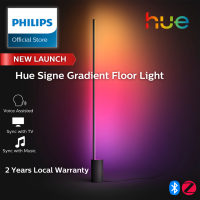
Philips Hue Signe Smart Floor Lamp Black - White and Color Ambiance LED Color-Changing Light - 1 Pack - Control with Hue App - Works with Alexa Google Assistant and Apple Homekit
$521.10$579.00
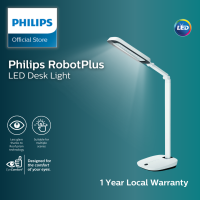
Philips RobotPlus LED desk light | Table Lamp with adjustable and foldable arms | Even light distribution with 4 step dimming lights.
$159.75$177.50
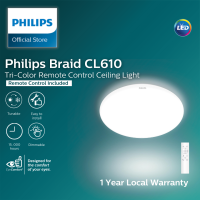
Philips Braid CL610 Ceiling Light with Remote Control | Tunable White Light Color from Warm to Cool
$118.35$131.50
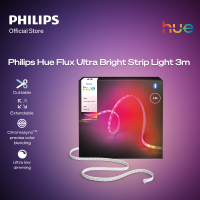
Philips Hue Flux Ultra Bright Strip Light 3m White and Color Gradient
$537.30$597.00
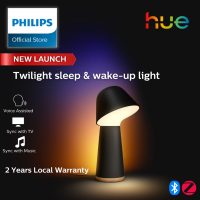
Philips Hue Twilight sleep and wake-up light black table light for bedside | smart night light
$436.50$485.00
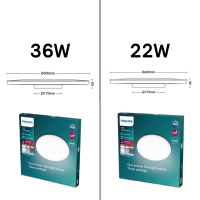
Philips Ozziet CL570 Slim Ceiling Light with Scene Switch 36W and 22W slim ceiling light with 3 different modes for perfect ambiance.
$188.01$208.90
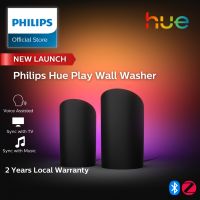
Philips Hue Play Smart Wall Washer Black White & Colour Light with ColorCast Technology Bluetooth
$566.10$629.00
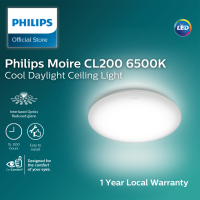
Philips Moire CL200 LED Round Ceiling Light slim with Eye Comfort Technology
$47.25$52.50
About Philips Lighting
Philips Lighting was the former name of the global lighting business that was separated from the Dutch electronics conglomerate Royal Philips to become an independent publicly listed company in 2016. In 2018, the company officially changed its corporate name to Signify N.V., whilst retaining Philips as the principal brand for its lighting products under a licensing agreement with Royal Philips.1 Consequently, “Philips Lighting” is primarily a historical corporate name today, while Philips remains a major lighting brand operated by Signify. For readers in Singapore and the wider region, it is important to note that products bearing the Philips mark are manufactured and distributed by Signify, not the health technology entity known as Royal Philips.
Overview
| Field | Information |
|---|---|
| Former corporate name | Philips Lighting N.V. |
| Current corporate name | Signify N.V. |
| Philips Lighting founded as | 1891 |
| Original founders | Gerard Philips and Frederik Philips |
| Original location | Eindhoven, Netherlands |
| Corporate separation from Philips | 2016 |
| Stock-market listing | Euronext Amsterdam, 2016 |
| Ticker | LIGHT |
| Corporate name changed | Philips Lighting → Signify, May 2018 |
| Current Philips relationship | Philips brand licensed to Signify |
| Main industry | Lighting and lighting technology |
| Products | Lamps, LED lighting, luminaires, smart lighting, connected lighting and lighting systems |
| Markets | Consumer, professional, commercial, industrial and public-sector |
| Major related brands | Philips, Philips Hue, Interact, Color Kinetics |
| Headquarters heritage | Eindhoven, Netherlands |
The Philips lighting business traces its origins to 1891, while the independent Philips Lighting company was created as part of Philips’ separation of its lighting activities in 2016.2
History
1891–1910s: The Philips beginnings
The history of Philips Lighting begins with Gerard Philips and Frederik Philips, who founded the Philips company in Eindhoven, Netherlands, in 1891. The original enterprise was heavily associated with electric lamps. At that time, electric lighting was still an emerging technology, and the development of reliable incandescent lamps was a crucial component of the transition from gas and oil lighting to electricity. Over subsequent decades, lighting became one of Philips’ defining businesses. The company eventually developed from a lamp manufacturer into a major multinational technology corporation, with lighting remaining one of its core activities. The company describes its lighting heritage as extending back to 1891.3
Expansion into a global lighting company
During the 20th century, Philips became one of the world’s best-known lighting manufacturers. Its portfolio expanded far beyond traditional household incandescent bulbs to encompass technologies such as incandescent lamps, fluorescent lamps, halogen lamps, compact fluorescent lamps, discharge lamps, automotive lighting, professional luminaires, architectural lighting, outdoor and street lighting, LED lighting, and electronic lighting controls. This progression was significant because Philips increasingly moved from being simply a lamp manufacturer towards becoming a company capable of providing complete lighting systems. That distinction became particularly important as lighting technology evolved from standalone bulbs towards LEDs, sensors, networking and software.
The transition to LED
One of the most significant technological transformations in the history of Philips Lighting was the shift from conventional lighting technologies to LEDs (light-emitting diodes). LEDs offered several potential advantages compared with traditional technologies, including lower energy consumption, longer operating life, compact form factors, digital controllability, tunable colours, easier integration with sensors and electronics, and compatibility with connected/IoT systems. Philips became a major player in this transition. By the 2010s, Philips Lighting was no longer simply selling replacement light bulbs; its business increasingly included LED luminaires, connected lighting, controls and digital lighting systems.
Separation from Royal Philips
A major turning point occurred in the 2010s. Royal Philips decided to separate its lighting activities from the rest of the company as it increasingly focused on health technology. A standalone structure for the lighting activities was established on February 1, 2016, and Philips Lighting subsequently became a separately listed company.4 In May 2016, Philips Lighting was introduced to the public markets on Euronext Amsterdam under the ticker LIGHT. This effectively transformed Philips Lighting from being a division of Royal Philips into an independent publicly traded company, marking a major milestone in the history of the business.5
Renaming to Signify
Following the separation from Royal Philips, Philips Lighting required a new corporate identity as it was no longer part of the Royal Philips corporate structure. In March 2018, Philips Lighting announced that it intended to change its company name to Signify. The new name was intended to represent the company’s vision of light becoming an “intelligent language” capable of connecting people, systems and information.6 On May 16, 2018, the company officially announced the change from Philips Lighting N.V. to Signify N.V., although the stock ticker remained LIGHT.
Relationship between Philips and Signify
It is essential to distinguish between the company and the brand. After the separation from Royal Philips, the corporate entity became Signify, but the Philips name remained on lighting products. Signify entered into a licensing arrangement with Royal Philips allowing it to continue using the Philips brand for lighting products and services. The evolution of this relationship can be summarised as follows:
- 1891: Establishment of the Philips lighting business.
- 2016: Philips Lighting becomes a separate company.
- 2018: Philips Lighting becomes Signify.
- Present: Signify operates Philips-branded lighting products.
Therefore, while Philips ≠ Signify corporately, Philips lighting products are largely part of Signify’s lighting business. Today, Philips remains Signify’s principal global lighting brand. Signify describes Philips as its global professional lighting brand and states that Philips-branded products cover applications ranging from homes and offices to industry, street lighting, horticulture and sports. When consumers or businesses purchase items such as Philips LED bulbs, ceiling lights, outdoor lamps, professional luminaires, or street-lighting products, the brand on the product says Philips, while the company behind the product is Signify.
Product categories
Philips Lighting historically and currently covers an exceptionally broad range of lighting applications.
Consumer lighting
Products designed for ordinary residential users include LED bulbs, decorative lamps, ceiling lights, downlights, spotlights, outdoor residential lighting, and smart lighting. These products are generally sold through retail and e-commerce channels across Singapore and other markets.
Professional lighting
Professional lighting is a much larger and more technically complex segment. Applications include offices, factories, warehouses, retail stores, hospitals, schools, hotels, airports, stadiums, roads, public buildings, and industrial facilities. Products in this category can include complete luminaires, lighting controls, sensors and software rather than simply replacement lamps. Signify describes Philips as its major professional-lighting brand.
Street and outdoor lighting
Philips-branded lighting has also historically been prominent in public infrastructure. Applications include street lighting, highways, tunnels, pedestrian areas, public squares, parking areas, and urban lighting. The transition to LED has allowed street lights to become more efficient and increasingly connected.
Architectural lighting
Lighting is frequently used as an architectural and aesthetic element rather than simply for illumination. Applications include buildings, bridges, monuments, entertainment venues, hotels, commercial developments, and façades. Signify also owns Color Kinetics, a brand specialising in dynamic architectural lighting systems.7
Smart and connected lighting
Philips Hue
One of the most recognisable consumer lighting products associated with Philips is Philips Hue. Hue represents the shift from conventional lighting to smart home lighting. Instead of simply turning a lamp on and off, smart lighting allows users to adjust brightness, change colour, select scenes, automate lighting, control lights remotely, and integrate lighting with smart-home systems. An important modern distinction is that Philips Hue is part of the Signify ecosystem, despite carrying the Philips name. Signify’s current brand information identifies Philips Hue as one of its lighting brands.
Connected lighting and IoT
A significant change in Philips Lighting’s business strategy was the movement toward connected lighting. While traditional lighting followed the path of light bulb → electricity → light, connected lighting follows the path of light → sensor → network → software → data → control. A modern lighting installation can potentially collect information about occupancy, energy consumption, environmental conditions, operating status, and usage patterns. This allows lighting to become part of a broader Internet of Things (IoT) infrastructure. Signify specifically describes its strategy around connecting lighting with networks, software, sensors and IoT platforms.
Interact
For professional connected lighting, Signify developed the Interact platform. Interact is essentially a software and systems ecosystem for connected professional lighting. It can manage lighting infrastructure containing connected luminaires, sensors, control systems, networks, software, and data. Signify describes Interact as its professional connected-lighting software and systems brand. This illustrates how the company evolved from selling lamps to selling lighting systems and digital services.
Specialised lighting sectors
Horticultural lighting
Artificial lighting is used in agriculture and controlled-environment growing to influence plant growth. Applications include greenhouses, indoor farms, vertical farms, plant research, and commercial horticulture. Philips/Signify has developed specialised horticultural lighting technologies for these environments. This exemplifies how modern lighting companies increasingly treat light as a tool for controlling biological and environmental processes, rather than merely providing visibility.
Automotive lighting
Historically, Philips was also a major automotive-lamp supplier. Automotive lighting has included products such as headlamps, signal lamps, interior lamps, and replacement automotive bulbs. However, the modern Signify business should not be confused with every lighting-related business historically associated with Philips; Philips’ broader corporate portfolio has changed substantially over time.
Technology evolution
A simplified history of Philips Lighting’s technology demonstrates the breadth of its development:
| Era | Major technology |
|---|---|
| 1890s–early 1900s | Incandescent electric lamps |
| 20th century | Incandescent + fluorescent + specialty lamps |
| Late 20th century | Halogen, compact fluorescent, discharge lighting |
| 2000s | Early commercial LED adoption |
| 2010s | Rapid transition toward LED |
| 2010s–2020s | Connected lighting, sensors and smart lighting |
| Today | LED + IoT + software + data + services |
This evolution explains why the company changed its identity from Philips Lighting to Signify: its business was increasingly about much more than manufacturing lamps.
Corporate and brand identity
The distinction between the various entities associated with the name is worth emphasising:
- Royal Philips: The Dutch health-technology company that emerged after Philips separated its lighting business.
- Signify N.V.: The independent lighting company that emerged from Philips Lighting.
- Philips Lighting: The company’s corporate name between its separation from Philips and its 2018 renaming.
- Philips: A licensed lighting brand used by Signify.
- Philips Hue: A smart-lighting brand associated with Signify.
The corporate separation and subsequent name change are documented by both Signify and Royal Philips.8
Brand positioning
Philips lighting has historically been positioned around several key attributes:
- Reliability: Philips has spent more than a century building recognition around dependable electrical and lighting products.
- Energy efficiency: The transition from incandescent lamps to fluorescent and then LED technologies has made efficiency an important part of the brand.
- Innovation: The company has consistently invested in new lighting technologies, from early electric lamps through LED and connected lighting.
- Professional expertise: Unlike brands focused exclusively on household bulbs, Philips has a very substantial professional-lighting heritage.
- Smart lighting: Products such as Philips Hue represent the brand’s transition into connected consumer technology.
The current Philips lighting site describes the brand around quality, reliability, innovation and energy efficiency.9
Global and regional presence
Philips Lighting developed into a global business rather than a Netherlands-only manufacturer. At the time of the 2018 corporate renaming, Signify reported operations in more than 70 countries, approximately 32,000 employees, and 2017 sales of approximately €7 billion. Its products serve both consumer markets (homes, apartments, individual consumers) and professional markets (businesses, governments, infrastructure, industrial facilities, commercial buildings, public spaces).
Presence in Indonesia and the region
Philips has a particularly recognisable presence in neighbouring Indonesia, where Philips-branded lighting products have been sold for many years. The Indonesian Philips lighting website currently identifies Signify as the company licensing and operating the Philips lighting brand, and lists applications including homes, offices, industry, street lighting, horticulture and sports.10 Consequently, seeing “Philips” on a lighting product in Southeast Asia does not mean that Royal Philips’ current health-technology company manufactured or operates the lighting business directly. The Philips lighting brand is licensed to Signify.11 This structure applies similarly to the Singapore market, where Signify manages the Philips lighting portfolio.
Major brands associated with Signify
Signify’s lighting portfolio extends beyond Philips. Key brands include:
| Brand | Main role |
|---|---|
| Philips | Main global professional and consumer lighting brand |
| Philips Hue | Smart-home lighting |
| Interact | Connected professional lighting/software |
| Color Kinetics | Dynamic architectural lighting |
Signify itself identifies these among its global lighting brands.12
Value of the Philips name
The Philips name has an unusually long history in lighting. The brand has been associated with lighting since 1891, giving it more than a century of accumulated consumer and professional recognition.13 This explains the unusual corporate arrangement where Signify owns/operates the lighting business, but Philips remains the consumer-facing lighting brand. This allows Signify to have an independent corporate identity while retaining the enormous recognition associated with the Philips name.
Legacy
The historical importance of Philips Lighting goes beyond its commercial products. The company participated in several major transitions in the history of artificial lighting: Electric lighting → mass-market lamps → fluorescent lighting → halogen → LED → smart/connected lighting. The most significant modern transition is arguably the last one. Lighting is increasingly becoming a digital infrastructure rather than simply a source of illumination. A modern connected luminaire can simultaneously function as light + electronics + sensor + network node + software interface. That transformation is central to the strategic evolution from Philips Lighting into Signify.
Timeline
1891
Gerard and Frederik Philips establish Philips in Eindhoven, Netherlands. Lighting becomes the foundation of the company’s early business.14
20th century
Philips becomes a major international lighting manufacturer, expanding into numerous lamp and lighting technologies.
Late 20th–early 21st century
Philips expands into professional lighting, electronics, LED technologies and increasingly sophisticated luminaires.
2016
Philips separates its lighting activities into Philips Lighting N.V.
May 2016
Philips Lighting becomes publicly listed on Euronext Amsterdam under ticker LIGHT.15
March 2018
Philips Lighting announces its intention to rename itself Signify while retaining the Philips brand for its lighting products.
May 2018
Philips Lighting N.V. officially becomes Signify N.V.
2018 onward
Signify continues developing Philips-branded lighting while expanding connected lighting, IoT, software, smart-home and professional lighting systems.
Today
Philips is the lighting brand; Signify is the company behind the Philips-branded lighting business.
Summary
Philips Lighting was the lighting division of Royal Philips that became an independent company in 2016 and was renamed Signify in 2018; Signify continues to sell lighting products under the licensed Philips brand, making Philips one of the world’s most recognizable modern lighting brands.16 The key historical fact to remember is that Philips Lighting is the former company name, while Philips is still the lighting brand and Signify is the current company operating that business.17
References
- Philips Lighting is now Signify | Signify Company Website
- Philips Lighting is now Signify – News | Philips
- Annual Report
- Philips Lighting announces intention to change company name to Signify while keeping the Philips brand for its products | Philips Lighting
- About us | Philips lighting
- Royal Philips – 20-F 2018
- Tentang kami | Philips lighting
- Philips Lighting sekarang menjadi Signify | Situs Web Signify Company
- Philips Lighting is now Signify | Signify Company Website
- 飞利浦照明现更名为昕诺飞 – 2018年新闻公告 – Signify公司网站
- Philips Lighting heet nu Signify – Blog | Philips
- Philips Lighting is now Signify
- Philips Lighting becomes Signify
- Philips Lighting anuncia la intención de cambiar el nombre de la compañía a Signify mientras mantiene la marca Philips para sus productos | Philips Lighting
- 飞利浦照明将更名为Signify – 2018年新闻公告 – Signify公司网站
- Philips Lighting | About Signify
- Signify IPO and ABB’s – News center | Philips