Shop on Lazada
Richell products
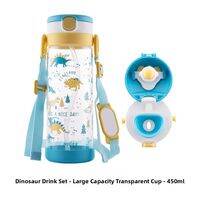
Richell | Large Capacity Straw Water Cup for Kids
$54.45
Buy on Lazada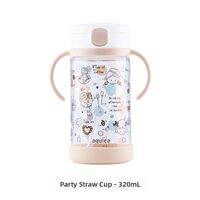
Richell | Transparent Toddler Straw Cup School Use
$40.47
Buy on Lazada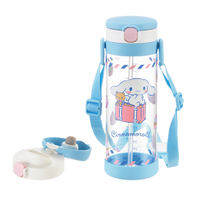
Richell | Sanrio Melody Kindergarten Childrens Sippy Straw Cup
$54.43
Buy on Lazada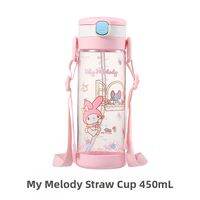
Richell | Sanrio Collaboration Special Design School Baby Cup
$32.51$46.36
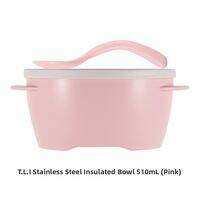
Richell | Stainless Steel Insulated Baby Feeding Bowl
$33.23
Buy on Lazada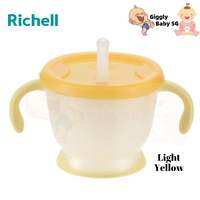
RICHELL AQULEA Clear Straw Training Mug (Toddler/ Kids Bottle Cup) Tritan
$15.15$18.65
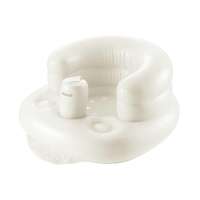
Richell Soft Inflatable Baby Bath & Floor Seat
$41.90$46.90
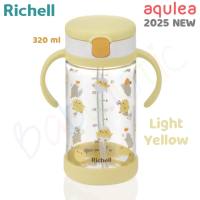
Richell AQULEA Straw Bottle Mug with Bottom Cover 320ml - 7 months+
$27.75
Buy on LazadaAbout Richell
Richell (Japanese: リッチェル, Ritcheru) is a Japanese manufacturer and consumer-goods brand headquartered in Toyama, Japan. The company is best known for practical, design-oriented products for everyday life, particularly baby and childcare products, pet products, housewares, gardening products, healthcare and life-care products, environmental goods, and exterior products.1 It also possesses capabilities in moulds, plastics processing, and medical equipment.1
Richell is sometimes encountered internationally under the Chinese name 利其尔 and operates through subsidiaries and offices in markets including the United States, China, South Korea, Vietnam, Thailand, and Taiwan.12
Basic information
| Item | Information |
|---|---|
| Brand / company | Richell Corporation |
| Japanese name | 株式会社リッチェル |
| Japanese | リッチェル |
| Country of origin | Japan 🇯🇵 |
| Founded | 1956 |
| Incorporated | July 23, 1960 |
| Headquarters | Toyama, Toyama Prefecture, Japan |
| President | Chiyuki Emoto |
| Employees | 308 as of March 2026 |
| Core origins | Plastic moulding and product manufacturing |
| Major categories | Baby, pet, housewares, gardening, healthcare, environmental, exterior |
| International presence | U.S., China, Korea, Vietnam, Thailand, Taiwan and others |
| Official philosophy | Providing “Good Products” that only Richell can make |
| Purpose | “Smiles to the World” |
The corporate data above comes from Richell’s current official company profile.1
Brand identity and positioning
At its core, Richell is a Japanese product-development and manufacturing company rather than a narrowly focused fashion or lifestyle brand.1 Its original expertise was plastic processing, which it used over time to develop products intended to make ordinary activities easier, safer, and more convenient.1 Today, the company describes its business as covering a broad range of life scenes.1
Richell can be characterised by the combination of Japanese industrial design, practical everyday products, and consumer-oriented engineering.1 The brand’s products tend to emphasise functionality, ease of use, safety, compact and efficient design, durability, approachable aesthetics, and consideration of changing lifestyles.1 The company explicitly states that it develops products by observing changes in consumers’ lifestyles, values, and social needs.1
It is useful to distinguish Richell from companies such as Muji or traditional Japanese household brands. While Muji is strongly associated with minimalist lifestyle aesthetics and retail, Richell is fundamentally a product engineering and manufacturing company whose brand identity stems from solving specific problems through product design.1 This problem-solving orientation applies to questions such as how a baby cup should be shaped for learning to drink, how a pet toilet can be made easier to clean, or how a storage container can better utilise limited space.1
Brand positioning overview
| Dimension | Richell’s position |
|---|---|
| Country identity | Strongly Japanese |
| Design | Functional, thoughtful, relatively clean |
| Price | Generally mid-range to premium depending on category |
| Manufacturing | Strong |
| Innovation | Practical/product-level innovation |
| Baby | Major category |
| Pet | Major category |
| Household | Core historical category |
| Industrial capability | Significant |
| Global reach | International |
| Brand personality | Practical, trustworthy, family-oriented |
Exact market positioning varies considerably by product and country, making it misleading to characterise the entire company as simply “premium” or “budget”.1
History
1956–1960: Foundation and incorporation
Richell’s history began in 1956 when Silver Resin Industry (シルバー樹脂工業所) was founded in Toyama, Japan.1 At that time, plastic was emerging as a modern material, and the company concentrated on plastic moulding technology and techniques for producing attractive, high-quality plastic products.1 One of its early areas was plastic lacquerware and household tableware, which demonstrated how plastic could be lightweight, easy to handle, and aesthetically expressive.1
In 1960, Silver Resin Industry was reorganised as Silver Resin Industry Co., Ltd., establishing its headquarters and factory in Toyama.1 This entity is the formal corporate predecessor of today’s Richell Corporation.1
1960s–1980s: Expansion and design focus
During the following decades, Richell developed its expertise in plastic manufacturing and technology for printing designs onto plastic.1 One notable early product was children’s tableware featuring the popular NHK character Boo Fu Woo, which helped increase the company’s recognition throughout Japan.1 By the 1970s, Richell was developing a wider range of household products, using plastic not merely as a cheap substitute for traditional materials but as a medium offering new combinations of functionality and design.1
During the 1980s, Richell expanded its household-product business and emphasised original product design.1 It began producing items that went beyond traditional plastic goods by incorporating other materials and exploring different applications.1 This period helped establish the philosophy that good everyday products should combine useful function with thoughtful design.1
1991: Rebranding as Richell Corporation
A significant milestone occurred in 1991 when the company changed its name to Richell Corporation and introduced the Richell corporate identity.1 According to the company, this marked an expansion of its product-development scope into cleaning products, storage, gardening, household organisation, and other lifestyle products.1 The company describes this transition as the birth of a new, future-oriented Richell brand.1
The name “Richell” combines “Rich”, suggesting luxury and comfort, and “Well”, suggesting quality and reliability, intending to communicate comfortable living, quality, and trustworthiness.1 Its corporate green, called NR Green (New Richell Green), represents freshness and gentleness.1
1990s onwards: Diversification
During the 1990s, Richell significantly broadened its business into areas associated with different stages of everyday life.1 These included baby products for childcare routines, pet products designed around the lives of dogs, cats, and their owners, life-care products for elderly care and mobility support, environmental products addressing waste management and recycling, and gardening items such as planters and containers.1 Richell describes this period as an expansion from enriching household life to addressing childcare, hobbies, pets, environmental issues, and care for older people.1
Product categories
Richell currently divides its products into several major areas.1
Baby and toddler
This is one of Richell’s most visible categories internationally.1 Products include baby feeding products, cups and mugs, tableware, training products, baby-care accessories, children’s furniture and accessories, and safety-related products.1 The company’s approach centres on making childcare easier for parents while supporting children’s development and independence.1
Pet
Pet products are another major part of Richell’s identity.1 The range includes products for dogs and cats covering feeding, toilets, carriers, cages and pens, pet living spaces, and travel.1 The underlying concept involves designing products around the relationship between pets and their owners rather than simply providing pet accessories.1
Housewares
Richell has deep roots in household products, with a range including food preparation, storage, cleaning, organisation, containers, and daily household items.1 This category is historically significant as the company’s original expertise lay in plastic household goods.1
Gardening
Richell produces gardening products such as planters, pots, gardening containers, and related outdoor products.1 Gardening has been part of the company’s portfolio since its expansion in the late 20th century.1
Life care and healthcare
The company has developed products for life care and healthcare, including items related to elderly care and daily living.1 Corporate capabilities have expanded beyond consumer products into medical equipment, utilising accumulated design, moulding, and processing expertise.1
Environmental products
This category includes products associated with waste collection, waste separation, recycling, and large containers.1 Expansion in this area was partly influenced by changes in Japanese environmental policy and recycling systems.1
Exterior products
Richell also develops products for outdoor and exterior applications, making the portfolio considerably broader than the baby and pet products for which international consumers may know it.1
Manufacturing and engineering
Richell retains substantial manufacturing and engineering capability, distinguishing it from a simple consumer-brand company.1 It conducts product development and manufacturing using multiple materials, with a process spanning market research, planning, product development, design, tooling and mould production, manufacturing, quality control, and distribution.1 Marketing teams conduct interviews, surveys, and monitor research to identify changing consumer needs.1
Mould and injection technology
Richell has significant expertise in injection moulding.1 Its engineering operations produce moulds for its own consumer products, automotive OEM products, medical equipment, and office equipment.1 Capabilities include two-material injection moulding, rubber moulds, blow moulding, and large moulding equipment.1 This indicates substantial in-house product engineering and manufacturing capabilities rather than reliance on generic external suppliers.1
Quality and certifications
Richell operates manufacturing facilities with formal quality-management systems.1 Official corporate information lists ISO 9001 certification for facilities including the Mizuhashi Factory and Recycling Factory.1 The Kamiichi Factory’s mould operation holds ISO 13485, a quality-management standard associated with medical devices.1
International operations
Richell gradually transformed from a Japanese manufacturer into an international organisation.1 Key milestones include:
| Year | Development |
|---|---|
| 1991 | Company renamed Richell Corporation |
| 1995 | Joint venture established in Dongguan, China |
| 1997 | Hong Kong branch established |
| 2001 | Richell U.S.A. established in Texas |
| 2004 | Richell Kunshan established in China |
| 2007 | South Korea branch established |
| 2008 | Richell Shanghai established |
| 2012 | Richell Korea Corporation established |
| 2020 | Richell Vietnam established in Ho Chi Minh City |
| 2020 | Richell U Kwong Plastics Vietnam established in Bắc Giang |
| 2021 | Richell Thailand established |
| 2021 | Richell Taiwan established |
| 2022 | Richell Logistics established |
This structure is particularly relevant in Asia, where Richell has developed a significant presence in markets such as China, Korea, Vietnam, Thailand, and Taiwan.1 In Vietnam specifically, the establishment of Richell Vietnam Co., Ltd. in Ho Chi Minh City and Richell U Kwong Plastics Vietnam Co., Ltd. in Bắc Giang Province in 2020 indicates that the country serves as both a sales market and part of the broader international manufacturing network.1
Corporate philosophy and sustainability
Richell’s official philosophy is “Providing ‘Good Products’ that only we can make with a refined and progressive sense.”1 Since its founding, the company has emphasised looking at products from the consumer’s perspective to create useful value.1 Many Richell products have a relatively understated appearance because the company generally prioritises function and usability over branding for its own sake.1
The corporate purpose is articulated as “Smiles to the World,” aiming to bring smiles to customers, employees, business partners, and other stakeholders while contributing to a sustainable society.1 Around its 65th anniversary, Richell began emphasising product development aimed at contributing to the SDGs and a more sustainable society, building on earlier experience with environmental products.1
Design principles
Richell’s design approach follows several recurring principles:1
- Human-centred design: Products are developed around actual situations in people’s lives.
- Practicality: Products generally solve concrete everyday problems.
- Safety: Particularly important in baby, pet, and healthcare products.
- Ease of use: Emphasis on intuitive and convenient products.
- Appropriate aesthetics: Combining functionality with clean, approachable designs.
- Adaptation to changing lifestyles: Tracking social changes and consumer behaviour during development.1
Strengths and limitations
Major strengths
- Manufacturing know-how: Over six decades of experience in moulding, tooling, and product manufacturing.1
- Japanese product-development heritage: Maintained Japanese headquarters and development roots since founding.1
- Strong baby and pet portfolios: Important international businesses with substantial product ecosystems.1
- Broad product ecosystem: Presence across many areas of daily life.1
- International network: Operations spanning Japan, China, the United States, and several Asian markets.1
- Engineering capability: Mould and medical-equipment capabilities distinguish it from ordinary consumer-goods brands.1
Potential limitations
From a brand perspective, Richell faces certain limitations. Brand recognition is uneven; it may be highly recognisable in specific categories or countries but lacks the global fame of major consumer brands.1 The extremely broad portfolio spanning baby, pets, gardening, household goods, healthcare, and industrial manufacturing can make the overall brand story less immediately obvious.1 Furthermore, Richell is more product-led than lifestyle-led, generally not selling an aspirational lifestyle identity but focusing instead on usefulness and engineering.1 These characteristics reflect the fact that Richell’s underlying business is broader than a conventional consumer lifestyle brand.1
Current status
As of 2026, Richell Corporation remains headquartered in Toyama and has 308 employees according to its corporate profile dated March 2026.1 Its business covers housewares, pet products, baby products, life-care products, gardening, environmental products, and exterior products, alongside industrial capabilities.1 The company completed a new R&D centre at its headquarters in 2023, reflecting continued emphasis on product development and engineering.1 Its current corporate direction combines the traditional idea of making “Good Products” with the purpose of bringing smiles to the world and pursuing sustainable manufacturing.1