Shop on Lazada
SANFU products
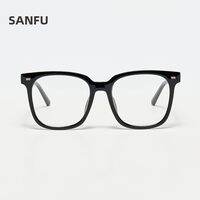
SANFU | Korean Style Blush Tint Simple Plain Glasses
$9.13$15.34
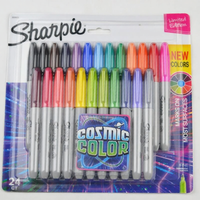
Colorful Sharpie Marker Pen for DIY Handmade Painting Orange Purple Pink Rose Red Sky Blue Oil-Based Pen Writing Tool
$28.82$30.28
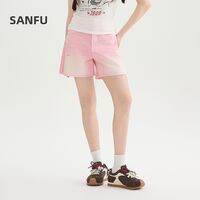
SANFU | Ripped and Frayed Denim Shorts Loose Fit
$41.62
Buy on Lazada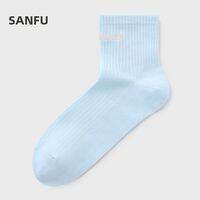
Soft Short Tube Socks for Women College Pattern Single Double Pack Sporty Style Cotton Blend Elastic Ankle Length Socks
$5.30$5.57
About SANFU
Overview
SANFU (Chinese: 三福) is a Chinese lifestyle retail brand established in Fuzhou, Fujian province, in 1992. Originally operating as a department store focused on apparel and accessories, the company has evolved over three decades into a comprehensive retailer centred on “trendy lifestyles”. Its current product assortment spans clothing, cosmetics, home furnishings, accessories, digital gadgets, and toys. SANFU positions itself as a starting point for trendy living, primarily targeting consumers aged 18 to 25.1
Note: This article concerns the Chinese retail brand SANFU. It is distinct from other entities sharing similar names in the chemical, textile, or furniture industries.
Corporate Profile
| Attribute | Details |
|---|---|
| Chinese Name | 三福 |
| Brand Name | SANFU |
| Founded | 1992 |
| Place of Origin | Fuzhou, Fujian Province, China |
| Industry | Retail, Lifestyle, Fashion Department Store |
| Primary Markets | Mainland China; International expansion underway |
| Core Demographic | Young consumers aged approximately 18–25 |
| Format | Offline lifestyle collection stores, retail outlets, online channels |
| Positioning | Trendy lifestyle retail |
| Vision | To help young people explore trendy lifestyles |
| Mission | To become the preferred lifestyle brand for young people |
| Headquarters | Gulou District, Fuzhou, Fujian Province, China |
| Website | SANFU Official Website |
Official records indicate that SANFU’s headquarters are located at Jinhuang Tower, No. 1 Shengfu Road, Gulou District, Fuzhou.2
History and Development
Origins (1992–1998)
SANFU traces its origins to 1992 with the establishment of Fuzhou Rongxin Department Store. The original business model focused on men’s and women’s clothing, alongside accessories and underwear. Unlike the large-scale lifestyle collection stores seen today, the early iteration was a traditional department store centred on youth fashion consumption.3 Emerging in Fuzhou, a coastal city in southeast China, the brand initially catered to local demand for affordable apparel. This period established the foundational elements of the brand: youth orientation, fashion focus, multi-category offerings, value pricing, and daily utility.
National Expansion (1998–2007)
While initially rooted in Fujian, SANFU began expanding nationally in the late 1990s. In 1998, the company opened a store on Changjiang Road in Hefei, Anhui province, marking its first significant step outside its home market.4 By 2007, SANFU had grown to operate more than 110 chain stores across over 80 cities, employing more than 5,000 staff. During this phase, the retail strategy shifted beyond simple merchandise sales to encompass curated product selection, store environment design, service standards, and a youthful brand image supported by rapidly updated inventory.
Visual Identity and Mall Integration (2011–2015)
In 2011, SANFU introduced a new “nine-grid” logo designed by Japanese graphic and spatial designer Hayashi Hiroyuki.5 This visual rebranding signalled a transition from a traditional department store aesthetic to a modern, youth-oriented identity. The nine-grid symbol remains a primary visual identifier for the brand.
Expansion accelerated around 2015 with the establishment of regional operations in Hebei and Northeast China. Concurrently, SANFU deepened partnerships with shopping centre operators such as Wanda, integrating its stores into major commercial complexes. During this period, visiting SANFU evolved into a leisure activity for young consumers, distinguishing the brand from traditional retailers by emphasising the experience of browsing over transactional purchasing.
Lifestyle Transformation (2021–Present)
A significant strategic pivot occurred in 2021 when SANFU launched its first “lifestyle collection store”. This format moved beyond the earlier department store model to integrate merchandise, spatial design, and experiential elements.9 The operational logic shifted from selling commodities to curating a lifestyle ecosystem where products serve as components of a broader youth culture experience.
Products and Categories
SANFU maintains an extensive inventory comprising tens of thousands of SKUs across numerous categories to address diverse daily needs.6 Key product segments include:
- Apparel: Women’s and men’s clothing, underwear, casual wear, trend-focused fashion, and accessories. Clothing remains a core heritage category.
- Beauty and Personal Care: Colour cosmetics, skincare, beauty tools, hair accessories, and personal care items. This segment fosters strong engagement with young female consumers.
- Accessories: Necklaces, earrings, rings, hair ornaments, bags, eyewear, and various trend-driven trinkets. These items typically feature low price points, high turnover rates, and strong visual appeal.
- Home and Living: Storage solutions, tableware, home décor, daily necessities, stationery, and small household items.
- Toys and Trendy Goods: Toys, designer collectibles, cultural creative products, and novelty items.
- Digital and Miscellaneous: Small electronics, electronic accessories, lifestyle tools, pet supplies, and other daily essentials for young consumers.
Brand materials released for the 2026 National College Advertising Art Competition describe SANFU as operating within daily life scenarios for young people, covering apparel, shoes, bags, cosmetics, jewellery, toys, pet products, and lifestyle electronics.6
Target Market and Brand Philosophy
SANFU explicitly defines its core demographic as diverse young people aged 18 to 25.7 Unlike traditional retailers organised strictly by product category, SANFU structures its offerings around youth lifestyle scenarios. A single shopping trip may encompass apparel, accessories, cosmetics, mobile accessories, snacks, and home goods, reflecting an integrated approach to youth consumption.
The brand’s stated vision is to “help young people explore trendy lifestyles”, with a mission to become their preferred lifestyle brand. Rather than prescribing specific trends, SANFU encourages self-expression through experimentation with different products and combinations. The underlying philosophy supports individual discovery rather than top-down trend dictation.
Retail Concept and Store Experience
SANFU operates under the concept of a “Trendy Lifestyle Market”. While traditional department stores typically organise inventory hierarchically by brand and category, SANFU prioritises lifestyle scenarios and experiential engagement. The strategy aims to create an undefined, fluid lifestyle experience through the combination of merchandise, space, and sensory elements, positioning the entity as a lifestyle retailer rather than a conventional department store.
Physical stores function as venues for exploration rather than purely transactional spaces. The typical customer journey involves browsing, discovering, trying, and coordinating items without a predetermined purchase list. This contrasts with specialty retail where visits are often goal-directed. Consequently, “browsing SANFU” has become embedded in the brand’s cultural identity among its target demographic.
This model aligns with shifts in Chinese youth consumption, which has progressed from prioritising function and price to valuing aesthetics, personality expression, emotional value, and social signalling. Products that are visually appealing, photogenic, or capable of enhancing personal atmosphere drive engagement even at accessible price points.
Market Presence and Scale
As of 2023, official disclosures indicated that SANFU operated more than 1,000 stores across large, medium, and small cities in China.15 However, subsequent public reports have cited figures of approximately 900 domestic stores, suggesting potential variations in statistical methodology or network optimisation.8
International Expansion
SANFU initiated its globalisation strategy in 2025. In December 2025, the company opened its first overseas location at Mall Artha Gading in Jakarta, Indonesia.17 This marked the brand’s transition from a domestic Chinese retailer to an international lifestyle player. The Jakarta outlet adapts the multi-category format—covering fashion, beauty, home goods, and accessories—to suit local youth preferences.18
By 2026, SANFU had established a presence at five locations in Indonesia, including Mall Artha Gading, Gandaria City, AEON Tanjung Barat, Living World Alam Sutra, and The Park Sawangan, indicating active replication of its retail network in Southeast Asia.19
Business Model and Competitive Positioning
SANFU’s commercial model relies on several key pillars:
- High SKU Count: Extensive variety increases the probability of product discovery.
- Rapid Inventory Turnover: Frequent updates encourage repeat visitation and anticipation of new arrivals.
- Cross-Category Sales: Multi-category placement drives incidental purchases across fashion, beauty, home, and digital segments.
- Experiential Space: Stores serve dual functions as sales points and brand experience hubs.
- Value Positioning: Pricing targets mass-market youth consumers rather than luxury or premium segments.
In the competitive landscape, SANFU occupies a hybrid position combining attributes of traditional department stores, fast fashion retailers, beauty collection stores, and lifestyle boutiques. It is best characterised as a comprehensive retail brand delivering trendy lifestyle experiences through multi-category merchandise and physical environments.
Strategic Advantages and Challenges
Strengths
SANFU benefits from an extensive offline network developed over thirty years and strong brand recognition among young consumers. The multi-category format allows customers to fulfil diverse needs in a single location, while rapid inventory refreshment sustains a sense of discovery. The proven domestic store model provides a foundation for international adaptation.
Challenges
The brand faces intense competition from lifestyle stores, beauty retailers, fast fashion brands, and trendy concept stores in China, necessitating continuous innovation in merchandise and spatial design. The rapid evolution of youth trends requires agile response capabilities. Additionally, physical retail must justify visitation against e-commerce alternatives through superior experiential value. International expansion introduces complexities regarding local consumer preferences, cultural nuances, supply chain logistics, regulatory compliance, and multilingual operations.
Development Timeline
- 1992: Predecessor Fuzhou Rongxin Department Store founded in Fujian, focusing on apparel, accessories, and underwear.10
- 1998: Hefei Changjiang Road store opens, initiating national expansion beyond Fujian.11
- 2007: Network exceeds 110 stores in over 80 cities with 5,000+ employees.12
- 2011: Nine-grid logo introduced to reinforce youthful visual identity.13
- 2015: Expansion into Hebei and Northeast markets; increased shopping mall partnerships.14
- 2021: Brand upgrade completed; first lifestyle collection store launched.9
- 2023: Official data reports over 1,000 stores nationwide.15
- 2025: Globalisation strategy initiated.16
- 2025 (December): First overseas store opens at Mall Artha Gading, Jakarta, Indonesia.17
- 2026: Continued Indonesian expansion with multiple confirmed store locations.19
References
- About Sanfu – SANFU
- 关于三福 – SANFU
- 联系我们 – SANFU
- 全国大学生广告艺术大赛-命题:SANFU三福
- SANFU! | LinkedIn
- 三福时尚sanfu品牌介绍-三福时尚家居生活馆_饰品连锁-买购APP
- SANFU三福的动态 – 哔哩哔哩
- SANFU三福的动态 – 哔哩哔哩
- 全国大学生广告艺术大赛-〖常见问题答疑〗SANFU三福
- 三福百货品牌介绍.pptx-原创力文档
- 2025第17届大广赛命题策略单:SANFU三福_征集网-第一征集网官方-标识征集-吉祥物征集-文创设计-国内征集,设计承办发布网站
- The difference between Sanfu fashion and Sanfu – WebNovel
- Huizhou Sanfu Fashion – WebNovel
- vietnamtrademark.net
- vietnamtrademark.net
- vietnamtrademark.net
- vietnamtrademark.net
- Tentang Sanfu – SANFU
- Ahmad Ardiansyah – Store Display & Service Supervisor di SANFU! | LinkedIn