Shop on Lazada
Skip Hop products
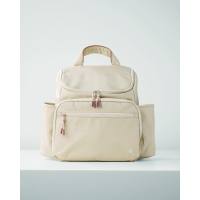
Skip Hop Forma Next Diaper Backpack | Lightweight Baby Changing Bag with Organizer Pouches
$126.65$149.00
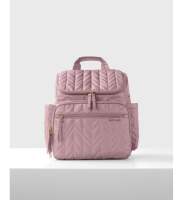
Skip Hop Forma Backpack Baby Diaper Bag (New Color Available!)
$126.65$149.00
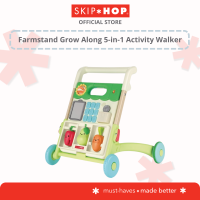
Skip Hop Farmstand Grow Along 5-in-1 Activity Walker | Baby Learning Walker with Play Center
$109.00$169.00
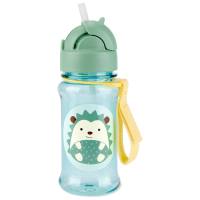
Skip Hop Zoo Tritan Renew Straw Bottle | NEW
$15.92$19.90
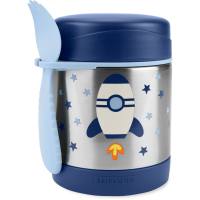
Skip Hop Spark Style Insulated Food Jar | 8 Designs | New Designs Available
$31.92$39.90
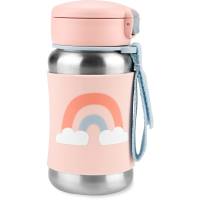
Skip Hop Spark Style Stainless Steel Straw Bottle | 8 Designs | New Designs Available
$31.92$39.90
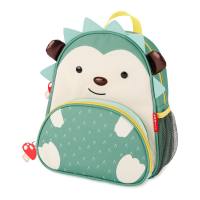
Skip Hop Zoo Kids Backpack | 8 Designs | New Designs Available
$31.92$39.90
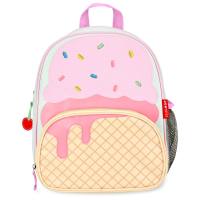
Skip Hop Spark Style Little Kid Backpack | 8 Designs | New Designs Available
$39.92$49.90
About Skip Hop
Skip Hop is an American baby and children’s lifestyle brand established in 2003 in New York City. The brand specialises in thoughtfully designed products for infants, toddlers, young children and their parents, with a focus on combining functionality, contemporary design, convenience and child development. Skip Hop is currently part of Carter’s, Inc., a major North American children’s apparel company that acquired the brand in 2017.1
Its most prominent product categories include diaper bags, baby gear, nursery items, toys, activity centres, bath products, feeding and mealtime accessories, children’s bags and travel products. The brand’s philosophy is encapsulated in its trademarked slogan, “Must-Haves Made Better®.”
Overview
| Category | Information |
|---|---|
| Brand name | Skip Hop |
| Founded | 2003 |
| Place founded | New York City, United States |
| Founders | Ellen and Michael Diamant |
| Industry | Baby, children’s and parenting products |
| Parent company | Carter’s, Inc. |
| Acquisition | Acquired by Carter’s in 2017 |
| Core customers | Expectant parents, babies, toddlers and young children |
| Brand positioning | Functional, innovative and stylish parenting essentials |
| Brand promise | “Must-Haves Made Better®” |
| Major categories | Baby gear, diaper bags, toys, bath, mealtime, nursery, kids’ bags, travel |
| Market positioning | Accessible/premium mass-market baby lifestyle brand |
| Geographic reach | International/global |
| Notable strength | Diaper bags and functional parenting accessories |
Carter’s classifies Skip Hop as one of its emerging brands, alongside Little Planet and Otter Avenue, identifying it as a provider of baby essentials ranging “from tubs to toys.”
History
Founding (2003)
Skip Hop was established in 2003 in New York City by Ellen and Michael Diamant. As new parents, the founders were frustrated by the lack of diaper bags that combined attractive design with practical functionality. Their solution was to develop a bag that functioned effectively both as a conventional diaper bag and as a stroller accessory.2
The company’s early concept differed from traditional baby product manufacturing. Its foundational philosophy was to take an everyday parenting necessity and redesign it to perform better. This approach became the basis for Skip Hop’s subsequent product development strategy. According to co-founder Ellen Diamant, the company began with the founders designing a diaper bag for their own needs before developing the concept into a commercial product line.
Early growth
Skip Hop subsequently expanded beyond diaper bags into a broader range of parenting products. The assortment grew to include items for travel, baby care, mealtime, bath time, playtime, nursery, baby gear and children’s bags. The company built its identity around the combination of utility and modern aesthetics, rather than treating baby products solely as functional commodities.
Acquisition by Carter’s (2017)
A significant milestone occurred in February 2017, when Carter’s, Inc. acquired Skip Hop Holdings, Inc. from Fireman Capital Partners. At the time, Carter’s described Skip Hop as a rapidly growing global lifestyle brand for families with young children.3
The acquisition provided Skip Hop with access to Carter’s resources, retail infrastructure and international reach, while adding a broader baby-product lifestyle business to Carter’s predominantly apparel-oriented portfolio. Skip Hop has remained within the Carter’s portfolio since the acquisition, with corporate materials continuing to identify it as a key brand.3
Founders
Ellen Diamant
Ellen Diamant is a co-founder of Skip Hop and was closely associated with the brand’s creative and product development direction. Her experience as a parent was integral to the original product philosophy: identifying problems parents encounter in daily life and designing products to address them.
Michael Diamant
Michael Diamant co-founded Skip Hop with Ellen. Together, they developed the original concept in New York and built Skip Hop from a diaper bag company into a broader children’s lifestyle brand. Company records specifically identify Ellen and Michael Diamant as the co-founders.4
Brand Philosophy
“Must-Haves Made Better®”
Skip Hop’s central brand promise is “Must-Haves Made Better®”. This phrase reflects the core idea that everyday products parents already require should be redesigned to make parenting easier, more convenient and more enjoyable. Carter’s describes the brand’s philosophy as creating innovative, smartly designed and highly functional essentials for parents, babies and toddlers.5
The brand’s positioning is broadly defined by three principles:
- Quality: Products are designed around the practical needs of babies and parents, emphasising usability and durability.
- Style: Skip Hop does not position baby products as purely utilitarian. Items commonly feature contemporary colours, patterns, shapes and materials intended to complement modern homes and lifestyles.
- Versatility: Many products are designed to adapt as a child grows or to serve multiple purposes. The current assortment includes grow-with-baby bath products, activity centres, high chairs, toys, diaper bags and children’s bags.6
Product Categories
Skip Hop has evolved from a diaper bag specialist into a comprehensive baby and children’s lifestyle brand.
Baby Gear
This category includes products designed for everyday childcare, such as high chairs, booster seats, activity centres, changing products, baby chairs and developmental equipment. The current range features items like the EON 4-in-1 High Chair and various activity centres.5
Diaper Bags & On-the-Go
Diaper bags remain one of Skip Hop’s signature categories. Products include diaper bags, changing bags, changing stations, wet/dry bags, wipes cases, travel accessories and stroller-related accessories. Carter’s reported that Skip Hop was the #1 brand in diaper bags in fiscal 2025, according to company filings.7
Nursery
Skip Hop offers products designed for the baby’s home environment, including changing and nursery-related items. The brand emphasises products that blend into contemporary home interiors rather than appearing as purely utilitarian childcare equipment.
Bath
The bath category comprises baby bath tubs, bath toys, bath accessories and grow-with-baby bath products. Current positioning specifically highlights bath tubs designed to accommodate a child’s growth.7
Playtime & Toys
Skip Hop has developed a substantial developmental toy business, including activity gyms, activity toys, activity centres, walkers, musical toys and developmental toys. The assortment includes products such as the Silver Lining Cloud Baby’s View 3-Stage Activity Center and Explore & More 4-in-1 Grow Along Activity Walker.4
Mealtime
Products in this category include feeding accessories, snack containers, cups, bottles, lunch-related products, high chairs and feeding accessories for toddlers.
Kids’ Bags
As children grow, Skip Hop extends its ecosystem into children’s bags, including backpacks, lunch bags, bento sets, preschool bags and toddler bags. The current range includes children’s backpacks and backpack/lunch box combinations.8
Target Customer
Skip Hop primarily targets a broad customer lifecycle spanning expectant parents, newborn parents, parents of babies, toddlers and preschool-age children.
A simplified customer journey typically progresses from pregnancy and baby registry to diaper bags and newborn essentials, followed by bath and feeding products, play and developmental items, toddler gear, and finally kids’ bags and school-related accessories. This “grow-with-baby” approach is central to the brand’s positioning, with products described as award-winning essentials designed to accompany children through various milestones.
Brand Positioning
Skip Hop occupies a distinct position in the children’s product market. It is neither primarily a fashion brand nor solely a safety-equipment manufacturer. Instead, it operates at the intersection of baby products, lifestyle design, parenting convenience and children’s development.
| Brand dimension | Skip Hop’s position |
|---|---|
| Functionality | Very high |
| Design emphasis | High |
| Baby focus | Very high |
| Parent convenience | Very high |
| Fashion/apparel | Low |
| Developmental play | High |
| Premium luxury positioning | Moderate |
| Mass-market accessibility | High |
| Lifestyle positioning | High |
Consequently, Skip Hop is best understood as a baby lifestyle brand rather than simply a baby-equipment manufacturer. Carter’s itself describes Skip Hop as a global lifestyle brand.9
Design Philosophy
A defining characteristic of Skip Hop is its emphasis on design-led functionality. While traditional baby products often prioritise function over aesthetics, Skip Hop seeks to combine both. The design approach typically addresses whether a product can solve a genuine parenting problem, improve ease of use, adapt as the baby grows, offer convenient storage or portability, fit aesthetically within a modern home, or perform multiple functions. This philosophy is particularly evident in its diaper bags, activity products, bath products and convertible items.
Product Development
Skip Hop’s product development is closely linked to problem-solving. Rather than creating products based solely on visual style, the company historically focuses on identifying challenges in parents’ daily routines and developing solutions. Carter’s states that Skip Hop maintains in-house design and creative teams dedicated to its “Must-Haves Made Better” positioning.10 This design-led approach has enabled the brand to expand from diaper bags into a diverse portfolio while retaining its identity.
Relationship With Carter’s
Skip Hop is part of Carter’s, Inc., which is primarily known for children’s clothing through its Carter’s and OshKosh B’gosh brands. Skip Hop complements this portfolio by providing a substantial presence in non-apparel baby and children’s products.11
This creates a strategic portfolio relationship where Carter’s and OshKosh B’gosh cover apparel, Little Planet covers organic/sustainable apparel, and Skip Hop covers baby gear, toys and lifestyle essentials. This structure allows Carter’s to participate in a wider portion of the parenting journey.
Sales & Distribution
Skip Hop products are distributed through multiple channels. According to Carter’s, the brand sells through Carter’s retail stores, e-commerce platforms, wholesale channels, national retailers, specialty stores and international distribution networks. Carter’s reported that wholesale represented the majority of Skip Hop’s net sales in fiscal 2025.12
Unlike a purely direct-to-consumer startup, the brand’s visibility relies on a combination of retail presence, e-commerce and wholesale distribution.
International Presence
Although founded in New York, Skip Hop has developed into a global lifestyle brand. It is distributed internationally through retailers and specialty channels, with Carter’s leveraging its corporate infrastructure to expand the brand’s reach. Carter’s continues to describe Skip Hop as a global brand serving families with young children.
Notable Brand Strengths
Recognition in diaper bags
Diaper bags are historically significant to Skip Hop and remain a core strength. Carter’s reported that Skip Hop was the No. 1 diaper bag brand in fiscal 2025.13
Design and function
The brand’s primary competitive advantage is its ability to combine practicality with attractive design, rather than competing solely on price.
Broad product ecosystem
Customers may encounter Skip Hop at multiple stages, progressing from diaper bags to bath, feeding, toys, activity centres and toddler bags. This provides opportunities to build brand familiarity beyond a single product category.
Grow-with-child philosophy
The brand increasingly emphasises products that remain useful across multiple developmental stages, rather than items designed for only a brief period.14
Brand Identity
Skip Hop’s visual and commercial identity is characterised as modern, playful, practical and parent-friendly. Compared to traditional baby brands, it employs a more contemporary lifestyle aesthetic. Products are designed to appeal simultaneously to parents, who value functionality and appearance, and children, who respond to playful shapes, characters and colours.
Competitive Landscape
Skip Hop competes across several overlapping markets. Depending on the category, competitors may include OXO Tot (feeding and baby products), Munchkin (baby care and feeding), Tommee Tippee (feeding and baby care), Lässig (diaper bags and lifestyle products), Stokke (premium equipment), BabyBjörn (equipment and accessories), NUK (feeding and infant products), Done by Deer (design-oriented products) and 3 Sprouts (storage and lifestyle products). However, Skip Hop’s combination of diaper bags, baby gear, toys, bath, feeding and children’s bags affords it a relatively broad market positioning.
Brand Architecture
Skip Hop operates as a master brand. Rather than creating independent brands for each category, it places numerous products under the same name, covering diaper bags, baby gear, bath, playtime, toys, mealtime, nursery, kids’ bags and on-the-go products. This structure facilitates cross-category recognition; a parent who first encounters Skip Hop through a diaper bag may subsequently consider the brand for bath products or toddler backpacks.
Factors Contributing to Success
Several factors explain the brand’s success:
- Solving genuine problems: Its origins were rooted in real frustrations experienced by the founders as parents.15
- Lifestyle orientation: Skip Hop incorporated contemporary design into baby products, moving away from purely utilitarian aesthetics.
- Functional focus: Products are designed around practical everyday challenges.
- Intelligent expansion: The company moved from diaper bags into adjacent categories where its design philosophy remained relevant.
- Scale through acquisition: The 2017 acquisition provided the backing of a larger children’s company and retail organisation.16
Skip Hop Today
As of 2026, Skip Hop remains a Carter’s brand positioned around baby and children’s essentials. Corporate filings indicate the brand focuses on products for expectant parents and families with young children, particularly diaper bags, kids’ bags, home gear, playtime, mealtime, bath time and travel. Filings also confirm Skip Hop was the No. 1 diaper bag brand in fiscal 2025.
The brand continues to introduce new products and campaigns. For instance, Carter’s reported a July 2026 Skip Hop launch called “Clean Slate Rescue,” demonstrating that Skip Hop remains an actively developed brand rather than merely a legacy label.17
Timeline
| Year | Event |
|---|---|
| 2003 | Skip Hop founded in New York City |
| 2003–2004 | Began with innovative diaper bag concepts |
| 2000s | Expanded into additional parenting and baby categories |
| 2010s | Developed into a broader global baby lifestyle brand |
| 2017 | Acquired by Carter’s from Fireman Capital Partners |
| 2017 onward | Expanded further through Carter’s retail, wholesale and e-commerce infrastructure |
| 2020s | Broadened assortment across baby gear, bath, play, feeding, nursery and children’s bags |
| 2025 | Carter’s reported Skip Hop as No. 1 in diaper bags for fiscal 2025 |
| 2026 | Continues as an active Carter’s brand with new products and campaigns |
References
- Skip Hop – Baby Items, Products & Gear | Carter’s
- Gate 8 Limited | packaging | display | space | display manufacturing | shop fittings | retail furniture | retail design | product displays | merchandising pos | gondolas | FSDUs | store concepts | pos marketing materials | brand communication tools | Skip Hop
- SEC
- Skip Hop Playtime & Toys | Carter’s
- Skip Hop Baby Gear | Carter’s
- Skip Hop Kids Bags | Carter’s
- cri-20241228
- nwl-20241231
- Skip Hop, Inc. in New York NY – Company Profile
- cri-20240330
- cri-20240330
- SEC Filing | Carter’s, Inc.
- cri-20221231
- Skip Hop’s founder talks 4 roadblocks to success, and how to overcome them
- skiphop.com
- cri-20220101
- cri-20210102
- bizjournals.com