Shop on Lazada
NUK products
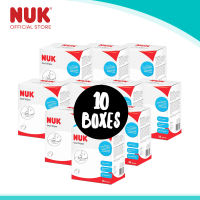
NUK Oral Wipes For Newborn Baby | 25 Sachet/ Box | Bundle Deals | Made In Japan
$148.50$202.00
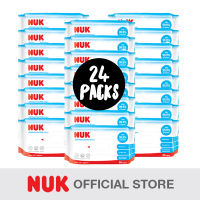
NUK Anti Bacterial Wipes for Baby 80pcs x 12 packs/ 3 packs | Baby Wipes | Wet Wipes | Bundle Deal/ carton deal
$100.00$183.20
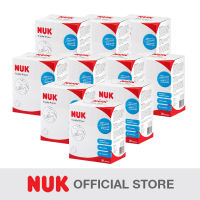
NUK Nipple Wipes 30 Sachet/ Box | Breast Wipes | For Breastfeeding
$128.00$172.00
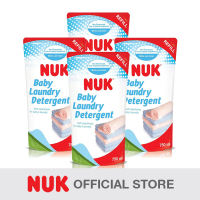
NUK Baby Laundry Detergent Refill Pack 750ml | Bundle Deals Available
$46.00$56.20
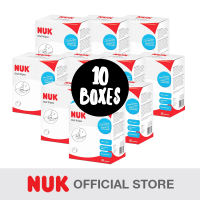
NUK Oral Wipes For Newborn Baby | 25 Sachet/ Box | 10 boxes | Carton Deals | Made In Japan
$148.50$202.00
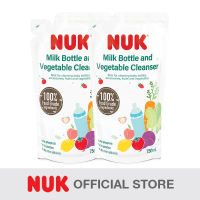
NUK Milk Bottle Cleanser and Vegetable Cleanser Refill 750ml | 100% Food Grade Ingredients | Bundle Deal | Milk Bottle Cleanser
$26.00$29.80
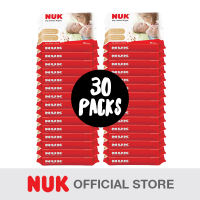
NUK Dry Cotton Wipes 80pcs x 30 Pack | Baby Wipes | Dry Wipes | Bundle Deal | Carton Deal
$179.00$250.00
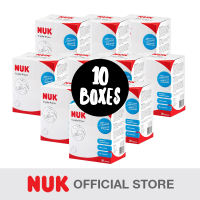
NUK Nipple Wipes 30 Sachet/ Box | 10 boxes | Carton Deal | Breast Wipes | For Breastfeeding
$128.00$172.00
About NUK
Brand Overview
NUK is a German baby-care brand best known for its baby bottles, feeding teats, pacifiers, drinking cups, breastfeeding accessories, and infant-care products. Its identity is strongly associated with an asymmetric, orthodontic-inspired teat shape developed in Germany during the 1950s in collaboration with dental specialists. Today, NUK operates as part of MAPA GmbH, and its products are distributed internationally 1.
Basic Information
| Attribute | Information |
|---|---|
| Brand | NUK |
| Origin | Germany |
| Founded / Launched | 1956 |
| Parent Company | MAPA GmbH |
| Industry | Baby care / Infant feeding |
| Core Categories | Pacifiers, bottles, teats, cups, breastfeeding, mealtime, oral care, baby hygiene |
| Key Concept | Natural, jaw-friendly feeding and soothing |
| Historic Slogan | “Understanding Life” |
| Current Positioning | Supporting babies’ natural development and parents’ everyday lives |
| International Presence | Products distributed in more than 100 countries; current materials cite over 110 countries, with some product pages citing over 120 depending on market context 10 |
The NUK Shape and Orthodontic Concept
NUK’s distinctive identity stems from its physiological and orthodontic teat concept rather than generic baby product manufacturing. The original design was based on observations of breastfeeding mechanics. Dentists Dr Adolf Müller and Prof. Dr Dr Wilhelm Balters researched the relationship between sucking, breastfeeding, and jaw development, creating an asymmetric teat intended to resemble the shape of a mother’s nipple during nursing. This orthodontic bottle nipple was commercially launched in 1956 by Hanseatische Gummiwarenfabrik GmbH 3.
This innovation established the characteristic NUK Shape, which features:
- A relatively flat underside
- A curved upper surface
- Broad space for the tongue
- A comparatively narrow and thin teat neck
- Asymmetric geometry rather than a perfectly round or symmetrical form
The company has continued to refine this foundational concept over subsequent decades rather than abandoning it 2.
History
1950s: Origins
The brand emerged in post-war Germany during the 1950s baby boom, a period when bottle-feeding was widespread and dental researchers were increasingly investigating how sucking habits affected oral development. Müller and Balters developed their teat design based on the form of the mother’s nipple during breastfeeding. The first NUK product reached the market in 1956, and the brand name quickly became associated with this unusual asymmetric teat 3. Although the concept was initially unfamiliar to consumers, the company collaborated with clinics, doctors, and midwives to explain the product’s rationale. By the end of the decade, NUK had become a recognisable baby-care brand in Germany 4.
1960s: Expansion into Practical Feeding
As powdered infant formula became common, NUK expanded beyond the teat itself. Addressing the inconvenience of traditional narrow-neck bottles for formula preparation, the brand introduced bottles with a wider opening, followed by screw-cap systems that simplified preparation and transport 5. This marked a significant step in transforming NUK from a specialist teat manufacturer into a broader infant-feeding system.
1970s: Medical and Hospital Orientation
During the 1970s, NUK strengthened its relationship with healthcare professionals by working closely with doctors, nurses, and midwives to develop products for hospital and specialised care applications. In 1971, it introduced what it described as the world’s first disposable bottle teat, featuring a preassembled, disinfected, and individually packaged teat and screw ring 6. Another key development occurred in 1979 with the introduction of a teat incorporating an air vent designed to prevent vacuum formation inside the bottle, serving as an important predecessor to modern anti-colic air-system concepts 7. By the end of the decade, NUK products were available in more than 48 countries 8.
1980s: Broader Baby Care Portfolio
In the 1980s, NUK significantly broadened its portfolio to include breast pads, breast pumps, baby toothbrushes, teething rings, potties, sterilisers, and other infant-care items. In 1985, the brand introduced a steam steriliser and began using silicone for soothers, providing parents with an alternative to traditional latex 9. This era helped establish the modern perception of NUK as a complete baby-care brand rather than solely a bottle and teat manufacturer.
1990s: Age-Based Developmental Stages
The 1990s brought a conceptual shift with the introduction of different teat and soother sizes corresponding to children’s developmental stages: 0–6 months, 6+ months, and 18+ months. NUK describes this as the world’s first “growing” size concept for teats and soothers 10. In 1998, the brand introduced a leak-proof drinking cup to assist children in transitioning to independent drinking and established its online presence. Licensed characters such as JANOSCH and Snoopy also appeared on products during this period, enhancing visual appeal for both children and parents 11.
2000s: System Integration
The 2000s represented another major expansion phase. In 2003, NUK introduced the FIRST CHOICE bottle-and-teat system, providing a standardised feeding ecosystem around the NUK Shape to facilitate combining bottles, teats, and accessories 12. An Oral Care programme launched in 2006 extended the brand’s philosophy from feeding to children’s oral hygiene. The NUK Genius Soother followed in 2007, incorporating further refinements to the teat shape based on accumulated research. In 2010, the brand entered the household cleaning category with its Baby Bottle Cleanser 13, completing an ecosystem covering feeding, drinking, oral care, and hygiene.
2010s: Understanding Life
During the 2010s, NUK increasingly positioned itself around its longstanding philosophy, “Understanding Life”, shifting emphasis from individual products to understanding the holistic needs of babies and parents. Key developments included the 2011 introduction of Easy Learning 1-2-3 leak-proof cups to support gradual learning of independent drinking 10. In 2012, the Thermo Light baby-food warmer was released, utilising light technology instead of conventional water-bath heating. That same year saw the launch of First Choice+, a new generation of feeding teats designed around the NUK Shape to support a more natural feeding experience 14.
2020s: Perfect Match and Sustainability
The 2020s have seen further evolution of the product philosophy, focusing on two primary themes. The Perfect Match platform was developed to include bottles, teats, soothers, and learner cups designed to adapt closely to a baby’s individual feeding, sucking, and developmental patterns 14. Simultaneously, the NUK for Nature range was introduced to combine established baby-care expertise with materials and production approaches aimed at reducing environmental impact 15. This reflects broader market trends where parents prioritise materials, packaging, manufacturing processes, and sustainability alongside safety and functionality.
Corporate Ownership
NUK is part of MAPA GmbH, a German company with roots tracing back to the post-war period. The corporate predecessor, Hanseatische Gummiwerke Bachmann & Co. KG, originated in Bremen and Zeven in 1947. Hanseatische Gummiwarenfabrik GmbH launched the orthodontic bottle nipple in 1956, effectively marking the birth of NUK. In 1967, the company was acquired by the French entity MAPA SA. Today, NUK serves as one of MAPA’s principal consumer brands alongside Spontex and BILLY BOY 22. Structurally, NUK functions as a brand within MAPA GmbH rather than as an independent standalone corporation.
Product Portfolio
NUK’s current portfolio covers a substantial portion of the early-childhood journey, organised into several core categories 16:
Feeding
- Baby bottles
- Feeding teats
- Bottle accessories
- Anti-colic systems
- Bottle sets
- Formula-feeding accessories
Soothing
- Pacifiers and soothers
- Age and size-specific categories
- Silicone and other teat material options
- Storage and hygiene accessories
Breastfeeding
- Breast pumps
- Breastfeeding accessories
- Nipple shields
- Breast pads
Learning to Drink
- Training cups
- Learner cups
- Straw cups
- Leak-proof cups
Mealtime
- Baby feeding accessories
- Toddler eating products
- Food-preparation accessories
Oral Care
- Baby toothbrushes
- Teething products
- Oral-care accessories
Baby Hygiene
- Hygiene products
- Sterilisation and cleaning products
- Bottle-cleaning products
Design Philosophy and Scientific Basis
Unlike conventional symmetrical or round pacifiers and bottle teats, the traditional NUK shape is intentionally asymmetric. The upper section is curved while the underside is flatter, providing additional room for the tongue. This design philosophy is grounded in breastfeeding mechanics; the brand posits that a mother’s nipple changes shape inside the baby’s mouth during nursing, suggesting that artificial teats should not necessarily be simple round replicas 17. The shape is intended to provide space for natural tongue movement, reduce pressure on the developing jaw, allow lips to close naturally, distribute forces differently around the mouth, and emulate aspects of breastfeeding. This design has been repeatedly refined since 1956 rather than remaining static 18.
It is important to distinguish NUK’s product claims from broader medical conclusions. The company invests significantly in research concerning sucking, feeding mechanics, oral development, and teat design, collaborating with scientists, dentists, orthodontists, paediatric professionals, and midwives 19. More recently, NUK highlighted a 2025 study published in Clinical Oral Investigations that used computer simulations to compare soother shapes. According to the brand’s summary, the NUK shape produced lower simulated palate stress and dental displacement than rounder designs tested 20. While this supports the mechanical rationale behind the design, terms like “orthodontic” or “jaw-friendly” describe the design philosophy rather than guaranteeing specific clinical outcomes, as real-world results depend on factors including duration of use, age, and individual development.
Manufacturing and Quality Standards
German manufacturing remains central to NUK’s brand identity. The company states that almost all its soothers and baby bottles are produced in Germany, supplemented by international manufacturing facilities. Quality controls are performed throughout the process, from raw-material sourcing through production and final packaging 21. Products undergo mechanical and safety testing, including checks for tensile strength and assembled components, alongside internal laboratory testing and external market surveillance. This contributes to the brand’s positioning as a combination of German engineering, medical and dental heritage, and baby-care specialisation.
Brand Philosophy
The NUK brand is fundamentally defined by four core ideas:
- Natural Development: Products are designed around the way babies naturally suck, feed, swallow, and develop.
- Expert Knowledge: The brand’s heritage is unusually connected to dentistry and orthodontics compared to general baby-product manufacturers.
- Practical Parenting: Beyond biological development, accessories such as bottles, cups, sterilisers, and cleaners are designed to simplify everyday parenting tasks.
- Development by Age: Rather than treating “baby” as a universal category, products are frequently divided according to developmental stages, such as different teat and soother sizes for specific age groups 19.
Competitive Positioning
NUK occupies a distinct position in the baby-care market, characterised by the following attributes:
| Brand Dimension | NUK Positioning |
|---|---|
| Origin | German |
| Core Heritage | Orthodontic and dental baby feeding |
| Hero Product | Pacifier/soother and bottle teat |
| Design Language | Functional, medical-inspired, developmental |
| Major Strength | Integrated feeding and soothing ecosystem |
| Manufacturing Image | Strong “Made in Germany” association |
| Target Customer | Newborns, babies, toddlers, and their parents |
| Main Differentiator | Distinctive asymmetric NUK Shape |
| Brand Personality | Trustworthy, scientific, caring, practical |
| Modern Themes | Natural development, research, sustainability |
Unlike brands built around fashion or toys, NUK’s identity originated from dental research and breastfeeding observation, evolving into a complete baby-care system. This history explains the continued emphasis on oral development, sucking mechanics, and feeding, providing a stronger technical narrative regarding oral anatomy than many generalist competitors.
Major Milestones
- Late 1940s: Müller and Balters investigate sucking, breastfeeding, and jaw development.
- 1956: First NUK orthodontic bottle teat enters the market 3.
- 1960s: Introduction of wider-neck bottles and improved feeding systems.
- 1971: Disposable teat introduced.
- 1979: Air-vent and air-system development.
- 1980s: Expansion into breastfeeding, oral care, sterilisation, and baby-care products.
- 1985: Steam steriliser introduced.
- 1990s: Age-based “growing” teat and soother concept established.
- 1998: Leak-proof drinking cup launched and online presence established.
- 2003: FIRST CHOICE system introduced.
- 2006: Oral Care programme launched.
- 2007: Genius Soother released.
- 2011: Easy Learning cups introduced.
- 2012: Thermo Light and First Choice+ launched.
- 2020s: NUK for Nature and Perfect Match platform introduced.
- 2025: New peer-reviewed research highlighted concerning soother shape and simulated oral forces 20.
- 2026: NUK marks its 70-year milestone and announces a new generation of the Perfect Match platform 23.
Market Significance
NUK’s significance in the baby-product market extends beyond its longevity. Its primary contribution lies in popularising the concept that baby bottle teats and pacifiers could be deliberately engineered around infant oral anatomy rather than treated as simple rubber or silicone nipples. This philosophy became the foundation for the company’s entire product ecosystem. Today, NUK describes itself as a brand whose products are used in more than 110 countries and states that it is the leading feeding brand in German hospitals according to its cited methodology 22.
References
- Quality standards safety testing & materials UK | NUK
- First Choice baby bottles & soothers anti-colic| NUK
- Brand biography our story heritage & expertise | NUK
- NUK – Designed by Orthodontists
- Brand Biography
- Home page
- Baby products to discover bestsellers & new in | NUK
- NUK First Choice+ Baby Bottle
- Studies research on dummies & oral development | NUK
- Baby products for feeding & care essentials UK | NUK
- Historia de la Marca NUK – 65 Años de Innovación | NUK
- Historia de la marca NUK
- NUK baby products in the official online shop
- Perfect Match baby bottles & soothers anti-colic | NUK
- Baby bottle steriliser set with bottle warmer UK | NUK
- Baby products for feeding & care essentials UK | NUK
- Dummy First Choice silicone 2-pack for 0–36m | NUK
- Baby dental care health tips on dummies & pacifier | NUK
- Dummy & soothers orthodontic sizes for newborns | NUK
- Brand Biography
- NUK
- NUK – MAPA
- NUK – MAPA