Shop on Lazada
Smeg products
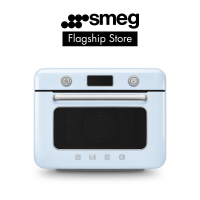
SMEG 10-in-1 Countertop Combi Steam Oven Available in 6 Colors
$1,698.00
Buy on Lazada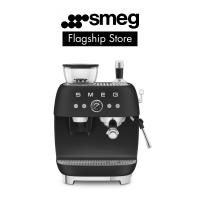
SMEG Espresso Coffee Machine with Integrated Grinder Available in 6 Colours with 2 Years Warranty
$998.00$1,398.00
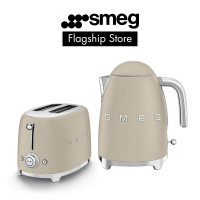
SMEG Breakfast Set 1.7L Kettle & 2-Slice Toaster Available in 2 Chrome Colours 50s Retro Style Aesthetic with 2 Years Warranty
$576.00
Buy on Lazada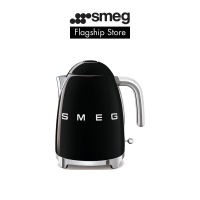
SMEG 1.7L Kettle - Available in 8 Glossy Colours 50s Retro Style Aesthetic with 2 Years Warranty
$268.00
Buy on Lazada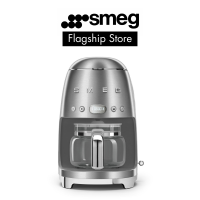
SMEG Drip Filter Coffee Machine - Available in 7 Colors 50s Retro Style Aesthetic with 2 Years Warranty
$348.00
Buy on Lazada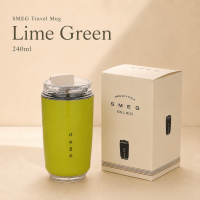
SMEG 240ml Insulated Tumbler – Classic Design Meets Leak-Proof Function Your Perfect Coffee Companion
$9.70$30.80
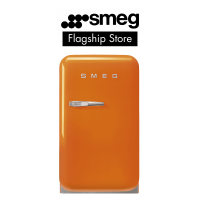
SMEG 34L Bar Fridge - Available in 10 Colours 50s Retro Style Aesthetic with 2 Years Warranty
$1,628.00$1,798.00
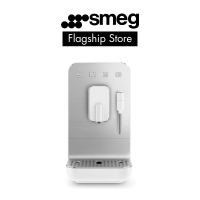
SMEG Automatic Bean to Cup Coffee Machine with Steam Wand Available in White & Black
$828.00$1,088.00
About Smeg
Overview
Smeg is an Italian family-owned home-appliance company best known for combining Italian design, distinctive retro styling and modern appliance technology. Founded in 1948 in Guastalla, near Reggio Emilia, Smeg has grown from a small metal-enamelling business into an international appliance group with a strong reputation for design-led products.1
| Smeg | |
|---|---|
| Full name | Smeg S.p.A. |
| Original name | Smalterie Metallurgiche Emiliane Guastalla |
| Founded | 1948 |
| Founder | Vittorio Bertazzoni Sr. |
| Headquarters | Guastalla, Reggio Emilia, Emilia-Romagna, Italy |
| Ownership | Family-owned |
| Industry | Consumer and professional appliances |
| Core identity | Italian design + technology + functionality |
| Major categories | Cooking, refrigeration, dishwashers, laundry, small appliances, coffee |
| International presence | Worldwide subsidiaries, representative offices and distributors |
| Manufacturing | Five production plants in Italy, according to Smeg |
| Best known for | FAB refrigerators, 1950s-inspired small appliances, ovens, hobs and design collaborations |
Smeg describes itself as a global Italian brand built around “colour, design and technology”. Its headquarters remain in Guastalla, where the company was founded.2
Origin of the name
The name SMEG is an acronym for Smalterie Metallurgiche Emiliane Guastalla, which translates roughly to Emilian Metallurgical Enamelling Works of Guastalla. The name reflects the company’s original business; it did not begin as the glamorous kitchen-appliance brand recognised today but originally worked with metal and enamelling before gradually moving into household appliances.3
Founding and early history
Smeg was founded in 1948 by Vittorio Bertazzoni Sr. in Guastalla, a town in the Emilia-Romagna region of northern Italy. The Bertazzoni family had already been involved in metalworking, and Smeg initially operated as an enamelling factory producing metal components and products for local industries.4 This origin is significant because Smeg’s later expertise in metalworking, enamel, manufacturing and surface finishes became integral to its identity.
Transition to household appliances
Smeg gradually shifted from industrial metalwork towards household appliances. In the mid-1950s, the company began producing cookers. Its first Smeg-branded cooker was Elisabeth, introduced in 1956, marking a major transition from earlier industrial activities into consumer appliances.5 Expansion into laundry appliances followed in 1963 with Leda, the first Smeg-branded washing machine.6
In 1970, Smeg introduced Niagara, described by the company as the world’s first dishwasher with capacity for 14 place settings. This product exemplified an approach that would become characteristic of the brand: combining technological development with attention to domestic usability.7 The following year, Smeg began producing built-in ovens and hobs, which eventually became central to its business.8
Design as a turning point
A defining element of Smeg’s modern identity is the decision to treat appliances as design objects rather than merely functional machines. This transformation accelerated during the 1970s and 1980s. In 1977, Smeg commissioned Italian designer and publisher Franco Maria Ricci to create a new logo incorporating visual references to gas-hob burners, oven knobs and the concept of mathematical infinity. This helped establish the visual language associated with the brand.9
Rather than treating design as an afterthought, Smeg increasingly collaborated with prominent architects and designers. Names associated with the brand include Guido Canali, Mario Bellini, Renzo Piano, Marc Newson, Piano Design and deepdesign (Raffaella Mangiarotti and Matteo Bazzicalupo). Smeg also maintains an internal design function and describes design as central to how its products communicate with their surroundings.10
Key design collaborations
- Guido Canali (1985): Smeg began collaborating with architect Guido Canali to create ovens and hobs, signalling a deliberate move towards a more architectural and design-oriented approach.11
- Mario Bellini (1991): The company subsequently worked with architect and designer Mario Bellini on ovens and hobs featuring his design input.12
- Renzo Piano (1995): Collaboration with internationally renowned architect Renzo Piano eventually extended to hobs, ovens, refrigerators and home-garden products.13
The FAB refrigerator
The product category most strongly associated with Smeg is the refrigerator, particularly the FAB series which became a defining part of the brand. Introduced in 1997, FAB refrigerators are characterised by rounded forms, bold colours, chrome details, soft curves and 1950s-inspired styling. These appliances transformed the refrigerator from an item normally hidden in a kitchen into one intended to be visually displayed. Smeg’s historical material describes the FAB line as colourful 1950s-style refrigerators that became icons of style worldwide.14 This launch is widely regarded as the moment when Smeg’s contemporary visual identity became unmistakable.
Design aesthetic
Smeg’s design language encompasses several recurring characteristics. The brand frequently draws inspiration from mid-century and 1950s Italian design while integrating contemporary technology; the result uses retro visual cues on modern appliances rather than attempting historically accurate reproduction.
Colour is fundamental to the brand’s identity. Instead of restricting appliances to conventional white, black or stainless steel, Smeg frequently employs pastel blue, cream, pink, red, green, black and metallic finishes. Colour thus becomes part of the product’s identity rather than merely a finish option. Rounded forms are equally prominent, with curved corners, rounded bodies, chrome accents, prominent controls and simplified geometric shapes appearing across refrigerators and small appliances.
Conceptually, Smeg often treats appliances as objects that contribute to interior design. Its design philosophy describes appliances as products capable of taking centre stage in the home rather than simply disappearing into the background.15
Product categories
Smeg’s portfolio extends well beyond its iconic toaster and refrigerator.
Major domestic appliances
- Cooking: Ovens, steam ovens, combination ovens, hobs, induction hobs, gas hobs, range cookers, cookers and cooker hoods.
- Refrigeration: Refrigerators, fridge-freezers, freezers and wine-related refrigeration products in selected markets.
- Dishwashers: Built-in and freestanding models.
- Laundry: Washing machines, washer-dryers and tumble dryers, depending on the market.
Small appliances
The small-appliance collection made Smeg particularly fashionable outside the traditional appliance industry. Products include toasters, kettles, blenders, stand mixers, food processors, juicers, hand blenders and coffee machines, many featuring the recognisable 1950s-inspired design language. These items demonstrate the company’s strategy of transforming everyday functional products into objects with strong visual identity. The company’s historical timeline dates the appearance of its 1950s-style small appliances to 2014, with designs developed in collaboration with deepdesign.16
Coffee and espresso
Coffee has become an important part of the Smeg portfolio. In 2019, Smeg acquired La Pavoni, the historic Italian manufacturer associated with domestic and professional espresso machines.17 In 2020, the company introduced the Lavazza A Modo Mio SMEG coffee machine, combining Lavazza’s capsule system with Smeg’s design approach.18 These moves expanded Smeg’s reach beyond traditional cooking and refrigeration.
Professional products
The wider Smeg Group also maintains professional activities. Historically, the company moved into professional equipment during the 1980s, supplying bars, gastronomy establishments, restaurants, professional dishwashing operations, healthcare facilities, laboratories and dental and medical environments. This professional division differs significantly from the colourful consumer products that dominate public perception of the brand.19
Collaborations
Collaboration is a key component of Smeg’s branding strategy. Over the years, the company has partnered with designers, architects, fashion houses and other brands.
- Ferrari: Smeg sponsored the Ferrari Formula 1 team beginning in the late 1970s, during the era associated with driver Gilles Villeneuve.20
- Marc Newson: Collaboration with designer Marc Newson began in 2008.
- Italia Independent: A 2012 partnership resulted in products including the Smeg500 refrigerator, which incorporated a refrigerator into the front end of a Fiat 500.21
- Dolce & Gabbana: Beginning in 2016, this collaboration combined Smeg appliances with highly decorative Sicilian-inspired visual motifs.22
- Lavazza: The companies collaborated on coffee machines, notably the Lavazza A Modo Mio SMEG introduced in 2020.23
- Porsche: Smeg and Porsche announced a design collaboration resulting in a limited capsule collection, listed in Smeg’s history under 2025.24
Manufacturing philosophy
Smeg emphasises its continued connection to Italian manufacturing. The company states that it operates five production plants in Italy and uses certified laboratories, testing procedures and manufacturing technologies focused on durability, safety, usability, energy efficiency and reliability.25 “Made in Italy” functions as part of the brand’s positioning rather than merely a geographic description.
Market positioning
Smeg is generally not considered a luxury brand in the same sense as Hermès, Rolex or Ferrari. It is more accurately described as a premium, design-led Italian appliance brand. Products often cost considerably more than basic appliances because customers pay for a combination of function, materials, engineering, design and brand identity. The company’s strategy aligns more closely with premium lifestyle design than conventional luxury. A Smeg toaster, for example, appeals partly through its aesthetic presence in the kitchen and its expression of the owner’s preferences.
Several factors contribute to this positioning:
- Design: Significant investment in product styling and collaborations with professional designers.
- Materials and finishes: Emphasis on surfaces, colours, metals, enamel, chrome and visible details.
- Brand: Substantial recognition built around a distinctive aesthetic.
- Manufacturing: Focus on Italian production and quality-control processes.
- Product development: Integration of engineering with design research and technological development.
Smeg describes its goal as combining performance and energy efficiency with styling research and design.26
Business model
Smeg’s strategy can be understood as a progression from Italian manufacturing and appliance engineering through industrial and product design to a strong visual identity, premium positioning and global distribution. Rather than competing purely on specifications such as capacity, motor power or number of programmes, Smeg makes design itself a primary reason for purchase. This distinguishes it from conventional appliance manufacturers.
The brand turned household appliances—traditionally considered utilitarian—into lifestyle products. Where a conventional refrigerator is evaluated primarily on capacity, energy efficiency, reliability, cooling performance and price, Smeg adds the dimension of whether the appliance contributes aesthetically to the room’s identity. This principle applies across toasters, kettles, stand mixers, coffee machines, ovens and cookers, making Smeg recognisable even to those unfamiliar with appliance engineering.
Visual brand identity
Smeg’s brand identity comprises Italian heritage, colour, retro styling, architecture and design, technology and premium positioning. The company summarises this identity around colour, design and technology.
Historical timeline
| Year | Event |
|---|---|
| 1948 | Vittorio Bertazzoni Sr. establishes Smeg in Guastalla |
| 1955–56 | Smeg enters cooker production; Elisabeth becomes its first branded cooker |
| 1963 | Leda washing machine introduced |
| 1970 | Niagara 14-place dishwasher introduced |
| 1971 | Built-in ovens and hobs enter production |
| 1977 | Franco Maria Ricci designs the Smeg logo |
| 1979 | Smeg begins Ferrari sponsorship |
| 1985 | Collaboration with architect Guido Canali |
| 1991 | Collaboration with Mario Bellini |
| 1995 | Collaboration with Renzo Piano |
| 1997 | FAB 1950s-style refrigerators emerge |
| 2008 | Collaboration with Marc Newson |
| 2012 | First Good Design Award; Smeg500 collaboration |
| 2014 | 1950s-style small appliances expand the range |
| 2016 | Dolce & Gabbana collaboration begins |
| 2019 | Smeg acquires La Pavoni |
| 2020 | Lavazza A Modo Mio SMEG launched; cookware introduced |
| 2021 | New generation of Galileo ovens |
| 2023 | Smeg receives another Good Design Award |
| 2024 | Collaboration with Stefano Boeri Interiors |
| 2025 | Porsche × Smeg capsule collection |
Ownership and the Bertazzoni family
Smeg remains a family-owned Italian business. Founded by the Bertazzoni family, the company is described in its own materials as being managed by the third generation of the family.28 This differentiates Smeg from many large appliance groups that have become parts of multinational conglomerates and connects to its emphasis on long-term design and manufacturing heritage.
Global expansion
Although strongly Italian in identity, Smeg is an international company operating through subsidiaries, representative offices, distributors and international sales networks. Group information lists 20 branches, representative offices and a widespread distributor network.29 The brand is simultaneously Italian in origin and identity yet global in distribution.
Relationship with Made in Italy
“Made in Italy” is central to Smeg’s positioning. The company’s headquarters are in Guastalla, Emilia-Romagna, and it maintains multiple production facilities in Italy, explicitly connecting its manufacturing culture with Italian quality, design and technological development.30 Emilia-Romagna has strong traditions in mechanical engineering, automotive manufacturing, food, industrial design and craftsmanship, meaning Smeg’s identity fits naturally within the broader industrial culture of northern Italy.
Comparison with conventional appliance brands
| Conventional appliance approach | Smeg approach |
|---|---|
| Function first | Function + design |
| Appliance blends into kitchen | Appliance can become a focal point |
| Neutral colours | Strong colour palette |
| Technology-led marketing | Technology + lifestyle |
| Appliance as equipment | Appliance as design object |
| Price/specification comparison | Design/brand/emotional appeal |
| Minimal visual identity | Highly recognizable visual identity |
Smeg does not ignore engineering; it emphasises testing, reliability, safety, energy efficiency and usability. The distinction lies in presenting engineering together with design rather than separately from it.31
Cultural significance
Smeg helped popularise the idea that everyday appliances can form part of interior design. Before this approach became widespread, appliances were typically hidden or integrated. Smeg instead made the appliance itself a decorative object, influencing how consumers perceive refrigerators, kettles, toasters, coffee machines and stand mixers. The company effectively transformed functional hardware into lifestyle merchandise.
Strengths and limitations
Strengths
- Strong recognition: Products are often identifiable without visible branding.
- Consistent design language: The rounded, colourful, retro-modern aesthetic has remained remarkably consistent.
- Italian heritage: Genuine manufacturing and family-business history dating to 1948.
- Designer credibility: Collaborations with major architects and designers provide credibility beyond conventional appliance marketing.
- Product breadth: Coverage spans large built-in appliances, small countertop products and professional equipment.
- Emotional appeal: Purchases are often driven by affinity for the object itself.
Limitations
- Premium pricing: Design and brand positioning make products considerably more expensive than mainstream alternatives.
- Design-dominated purchasing: Customers prioritising maximum specifications per dollar may prefer other brands.
- Styling specificity: The distinctive retro look may not suit minimalist, industrial or ultra-modern interiors.
- Aesthetic premium: Part of the price represents design and brand rather than purely technical performance.
These limitations represent trade-offs inherent in Smeg’s positioning rather than deficiencies.
Brand differentiation
Smeg sells household appliances as designed Italian lifestyle objects rather than treating design as an addition to engineering. The company began with metal and enamelling, moved into appliances, developed engineering and manufacturing expertise, and then increasingly incorporated architects, designers, colour and fashion into product development. This evolution produced the brand recognised today.
Current status
As of 2026, Smeg remains headquartered in Guastalla and continues to operate as a family-owned Italian appliance group with international operations. Its portfolio spans major domestic appliances, small appliances, coffee equipment and professional products.32 Recent history shows continued use of collaborations to maintain cultural relevance, including partnerships with Stefano Boeri Interiors and Porsche.33
References
- History
- About Smeg
- Chi Siamo | Smeg Italia
- Code of Ethics
- MAJOR DOMESTIC APPLIANCES
- Smeg Professional – Brand story – History
- About Smeg
- History
- Smalterie Metallurgiche Emiliane Guastalla
- History
- Storia | Smeg Italia
- SUSTAINABILITY
- About Smeg Group
- Société SMEG FRANCE à MONT-SAINT-AIGNAN (76130). Chiffre d’affaires, extrait Kbis, bénéfice, statuts, extrait RNE, bilans, actionnaires – 344083019
- EDGAR Filing Documents for 0000064040-26-000013
- spgi-20251231
- EDGAR Filing Documents for 0000825542-25-000022
- smg-20250930
- EDGAR Filing Documents for 0001375365-25-000027
- History
- About Smeg
- Smeg – Histoire
- Smeg | Historie
- Historia – La historia
- Smeg – Technology with style | Smeg Singapore
- Smeg Singapore PTE-LTD contacts | Smeg.sg – Contact
- History – Story – Timeline – Italy – | Smeg Professional UK
- Smeg Professional – Oltre 70 anni di Made In Italy – Storia
- About – SMEG Shop
- Our History – Smeg Instruments
- History | Smeg Instruments UK
- Smeg History – Brand Story – Italy – Premium | Smeg UK
- SMEG story