Shop on Lazada
Solvil et Titus products
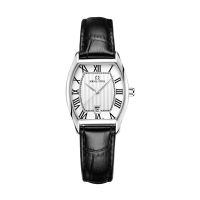
Solvil et Titus Barista Womens 3 Hands Date Quartz Watch in Silver White Dial and Black Leather Strap W06-02825-001
$208.00$260.00
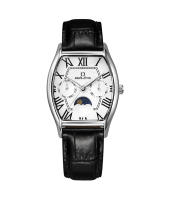
Solvil et Titus Barista Multi-Function Quartz Black Leather Women Watch W06-03220-001
$304.00$380.00
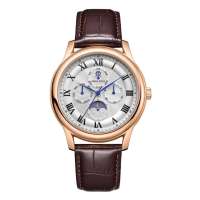
Solvil et Titus Classicist Multi-function Day/night Quartz in Silver White Dial and Brown Leather Strap Men Watch W06-03322-003
$196.00$280.00
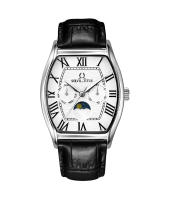
Solvil et Titus Barista Multi-Function Quartz Black Leather Men Watch W06-03219-001
$304.00$380.00
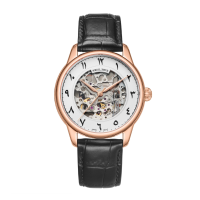
Solvil et Titus Special Edition Jawi Classic Automatic Black Leather Strap Men Watch W06-03309-001
$448.00$560.00
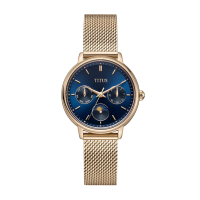
Solvil et Titus Fashionista Multi-Function Day & Night Quartz Dark Blue Dial Rose Gold Mesh Strap Women Watch W06-03404-005
$240.00$300.00
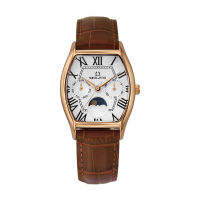
Solvil et Titus Barista Multi-Function Quartz Brown Leather Women Watch W06-03220-003
$336.00$420.00
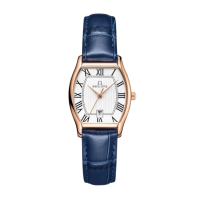
Solvil et Titus Barista 3 Hands Date Quartz in Silver White Dial and Blue Leather Strap Women Watch W06-02825-014
$224.00$280.00
About Solvil et Titus
Solvil et Titus (also styled Solvil & Titus) is a Swiss-origin watch brand that has established a significant presence in Singapore and the wider Asian market. Historically associated with Swiss watchmaker Paul Bernard Ditisheim and his achievements in precision chronometry, the brand’s contemporary identity is defined by its strong emotional and pop-cultural resonance in Asia. This reputation is anchored by its iconic advertising campaigns featuring the Chinese phrase 「天長地久」, which translates to the English slogan “Time Is Love”. 1
Overview
| Details | |
|---|---|
| Brand | Solvil et Titus / Solvil & Titus |
| Industry | Watchmaking / watches and accessories |
| Origin | Swiss Jura, Switzerland |
| Founder | Paul Bernard Ditisheim |
| Established | 1887 (per current official history) |
| Historic headquarters | La Chaux-de-Fonds → Geneva |
| Asian base | Hong Kong |
| Current identity | Swiss heritage / Asian-oriented watch brand |
| Major historical figure | Paul Bernard Vogel |
| Current group association | Stelux |
| Best-known slogan | 天長地久 — “Time Is Love” |
| Major market legacy | Hong Kong and Southeast Asia |
Historical records regarding the brand’s founding date vary, with sources citing either 1887 or 1892. While older reference materials often associate 1892 with the establishment of Ditisheim’s independent business, Solvil et Titus currently presents 1887 as its official founding year on its modern platforms. 2
Origins in Swiss watchmaking
Solvil et Titus traces its roots to the Jura Mountains of Switzerland, a historic centre of horology. The brand originated with Paul Bernard Ditisheim (1868–1945), a member of the prominent Ditisheim family of watchmakers. According to brand history, Ditisheim demonstrated exceptional early talent, obtaining his watchmaking diploma from the École d’arts appliqués in La Chaux-de-Fonds at the age of 13. 3
Rather than focusing solely on decorative aesthetics, Ditisheim prioritised precision and chronometry—the science of accurate time measurement. His technical research addressed critical factors affecting mechanical movement performance, including atmospheric pressure, magnetic fields, temperature variations, balance regulation, and chronometer precision. This engineering-led approach formed the foundation of the early Solvil et Titus identity. 4
Etymology
The name Solvil et Titus combines two distinct historical references:
- Solvil: Associated with Sonvilier, a village in the Swiss Jura region known for producing watch components.
- Titus: A reference to Titus, the Roman emperor of the 1st century AD.
This nomenclature links the brand’s specific Swiss geographical origins with classical Roman history. 5
Precision chronometry era
The company’s early reputation was built on technical merit rather than fashion. Ditisheim participated in major European precision trials, earning recognition at observatories including Neuchâtel and Kew. A defining milestone occurred in 1912 when Ditisheim achieved the world chronometric record at the Royal Kew Observatory in London. 6
This achievement highlights a significant divergence between the brand’s original positioning and its modern perception. Early Solvil et Titus was synonymous with precision engineering and scientific chronometry, whereas the contemporary brand is recognised for lifestyle, romance, and Asian pop culture. The transition between these identities constitutes the core narrative of the brand’s evolution.
The Vogel era and strategic shift
A pivotal transition occurred around 1930 when Swiss industrialist Paul Bernard Vogel acquired both the Solvil et Titus and Paul Ditisheim brands. Vogel relocated the company’s headquarters to Geneva, signalling a broader international orientation. 7 Beyond Solvil et Titus, Vogel played a significant role in organising the Swiss watch industry and developing larger manufacturing groups.
Under Vogel’s stewardship, the brand began to move beyond high-end chronometry. Recognising post-World War II market shifts, Vogel identified a growing middle-class demand for watches that were attractive, reliable, fashionable, and affordable. Consequently, Solvil et Titus transitioned towards more accessible mechanical and, later, electronic timepieces. 8 This strategic pivot allowed the brand to reach a consumer base far exceeding traditional luxury watch buyers, evolving from a specialist precision name into a broader consumer brand.
Electronic innovation and industry consolidation
Solvil et Titus also participated in the mid-20th-century shift towards electronic timekeeping. In the early 1960s, following extensive development, the company introduced the Soltronic, an electronic clock described in historical sources as highly advanced for its era. 9 This period demonstrates that the brand’s history encompasses not only traditional mechanics but also the Swiss industry’s experimentation with mass-market electronic technology during the 1960s and 1970s.
In 1968, Paul Bernard Vogel became associated with Société des Gardes-Temps SA, a newly formed conglomerate intended to provide scale in an increasingly competitive global market. The group, which had connections to brands such as Waltham and Elgin, was considered one of the world’s largest watchmaking organisations at the time. This affiliation marked Solvil et Titus’s integration into the wider restructuring and internationalisation of the Swiss watch sector.
Expansion into Asia
The most consequential chapter in the brand’s modern history began with its expansion into Asia. During the 1960s and 1970s, the Vogel family recognised the potential of emerging Asian consumer markets. Paul Vogel, son of Paul Bernard Vogel, was tasked with developing these interests, establishing Hong Kong as the central hub for the brand’s Asian operations.
By the 1970s, Solvil et Titus had become one of the better-known watch brands in parts of Asia. 10 Unlike many Swiss marques that remained primarily European-focused, Solvil et Titus cultivated a distinct regional identity. In the late 1970s, the Asian business and brands were acquired by Hong Kong entrepreneur Joseph Wong and integrated into the Stelux group, while European operations followed a separate trajectory. As a result, while the brand’s heritage remains Swiss, its commercial and cultural development is intrinsically linked to Hong Kong and Southeast Asia.
The “Time Is Love” era
From the 1980s onwards, Solvil et Titus distinguished itself through emotionally driven storytelling. Moving away from technical specifications, television advertising associated the watches with romance, relationships, memory, separation, reunion, and lifelong commitment. The campaign was anchored by the Chinese phrase 「天長地久」 (roughly “everlasting love”) and the English slogan “Time Is Love”.
This repositioning shifted the value proposition from technical precision to emotional significance, suggesting that the watch represented shared moments with loved ones rather than mere timekeeping accuracy. This emotional territory remains central to the brand, with current official sites continuing to describe their products as carriers of stories, promises, and love. 12
Celebrity endorsements
The brand’s advertising campaigns featured prominent celebrities, cementing its status in Asian popular culture. Official histories list major stars including Anita Mui, Dave Wang Chieh, Chow Yun-fat, Andy Lau, and Ryan Giggs. 11 For consumers in Singapore and the region who grew up with this media landscape during the 1980s and 1990s, Solvil et Titus carries strong nostalgic associations with celebrity culture and romantic narratives.
Contemporary brand identity
Modern Solvil et Titus integrates multiple layers of identity relevant to the Singapore market:
- Swiss Heritage: Continued emphasis on Jura origins and chronometric history.
- Asian Cultural Relevance: Deep connection to Hong Kong and Southeast Asian consumer culture.
- Romance: The enduring legacy of the “Time Is Love” concept.
- Fashion and Lifestyle: Collections designed as accessories rather than purely technical instruments.
- Gift-Giving: Positioning suited for anniversaries, weddings, Valentine’s Day, and relationship milestones.
In Singapore specifically, the brand explicitly promotes couples’ watches and matching pairs alongside individual men’s and women’s collections, reinforcing its suitability as a gift for shared occasions. 13
Current product positioning
Today’s Solvil et Titus offers a diverse range of timepieces that extends beyond its historical chronometer focus. Current collections available in the region include Barista, Fashionista, Saber, Voyager, Aspira, and Once. These encompass both automatic/mechanical and quartz movements, ranging from traditional designs to contemporary fashion-oriented pieces. 14
The brand occupies a distinct niche between Swiss heritage, fashion, and emotional gifting. It does not compete directly with ultra-luxury haute horlogerie manufacturers; instead, its value proposition centres on design, heritage, emotional meaning, and accessibility.
Market positioning comparison
| Brand type | Main selling idea |
|---|---|
| Patek Philippe | Haute horlogerie, craftsmanship, prestige |
| Rolex | Status, performance, heritage, recognition |
| Omega | Swiss engineering, sports/space heritage |
| Longines | Swiss heritage, elegance, accessible luxury |
| Tissot | Swiss heritage + mass-market accessibility |
| Solvil et Titus | Swiss heritage + romance + Asian cultural identity |
While brands like Rolex sell achievement and Patek Philippe sells heritage, Solvil et Titus sells the emotional meaning of time. This distinction makes the “Time Is Love” narrative arguably more critical to understanding the brand than any single model specification. 21
Corporate structure
The modern Asian Solvil et Titus business is historically and corporately associated with Stelux Holdings, a Hong Kong-based group. Historical sources confirm the sale of Asian brand operations to Joseph Wong and their subsequent integration into Stelux. Intellectual property records further list Solvil et Titus S.A. as a registered trademark owner, with Stelux’s legal department associated with the registration.
Key historical milestones
- 1887: Paul Bernard Ditisheim establishes the brand in the Swiss Jura. 15
- 1912: Ditisheim achieves the world chronometric record at the Royal Kew Observatory.
- 1930: Paul Bernard Vogel acquires the brand and relocates headquarters to Geneva.
- 1960s: Development of electronic timekeeping, including the Soltronic.
- 1968: Integration into Société des Gardes-Temps.
- 1970s: Expansion into Asia under Paul Vogel, centred on Hong Kong. 16
- 1980s: Transformation into a romantic icon via celebrity-driven “天長地久” advertising. 17
- Present: Continued identity building around “Time Is Love”, memories, and personal expression. 18
Brand philosophy
The contemporary philosophy of Solvil et Titus posits that a watch does not merely record time, but records moments that matter. This perspective frames the product as a vessel for stories and affection rather than solely as a precision instrument. 19 The brand’s evolution from Swiss precision manufacturer to Asian cultural phenomenon represents a unique trajectory in watch history, combining technical origins with deep emotional resonance in markets like Singapore. 20
References
- Brand Story
- Brand Story
- Solvil et Titus
- Paul Ditisheim
- Paul Bernard Vogel
- Solvil et Titus
- Solvil et Titus
- Solvil et Titus [Watch Wiki]
- Swiss Watch Brand | Solvil et Titus Singapore Online Watch Shop
- Category:Solvil et Titus – Wikimedia Commons
- Company:Solvil et Titus – HandWiki
- The true story of Solvil and Titus
- Solvil et Titus SA in Genève – Reports | Moneyhouse
- Solvil et Titus SA à Genève – Renseignements | Moneyhouse
- Marke TITUS – Wirtschaftsregister.ch
- Marke SOLVIL ET TITUS TITAN – Wirtschaftsregister.ch
- Marke SOLVIL ET TITUS TITAN – Wirtschaftsregister.ch
- Marke TITUS – Wirtschaftsregister.ch
- Brand Story
- Swiss Watch Brand | Solvil et Titus Thailand Online Watch Shop
- 鐵達時 Solvil et Titus