Shop on Lazada
Teck Sang products
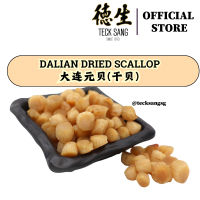
Premium Dalian Dried Scallop Yuanbei 精选大连元贝 ( 300G / 500G / 1KG ) Assorted / Seafood / Teck Sang
$65.00
Buy on Lazada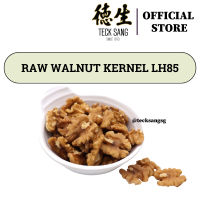
Raw Walnut Kernel 生核桃肉 ( 500G / 1KG ) / Unsalted / Unbaked / Healthy Snacks / Teck Sang
$20.00
Buy on Lazada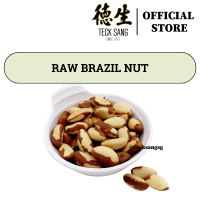
Raw Brazil Nut 生巴西果仁 ( 500G / 1KG ) / Unsalted / Unbaked / Healthy Snacks / Teck Sang
$42.00
Buy on Lazada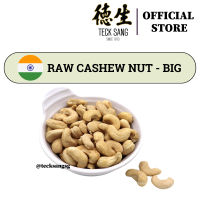
Raw Cashew Nut Big W240 生腰果/ 生腰豆 ( 500G / 1KG ) / Unsalted / Unbaked / Healthy Snacks / Teck Sang
$20.00
Buy on Lazada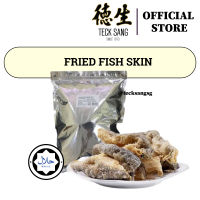
Original Flavor Crispy Fish Skin ( 600G ) / Snacks / Steamboat / Halal / Teck Sang
$13.90
Buy on Lazada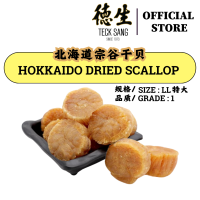
Japan Hokkaido Dried Scallop 日本宗谷干贝 ( 100G ) / Premium / Dried Seafood / First Grade / Teck Sang
$70.20
Buy on Lazada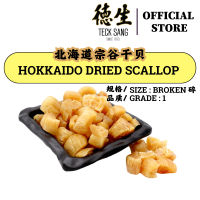
Japan Hokkaido Dried Scallop Broken 日本宗谷干贝碎 ( 100G / 300G / 500G ) / Premium / Dried Seafood / First Grade / Teck Sang
$218.80
Buy on Lazada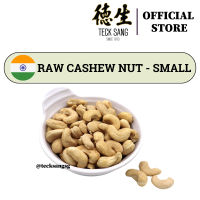
Raw Cashew Nut Small W320 腰果/ 腰豆 ( 500G / 1KG ) / Unsalted / Unbaked / Healthy Snacks / Teck Sang
$18.00
Buy on LazadaAbout Teck Sang
Teck Sang (德生) is a Singaporean food-ingredients company and traditional Chinese-food specialist best known for importing, distributing, wholesaling and retailing dried seafood, nuts, spices, herbs, grains, condiments, canned abalone and other ingredients used in Chinese and wider Asian cuisine. The company operates under the legal name Teck Sang Pte. Ltd. and has been based on Hongkong Street in Singapore since its establishment in 1973.1
Its brand positioning is captured by the slogan “A Fresh Take on Traditional Taste”, reflecting an approach that combines a long-standing Chinese-food heritage with contemporary retail, e-commerce and product-development efforts.1
Overview
| Field | Information |
|---|---|
| Name | Teck Sang |
| Chinese name | 德生 |
| Legal entity | Teck Sang Pte. Ltd. |
| Founded | 1973 |
| Headquarters / retail location | 11 Hongkong Street, Singapore 059654 |
| Industry | Food ingredients; wholesale; import/export; retail |
| Core positioning | Traditional Chinese food ingredients |
| Main markets | Singapore and international export markets |
| Business model | B2B wholesale + export + B2C retail/e-commerce |
| Slogan | “A Fresh Take on Traditional Taste” |
| House brands | Hoi Mei, Healthy Nutty, Ideal Food, Chuen Jia Fu |
The Singapore Food Manufacturers’ Association describes Teck Sang as one of Singapore’s established food-ingredient importers, exporters and wholesale distributors, serving sectors including hotels, restaurants, caterers, food manufacturers, retailers, bakeries and supermarkets.2
History
Origins
Teck Sang’s history is closely connected with the Chinese dried-food trade between Hong Kong and Singapore. According to accounts published by Teck Sang and The Peak Singapore, the family’s trading background began in Hong Kong. Founder Seit Wing Yun became involved in the dried-seafood trade at a young age while his family developed connections with Hong Kong’s traditional dried-seafood trading district. The Singapore operation was subsequently established by Seit Wing Yun together with Sit Kin Ming in 1973.
This Hong Kong connection became an important part of Teck Sang’s identity. Hongkong Street in Singapore was historically associated with wholesale trading, and Teck Sang’s location there placed the company within an established commercial ecosystem for Chinese food products.
Establishment in Singapore
Teck Sang Pte. Ltd. was incorporated in Singapore on 29 June 1973. Public corporate records identify it as an exempt private company limited by shares, with its registered address at 11 Hongkong Street.3
Over subsequent decades, Teck Sang developed from a traditional dried-goods business into a broader food-ingredients supplier. Its range expanded beyond dried seafood into nuts, beans, pulses, grains, spices, dried fruits, herbs, canned products and condiments.2
Family business
Teck Sang remains closely associated with the founding family. A 2016 profile in The Peak reported that family members from three generations were involved in the business at that time. The third generation included Sit Chee Chung, who described the family’s Hong Kong origins and the establishment of the Singapore business.
The family connection is particularly relevant to understanding Teck Sang’s positioning: rather than presenting itself simply as a commodity wholesaler, the company emphasizes accumulated sourcing knowledge, traditional food culture and relationships built over generations.
Products
Teck Sang’s assortment is broad but can be divided into several major categories.
Dried seafood
Dried seafood is one of the company’s historical specialities and remains central to its identity. Products include:
- Dried sea cucumber
- Fish maw
- Dried scallops
- Abalone
- Canned abalone
- Other premium seafood products
Teck Sang uses the term Hoi Mei (海味)—literally referring to dried seafood or “sea flavours”—as part of its branding for this category.1 The company has historically positioned itself toward higher-quality dried seafood, with past profiles noting an assortment that included premium Japanese sea cucumber, fish maw and other specialist ingredients totalling more than 300 SKUs.
Nuts, seeds and dried fruits
Another major category comprises everyday and premium pantry foods, including:
- Almonds
- Cashews
- Walnuts
- Pecans
- Macadamias
- Chickpeas
- Pumpkin seeds
- Sunflower seeds
- Sesame
- Prunes
- Dates and other dried fruits
This category allows Teck Sang to serve not only traditional Chinese cooking but also consumers interested in snacks, baking and contemporary healthy eating.1
Chinese herbs and soup ingredients
The company carries ingredients traditionally associated with Chinese cooking and soup-making, including:
- Red dates
- Goji berries / wolfberries
- Dried mushrooms
- Fungus
- Herbs
- Soup ingredients
- Dried roots and botanicals
These items connect Teck Sang’s traditional-food identity with its stated interest in healthy living and quality ingredients.1
Spices, grains and pantry ingredients
Teck Sang’s wholesale assortment includes spices, grains, beans and pulses, as well as ingredients such as chilli, garlic, coriander, fennel, cloves, cassia, ginger, star anise, cumin, pepper and various nuts and seeds.4
Condiments and Chinese cooking ingredients
The assortment includes sauces, vinegar, sesame oil, seasonings, powders and other pantry staples used in Chinese and Asian cooking.1
Chinese sausages
Teck Sang is associated with Ideal Food, a Singapore producer of Cantonese and Hong Kong-style Chinese sausages. Ideal Food has roots going back to 1968, predating Teck Sang’s 1973 incorporation. Its products include traditional lap cheong, duck-liver sausage and Dongguan-style sausage. Teck Sang describes the production as retaining traditional Cantonese recipes while using modern manufacturing methods.1
House brands
Teck Sang is not simply a packaged-food brand; it is also a retailer, distributor and owner-operator of several house brands. Its current website identifies four principal labels:1
Hoi Mei (海味)
A dried-seafood-oriented brand associated with Teck Sang’s historical speciality. The name references the traditional Chinese dried-seafood trade.
Healthy Nutty
A brand focused on nuts and related snack products, reflecting Teck Sang’s expansion into everyday and health-oriented food consumption.
Ideal Food
The Chinese-sausage and traditional processed-food business associated with Teck Sang, particularly known for Hong Kong and Cantonese-style lap cheong.
Chuen Jia Fu (全家福)
A house brand particularly visible in abalone and gift-hamper products, including Lunar New Year gift selections.
Business model
Teck Sang operates across three principal channels:
- Wholesale: Supplies businesses such as restaurants, hotels, caterers, bakeries, supermarkets, retailers and food manufacturers.2
- Import/export: Sources food ingredients internationally and distributes them in Singapore and overseas. Stated export markets include Southeast Asia, the Middle East and parts of South America.2
- Retail: Operates a physical retail presence on Hongkong Street and an online store, allowing individual consumers to purchase ingredients directly.1
This structure distinguishes Teck Sang from a conventional consumer packaged-food company; its identity sits between a traditional Chinese grocer, specialist ingredient importer, wholesaler, distributor and consumer brand house.
Brand philosophy
Teck Sang describes its modern direction as an attempt to combine traditional taste with contemporary lifestyles. The company’s stated philosophy is that lifestyles have changed, with greater emphasis on fitness, mental wellness and healthy living. It therefore aims to modernise traditional ingredients and make them more accessible through retail and digital channels while retaining its heritage.1
Its stated mission includes promoting Asian cuisine culture worldwide and modernising healthy living through quality traditional ingredients.1 This explains the tension and opportunity at the centre of the Teck Sang brand: it sells products deeply associated with traditional Chinese food culture while trying to make them relevant to younger and more health-conscious consumers.
Retail identity
Teck Sang’s physical presence at 11 Hongkong Street is an important part of its brand story. The location is in the Singapore River and Clarke Quay area, a historic part of central Singapore. The store has traditionally functioned as a specialist destination for Chinese dried foods and ingredients rather than as a conventional supermarket, with chefs and food enthusiasts visiting for premium dried Chinese delicacies.
The online store extends this specialist-retailer model into e-commerce. Its catalogue includes dried seafood, abalone, mushrooms, herbs, soup ingredients, nuts, dried fruits, condiments, Chinese sausages and gift products.1
Chinese New Year
Chinese New Year is particularly important to Teck Sang’s product ecosystem. Traditional festive ingredients such as abalone, dried seafood, Chinese sausages, dried mushrooms, nuts and premium gift sets are all closely associated with Lunar New Year dining and gifting.
Teck Sang occupies a distinctive position in Singapore’s Chinese-food culture where its products function simultaneously as cooking ingredients, festive foods and premium gifts. Its Chuen Jia Fu range, for example, includes Lunar New Year abalone and selected gift boxes.1
Reputation and positioning
Historically, Teck Sang has been positioned toward quality and specialist expertise, particularly in dried seafood. Profiles have noted that the company carried hundreds of specialist products and that product sourcing and quality assessment were important parts of its business, with staff individually inspecting certain premium products such as cordyceps before selecting them for sale.
Its competitive identity can be summarised as heritage combined with specialist sourcing, breadth of ingredients and Singapore retail accessibility, rather than competing solely on mass-market packaged-food branding.
Digital transformation
Although Teck Sang originated as a traditional wholesale and retail operation, it has increasingly adopted digital commerce. Its website provides online ordering and delivery, while its business profile describes mobile ordering and drive-by collection as part of the company’s attempt to adapt to contemporary consumer behaviour.1 This is consistent with the brand’s broader philosophy of giving traditional ingredients a more convenient and modern route to consumers.
Geographic reach
Teck Sang is fundamentally a Singaporean company, but its business is international in supply and distribution. The Singapore Food Manufacturers’ Association reports that its exports and third-country trading extend into Southeast Asia, the Middle East and South American markets.2
The company’s Hong Kong connections remain particularly significant because Hong Kong has historically been an important source and trading centre for Chinese dried seafood and traditional food ingredients.1
Corporate profile
Legally, Teck Sang operates as TECK SANG PTE. LTD., UEN 197301209G. Singapore business records list its incorporation date as 29 June 1973 and its primary activity as wholesale trade of a variety of goods without a dominant product.3
This legal classification is broader than the consumer-facing description of Teck Sang as a traditional Chinese food-ingredient specialist. In practice, the company’s activities encompass importing, exporting, wholesaling, distribution and retailing food products.2
Brand architecture
Teck Sang functions as a brand ecosystem:
- Teck Sang Pte. Ltd. (Import / export / wholesale / retail)
- Teck Sang (Retail identity)
- Hoi Mei (Dried seafood)
- Healthy Nutty (Nuts and snacks)
- Ideal Food (Chinese sausages and traditional processed foods)
- Chuen Jia Fu (Abalone and festive gifting)
This architecture allows the company to retain the credibility of the Teck Sang name while giving particular product categories their own identities.1
Cultural significance
Teck Sang is representative of a broader class of Singaporean businesses that grew around traditional Chinese food culture and regional trading networks. Its history reflects several overlapping traditions:
- Hong Kong–Singapore trade
- Chinese dried-seafood commerce
- Family-owned food businesses
- Traditional Chinese cooking
- Chinese New Year food and gifting
- Singapore’s role as a regional food-import and distribution hub
Its continued presence on Hongkong Street gives the company a physical connection to Singapore’s older commercial landscape, while its online store represents the newer generation of food retail.