Shop on Lazada
Three Squirrels products
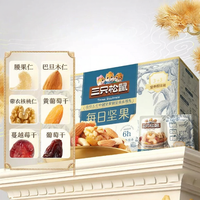
Three Squirrels | Healthy Mixed Nuts 750g
$23.23$46.98
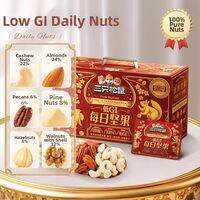
Three Squirrels | Low GI Healthy Snack Nuts 750g
$30.03$60.34
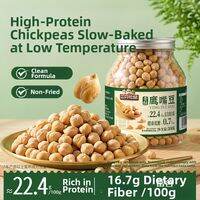
Three Squirrels | Low Fat Instant Hunger-Control Snack Roasted Chickpeas 50g x 20 Bags
$21.52$39.83
Three Squirrels | Sugary Fat Calories Free Konjac Jelly Snack
$26.23$27.31
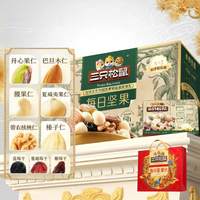
Three Squirrels | Healthy Snack Nut Gift Box 750g
$69.37$101.63
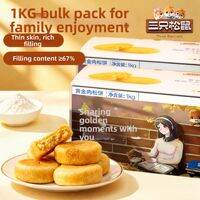
Three Squirrels | Nutritious Breakfast Golden Meat Floss Buns
$29.05$47.32
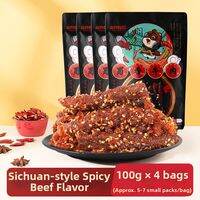
Three Squirrels | Mouth-watering Spicy Beef Jerky Snack
$16.33$23.75
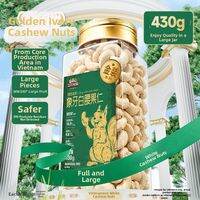
Three Squirrels | Premium Healthy Snack Cashew 430g
$36.27$38.69
About Three Squirrels
Three Squirrels (Chinese: 三只松鼠; pinyin: Sān Zhī Sōngshǔ) is a Chinese packaged-food company best known for nuts, dried fruits and leisure snacks. Founded in Wuhu, Anhui Province, in 2012 by Zhang Liaoyuan, it emerged as an internet-native brand that combined e-commerce, distinctive packaging, cartoon mascots and personalised customer service to build national recognition.1 The business is now operated by Three Squirrels Inc. (三只松鼠股份有限公司), which is listed on the Shenzhen Stock Exchange’s ChiNext board under stock code 300783. Originally an online nut retailer, it has evolved into a multi-category, omnichannel snack enterprise with integrated manufacturing, branding, retail and supply-chain operations.
Basic information
| Item | Information |
|---|---|
| Chinese name | 三只松鼠 |
| English name | Three Squirrels |
| Pinyin | Sān Zhī Sōngshǔ |
| Company | Three Squirrels Inc. / 三只松鼠股份有限公司 |
| Founded | 2012 |
| Founder | Zhang Liaoyuan (章燎原) |
| Headquarters | Wuhu, Anhui, China |
| Industry | Packaged food / snacks / consumer goods |
| Core category | Nuts and nut-based snacks |
| Stock code | 300783.SZ |
| Listing venue | Shenzhen Stock Exchange, ChiNext |
| IPO date | 12 July 2019 |
| Major brand | Three Squirrels |
| Other major brand | Deer Blue / 小鹿蓝蓝 |
| Business model | Brand + product + manufacturing + retail + omnichannel |
| Strategic positioning | “All-category + all-channel” food business |
The company describes its current operating model as “全品类+全渠道” (“all-category + all-channel”), supported by an integrated manufacturing, branding and retail strategy.2
Origins and early growth
Three Squirrels was established in February 2012 in Wuhu, Anhui, by Zhang Liaoyuan and a five-person founding team. Its initial proposition was to sell nuts and other snack foods directly to consumers via China’s rapidly expanding e-commerce market. At the time, the packaged-snack sector was dominated by traditional manufacturers and offline retailers; Three Squirrels instead sought to build a consumer brand around the entire shopping experience.
The company received an angel investment of US$1.5 million from IDG Capital in April 2012 and began operating on Taobao and Tmall in June of that year. According to corporate records, it achieved 1,000 orders within its first seven days and became the top seller in Tmall’s nut category 65 days after launch. During its first Double 11 promotion in November 2012, sales reached approximately RMB 7.66 million, placing the brand at the top of the food category. This early success established a formula combining nuts, e-commerce, distinctive packaging, character intellectual property (IP) and customer experience.
Brand identity and “Master Culture”
Name and mascots
The name “Three Squirrels” reflects the company’s core nut category, as squirrels naturally evoke nuts, food storage and playfulness. Rather than using a conventional corporate logo, the brand built its identity around three cartoon characters identified as Xiao Jian (小贱), Xiao Mei (小美) and Xiao Ku (小酷). These mascots are presented as pets from an imaginary “Squirrel Planet”, transforming a commodity product into a character-driven consumer brand.2
Customer relationship
A defining innovation was the concept of addressing customers as “主人” (zhǔrén, literally “master” or “owner”). Introduced in 2012, this “Master Culture” (主人文化) framed interactions as cute pets serving their master rather than standard commercial transactions. In the formative years of Chinese e-commerce, when service quality was a key differentiator, this approach helped position Three Squirrels as an experience-oriented internet brand.
Packaging and visual language
Three Squirrels became widely recognised for packaging featuring large cartoon squirrels, bright colours, speech bubbles, humorous copy, personalised messages and gift-like presentation. Unlike traditional food brands where packaging merely contains the product, Three Squirrels uses packaging to communicate brand personality and foster an emotional connection with consumers.
E-commerce expansion and public listing
Three Squirrels was effectively born on the internet, growing alongside platforms such as Taobao, Tmall and JD.com, as well as mobile commerce, social media and livestreaming. This allowed nationwide reach without an initial physical store network. Double 11 sales rose from RMB 7.66 million in 2012 to RMB 356.2 million in 2013. In 2013, the company secured a Series B investment of US$6.17 million from Capital Today and IDG Capital, enabling expansion beyond online resale into product development, quality control, logistics, branding and supply-chain management.
Three Squirrels listed on the Shenzhen Stock Exchange’s ChiNext board on 12 July 2019 under ticker 300783, issuing 41 million shares at RMB 14.68 each and raising approximately RMB 6.02 billion. Revenue for 2018 was about RMB 7.001 billion, with net profit of roughly RMB 303.86 million.1 The listing was noted as the first A-share IPO in China’s leisure-food e-commerce sector and marked the company’s transition from startup to major publicly traded consumer-food firm.
Product portfolio
Although nuts remain the strategic core, Three Squirrels has progressively diversified its offerings.
Nuts
Key products include daily mixed nuts, macadamia nuts, pistachios, cashews, almonds, pecans, peanuts, walnuts, chestnuts and other tree nuts and seeds. The company states that numerous nut products generate annual sales exceeding RMB 100 million.
Dried fruits and traditional snacks
The range extends to dried mango, dried fruit mixes, raisins, sachima, egg yolk pastries, bread, cookies, cakes, chicken snacks, jerky, shredded-meat products, braised foods, chicken feet and quail eggs.
Beverages
Categories include nut-based beverages, AD calcium drinks, eight-treasure porridge and other food and drink items.
The modern strategy uses nuts as the anchor of consumer mindshare while expanding into a broader snack ecosystem.2
Daily Nuts
The “Daily Nuts” (每日坚果) concept packages convenient portions of mixed nuts for everyday consumption, shifting nuts from occasional gifting to a daily health-snack category. The company reports this line has become a billion-yuan-level single product, supporting its positioning as a provider of accessible, healthier foods rather than solely indulgent snacks.
Brand philosophy and strategic evolution
Three Squirrels’ stated mission is to make nuts and healthy food accessible to everyone (“让坚果和健康食品普及大众”), with a vision of affordability and ubiquitous availability (“人人吃得起,处处买得到”).2 Its ambition includes becoming a leading global nut company and building multiple healthy-food brands.
The business model has evolved through three phases:
- Internet-native (2012–mid-2010s): Focus on e-commerce, nuts, customer experience and IP.
- National consumer brand (mid/late 2010s): Emphasis on brand building, product expansion, supply chain and logistics.
- Omnichannel food company (2020s): Integration of online and offline channels, manufacturing, distribution, retail and multiple brands.
This shift towards an “all-category + all-channel” model responds to the maturation of China’s retail environment. Offline expansion now encompasses major e-commerce platforms, social commerce, distributors, supermarkets, convenience stores, specialty outlets and company-operated formats such as “国民零食店”, “生活馆” and mini stores.
Intellectual property and sub-brands
Three Squirrels treats its mascots as IP assets rather than mere logos, developing animated content, short videos, songs, merchandise and entertainment.3 This creates a character-economy loop linking food, content, community and brand loyalty.
Beyond the flagship brand, the company launched Deer Blue (小鹿蓝蓝) in 2020, targeting children’s healthy snacks.4 This leverages existing capabilities in branding, product development and distribution to serve a distinct demographic segment.
Supply-chain transformation
A significant but less visible development is the deepening integration of manufacturing and supply-chain control. Moving away from pure outsourcing, Three Squirrels now pursues a “one product, one supply chain” strategy with regional manufacturing bases. Capabilities have expanded to cover core nut categories as well as sachima, noodles, biscuits, cookies and baked snacks. This vertical integration supports competitiveness in raw-material sourcing, quality consistency, cost efficiency, product innovation and speed to market.
Financial performance and market position
For the full year 2025, Three Squirrels reported revenue of RMB 10.189 billion and net profit attributable to parent of RMB 155 million. The Three Squirrels brand contributed RMB 9.117 billion (89.48% of total revenue), while Deer Blue generated RMB 833 million. Third-party e-commerce accounted for RMB 7.176 billion, or 70.42% of revenue, underscoring the continued importance of digital channels despite offline expansion. Major platform revenues included approximately RMB 2.272 billion from Douyin, RMB 1.719 billion from Taobao/Tmall and RMB 1.513 billion from JD.5
Competitive advantages and challenges
Strengths
- Instantly recognisable character-driven brand identity.
- First-mover advantage as an internet-native food brand.
- Strong association with nuts, particularly packaged mixed nuts and gifts.
- Continuous product innovation extending beyond nuts.
- Omnichannel distribution combining digital and physical retail.
- IP ecosystem enabling advertising, entertainment and engagement.
- Deepening manufacturing and supply-chain integration.
Challenges
Despite diversification, reliance on third-party e-commerce exposes the business to changes in platform traffic, algorithms, advertising costs and commission structures.6 Competition in China’s snack sector remains intense, spanning traditional manufacturers and emerging social-commerce brands. As agricultural commodities, nut prices are volatile; the 2025 report cited substantial raw-material cost increases as a factor affecting profitability. Expanding from a strong nut identity into diverse categories also raises questions about maintaining brand distinctiveness, while physical retail introduces fixed costs related to rent, labour and inventory management.
Cultural and industry significance
Three Squirrels exemplifies China’s first generation of internet-native consumer brands. Whereas traditional models followed a factory-to-distributor-to-retailer path, Three Squirrels connected its supply chain directly to consumers via internet platforms, enabling rapid feedback and iteration. It demonstrated how a low-differentiation commodity could be transformed into a lifestyle brand through character IP, packaging, humour and digital culture. The company is frequently cited as a representative of China’s domestic-brand movement and the rise of homegrown consumer enterprises.2
Timeline
- 2012: Founded in Wuhu with a five-person team; receives US$1.5 million angel investment from IDG Capital; begins Tmall operations; achieves RMB 7.66 million in first Double 11 campaign.
- 2013: Secures Series B funding from Capital Today and IDG Capital; Double 11 sales reach RMB 356.2 million; initiates major logistics and infrastructure expansion.
- 2010s: Grows rapidly as a leading online snack brand; nuts remain central; brand IP and Master Culture become key differentiators.
- 2019: Lists on Shenzhen Stock Exchange ChiNext board (stock code 300783); becomes a major publicly traded snack company.
- 2020: Launches Deer Blue (小鹿蓝蓝) for children’s healthy snacks.4
- 2020s: Diversifies product range; develops offline retail; strengthens manufacturing and supply chain; adopts all-category, all-channel strategy.
- 2025: Revenue reaches RMB 10.189 billion; Three Squirrels remains dominant brand; continues integrating manufacturing, branding and retail capabilities.7
References
- Three Squirrels – Wikidata
- Three Squirrels (San Zhi Song Shu 三只松鼠) – Chinese Food Wiki
- China Focus: Snacking firm Three Squirrels, convenience store trends, export news and more feature in our round-up
- A tale of Three Squirrels: How China went nuts for nation’s largest online snacks retailer
- 三只松鼠 Three Squirrels – suning.hk
- Why China’s biggest online nut vendor Three Squirrels takes management lessons from Mao | South China Morning Post
- 三只松鼠海外 — 中国优质零食出口商