Shop on Lazada
Tissot products
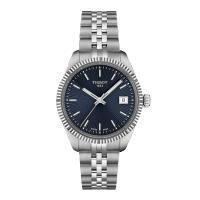
Tissot Ballade 34mm (T1562101104100)
$490.00
Buy on Lazada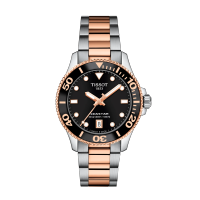
Tissot Seastar 1000 36mm (T1202102205101)
$650.00
Buy on Lazada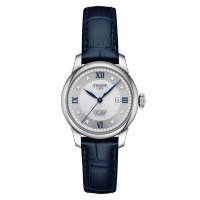
Tissot Le Locle 20th Anniversary 29mm (T0062071103601)
$1,200.00
Buy on Lazada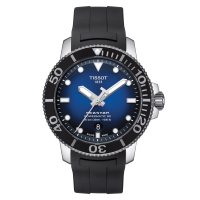
Tissot Seastar 1000 43mm (T1204071704100)
$1,110.00
Buy on Lazada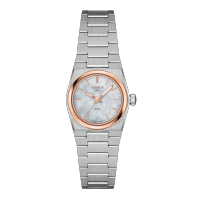
Tissot PRX 25mm (T1370102111100)
$490.00
Buy on Lazada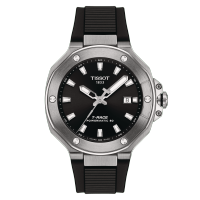
Tissot T-Race 41mm (T1418071705100)
$990.00
Buy on Lazada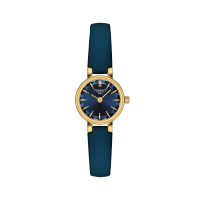
Tissot Lovely Round 19.5mm (T1400093604100)
$445.00
Buy on Lazada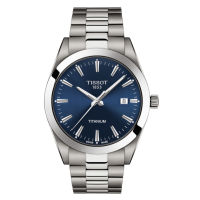
Tissot Gentleman 40mm (T1274104404100)
$760.00
Buy on LazadaAbout Tissot
Tissot is a Swiss watchmaker established in 1853 in Le Locle, Switzerland. As one of Switzerland’s longest-standing horological brands, it currently operates under the Swatch Group, alongside marques such as Omega, Longines, Rado, Certina and Mido. The brand positions itself at the intersection of Swiss watchmaking heritage, technical innovation, sporty design and relatively accessible pricing.1
Quick facts
| Category | Details |
|---|---|
| Brand | Tissot |
| Founded | 1853 |
| Founders | Charles-Félicien Tissot and his son Charles-Émile Tissot |
| Origin | Le Locle, Neuchâtel, Switzerland |
| Industry | Swiss watchmaking |
| Parent group | Swatch Group |
| Positioning | Accessible / entry-level Swiss luxury |
| Main products | Mechanical, quartz and solar watches |
| Famous collections | PRX, Le Locle, Gentleman, Seastar, T-Touch, PR 516, PR 100 |
| Major partnerships | NBA/WNBA, MotoGP, Tour de France and others |
| Key identity | Swiss heritage + innovation + sporty/everyday watches |
| Founded in | The Swiss Jura watchmaking region |
Tissot describes its philosophy as combining “tradition and pioneering spirit since 1853”, with headquarters and historical roots remaining in Le Locle.2
History
1853: Origins in Le Locle
Tissot was established in 1853 in Le Locle, a town in the Swiss Jura that evolved into a pivotal centre of Swiss watchmaking. The company’s origins are linked to Charles-Félicien Tissot and his son Charles-Émile Tissot. Initially, the enterprise operated as a traditional family workshop rather than the large international brand it would eventually become. Le Locle itself holds significant importance in horological history; watchmaking developed there from the late 17th century before becoming a major regional industry.2
19th century: International expansion
Unlike many contemporaries that focused exclusively on the domestic market, Tissot developed an international outlook relatively early by producing watches for overseas customers. This strategy helped establish a defining characteristic that persists today: Swiss watchmaking intended for a broad international audience. Consequently, Tissot has historically occupied a different market position from highly exclusive Swiss maisons such as Patek Philippe, Audemars Piguet or Vacheron Constantin.
Brand philosophy
Tissot’s identity is fundamentally defined by Swiss heritage, innovation and accessibility. Rather than competing primarily with ultra-high-end manufacturers, the brand aims to bring elements associated with Swiss mechanical watchmaking—including automatic movements, traditional finishing, mechanical complications, chronographs and heritage designs—to a wider audience. While the Swatch Group describes Tissot as combining tradition with a pioneering spirit, the brand itself emphasises the balance between heritage and innovation.3 This positioning makes Tissot particularly relevant for individuals entering the world of Swiss watches.
Relationship with the Swatch Group
Tissot is part of The Swatch Group, one of the world’s largest watchmaking conglomerates. This relationship has deep historical roots; Tissot and Omega were previously united under the SSIH structure, which later became integral to the corporate history leading to today’s Swatch Group.4
The modern Swatch Group portfolio covers a broad spectrum of brands:
- Entry/accessibility: Tissot / Certina / Mido
- Mid-to-upper range: Longines / Rado
- Luxury: Omega
- High luxury: Breguet / Blancpain / Jaquet Droz
While not a strict price hierarchy, this structure illustrates Tissot’s role in providing the Swatch Group with a major Swiss brand positioned towards a large international consumer market.
Technological innovations
Tissot’s significance extends beyond its age, as the company has repeatedly experimented with new technologies and designs throughout its history.
Anti-magnetic and water-resistant watches
Historical records note developments in the 1930s involving cases designed to protect watches against dust, shock and humidity, alongside anti-magnetic characteristics.5 Tissot also developed water-resistant timepieces during the 20th century, eventually introducing the Seastar name for a generation of waterproof models. The Seastar name was officially registered by Tissot in Switzerland in 1952.6
Unconventional materials
The brand has explored non-traditional case materials, including rock and wood, demonstrating that its history is not limited to conventional stainless-steel watchmaking.
T-Touch technology
Perhaps the most recognisable example of Tissot’s technological identity is T-Touch. This concept introduced tactile interaction to wristwatches, allowing users to access functions through the crystal. Depending on the model, T-Touch watches have incorporated features such as compasses, altimeters, barometers, thermometers, chronographs, alarms and weather-related functions.
Major collections
Tissot maintains an extensive catalogue spanning automatic, quartz and solar-powered models.7 Key families include:
PRX
The Tissot PRX is arguably the brand’s most significant modern collection. It combines an integrated bracelet, slim profile, 1970s-inspired design, horizontal or waffle-style dial textures, and sporty-elegant styling. Heavily inspired by a historical Tissot design, the modern PRX offers the visual language of an integrated-bracelet luxury sports watch at a considerably lower price point. It is available in numerous sizes, materials and movements, including both quartz and automatic versions.8 The collection’s success has helped reposition Tissot as a fashionable, enthusiast-friendly Swiss brand.
Le Locle
Named after the town where Tissot was founded, the Le Locle collection represents the brand’s traditional side. Its design language is classical, typically featuring round cases, automatic movements, dress-watch styling, decorative dials, Roman numerals or classical indices, and exhibition casebacks. Tissot describes this line as embodying the brand’s heritage through craftsmanship, precision and automatic movements.9 In contrast to the modern PRX, the Le Locle signifies traditional Swiss elegance.
Gentleman
Designed as an everyday Swiss watch, the Tissot Gentleman offers conservative proportions, stainless-steel construction, date displays and sporty-elegant styling. Available in automatic or quartz variants, it is positioned as a versatile single watch suitable for business or casual attire.
Seastar
The Seastar is Tissot’s sports and diving-oriented collection. With roots dating back to the 1952 registration of the name,10 modern models feature high water resistance, rotating bezels, luminous markers and robust cases. Current iterations are available in various sizes and movements, including automatic versions.11
T-Touch
Distinct from traditional mechanical lines, the T-Touch collection incorporates electronic and digital functionality into a wristwatch. Associated with outdoor activities and adventure, it embodies a philosophy of Swiss watchmaking combined with technology and outdoor instruments.
PR 516
Drawing heavily from Tissot’s motorsport heritage and mid-century sports-watch designs, the PR 516 remains historically significant. Modern versions often include automatic chronograph movements and vintage-inspired aesthetics.12
PR 100
Positioned towards everyday use, simplicity, durability and affordability, the PR 100 serves as a practical option for business and casual wear, illustrating Tissot’s strength in producing watches for a broad audience.
Movements and certifications
Mechanical, quartz and solar
Tissot does not exclusively manufacture mechanical watches. Its catalogue includes:
- Quartz: Valued for accuracy, low maintenance, affordability and thinness.
- Automatic mechanical: Appreciated for traditional watchmaking, battery-free operation and visible mechanics.
- Solar quartz: Offering a practical alternative with light-powered charging.
Powermatic 80
A key movement in modern Tissot offerings is the Powermatic 80, named for its approximately 80-hour power reserve. This significantly exceeds the 40–48 hour reserve typical of conventional mechanical watches, allowing the watch to run through much of a weekend if removed on Friday evening.
COSC certification
Tissot produces watches with COSC (Contrôle Officiel Suisse des Chronomètres) certification, indicating they have passed rigorous precision testing. Models such as the Ballade, Le Locle and Heritage 1938 have been offered in COSC-certified versions, demonstrating genuine mechanical watchmaking credentials beyond entry-level fashion timepieces.
Sports partnerships and ambassadors
Sports sponsorship is a central pillar of Tissot’s global marketing. The brand serves as official timekeeper for several major sporting bodies, including the NBA and WNBA,13 MotoGP and the Tour de France.14 Motorsport is particularly embedded in the brand’s identity through collections like the T-Race, PRS and PR 516.
Current brand ambassadors highlighted by the Swatch Group include basketball player Damian Lillard, motorcycle racer Enea Bastianini, cyclist Primož Roglič, and actors Lee Dong Wook and Simon Gong.15 This diverse roster reflects an intentional strategy to appeal beyond traditional watch collectors.
Market positioning and pricing
Hierarchy within Swiss watchmaking
Tissot is generally categorised as entry-level Swiss luxury. A simplified hierarchy within the Swatch Group places Tissot below Mido, Hamilton, Rado, Longines and Omega, but above Swatch. While Tissot is a legitimate Swiss manufacturer, it is not positioned as haute horlogerie; its core mission is to make Swiss watches relatively attainable.
Pricing indications
Prices vary substantially by model, movement and materials. As an indication based on regional catalogues, examples include:
- PRX Quartz: around RM1,800
- PRX Automatic: around RM3,350–RM3,900
- Gentleman Automatic: around RM3,450–RM4,000
- Le Locle Automatic: around RM3,000–RM4,000+
- Seastar Automatic: around RM3,450–RM4,500
These figures are indicative of Southeast Asian market listings and may vary by specific reference, promotion and availability.
Value proposition
Tissot is frequently recommended as a first serious Swiss watch due to its value proposition. Buyers receive Swiss heritage, genuine Swiss Made manufacturing, mechanical movements, sapphire crystals and international support without entering luxury price tiers. However, the brand faces strong competition from Hamilton, Certina, Seiko, Citizen, Orient, Mido and Longines. Additionally, because Tissot produces watches at relatively high volumes, ownership lacks the exclusivity of high-end manufactures, and some enthusiasts debate its classification alongside luxury brands due to the prevalence of quartz models.
Comparisons with other brands
Tissot vs Seiko
This comparison essentially represents a choice between two watchmaking traditions: Swiss (Tissot) versus Japanese (Seiko). Tissot offers strong European heritage and distinctive designs like the PRX, while Seiko provides extensive technical history, proprietary movements and excellent dive watches across a broad price range.
Tissot vs Hamilton
Both are Swatch Group brands with overlapping price ranges. Hamilton generally projects a stronger military, aviation and American historical identity, whereas Tissot emphasises Swiss heritage, sports and mainstream versatility.
Tissot vs Longines
Longines is positioned above Tissot within the Swatch Group, emphasising heritage, equestrian history, premium finishing and higher prices. Tissot focuses on accessibility, innovation and broader everyday appeal. While generally less prestigious than Longines, Tissot serves a distinct and vital market segment.
Reputation and assessment
Among enthusiasts, Tissot is respected as a legitimate Swiss watchmaker with over 170 years of history rather than merely a fashion label. Its reputation rests on Swiss manufacturing heritage, mechanical competence, technical experimentation and successful modern releases like the PRX.
If identifying the part of the catalogue that best represents the brand, the PRX Automatic captures the modern appeal of stylish, historically inspired Swiss automatics at an accessible price. For traditionalists, the Le Locle Automatic embodies classic Swiss values, while the Gentleman, Seastar, T-Touch and T-Race serve specific functional niches.
| Area | Assessment |
|---|---|
| History | ⭐⭐⭐⭐⭐ |
| Swiss heritage | ⭐⭐⭐⭐⭐ |
| Innovation | ⭐⭐⭐⭐½ |
| Mechanical watches | ⭐⭐⭐⭐ |
| Design variety | ⭐⭐⭐⭐⭐ |
| Value | ⭐⭐⭐⭐⭐ |
| Prestige | ⭐⭐⭐½ |
| Exclusivity | ⭐⭐½ |
| Beginner friendliness | ⭐⭐⭐⭐⭐ |
| Sports presence | ⭐⭐⭐⭐⭐ |
Ultimately, Tissot is one of the most important accessible Swiss watch brands. Its historical role is democratic: making Swiss watchmaking available to a broader audience while maintaining genuine horological heritage. Its current identity combines 1853 heritage, Swiss Made standards, innovation, sports partnerships and mechanical watchmaking at accessible price points.16
References
- Tissot – Swatch Group
- Tissot History | Tissot World | Tissot® United States
- Tissot Le Locle Collection (2003-2023) – Tissot
- Tissot & the PRX – Tissot
- Collection of Tissot Watches | Tissot® Malaysia
- Automatic Watches Collection | Tissot® Malaysia
- Tissot Le Locle Watch Collection for Men | Tissot® Malaysia
- Tissot Le Locle Watch Collection | Tissot® Malaysia
- Collection of Tissot Watches | Tissot® Malaysia
- Automatic Watches for Men | Tissot® Malaysia
- Who Owns Tissot Watches? A Swatch Group Brand – LegalClarity
- Inside the Making of a Tissot Watch – Tissot
- The Story Behind the SRV – Tissot
- Tissot Le Locle Collection (2003-2023) – Tissot
- Tissot History | Tissot World | Tissot® Malaysia
- Tissot Watchmakers’ Favorite Watches | Tissot® Malaysia