Shop on Lazada
Total products

TOTAL 30000bpm 66Nm Compact Brushless Cordless Impact Drill TIDLI206681
$125.27$170.82

TOTAL Mechanic gloves TSP1809-XL
$34.98$47.70
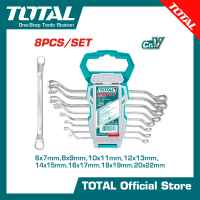
TOTAL Offset ring spanner set THT102486
$30.58$41.70

TOTAL 2 Pcs screwdriver set TKSDS0226
$12.36$16.86
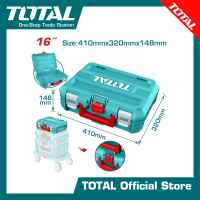
TOTAL 16″ Stackable tool box TPBXS101
$23.20$31.64
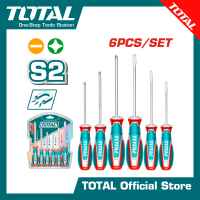
TOTAL 6 Pcs screwdriver set TKSDS0626
$21.63$29.49
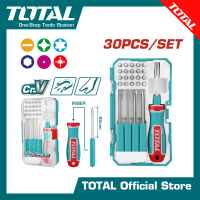
TOTAL 30 Pcs Interchangeable screwdriver and bits set TACSD30306
$18.77$25.59

TOTAL 8 Pcs ratchet screwdriver set TACSD30086
$12.36$16.86
About Total
Total is a French-origin energy brand historically recognised for its network of service stations, petroleum products, lubricants and oil-and-gas operations. Today, the Total brand is owned by TotalEnergies SE, a multinational energy company formerly known as Total S.A. The corporate group officially adopted the name TotalEnergies in 2021 to reflect its strategic expansion beyond conventional oil and gas into electricity, renewables, biofuels, natural gas and other low-carbon energy sources 110.
It is important to distinguish Total the brand from TotalEnergies the company. The name Total originated as a commercial brand in 1954, whereas the corporate group underwent several name changes and major mergers before becoming TotalEnergies 68.
Brand overview
| Field | Information |
|---|---|
| Brand name | Total |
| Current corporate owner | TotalEnergies SE |
| Country of origin | France |
| Brand launched | 1954 |
| Original corporate predecessor | Compagnie française des pétroles (CFP) |
| Industry | Energy, petroleum, fuels, lubricants, mobility |
| Modern parent company | TotalEnergies |
| Corporate headquarters | Courbevoie, France |
| Current CEO & Chairman | Patrick Pouyanné |
| Modern corporate name | TotalEnergies SE |
| Global presence | About 120 countries |
| Employees | More than 100,000 |
| Main legacy products | Gasoline, diesel, lubricants, aviation fuel, petroleum products |
| Expanded businesses | Natural gas, LNG, electricity, renewables, biofuels, EV charging, hydrogen and other low-carbon energy |
The figures above are based primarily on TotalEnergies’ 2025 reporting and 2026 corporate information.
Origins and development
Total was established as one of the world’s major petroleum brands, becoming widely recognisable through its filling station network and petroleum products. Its origins trace back to the creation of Compagnie française des pétroles (CFP) in France in 1924 23. CFP was formed partly to secure French access to petroleum resources following the First World War and began international oil operations in the Middle East, subsequently developing into a major integrated oil company 45.
In 1954, CFP and the Compagnie française de raffinage (CFR) created the Total brand and logo to establish a distinctive international identity for the group’s distribution activities 6. The name “Total” was chosen for its simplicity and ease of pronunciation across different markets. Over subsequent decades, the brand expanded from petroleum distribution into exploration and production, refining, petrochemicals, natural gas, trading and lubricants. The company later became known simply as Total before its transformation into TotalEnergies in 2021 10.
Corporate history
Formation of CFP and early production
The corporate ancestor of TotalEnergies was founded on 28 March 1924 as Compagnie française des pétroles (CFP) 2. The French government supported its establishment to foster national participation in the international petroleum industry and improve energy security 3. CFP commenced oil production activities in Iraq in 1927, establishing an international orientation that characterised the company throughout its history 4.
Launch of the Total brand
The year 1954 marks the emergence of Total as a consumer brand. CFP and CFR developed the Total brand and logo to support their own distribution network, seeking a name with international appeal rather than one tied specifically to France 6. This identity became familiar at petrol stations and on fuel and lubricant products globally.
International expansion and acquisitions
From the 1970s through the 1990s, Total developed into an integrated international petroleum company with activities spanning crude-oil exploration, production, refining, fuel distribution, petrochemicals, natural gas, lubricants and international trading 7. Two significant corporate transactions reshaped the group at the turn of the century: in 1999, Total acquired Belgian petroleum company Petrofina, and in 2000, it combined with French energy company Elf Aquitaine 8. These mergers greatly increased Total’s international scale and incorporated additional brands, including Elf, Elan and AS 24, into the group.
Diversification and rebranding
During the 2000s and 2010s, Total diversified beyond oil and gas into liquefied natural gas (LNG), solar energy, batteries, electricity, biofuels and electric mobility 9. In 2021, Total S.A. changed its name to TotalEnergies SE to signal its strategy of becoming a multi-energy company where electricity and renewables play a larger role alongside hydrocarbons 110. The Total name did not disappear; TotalEnergies continues to operate consumer-facing businesses under both the TotalEnergies and Total brands.
Distinction between Total and TotalEnergies
Understanding the relationship between the brand and the corporation is essential:
- Total: The historic commercial brand dating from 1954, associated with petrol stations, gasoline, diesel, lubricants, automotive products, aviation fuels and petroleum services 6.
- Total S.A.: The former corporate name of the French multinational behind the Total brand.
- TotalEnergies SE: The current corporate entity since 2021, describing itself as a global integrated energy company producing and marketing oil, biofuels, natural gas, green gases, renewables and electricity 110.
The evolution can be summarised as: CFP → Total brand → Total S.A. → TotalEnergies SE, with the Total brand now forming part of the broader TotalEnergies portfolio.
Current business activities
Although often associated primarily with service stations, TotalEnergies operates across much of the energy value chain.
Oil and gas
TotalEnergies remains a major international hydrocarbon producer. In 2025, it produced approximately 2.5 million barrels of oil equivalent per day, with natural gas accounting for about 46% of its hydrocarbon output.
Natural gas and LNG
Natural gas is central to the company’s strategy. TotalEnergies describes itself as the world’s No. 3 LNG player, with 2025 reporting recording 43.9 million tonnes of LNG sold.
Refining and chemicals
The company operates refineries and petrochemical facilities producing fuels and chemical products. Its 2025 Universal Registration Document listed 14 refineries, including the La Mède biorefinery, and 26 petrochemical sites.
Fuel retail
This segment represents the most visible aspect of the Total brand for consumers. TotalEnergies operates a large international network of branded service stations offering fuels, convenience retail, food and mobility services. At the end of 2025, the company reported approximately 12,775 company-branded service stations, encompassing the TotalEnergies, Access, Elf, Elan and AS 24 networks.
Lubricants
Total has historically been a major lubricant brand for passenger cars, motorcycles, trucks, industrial machinery, agriculture, marine and aviation applications. The company’s Marketing & Services division remains a significant global supplier.
Renewable energy and electricity
TotalEnergies has invested heavily in solar, wind and other renewable projects. At the end of 2025, it reported 34.1 GW of gross installed renewable power-generation capacity. Electricity is now a central strategic pillar, with 2025 results showing 48.1 TWh of net power production, including 31.4 TWh from renewable sources.
Electric mobility and biofuels
The company has expanded into electric vehicle charging, reporting nearly 90,000 operated and supervised EV charging points at the end of 2025. It also produces and markets biofuels, including sustainable aviation fuel, with approximately 397,000 tonnes of biofuels production reported in 2025.
Brand identity
The name Total was selected in 1954 for its brevity and international pronounceability, making it suitable for expansion outside France 6. The historic visual identity featured a multicoloured circular logo that made Total stations instantly recognisable. While the visual identity has evolved, including a major update in 2003 and the transition to the current multicoloured “orb” identity under TotalEnergies, the concept of a vibrant, accessible energy brand remains central 10.
Global scale and financials
TotalEnergies is among the world’s largest integrated energy companies. According to its latest reporting, it had:
- 101,513 employees;
- Operations in approximately 120 countries;
- Approximately $201 billion in sales in 2025;
- Approximately $27.8 billion in cash flow from operations excluding working capital;
- $17.1 billion of net investments;
- Approximately 2.5 million barrels of oil equivalent per day of hydrocarbon production;
- Nearly 13,000 service stations;
- Nearly 90,000 EV charging points.
Its 2025 adjusted net income was $15.6 billion, while IFRS net income was $13.1 billion.
Corporate structure
The modern company, TotalEnergies SE, is a publicly traded French corporation listed on Euronext Paris. It is governed by a Board of Directors and executive management, with Patrick Pouyanné serving as Chairman and Chief Executive Officer as of 29 May 2026. The company maintains its headquarters in the Paris region at La Défense in Courbevoie, France 1.
Associated brands
While Total is the most prominent historical name, the TotalEnergies commercial ecosystem includes several distinct brands:
- TotalEnergies: The principal modern corporate and consumer identity.
- Total: The historic petroleum brand.
- Elf: A major French-origin fuel and lubricant brand acquired through the Elf Aquitaine combination.
- Elan: A fuel-station brand.
- AS 24: A specialised European fuel and mobility network for heavy-duty transport.
The company’s 2025 reporting explicitly includes TotalEnergies, TotalEnergies Contact, Access, Elf, Elan and AS 24 in its branded service-station network.
Presence in Thailand
TotalEnergies maintains a presence in Thailand, particularly through its energy and lubricant activities. The local organisation operates under TotalEnergies Marketing (Thailand), reflecting the transition from the historic Total identity. The Thai market is relevant for lubricants and industrial/automotive energy products, complementing the group’s broader global portfolio which includes natural gas, electricity, renewable energy and mobility solutions.
Sustainability and energy transition
A defining aspect of TotalEnergies’ modern identity is its transition from a traditional oil major to a broader energy company. The company states its ambition is to reach carbon neutrality together with society within the framework of the Paris Agreement. Its 2030 targets include reducing net greenhouse-gas emissions from operated facilities and lowering the lifecycle carbon intensity of sold energy products. Reported Scope 1 and 2 emissions from operated facilities fell from 46 million tonnes CO₂e in 2015 to 33 million tonnes in 2025.
However, the company continues to invest substantially in oil and gas. Consequently, TotalEnergies’ strategy is frequently discussed in debates regarding how traditional petroleum companies should address climate change. It positions itself as simultaneously a major fossil-fuel producer and one of the world’s largest investors in renewable electricity and lower-carbon energy 910.
Controversies
Like other major international oil and gas companies, Total and TotalEnergies have faced criticism regarding:
- Climate change and greenhouse-gas emissions;
- Continued investment in fossil-fuel production;
- Environmental impacts of projects in sensitive regions;
- Relations with host governments and human-rights issues;
- Lobbying and corporate climate policy;
- Allegations that its transition strategy is insufficient.
TotalEnergies contests various allegations and presents its approach as a gradual transformation of its energy portfolio while meeting global demand.
Historical significance
Total represents the transformation of the French petroleum industry into a global energy corporation. Its history illustrates key stages of the energy sector:
- 1920s: French national energy security and international oil exploration 23.
- 1950s: Creation of the Total consumer brand and fuel distribution 6.
- 1960s–1990s: International oil expansion, refining, chemicals and global markets 7.
- 2000s: Major acquisitions creating a larger integrated group 8.
- 2010s: Expansion into LNG, solar, batteries and electricity 9.
- 2021 onward: Transition to TotalEnergies and a multi-energy strategy 10.
TotalEnergies is thus the modern incarnation of a business with institutional roots dating to 1924, while the Total brand itself dates from 1954.