Shop on Lazada
Venum products
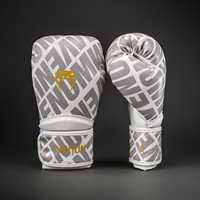
Venum | Adult and Kid Boxing Gloves Training
$100.64
Buy on Lazada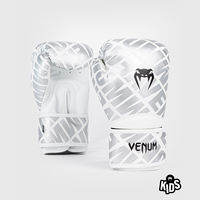
Venum | Childrens Boxing Gloves for Training and Competition
$74.54
Buy on Lazada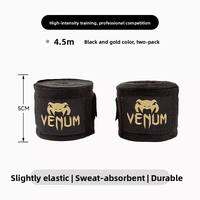
Venum | Boxing Wraps 4m
$34.92
Buy on Lazada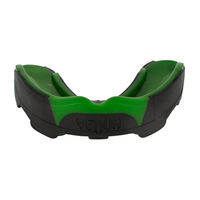
Venum | Multi-sport Teeth Protection Guard for teeth retainer
$44.60
Buy on Lazada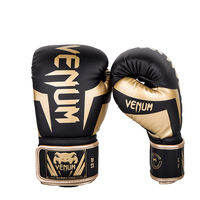
Venum | Elite Training Fighting Boxing Gloves
$317.07
Buy on Lazada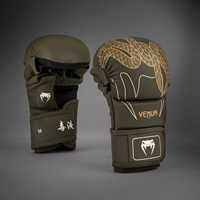
Venum | Combat Boxing Gloves for Mixed Martial Arts Training
$88.29$123.68
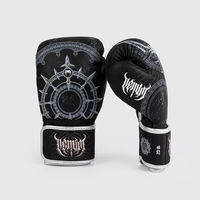
Venum | Boxing Gloves for Muay Thai and MMA
$123.55$174.46
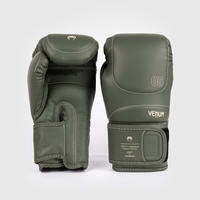
Venum | Boxing Training Gloves
$159.37$224.37
About Venum
Venum is a French combat sports brand best known for its mixed martial arts (MMA), boxing, Muay Thai, Brazilian jiu-jitsu (BJJ) and fitness equipment and apparel. Founded in the mid-2000s, the company grew from a niche MMA-focused label into one of the most recognisable global combat sports brands. Its most significant commercial milestone came through its partnership with the Ultimate Fighting Championship (UFC), for which Venum has served as the exclusive global outfitting partner since 2021. Following a contract extension in 2024, this arrangement is scheduled to continue through 2029.12
Basic information
| Field | Information |
|---|---|
| Brand | Venum |
| Industry | Combat sports / sportswear |
| Origin | France |
| Established | 2005–2006 |
| Founder / CEO | Franck Dupuis |
| Main focus | MMA, boxing, Muay Thai, BJJ and other combat sports |
| Major partnership | UFC |
| Best known for | Fight shorts, gloves, protective equipment, training apparel and UFC fight kits |
| Positioning | Performance-oriented combat sports + lifestyle |
| Official UFC outfitter | Since April 2021 |
| Current UFC agreement | Extended through 2029 |
Sources differ slightly on the precise founding date. Venum’s current corporate materials state that the brand began in Paris in 2005, whilst UFC documentation commonly cites 2006 as the start of its service to the combat sports community. Historical records indicate that founder Franck Dupuis conceived the brand in 2005, with business operations formally developing into Venum in 2006.2
History
Origins in Paris and the early MMA boom
Venum emerged during a pivotal period for mixed martial arts. In the mid-2000s, MMA was transitioning from a niche discipline into a global sporting and entertainment phenomenon. Franck Dupuis, who was working in combat sports retail and distribution, identified a gap in the European market: existing offerings frequently lacked a combination of technical performance, distinctive design and strong cultural identity.
According to company history, Dupuis decided in summer 2005 to create a new brand focused on high quality and original design.3 The initial product line centred on MMA culture, featuring ripstop fight shorts and cotton T-shirts. To ensure authenticity and technical relevance, Venum established a workshop in Rio de Janeiro, linking the nascent European brand directly to Brazil’s rapidly evolving MMA and Brazilian jiu-jitsu scene.4
This Franco-Brazilian connection became a foundational element of the brand’s identity and product development.
Founding and ownership
Franck Dupuis is the central figure in Venum’s corporate history. Company records state that he initially developed the business alone before bringing in Jean-François Bandet, a former IBM colleague, as a partner in 2006. The pair worked together for nearly a decade until Bandet departed in 2014, after which Dupuis assumed sole chairmanship and shareholding.5
Secondary sources occasionally present conflicting accounts regarding the founders. For instance, some references list André Vieira alongside Dupuis, whereas Venum’s own detailed historical narrative emphasises the partnership between Dupuis and Bandet.6 Consequently, Dupuis is accurately described as the principal founder and long-standing leader, while acknowledging that early development involved multiple contributors and deep ties to the Brazilian combat sports community.
Brand concept and identity
From its inception, Venum sought to distinguish itself through two primary pillars:
Performance orientation
Products were engineered specifically for athletes actively training and competing in combat sports, rather than treating fighting merely as a fashion aesthetic.
Visual identity
Venum adopted a more aggressive and immediately recognisable visual style than many traditional sports brands. Common design elements include:
- Large-scale graphics and oversized logos
- Snake and serpent imagery
- Dark colour palettes, particularly black, red and white combinations
- Stylised typography
- Camouflage, geometric patterns and textures inspired by scales or armour
This approach allowed the brand to function simultaneously as technical equipment and combat sports lifestyle wear, creating a significant competitive advantage.
Etymology
The name Venum is a stylised spelling of “venom”. This choice aligns with the brand’s core metaphor, communicating attributes such as danger, aggression, speed, precision and survival instinct. The snake motif remains one of the most enduring visual symbols associated with the brand and modern MMA culture.
Growth and athlete partnerships
Rather than relying primarily on traditional sports retail channels, Venum embedded itself within fighter communities, gyms and competitions. The company began sponsoring notable athletes early in its development. Historical records cite Denis Kang, Jeff Monson and Pequeno among the first sponsored fighters, followed by high-profile names including Wanderlei Silva, José Aldo, Lyoto Machida and Mauricio “Shogun” Rua.7
This strategy was critical for establishing credibility. In combat sports, brand legitimacy depends heavily on whether elite competitors trust the equipment. By positioning professional athletes as proof of performance rather than mere celebrity endorsers, Venum validated its products within the sport itself.
Prominent fighters associated with the brand over its history also include Frankie Edgar, Michael Bisping, Max Holloway and Jorge Masvidal. The UFC has frequently highlighted these associations, reinforcing a cycle where athlete endorsement drives fan engagement and product sales.8
Product range
Although MMA remains central to its identity, Venum has expanded into a comprehensive combat sports ecosystem. Current product categories include:
Mixed Martial Arts
- MMA gloves
- Fight shorts
- Rash guards
- Compression clothing
- Training apparel
- Protective equipment
Boxing
- Boxing gloves
- Hand wraps
- Headgear
- Apparel and training equipment
Muay Thai
- Muay Thai shorts
- Gloves and shin guards
- Protective equipment
- Training apparel
Brazilian Jiu-Jitsu
- BJJ gis
- No-gi apparel
- Rash guards and grappling shorts
- Belts and accessories
Fitness and training
- Gym apparel
- Compression wear
- Training shoes
- Bags and accessories
This diversified portfolio serves both professional fighters and recreational athletes who train regularly.
UFC partnership
Exclusive outfitting agreement
The most significant event in Venum’s corporate history is its partnership with the UFC. In July 2020, the UFC announced that Venum would replace Reebok as its exclusive global outfitting and apparel partner. The agreement officially commenced in April 2021.7
This deal fundamentally transformed Venum’s visibility. Prior to 2021, it was already a major combat sports brand; afterwards, millions of viewers worldwide saw Venum equipment whenever UFC fighters entered the Octagon. The brand effectively transitioned from being a prominent MMA supplier to becoming an integral part of the visual identity of the world’s largest MMA promotion.
UFC Fight Kit
A key output of the partnership is the UFC Fight Kit, designed specifically for competition inside the Octagon. The apparel is engineered around the physical demands of MMA, featuring lightweight microfibre materials, flexible construction, minimal seams, moisture management and durability to ensure freedom of movement.9
The partnership also encompasses Fight Week apparel worn during training sessions, media events, weigh-ins, open workouts, fighter walkouts and fight nights.
Contract renewals and expansion
Following the success of the initial term, the UFC and Venum renewed their agreement in 2022.10 On 7 March 2024, a further long-term extension was announced, securing Venum’s status as exclusive global outfitting partner through 2029.2
Beyond fight gear, Venum supplies apparel for UFC Performance Institute facilities in Las Vegas, Shanghai and Mexico City.11 As of 2026, Venum remains the exclusive partner under this agreement.12
Strategic expansion beyond MMA
While rooted in combat sports, Venum’s current corporate strategy explicitly addresses expansion into other contact sports, articulated as moving “from cage to gridiron”. This includes exploring opportunities in American football.3
The underlying rationale is that equipment capable of withstanding the rigours of a five-round MMA fight can apply similar protection and performance philosophies to other high-contact disciplines. This marks an evolution from a pure combat sports focus towards a broader contact sports ecosystem.
Global presence and regional operations
Venum has grown from a French-origin company into a global brand with regional operations covering the United States, Europe, Asia and Latin America. Its digital infrastructure supports regional shopping and distribution, whilst products are available through retailers and online channels worldwide.13
Brazil retains particular historical significance due to the Rio de Janeiro workshop established during the brand’s formative years. This connection provided direct access to BJJ, MMA and Muay Thai cultures, embedding Brazilian fighting heritage into the brand’s DNA.
The UFC partnership has naturally accelerated international exposure, making Venum one of the most visible combat sports brands globally.
Market positioning
Venum occupies a distinct position within the sportswear industry compared to generalist athletic brands.
| Brand | Core identity |
|---|---|
| Nike | General athletic sportswear |
| Adidas | General athletic + lifestyle |
| Under Armour | Performance sportswear |
| Everlast | Boxing + combat sports |
| Hayabusa | Combat sports |
| Venum | MMA + combat sports + lifestyle |
Unlike generalist brands for whom MMA is peripheral, Venum’s core identity is intrinsically linked to fighting. This specialisation means that seeing Venum on an elite UFC fighter carries different cultural weight than seeing a generic sportswear logo.
Business model
Venum operates across several interconnected revenue streams:
- Product development (equipment and apparel)
- Professional athlete partnerships
- UFC licensing
- Direct-to-consumer sales
- Retail and wholesale distribution
This integrated model allows the company to monetise the same audience at multiple touchpoints. A consumer might discover the brand via a UFC broadcast, purchase a licensed T-shirt, later acquire training gloves, and eventually buy lifestyle apparel.
Significance in MMA culture
Venum’s importance extends beyond commercial metrics; it has played a role in the commercial maturation of MMA culture. During the 2000s, when the sport’s apparel identity was fragmented, Venum helped establish a cohesive visual language combining fighter credibility, performance technology and distinctive graphics.
Its subsequent UFC partnership amplified this identity to a mainstream audience. Today, Venum is widely regarded as one of the brands most closely associated with modern professional MMA.
Timeline
- 2005: Franck Dupuis develops the concept for a new combat sports brand in Paris.14
- 2006: Early product line developed; connection established with Rio de Janeiro’s combat sports scene.15
- Late 2000s: Rapid expansion via MMA products, fighter sponsorships and international distribution.
- 2010s: Brand establishes itself as a major player in the global MMA and combat sports market.
- 2020: UFC announces Venum as future exclusive global outfitting partner.16
- April 2021: Official debut of UFC Fight Kits.17
- 2022: Partnership renewal agreed between UFC and Venum.18
- 2024: Long-term extension announced, maintaining exclusivity through 2029.19
- 2026: Continued expansion beyond combat sports, including strategic push into other contact sports such as American football.20
References
- The UFC + Venum Era Arrives | UFC
- UFC And Venum Announce Long-term Extension Of Exclusive Global Outfitting And Apparel Partnership | UFC
- VENUM – FROM CAGE TO GRIDIRON
- Highlights CN
- Our story – Venum Latam
- Venum
- UFC Names Venum New Exclusive Outfitting Partner | UFC
- UFC And Venum Announce Renewal Of Exclusive Global Outfitting And Apparel Partnership | UFC
- Venum, The World’s leading combat sports brand.
- Venum Team: Gloria Peritore, on Kickboxing and Finding Strength
- Behind The Scenes Of The VENUM Launch | UFC
- Privacy Policy – Venum Asia
- UFC announces deal with Venum Brazil | MMA Fighting
- Venum Brasil wants to be brought into fold, says UFC doesn’t have rights in country | MMA Fighting
- UFC inks apparel deal with Venum that will begin in 2021 – ESPN
- UFC NOMEIA VENUM COMO NOVA PARCEIRA EXCLUSIVA DE EQUIPAMENTO E VESTUÁRIO | UFC
- VENUM станет новым эксклюзивным производителем экипировки UFC | UFC
- Brand Story – Venum – Venum
- About Venum Football – Venum France
- Sales Agreements – Venum Asia