Shop on Lazada
Volkswagen products
![[Official Volkswagen SG] VW Genuine Wiper Blades front and rear](https://sg-live.slatic.net/p/5d2b43b38c2d2d13f8403b8f82007d87.jpg_200x200q80.jpg)
[Official Volkswagen SG] VW Genuine Wiper Blades front and rear
$74.90$124.37
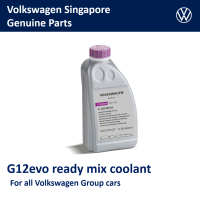
Volkswagen Coolant G12evo Ready Mix G12E050A2
$19.80$29.12
![[Official Volkswagen SG] Volkswagen Genuine Touch Up Paint Set](https://sg-live.slatic.net/p/66eb30f0a9108f093f7b1211af90041f.png_200x200q80.jpg)
[Official Volkswagen SG] Volkswagen Genuine Touch Up Paint Set
$33.90$44.43
![[Official Volkswagen SG] Genuine VW & Skoda Windshield Wiper Fluid Funnel and Cap](https://sg-live.slatic.net/p/30dac1cdded8eab2dc51e77ee767c40d.png_200x200q80.jpg)
[Official Volkswagen SG] Genuine VW & Skoda Windshield Wiper Fluid Funnel and Cap
$13.20$18.90
![[Official Volkswagen SG] Genuine Volkswagen Washer Tank Cap](https://sg-live.slatic.net/p/e8f28abab39d24e0097940993ed3d37a.jpg_200x200q80.jpg)
[Official Volkswagen SG] Genuine Volkswagen Washer Tank Cap
$15.90$18.33

Genuine VW / Audi G12 EVO Coolant Ready Mix 1L (G12E050A2)
$15.50$26.40
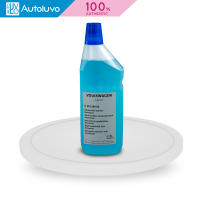
Genuine Audi VW Windscreen Cleaner Washer Fluid suitable for all vehicles 1litre (G052184A2)
$14.80$19.20
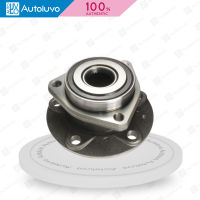
Genuine Front LH/RH Wheel Bearing for Audi A3/TT/Skoda/VW Golf/Passat/Touran (5WA407621D)
$300.00
Buy on LazadaAbout Volkswagen
Volkswagen (German: Volkswagen, literally “people’s car”), commonly abbreviated VW, is a prominent German automobile manufacturer headquartered in Wolfsburg, Germany. It serves as the flagship passenger-car brand of the Volkswagen Group, one of the world’s largest automotive conglomerates. The marque is best known for models such as the Beetle, Golf, Passat, Polo, Jetta, Tiguan, ID.3, ID.4 and ID. Buzz.
The history of Volkswagen is notably complex. Conceived in 1930s Nazi Germany as a mass-motorisation project, the company was involved in wartime production and forced labour during World War II before being rebuilt under British administration. In the post-war era, the Beetle established Volkswagen as an international manufacturer, while subsequent models—particularly the Golf—cemented its status as a dominant volume brand in Europe.1
Basic information
| Item | Information |
|---|---|
| Brand | Volkswagen |
| Common abbreviation | VW |
| Meaning | “People’s car” |
| Country of origin | Germany |
| Headquarters | Wolfsburg, Germany |
| Parent company | Volkswagen Group |
| Industry | Automotive |
| Main products | Passenger cars, SUVs, electric vehicles, commercial vehicles |
| Established | 1937 |
| Famous historical model | Volkswagen Beetle |
| Best-known modern model | Volkswagen Golf |
| Major current EV family | ID. |
| Corporate group | Volkswagen Group |
The parent entity, Volkswagen Group, is also headquartered in Wolfsburg. In 2025, the Group reported 111 production facilities, approximately 663,000 employees and 9.0 million vehicle deliveries worldwide. These figures encompass the entire Group rather than the Volkswagen passenger-car brand alone.2
Origin of the name
The German word Volkswagen translates literally to “people’s car”. The concept originated from the objective of creating an affordable automobile for ordinary German families. During the 1930s, engineer Ferdinand Porsche developed designs for a compact, economical mass-market vehicle, a project that eventually became associated with the government’s “people’s car” programme.3 Consequently, the name describes the automobile’s original purpose rather than serving merely as a commercial label.
Foundation and Nazi-era origins
Volkswagen traces its origins to the 1930s. In 1934, Ferdinand Porsche’s engineering organisation received a contract to develop prototypes for a German mass-market automobile, which evolved into a state-backed industrial programme.4
On 28 May 1937, the Gesellschaft zur Vorbereitung des Deutschen Volkswagens was established, later renamed Volkswagenwerk GmbH in September 1938.5 A large-scale factory was constructed near present-day Wolfsburg with the intention of manufacturing the “people’s car” en masse. However, World War II prevented planned civilian production. Instead, the factory was integrated into the German war economy, producing military vehicles and equipment using forced labour. Volkswagen’s own historical documentation explicitly acknowledges the company’s involvement in forced labour and the wartime economy.6 This period remains an inseparable part of the company’s origins.
The Beetle
The vehicle that achieved international fame as the Volkswagen Beetle was originally developed as the German “people’s car”. Its technical characteristics included a rear-mounted air-cooled engine, rear-wheel drive, a rounded body, simple mechanical construction, relatively low production costs and high durability. Known officially in Germany as the Käfer (“Beetle”), it was marketed under various names globally.
Mass civilian production commenced in earnest after World War II when British authorities assumed control of the plant. By late 1945, production of the Volkswagen saloon had begun under British administration,7 and the Beetle eventually became one of the most recognisable automobiles in history.
Post-war reconstruction
The post-war era marked Volkswagen’s transformation from a German industrial project into a global automotive company. Under British administration, the company focused on Beetle production as demand grew rapidly both domestically and internationally.
In 1950, Volkswagen introduced the Type 2 Transporter, popularly known as the VW Bus or Microbus, which became a significant commercial and cultural icon.8 During Germany’s economic recovery, Volkswagen emerged as a symbol of national resurgence, with exports playing a critical role in the company’s development.
International expansion
Throughout the 1950s and 1960s, Volkswagen expanded aggressively beyond Germany. The Beetle gained popularity across Europe, North America, Latin America, Australia, Asia and Africa. The company established manufacturing and sales operations in multiple countries, gradually evolving from a domestic manufacturer into an international corporation. A key milestone in this development occurred in 1960 when Volkswagen was converted into a joint-stock corporation.9
Crisis and transition
Despite the Beetle’s immense success, reliance on a single vehicle concept eventually became problematic. By the late 1960s and early 1970s, shifting consumer preferences and increased competition necessitated new products. The company began transitioning from traditional rear-engine, air-cooled architectures to front-engine, front-wheel-drive vehicles with water-cooled engines, a shift identified in Volkswagen’s historical chronology as beginning in the 1970s.10 This strategic pivot ultimately yielded some of the marque’s most significant models.
The Golf revolution
Introduced in 1974, the Volkswagen Golf represented a radical departure from the Beetle. Whereas the Beetle featured a rear engine, rear-wheel drive and air cooling, the Golf utilised a front engine, front-wheel drive, water cooling and a modern hatchback layout. Combining compact dimensions, practical packaging, efficient engines, affordable pricing and European driving dynamics, the Golf became Volkswagen’s defining modern product and one of Europe’s most successful automobiles.
The GTI
The Golf GTI, introduced in the 1970s, helped establish the modern hot hatch segment: a practical compact car offering significantly enhanced performance. The formula combined a small chassis with a powerful engine, sporty handling and everyday usability. The GTI became an automotive cultural icon, inspiring competitors such as the Ford Escort/Focus ST, Renault Sport models and Peugeot GTi variants.
Notable models
Volkswagen has produced a diverse range of vehicles throughout its history:
Beetle
The company’s historic symbol and one of the world’s most recognisable cars.
Type 2 / Transporter
The iconic VW Bus, used for commercial transport and later associated with 1960s counterculture.
Golf
Volkswagen’s most important modern compact car.
Polo
A smaller hatchback positioned below the Golf.
Passat
A larger family car positioned above the Golf.
Jetta
A sedan derived from the Golf platform, particularly significant in North America and other markets.
Scirocco
A sporty compact coupé.
Corrado
A technologically advanced sporting coupé.
Touran
A compact MPV.
Tiguan
A major SUV that became a global volume product.
Touareg
A larger premium-oriented SUV.
Arteon
A fastback-style executive/luxury-oriented model.
ID.3
An electric compact hatchback.
ID.4
An electric crossover/SUV.
ID.5
An electric coupé-SUV.
ID.7
A larger electric model.
ID. Buzz
A modern electric interpretation of the classic VW Bus concept.
Volkswagen describes its heritage as extending from the Beetle and Bus through the Rabbit, Jetta and GTI to modern vehicles such as the Tiguan and Atlas.11
Volkswagen Group structure
It is essential to distinguish between Volkswagen and Volkswagen Group, as they are distinct entities.
Volkswagen
The automobile brand producing vehicles such as the Golf, Polo, Passat, Tiguan, ID.4 and ID.7.
Volkswagen Group
The larger automotive corporation owning or controlling numerous brands, including Volkswagen, Audi, Škoda, SEAT, CUPRA, Porsche, Bentley, Lamborghini, Ducati and Volkswagen Commercial Vehicles. The Group organises these marques into strategic brand groups and shares technologies and industrial resources across the organisation.12 Consequently, a Volkswagen Golf and an Audi model may share underlying technologies despite having different brand identities and target demographics.
Brand positioning
Volkswagen traditionally occupies the mass-market/mainstream segment. A simplified hierarchy within the Volkswagen Group places Volkswagen, Škoda and SEAT in the mainstream category; CUPRA and Audi in the sportier/premium segment; and Porsche, Bentley and Lamborghini in the luxury/performance tier. While not absolute, this framework illustrates Volkswagen’s role within the Group.
Historically, the brand’s proposition has centred on German engineering, practicality, quality, recognisable design and reasonable pricing. In 2025, Volkswagen articulated a renewed direction focusing on design, quality, price-performance, intuitive operation and technology, encapsulated by the phrase “True Volkswagen.”13
Design philosophy
Volkswagen design has historically prioritised recognition over extravagance. Common characteristics include clean lines, conservative proportions, strong visual consistency, functional interiors, simple geometric forms and restrained styling. This approach ensures models remain identifiable across generations, with the Golf serving as a prime example of substantial evolution while maintaining core identity.
Engineering architecture
Platform sharing
The Volkswagen Group is renowned for utilising common platforms across different brands, allowing a single engineering architecture to support numerous vehicles. This strategy reduces development costs and facilitates technology dissemination across high production volumes.
MQB
The MQB platform architecture became a foundational element for the Group’s front-engine vehicles, supporting products with varying dimensions and body styles.
MEB
For electric vehicles, Volkswagen developed MEB (Modularer E-Antriebs-Baukasten), or Modular Electric Drive Matrix. Designed specifically for battery-electric vehicles, it underpins numerous ID-family vehicles and related Group products.
Electrification strategy
Volkswagen’s future strategy increasingly centres on electrification through its dedicated ID. family. Key models include the ID.3 (compact hatchback), ID.4 (electric SUV/crossover), ID.5 (coupé-style SUV), ID.7 (larger electric car) and ID. Buzz (electric van/MPV). The company has also indicated plans to expand its electric portfolio into smaller segments, stating in its 2025 product strategy that additional electric models would be introduced in the small-car and compact categories.14 This transformation aligns with the broader Volkswagen Group strategy aimed at sustainable mobility and greater electrification.15
Current status
As of 2026, Volkswagen is undergoing a significant transformation driven by electric vehicles, competition from Chinese automakers, software-defined vehicles, autonomous driving technology, battery advancements, new manufacturing methods, changing consumer expectations and pressure on margins. The company is simultaneously modernising its combustion-engine portfolio and expanding its electric range.
The Group describes its long-term strategy through 2035 as “Mobility for Generations”, aiming to become the “Global Automotive Tech Driver.”16 In 2025, the passenger-car portfolio comprised both combustion/hybrid vehicles—notably the T-Roc, Tiguan, Tayron and Passat—and the electric ID family.17
Relationship with China
China is a critical market for Volkswagen, which entered the country earlier than many Western automakers and established major joint ventures. However, the Chinese automotive landscape has shifted dramatically, with domestic manufacturers such as BYD becoming increasingly competitive in electric vehicles and software. This has compelled Volkswagen to reassess its development speed and competitive strategy in the region, reflecting broader global challenges.
Presence in North America
Volkswagen has maintained a long-standing presence in the United States, where the Beetle achieved cultural prominence between the 1950s and 1970s. Subsequent models included the Rabbit, Golf, Jetta, Passat, Tiguan, Atlas and ID.4. The company operates a major manufacturing facility in Chattanooga, Tennessee. More recently, Volkswagen has reconsidered its American strategy; in August 2026, Reuters reported plans for a significant overhaul centred partly on expanding into the pickup-truck segment.18
Motorsport
Volkswagen has participated extensively in motorsport, including rallying, touring-car racing, Formula 3, the Dakar Rally, the World Rally Championship, hill climbs and endurance racing. Notable successes include the Polo R WRC in the World Rally Championship and multiple victories in the Dakar Rally with the diesel-powered Race Touareg. Motorsport has historically served as a platform for demonstrating engineering capability and promoting performance-oriented models.
Logo
The Volkswagen logo consists of the letters V and W arranged within a circle. Having undergone multiple redesigns, the modern version is flatter and simpler than earlier iterations, reflecting the industry’s shift towards digital-friendly branding. The VW symbol remains among the most recognisable automotive logos globally.
Strengths
- Brand recognition: VW is one of the world’s most recognisable automotive brands.
- Industrial scale: As part of Volkswagen Group, the brand accesses substantial manufacturing, engineering and purchasing resources.
- Product diversity: The portfolio spans small cars, family cars, SUVs, electric vehicles and commercial vehicles.
- European position: Volkswagen has historically been a dominant automobile brand in Europe.
- Engineering expertise: The Group possesses extensive capabilities in engines, transmissions, platforms, electronics and EV technology.
- Historic equity: Names such as Golf, GTI, Beetle, Bus and Passat carry significant historical recognition.
Challenges
- Electrification: Transitioning from internal combustion to EVs requires enormous investment.
- Chinese competition: Domestic Chinese manufacturers are increasingly competitive in EVs, batteries and software.
- Software: Volkswagen has faced difficulties developing automotive software at the pace demanded by the modern market.
- Cost structure: High manufacturing and labour costs in Germany can make European production expensive.
- Brand positioning: Maintaining mainstream identity whilst competing against sophisticated, lower-cost alternatives presents ongoing challenges.
- Historical complexity: Nazi-era origins and forced labour remain part of the company’s historical responsibility.
Dieselgate scandal
A pivotal event in modern Volkswagen history was the 2015 emissions scandal, commonly known as Dieselgate. Software in certain diesel vehicles was found to detect testing conditions and alter vehicle behaviour, allowing compliance with regulatory limits in laboratories whilst producing different emissions during normal driving. The scandal resulted in massive financial penalties, recalls, lawsuits, regulatory investigations, reputational damage and strategic shifts, including accelerated emphasis on electric vehicles.
Cultural impact
Certain Volkswagen products have transcended their function as transport to become cultural symbols. The Beetle is associated with post-war European mobility, American popular culture and 1960s counterculture. The VW Bus evokes travel, camping, surfing and the hippie movement. The Golf GTI is linked to European car culture and the hot-hatch movement, while the standard Golf represents practical European daily transport. This cultural resonance contributes to unusually strong emotional recognition for a mainstream manufacturer.
Most significant models
| Model | Importance |
|---|---|
| Beetle | Established Volkswagen’s global identity |
| Type 2 / Bus | Created the iconic VW van |
| Golf | Became VW’s defining modern car |
| Golf GTI | Helped create the hot-hatch category |
| Polo | Major small-car product |
| Passat | Important midsize family car |
| Jetta | Major sedan, especially in North America |
| Tiguan | Key global SUV |
| Touareg | Moved VW into larger premium SUV territory |
| ID.3 | Major electric compact |
| ID.4 | Major electric SUV |
| ID. Buzz | Modern electric interpretation of the VW Bus |
Timeline
- 1934 — Ferdinand Porsche’s team develops the concept for a German mass-market car.19
- 1937 — The company preparing the “German Volkswagen” is established.20
- 1938 — Renamed Volkswagenwerk GmbH; construction of the factory near present-day Wolfsburg begins.21
- 1939–1945 — World War II redirects production toward military equipment; forced labour is used.22
- 1945 — British administration begins civilian Volkswagen production.
- 1950 — Type 2 Transporter introduced.23
- 1950s–1960s — Beetle becomes an international success.
- 1960 — Volkswagen becomes a joint-stock corporation.24
- 1974 — Golf introduced.
- 1970s–1980s — Transition toward front-engine, front-wheel-drive vehicles.
- 1990s–2000s — Global expansion and portfolio broadening.
- 2010s — SUVs gain importance.
- 2015 — Diesel emissions scandal becomes public.
- 2019 — ID. electric-car strategy launched.
- 2020 — ID.3 enters production.
- 2021 — ID.4 expands electric SUV offering.
- 2022 — ID. Buzz enters the market.
- 2025 — Continued expansion of EV range and hybrid/conventional portfolio.25
- 2026 — Ongoing restructuring amid intense competition, particularly from Chinese automakers.
Distinction from Volkswagen Group
Volkswagen refers to the car brand, whereas Volkswagen Group denotes the parent automotive corporation. Statements such as “Volkswagen owns Porsche” refer to the Group, not the passenger-car brand. Similarly, Audi, Lamborghini, Bentley, Ducati and Škoda belong to the wider Group structure rather than being Volkswagen-branded vehicles.
Evolution of identity
Historically, Volkswagen has embodied several identities:
- 1930s: Affordable car for the masses.
- 1950s–1960s: Symbol of German economic recovery and mass motorisation.
- 1970s–1990s: Representative of modern European engineering.
- 1990s–2010s: Global mainstream automotive brand.
- 2010s: Diesel technology leading to emissions crisis.
- 2020s: Electrification, software and global restructuring.
This evolution distinguishes Volkswagen among automobile manufacturers.
References
- History | Volkswagen Group
- History | Volkswagen Newsroom
- About Us | Volkswagen Group
- 1937 to 1945 – Founding of the Company and Integration into the War Economy | Volkswagen Group
- The History of Porsche | Volkswagen Group
- Volkswagen Chronicle | Volkswagen Group
- Our History | Volkswagen
- Brands & Brand Groups | Volkswagen Group
- “True Volkswagen”: Volkswagen realigns its model range around core values | Volkswagen Group
- New group models in 2025 – Volkswagen Group Annual Report 2025
- Volkswagen to overhaul US strategy with planned pick-up truck, source says
- Strategy | Volkswagen Newsroom
- Group | Volkswagen Group
- Structure and Business Activities – Volkswagen Group Annual Report 2025
- 1937 bis 1945 – Unternehmensgründung und Einbindung in die Kriegswirtschaft | Volkswagen Group
- Neue Konzernmodelle im Jahr 2025 – Volkswagen Group Geschäftsbericht 2025
- Brand Groups and Business Fields – Volkswagen Group Annual Report 2025
- Brand Groups and Business Fields – Volkswagen Group Annual Report 2025
- Volkswagen Chronik | Volkswagen Group
- 1934 bis 1937 – Der „deutsche Volkswagen“ als „Gemeinschaftswerk“ der deutschen Automobilindustrie | Volkswagen Group
- Learn about our Heritage | Volkswagen
- VW Models: SUVs, Sedans, Electric cars | Volkswagen
- Company Profile | 企業情報 | フォルクスワーゲンについて | フォルクスワーゲン公式
- Models | Volkswagen Malaysia
- The Volkswagen Heritage | Volkswagen Australia