Shop on Lazada
Wahoo Fitness products
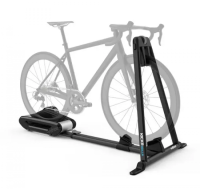
WAHOO KICKR ROLLR SMART BIKE ROLLER
$1,210.00
Buy on Lazada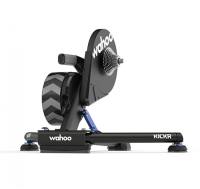
WAHOO NEW KICKR V6 SMART BIKE TRAINER
$1,810.00$2,307.00
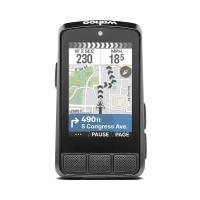
Wahoo ELEMNT BOLT 3 GPS Bike Computer
$559.00
Buy on Lazada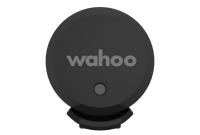
Wahoo TRACKR SPEED Cycling Speed Sensor
$75.00
Buy on Lazada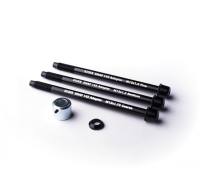
WAHOO KICKR SNAP 12 X 142 THRU AXLE ADAPTER
$125.00
Buy on Lazada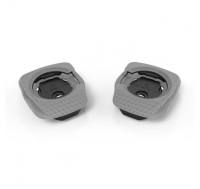
WAHOO SPEEDPLAY EASY TENSION CLEATS
$120.00
Buy on Lazada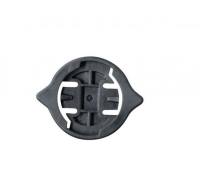
WAHOO ELEMNT QUARTER TURN MOUNT ADAPTOR
$30.00
Buy on Lazada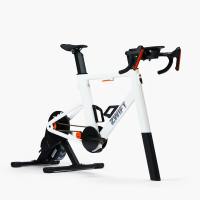
Wahoo Kickr Zwift Ride with Kickr Core 2 | All-In-One Complete Setup of Indoor Virtual Cycling Smart Trainer
$3,219.00$3,799.00
About Wahoo Fitness
Overview
Wahoo Fitness is an American sports-technology company best known for connected cycling and endurance-training equipment. Founded in 2009 by Chip Hawkins in Atlanta, Georgia, Wahoo built its reputation around combining sensors, hardware, software, training data, and performance analytics into an integrated ecosystem for cyclists, runners, triathletes, and other endurance athletes. 1
Its best-known product families include KICKR smart trainers and indoor bikes, ELEMNT GPS cycling computers, SPEEDPLAY power and cycling pedals, TICKR/ TRACKR heart-rate and fitness sensors, and the Wahoo SYSTM training platform.
| Category | Information |
|---|---|
| Company | Wahoo Fitness, LLC |
| Founded | 2009 |
| Founder | Chip Hawkins |
| Headquarters | Atlanta, Georgia, USA |
| Industry | Fitness technology / sports technology |
| Ownership | Privately held |
| Main markets | Cycling, running, triathlon, endurance sports |
| Best known for | Smart trainers, cycling computers, sensors, training software |
| Major product brands | KICKR, ELEMNT, SPEEDPLAY, TICKR, TRACKR, SYSTM |
| Official website | 2 |
Wahoo describes its broader vision as building a connected ecosystem of software, sensors, devices, data and performance insights rather than simply selling individual fitness products.
Origins
Wahoo was established in Atlanta in 2009 by Chip Hawkins, an engineer and cycling enthusiast. The company began with a relatively simple idea: smartphones could become much more useful training computers if they could communicate with external fitness sensors.
One of Wahoo’s early products was the Wahoo ANT+ Key, a small accessory that allowed an iPhone to communicate with ANT+ fitness sensors.
That idea was important because, at the time, dedicated cycling computers were common, while smartphones were becoming increasingly powerful but weren’t yet deeply integrated with cycling sensors.
Wahoo’s philosophy became essentially:
use modern consumer technology to make serious athletic training simpler and more connected.
The company subsequently expanded from smartphone connectivity into heart-rate monitoring, cycling sensors, GPS computers, indoor trainers, training software and eventually running equipment.
Product Categories
Wahoo is primarily an endurance-sports technology company rather than a traditional sportswear company. Its products can broadly be divided into six categories:
- Indoor cycling
- Outdoor cycling electronics
- Cycling pedals and power measurement
- Heart-rate and other sensors
- Running equipment
- Training software and digital services
This breadth is one of Wahoo’s defining characteristics.
KICKR Indoor-Cycling Ecosystem
If there is one product family most strongly associated with Wahoo, it is KICKR. KICKR is Wahoo’s family of smart indoor cycling trainers, bikes and accessories.
The basic idea is simple: instead of putting a normal bicycle on a stationary trainer and manually adjusting resistance, a smart trainer electronically controls resistance and communicates with training software.
For example, a KICKR can:
- Measure power
- Control resistance
- Simulate climbs
- Respond to virtual training software
- Connect through Bluetooth and ANT+
- Record training data
- Work with third-party training platforms
Current Wahoo products include the KICKR CORE 2, KICKR MOVE, KICKR BIKE PRO and KICKR RUN, among others. Wahoo’s support documentation maintains a detailed distinction between current, discontinued and obsolete hardware.
KICKR BIKE
The KICKR BIKE is Wahoo’s smart indoor cycling machine rather than simply a trainer for an existing bicycle. It is designed to reproduce aspects of outdoor cycling indoors, including electronically controlled resistance and simulated gradients.
KICKR MOVE
KICKR MOVE adds physical movement to the indoor-training experience, allowing the bike/trainer system to move under the rider rather than remaining completely fixed.
KICKR RUN
Wahoo later expanded beyond cycling with the KICKR RUN, a connected smart treadmill. The launch represented an important strategic change: Wahoo was no longer exclusively a cycling-technology company and was moving more aggressively into running and multi-sport training. Wahoo announced its entry into indoor running in 2024.
ELEMNT Cycling Computers
ELEMNT is Wahoo’s family of GPS cycling computers. It competes primarily with products from companies such as Garmin, Hammerhead, and Bryton.
The ELEMNT philosophy has traditionally emphasized simplicity and usability rather than overwhelming cyclists with complicated menus.
The current ELEMNT family includes products such as:
- ELEMNT ACE
- ELEMNT ROAM 3
- ELEMNT BOLT 3
Wahoo’s current software supports route synchronization, workout synchronization, data-page customization and device management.
ELEMNT BOLT
The BOLT is positioned as the smaller, more compact performance-oriented cycling computer.
ELEMNT ROAM
The ROAM emphasizes navigation and longer-distance riding, making it particularly relevant to endurance riders, bikepackers and cyclists who spend considerable time exploring unfamiliar roads.
ELEMNT ACE
The ACE sits higher in the ELEMNT range and is designed as a large-screen, premium cycling computer.
SPEEDPLAY Pedals
Another major piece of the Wahoo portfolio is SPEEDPLAY. SPEEDPLAY is a road-cycling pedal system originally associated with the distinctive dual-sided pedal design. Wahoo acquired the SPEEDPLAY brand and incorporated it into its cycling ecosystem.
Modern SPEEDPLAY products include conventional road pedals as well as SPEEDPLAY POWER, which incorporates power measurement.
Wahoo states that SPEEDPLAY POWER can measure cycling power at the pedal and provide information such as:
- Power
- Cadence
- Left/right power balance
The pedals communicate through Bluetooth and ANT+. This is strategically important because it means Wahoo can participate in the cycling-data chain from the rider’s feet → power measurement → cycling computer → training software.
TICKR and TRACKR Sensors
Wahoo has also historically been well known for heart-rate monitors. The TICKR family helped establish Wahoo’s reputation for relatively inexpensive, easy-to-use training sensors. The newer TRACKR HEART RATE is part of Wahoo’s current sensor lineup.
These devices can transmit heart-rate data using standards such as Bluetooth and ANT+.
Wahoo also sells other sensors for metrics such as speed, cadence, and radar/traffic awareness. The current TRACKR lineup includes products such as TRACKR HEART RATE, TRACKR SPEED and TRACKR RADAR.
Wahoo SYSTM
Hardware is only half of Wahoo’s strategy; the other half is software. Wahoo SYSTM is Wahoo’s structured training platform. It evolved from The Sufferfest, a cycling-training platform that Wahoo acquired and subsequently integrated into its broader software ecosystem.
SYSTM provides structured workouts and training plans covering areas such as cycling, running, strength, yoga, mobility, mental training, and multi-sport preparation.
One of its most distinctive features is 4DP — Four-Dimensional Power. Instead of treating an athlete’s ability as a single FTP number, 4DP attempts to characterize different aspects of cycling performance, including neuromuscular power, anaerobic capacity, maximal aerobic power, and functional threshold power. Wahoo has also developed 3DP concepts for running.
Wahoo App and Integration
Wahoo’s software strategy has evolved considerably. Today, the Wahoo App acts as a central hub for much of the company’s ecosystem. It can be used to set up Wahoo devices, update firmware, configure cycling computers, manage KICKR trainers, record activities, connect sensors, synchronize training data, connect third-party fitness services, and analyze training information.
Wahoo says its ecosystem works with more than 110 third-party training and fitness apps. This interoperability is an important part of Wahoo’s identity. Rather than forcing an athlete to use only Wahoo software, Wahoo deliberately integrates with external platforms.
A major selling point of Wahoo products is their ability to work with third-party services. Depending on the device and service, Wahoo supports integrations involving platforms such as Strava, TrainingPeaks, Komoot, Zwift, and COROS. Wahoo’s current app describes itself as a data hub, allowing athletes to bring activities from different platforms into a unified Wahoo profile. This is particularly attractive to serious endurance athletes who may use different brands for different purposes.
Relationship with Zwift
Wahoo and Zwift have had a complicated relationship. They are competitors in certain areas but also important ecosystem partners. For example, Wahoo manufactures smart trainers while Zwift provides virtual training and racing software. Wahoo trainers can be used with Zwift, and both companies benefit from an interoperable indoor-training ecosystem.
The broader lesson is that the modern indoor-cycling market is not simply about hardware versus hardware. Hardware, software, connectivity and platform ecosystems are all intertwined.
Transition from The Sufferfest
One of Wahoo’s more important software moves was its acquisition of The Sufferfest. The Sufferfest was known for highly structured cycling workouts combined with humorous and motivational video content. Wahoo eventually transformed the platform into Wahoo SYSTM, expanding it beyond cycling. The result is a more comprehensive training platform rather than simply an indoor-cycling workout library. Wahoo’s current support documentation lists The Sufferfest as an obsolete standalone software product and SYSTM as the successor.
Wahoo RGT
Wahoo also operated RGT, or Road Grand Tours, a virtual cycling platform. RGT attempted to provide a more realistic virtual-cycling environment, competing in the broader market occupied by platforms such as Zwift. However, Wahoo eventually discontinued RGT. The company says Wahoo RGT closed on October 31, 2023, with its software team redirected toward training intelligence and the Wahoo/SYSTM ecosystem. This was significant because it showed a strategic shift away from trying to compete directly as a virtual-world platform. Instead, Wahoo increasingly positioned itself as the training-data and performance ecosystem surrounding the athlete.
Sports Science Philosophy
Wahoo places considerable emphasis on sports science. The company has operated a sports-science organization and facility in Boulder, Colorado, involving researchers, coaches and sports scientists. The goal is to connect scientific concepts with actual consumer training products.
This philosophy can be seen in 4DP cycling assessments, running performance metrics, structured training, training-load analysis, recovery information, and workout personalization. Wahoo’s stated philosophy is not simply “collect more data.” It is closer to: collect useful data → interpret it → turn it into actionable training information.
Brand Identity
Wahoo’s official brand philosophy revolves around the idea of “Building the better athlete in all of us.” The company emphasizes progress rather than only winning, innovation, community, personal improvement, enjoyment of difficult training, and athlete-focused technology.
Wahoo calls its community members “Wahooligans.” The deliberately energetic branding is part of the company’s personality. It is less corporate than many traditional sports-equipment brands and tends to position itself around the culture of endurance athletes.
From a branding perspective, Wahoo occupies an interesting position. It is premium but not luxury. It is technical but intentionally approachable. It is performance-oriented without being exclusively professional. And its identity is strongly connected with endurance-sports culture. The unusual spelling and energetic naming help differentiate the company from more conventional electronics brands.
Competitive Positioning
The easiest way to understand Wahoo is to compare its philosophy with traditional sports-electronics companies.
- Garmin: Has an extremely broad ecosystem covering running, cycling, triathlon, hiking, navigation, outdoor sports, wearables, and smartwatches. Wahoo historically had a narrower focus and concentrated heavily on serious cycling and endurance training.
- Apple: Approaches fitness primarily through a general-purpose consumer ecosystem centered around the Apple Watch and iPhone. Wahoo instead builds specialized athletic hardware.
- Zwift: Is primarily a software/virtual-training company. Wahoo is fundamentally a hardware + sensor + software ecosystem.
- Specialized/Trek: Traditional bicycle manufacturers focus heavily on bicycles and cycling equipment. Wahoo focuses more on the digital layer of cycling and training.
This makes Wahoo somewhat analogous to a technology company operating inside the endurance-sports industry.
Target Customer
Wahoo products generally appeal to people who take training seriously. Its customer base includes recreational cyclists, serious amateur cyclists, competitive cyclists, triathletes, runners, indoor-training enthusiasts, cycling coaches, endurance athletes, and data-oriented athletes.
It is particularly attractive to athletes who care about metrics such as power + heart rate + cadence + speed + training load + workout structure + performance trends.
Current Ecosystem Structure
As of 2026, Wahoo’s ecosystem can broadly be visualized as an integration of Cycling (KICKR, ELEMNT, SPEEDPLAY), Running (KICKR RUN), and Training (Wahoo App, SYSTM) components feeding into an Athlete Profile.
The key concept is that Wahoo increasingly wants these products to work as one ecosystem rather than isolated devices.
Wahoo’s current software ecosystem essentially has three major components:
- Wahoo App: The general device-management, activity and fitness-data hub.
- Wahoo SYSTM: The structured training platform with workouts, plans and sports-science-oriented training.
- ELEMNT Companion: The companion application supporting earlier generations of ELEMNT computers and the ELEMNT RIVAL watch.
Wahoo describes these as connected through a common account and ecosystem.
Corporate History
Wahoo grew from a small Atlanta startup into a global endurance-sports technology brand. The company later attracted outside investment. In 2021, Rhone Capital acquired a majority stake in Wahoo. According to the company’s subsequent history, Chip Hawkins and investment partners later bought the company back in 2023. 3
Wahoo subsequently appointed Gareth Joyce as CEO, with founder Chip Hawkins remaining involved as founder and board member. Wahoo announced Joyce’s appointment in 2024.
Wahoo’s headquarters remain in Atlanta, and the company lists international operations/representatives including the United Kingdom and EU.
Milestones
| Year | Event |
|---|---|
| 2009 | Wahoo Fitness founded by Chip Hawkins in Atlanta |
| Early 2010s | Establishes reputation for smartphone-connected fitness sensors |
| 2012 | First-generation KICKR introduced |
| 2010s | Expands into heart-rate sensors and cycling computers |
| 2017 | Launches ELEMNT BOLT |
| 2019 | Acquires/expands SPEEDPLAY business |
| 2021 | Rhone acquires majority ownership |
| 2021 | Wahoo acquires The Sufferfest |
| 2022 | Wahoo launches Wahoo X/SYSTM ecosystem and expands sports-science focus |
| 2023 | Wahoo RGT eventually discontinued |
| 2023 | KICKR MOVE and KICKR SHIFT introduced |
| 2023 | Hawkins/investor group buys back Wahoo |
| 2024 | Gareth Joyce becomes CEO |
| 2024 | KICKR RUN expands Wahoo into smart treadmills |
| 2025–26 | Wahoo continues developing its integrated cycling/running hardware and software ecosystem |
Some older product dates vary depending on whether one counts announcement, launch or retail availability, so the timeline above is best viewed as a high-level history rather than a complete corporate chronology.
Strengths
- Strong cycling reputation: Wahoo has developed considerable credibility among serious cyclists, particularly around smart trainers and cycling computers.
- Excellent interoperability: The company’s willingness to work with third-party platforms is a major advantage. Wahoo explicitly supports more than 110 external training/fitness integrations.
- Hardware + software combination: Wahoo doesn’t just sell a cycling computer or trainer. It can potentially provide: sensor → device → workout → training data → analysis.
- Athlete-focused design: Its products tend to be designed around actual training scenarios rather than simply maximizing the number of consumer features.
- Strong indoor-training presence: KICKR is one of the most recognizable names in smart indoor cycling.
- Expanding beyond cycling: The KICKR RUN and running-focused software indicate that Wahoo wants to become a broader endurance-sports technology company, not remain a cycling-only brand.
Industry Role
Wahoo is unusual because it sits between several parts of the bicycle industry. It isn’t primarily a bicycle manufacturer. Instead, it provides the technology infrastructure surrounding the bicycle.
For example, the flow goes from Rider → SPEEDPLAY POWER → Power/Cadence → ELEMNT → Training Data → Wahoo SYSTM/Strava/TrainingPeaks → Athlete Analysis.
For indoor riding, the flow is Bicycle → KICKR TRAINER (Power/Speed/Resistance) → Training Software (SYSTM/Zwift).
This interconnected approach is arguably the core of Wahoo’s business model.
Why Cyclists Know Wahoo
Among cyclists, the name Wahoo is particularly associated with three things:
- KICKR → indoor training
- ELEMNT → cycling computers
- SPEEDPLAY → pedals
These three categories give Wahoo presence both indoors and outdoors. An athlete could theoretically use SPEEDPLAY pedals → ELEMNT computer → TRACKR heart-rate sensor → KICKR indoor trainer → SYSTM training software → Wahoo App and remain inside a largely unified ecosystem. That is exactly the type of connected ecosystem Wahoo has been building.
Summary
Wahoo Fitness is an Atlanta-based American fitness-technology company founded in 2009 by Chip Hawkins. The company develops connected hardware and software for cycling, running and endurance sports, with major product lines including KICKR smart trainers and bikes, ELEMNT GPS cycling computers, SPEEDPLAY pedals, TRACKR sensors and Wahoo SYSTM training software. Wahoo’s strategy centers on integrating athletic hardware, sensors, training applications and performance data into an interoperable endurance-sports ecosystem.
Its historical identity was “the smart-trainer and cycling-technology company.” Its newer identity is broader: “a connected endurance-training technology ecosystem for cyclists, runners and multisport athletes.” That transition—from a company making smartphone-connected cycling accessories in 2009 to a company spanning smart trainers, GPS computers, power pedals, sensors, treadmills, sports science and training software—is probably the most important story in Wahoo’s development.