Shop on Lazada
Zuru products
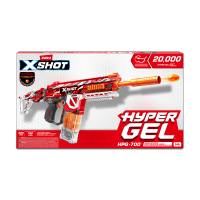
X-Shot Hyper Gel HPG-700 Blaster (20000 Hyper Gel Pellets) by ZURU
$89.90
Buy on Lazada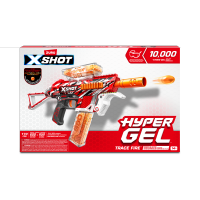
X-Shot Hyper Gel Trace Fire Blaster (10000 Hyper Gel Pellets) by ZURU
$59.90
Buy on Lazada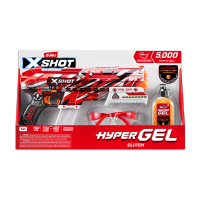
X-Shot Hyper Gel Clutch Blaster (5000 Hyper Gel Pellets) by ZURU
$29.90$39.90
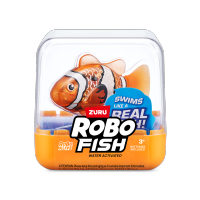
Robo Fish Series 3 Robotic Swimming Fish by ZURU
$8.90$12.90
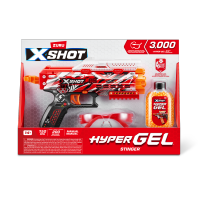
XSHOT Hyper Gel Stinger Blaster (3000 Hyper Gel Pellets) by ZURU
$19.90
Buy on Lazada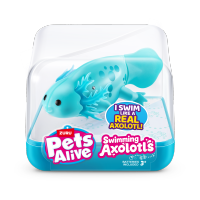
Pets Alive Swimming Axolotls By ZURU
$9.90$12.90
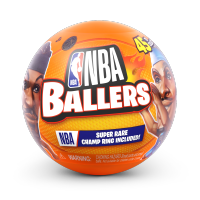
5 Surprise NBA Ballers Series 2 by ZURU
$7.90$12.90
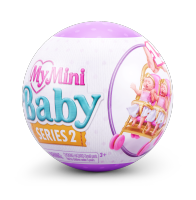
5 Surprise My Mini Baby Series 2 by ZURU
$12.90
Buy on LazadaAbout Zuru
Zuru (stylised as ZURU) is a privately held multinational consumer-products company established in 2003 by New Zealand-born siblings Mat Mowbray, Nick Mowbray and Anna Mowbray. Although best known for its toy and play brands, the group has expanded significantly into consumer packaged goods and construction technology. Zuru describes its overarching mission as “Tomorrow Reimagined”.1
From its origins as a small toy-manufacturing operation in China, Zuru has grown into a global enterprise with automated manufacturing facilities and operations spanning more than 120 markets. As of 2026, the company reports having 6,000 employees, 34 offices, over 100 acres of automated manufacturing capacity and a presence in more than 120 countries.2
Overview
| Item | Information |
|---|---|
| Company name | ZURU |
| Founded | 2003 |
| Founders | Mat Mowbray, Nick Mowbray, Anna Mowbray |
| Founding background | New Zealand entrepreneurs who established manufacturing in China |
| Ownership | Privately held; controlled by the Mowbray family |
| Main industries | Toys, consumer goods, construction technology |
| Major divisions | ZURU Toys, ZURU Edge, ZURU Tech |
| Major markets | 120+ countries/markets |
| Employees | Approximately 6,000 (2026 company account) |
| Manufacturing | Highly automated production facilities |
| Major toy brands | XSHOT, Mini Brands, Rainbocorns, Bunch O Balloons, Pets Alive, Robo Alive, Smashers, 5 Surprise |
| Notable consumer brands | MONDAY Haircare, Millie Moon, Rascals |
| Company slogan | “Tomorrow Reimagined” |
History
Early beginnings
Zuru’s origins lie in Cambridge, New Zealand, where brothers Mat and Nick Mowbray began experimenting with product development. Before the company existed, Mat created a model hot-air-balloon kit as a school science project at age 12. After winning a science fair, the brothers produced and sold the kits themselves from a makeshift factory on their family’s dairy farm, personally delivering orders to customers.4
This early experience fostered an interest in manufacturing and entrepreneurship. In 2003, Mat and Nick relocated to China with a NZ$20,000 loan from their parents. They initially operated in the Shantou manufacturing region despite limited local contacts, language skills or manufacturing experience.5 Rather than outsourcing production, they developed proprietary production systems and automation capabilities, an approach that became central to Zuru’s identity.
The Mowbray family
Mat Mowbray
Mat Mowbray is a co-founder closely associated with the company’s manufacturing and technology ambitions. He was responsible for the early hot-air-balloon project and later became heavily involved in ZURU Tech, the construction-technology division.6
Nick Mowbray
Nick Mowbray, Mat’s younger brother and co-founder, serves as one of the company’s principal commercial leaders. He has frequently described Zuru’s competitive advantage as stemming from speed, automation, innovation and vertical integration rather than traditional outsourced manufacturing.7
Anna Mowbray
Anna Mowbray joined the company during its early development and became integral to management and operations. Zuru credits her operational expertise with helping transform the brothers’ manufacturing venture into a scalable international business.8
Growth into a global toy company
Zuru initially focused on toy manufacturing but achieved breakthrough success through products capable of large-scale international retail distribution. An early success was Robo Fish, an electronic toy simulating fish movement, which led to further products aimed at major retailers.9
The company’s most significant breakthrough came with Bunch O Balloons, a system for filling multiple water balloons simultaneously. Zuru acted as commercial partner and licensee for inventor Josh Malone and Tinnus Enterprises. The product’s success established Zuru as a major international toy company, though it also prompted extensive patent litigation against Telebrands regarding competing products. US court records identify Zuru and Tinnus as plaintiffs, with Zuru holding exclusive licence rights to relevant Bunch O Balloons patents.10
Bunch O Balloons demonstrated a recurring Zuru model: identifying existing categories, developing more convenient or entertaining products, manufacturing at scale and distributing aggressively through major retailers.
ZURU Toys
ZURU Toys remains the company’s most prominent division, distributing through major retailers in over 120 countries.11 Its portfolio spans several key categories:
- XSHOT: A line of foam-dart blasters competing on performance, range breadth and retail pricing. Zuru reports annual shipments of approximately 39 million units.12
- Mini Brands: Centred on miniature versions of real-world consumer products packaged in surprise capsules. The brand combines collectibles, unboxing mechanics, brand licensing and social-media-friendly content, aligning with broader collecting trends.
- Rainbocorns: Plush and collectible fantasy animals, particularly unicorn-inspired characters, combining traditional plush with surprise elements.
- Pets Alive: Interactive toy animals using electronic and mechanical features to simulate pet behaviour.
- Robo Alive: Robotic and electronic animal toys designed to mimic real movement, continuing the technological approach pioneered by Robo Fish.
- Smashers: Collectible toys built around surprise, destruction and discovery mechanics.
- 5 Surprise: Collectible lines based on capsules containing multiple small items, supporting a strategy of low-cost repeat purchases.
- Fuggler: A plush character brand known for distinctive teeth and intentionally comedic aesthetics, integrated into Zuru’s broader collectible portfolio.13
Other brands include Ballers and MAX. The company also partners with major entertainment properties including Disney, Nickelodeon, Universal and DreamWorks.
Business model and automation
Zuru distinguishes itself from traditional toy designers through heavy investment in proprietary manufacturing and automation. Rather than contracting external suppliers, the company developed its own automated production lines, software, engineering processes and supply-chain systems. This vertical integration enables rapid progression from concept to retail shelf.14
Automation is central to this strategy. Zuru reports operating over 100 acres of fully automated manufacturing capacity. In high-volume, low-margin consumer goods sectors, automation reduces costs, increases output, improves consistency and accelerates new product introductions. Consequently, Zuru competes not only on product design but on systemic manufacturing efficiency.
Expansion beyond toys
Having established its toy business, Zuru applied similar principles to other consumer categories through ZURU Edge. This division focuses on baby care, home products, pet care, health, beauty and confectionery, aiming to challenge incumbent companies through innovation, speed and modern branding.15
Notable ZURU Edge brands include:
- MONDAY Haircare: Positioned as accessible and visually distinctive, it became one of the fastest-growing haircare brands in the United States within two years of launch.16
- Millie Moon: A premium baby-care brand focusing on diapers and related products.17
- Rascals: A baby-care brand emphasising value alongside quality.18
ZURU Tech
ZURU Tech represents the company’s expansion into construction technology and automated home manufacturing. Its goal is to industrialise house building through a system called Dreamcatcher, part of a broader Unified Building System connecting software, architectural design, engineering, automated factory production and on-site construction.19
Dreamcatcher allows digital customisation while automatically addressing building codes and structural requirements. The long-term vision involves mass customisation: producing varied home designs through automated industrial manufacturing rather than traditional manual construction.20
Marketing strategy
Zuru employs highly visual, digital-first marketing across YouTube, TikTok and Instagram, leveraging influencer partnerships, unboxing content and licensed characters. The Mini Brands concept exemplifies this approach, as the act of opening capsules creates inherent video and social media content. Unlike traditional toys, these products treat discovery and display as entertainment in themselves.
Global scale and financials
According to its latest published accounts, Zuru Group operates with approximately 6,000 employees across 34 offices and 120+ markets, supported by multiple global research and development centres.21 Its toy business alone distributes through major retailers worldwide.22
As a privately held company, Zuru does not publish audited public financial results. In 2024, Radio New Zealand reported that the National Business Review estimated Nick and Mat Mowbray’s collective wealth at NZ$20 billion, citing Nick’s statement that Zuru targeted approximately US$3 billion in revenue for that year.23 Zuru’s own 2026 account describes the group as a $2.6 billion company, though the precise accounting basis is unspecified.24
Corporate structure
Zuru comprises three core divisions:25
- ZURU Toys: Focused on toys, collectibles and children’s entertainment.
- ZURU Edge: Focused on fast-moving consumer goods including baby, beauty, home and pet care.
- ZURU Tech: Focused on software, automation and industrialised construction.
Company philosophy
Zuru’s corporate philosophy centres on disruption. Rather than entering markets as conventional competitors, it targets categories perceived as inefficient or stagnant, redesigning product development, manufacturing and sales processes. Its stated aim is to “reimagine tomorrow” by applying automation, technology and aggressive product development to underserved sectors.26
This philosophy explains Zuru’s diversification from toys to consumer goods and construction technology. While these industries appear unrelated externally, Zuru views them as sharing a common challenge: improving the efficiency of physical product design, manufacture and delivery.
Intellectual property disputes
Like many major toy companies, Zuru has engaged in intellectual property litigation. The most prominent case involved Bunch O Balloons, where Zuru and Tinnus Enterprises pursued patent claims against Telebrands over competing water-balloon products, resulting in multiple US court cases.
Court records also document trademark and IP disputes involving other Zuru brands and competing toy manufacturers.27 Such litigation reflects the importance of intellectual property protection in an industry where successful products are frequently replicated.
Significance
Zuru’s significance lies not in any single blockbuster product but in its development of a repeatable product-development and manufacturing system. Its evolution spans from 1990s experiments in New Zealand to establishing manufacturing foundations in China in 2003, achieving international recognition through Robo Fish in the 2010s, and scaling globally with Bunch O Balloons from 2015 onwards. Subsequent expansion included Mini Brands, Rainbocorns and XSHOT in the late 2010s, ZURU Edge’s entry into consumer goods from 2017, and ZURU Tech’s automated construction initiatives in the 2020s. By 2026, Zuru described itself as a roughly $2.6 billion global group operating across 120+ markets.28
Unlike traditional toy companies such as Mattel or Hasbro, Zuru operates fundamentally as a technology and manufacturing enterprise that gained prominence through toys. Its core capability lies in building systems capable of inventing, engineering, automating, manufacturing, marketing and distributing products at scale—from miniature collectibles to full-size houses.
References
- Tomorrow Reimagined | ZURU
- Built Different: The ZURU Story | ZURU®
- Zuru (company)
- REDACTED VERSION OF 719 SEALED MEMORANDUM AND OPINION for Tinnus Enterprises, LLC et al v. Telebrands Corporation :: Justia Dockets & Filings
- Tinnus Enterprises, LLC v. Telebrands Corp., No. 16-1410 (Fed. Cir. 2017) :: Justia
- ZURU Toys | Reimagining Play, Every Day.
- Mini Brands | ZURU Toys
- ZURU Toys | Play Reimagined.
- Zuru owners top 2024 Rich List, beating out magnate Graeme Hart | RNZ News
- The ZURU Pitch | ZURU®
- Zuru Inc. v. The Individuals, Partnerships and Unincorporated Associations Identified in Schedule A 1:2024cv12537 | U.S. District Court for the Northern District of Illinois | Justia
- Zuru, LLC v. Moose Creative Management Pty Ltd et al 2:2024cv07693 | U.S. District Court for the Central District of California | Justia
- Une conception unique : l’histoire de ZURU | ZURU®
- Le pitch de ZURU | ZURU®
- State of the Industry Q&A 2026: Brittany Oliver, ZURU – The Toy Book
- Zuru Inc. et al v. Cronus Global, LLC et al 2:2025cv07954 | U.S. District Court for the Central District of California | Justia
- Zuru Inc. v. Bytor, 1:25-cv-22127
- Featured Rich Listers: Nick and Mat Mowbray
- Lego A/S v. Zuru Inc., 3:18-cv-02045
- Lego A/S v. Zuru Inc., 3:18-cv-02045
- What’s Zuru’s Next Move After Selling Millions Of Cheap Toys? Take On Procter & Gamble, Of Course
- Lego A/S v. Zuru Inc. (Lego A/S v. Zuru Inc., 24-634-cv (2nd Cir. Mar 26, 2025)) – vLex United States
- Zuru Inc. et al v. 1616 Holdings Inc. 1:2025cv21115 | U.S. District Court for the Southern District of Florida | Justia
- Zuru Inc. v. JD E-Commerce America Limited et al 1:2025cv20354 | U.S. District Court for the Southern District of Florida | Justia
- Mowbray Brother’s Toy Giant Zuru: Subject to Multiple Misleading Conduct Claims With Watchdog
- Zuru Group’s Mowbrays named visionary leaders of the year at Deloitte Top 200 Awards – NZ Herald
- Kelly Toys Holdings, LLC v. Zuru, LLC, 2:23-cv-09255
- Cronus Global, LLC v. Zuru, Inc. 2:2024cv05372 | U.S. District Court for the Central District of California | Justia