Shop on Lazada
Anessa products
![[10.10] Anessa Gold Milk Trio Set](https://sg-live.slatic.net/p/bbff43ec1872a2eb63b1e4ae6cf22346.jpg_200x200q80.jpg)
[10.10] Anessa Gold Milk Trio Set
$141.00
Buy on Lazada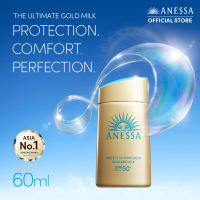
Anessa Perfect UV Sunscreen Skincare Milk 60ML
$47.00
Buy on Lazada![[10.10] Anessa Mild Milk Duo Set](https://sg-live.slatic.net/p/827f892857530a6052afc916718e9522.jpg_200x200q80.jpg)
[10.10] Anessa Mild Milk Duo Set
$94.00
Buy on Lazada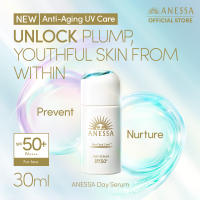
Anessa Day Serum 30ML
$51.00
Buy on Lazada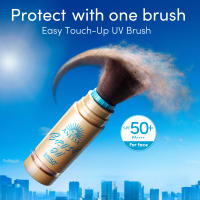
Anessa Brush-on Powder 3g
$51.00
Buy on Lazada![[10.10] Anessa Perfect UV Sunscreen Skincare Spray Duo](https://sg-live.slatic.net/p/7790b1bf050a4e1d91df8f08d980d321.jpg_200x200q80.jpg)
[10.10] Anessa Perfect UV Sunscreen Skincare Spray Duo
$68.00
Buy on Lazada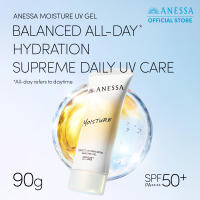
Anessa Perfect UV Sunscreen Skincare Moisture Gel 90g
$36.00
Buy on Lazada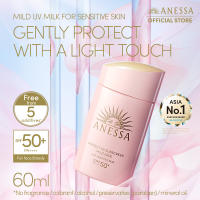
Anessa Perfect UV Sunscreen Mild Milk N 60ML
$47.00
Buy on LazadaAbout Anessa
Brand overview
Anessa is a Japanese sun-care and UV-protection brand owned by Shiseido. Launched in 1992, it has evolved from a specialist sunscreen line into one of Shiseido’s major global suncare brands, best known for high-performance sunscreens that protect against UVA and UVB rays while delivering skincare benefits 1. The brand’s central philosophy is to provide protection that enables people to enjoy life under the sun, with products characterised by strong resistance to water, sweat, heat and friction, lightweight textures and technologies designed to maintain an even UV-protective film on the skin 2.
In 2024, Shiseido stated that Anessa was available in 12 Asian countries and regions and held the number one position in Asia by sales, based on Euromonitor’s 2023 retail data 2. Vietnam is cited as one of its important markets, with an official local product range and brand presence 1.
Brand profile
| Category | Information |
|---|---|
| Brand name | Anessa / アネッサ |
| Parent company | Shiseido Company, Limited |
| Origin | Japan |
| Founded | 1992 |
| Industry | Beauty & personal care |
| Category | Suncare, sunscreen, skincare |
| Core specialisation | UV protection |
| Main products | Sunscreen milk, gel, spray, powder and related UV products |
| Key positioning | High-performance UV protection + skincare |
| Major markets | Japan and Asian markets, with wider international presence |
| Core audience | Consumers seeking reliable daily or outdoor UV protection |
| Brand concept | Helping people enjoy life and “shine” under the sun |
Name and philosophy
The name Anessa is derived from the Japanese word “nessa” (熱砂), meaning “hot sand” or “heated sand”. This evokes the image of hot sand under intense sunlight and connects directly to the brand’s original association with strong sun exposure 2. Rather than simply blocking the sun, the brand’s broader philosophy is that people should be able to live actively and beautifully in sunlight while keeping their skin protected.
This concept later developed into the brand’s Free to Shine philosophy, which holds that sunscreen should not make people fear sunlight or restrict their lifestyles. Instead, effective sun protection should give individuals the confidence to travel, exercise, enjoy beaches, participate in sports and spend time outdoors with friends and family while caring for their skin. Shiseido describes the brand’s goal as changing the relationship between people and the sun in a positive direction 2.
Relationship with Shiseido
Anessa’s primary competitive advantage lies in its connection to Shiseido’s extensive history of UV research. Shiseido traces its UV research back to 1915 and introduced Uviolin, one of its earliest dedicated sun-protection products, in 1923 2. The company subsequently contributed to the development and adoption of SPF and UVA-related measurement and labelling standards in Japan.
The historical progression of Shiseido’s UV research includes:
- 1915: UV research begins
- 1923: Uviolin sunscreen launched
- 1980: SPF labelling introduced on a Shiseido sunscreen
- 1986: UVA protection measurement (PFA) adopted
- 1992: Anessa launches
- 2004: SPF/PA standards evolve
- 2010s–2020s: Water, heat and friction-responsive technologies developed
- Present: Sunscreen combined with skincare positioning
Anessa was built specifically around Shiseido’s accumulated UV-protection research rather than functioning as a general cosmetics line that also sells sunscreen 2.
History and evolution
Founding
Anessa officially launched in March 1992. At the time, sunscreen products were often associated with functional outdoor protection rather than sophisticated beauty. Shiseido sought to combine strong UV protection, sweat and water resistance, comfortable application, attractive cosmetic design and suitability for active lifestyles. The first Anessa positioned itself as an all-season outdoor sun-care product, with early advertising using the slogan “Anessa isn’t in the room” to emphasise outdoor living 2. A prototype of the product was reportedly used during a Japanese Antarctic expedition in 1990, prior to commercial launch, illustrating the brand’s focus on demanding UV environments 1.
1990s: Strong sunscreen
The original Anessa focused heavily on preventing tanning, providing high UV protection and resisting sweat and water during outdoor activities. The brand identity was strongly linked to summer, sports, beaches and resorts 2.
Late 1990s–2000s: Protection and cosmetic comfort
Addressing the issue that high-protection sunscreens often had unpleasant textures, Anessa began emphasising transparency, smoothness, comfort and lightweight, non-sticky finishes. This shift helped move sunscreen from a tolerated necessity to a part of daily beauty routines 2.
2010s: Advanced UV technology
Anessa differentiated itself through proprietary technologies designed to keep the sunscreen film stable under real-world conditions. Notable innovations included SuperVeil-UV 360, WetForce, HeatForce, Aqua Booster and AutoRepair, followed later by Auto Booster. WetForce was described as technology activated by contact with water, while HeatForce was designed around heat exposure.
2020s: Sunscreen as skincare
The brand shifted its messaging from “protect your skin from the sun” to “protect your skin while caring for it”. Current products incorporate skincare-oriented ingredients and claims involving hydration, skin conditioning, antioxidant care and prevention of concerns associated with UV exposure 12.
Key technologies
Anessa’s differentiation rests on four pillars: strong UV protection, performance under real-world conditions, skincare benefits and texture usability. Many flagship products are rated SPF50+ PA++++, the highest commonly used Japanese labelling levels for broad UVA/UVB protection 2. Technologies are designed to maintain the protective film despite sweat, water, heat, humidity, rubbing and facial movement.
Aqua Booster
Aqua Booster is one of Anessa’s best-known technologies. The UV-protective film becomes more uniform and stronger when exposed to water or sweat, rather than losing effectiveness immediately. Current products use newer generations such as Aqua Booster EX 2.
Thermo Booster
Thermo Booster technology utilises heat to help UV-protection components form a more uniform protective film, reducing gaps through which UV radiation could penetrate 2.
Auto Booster
Auto Booster extends the responsive technology philosophy to broader environmental conditions. For example, the Vietnamese Perfect UV Skincare Milk describes Auto Booster as strengthening the UV-protective film in response to high temperature, humidity, water and sweat 1.
Auto Veil
Auto Veil helps prevent disruption of the UV-protective film caused by facial skin movement and expressions 1.
Friction resistance
Proprietary powders are designed to create a smoother, more uniform film that is less easily removed by rubbing from touching the face, clothing, towels or bags 2.
Super WaterProof
Flagship products are described as having 80-minute water-bath test performance for water resistance, although exact performance and labelling depend on the individual product. This durability makes the brand popular among consumers who swim, run, hike or engage in beach activities 2.
Product portfolio
Anessa’s portfolio extends beyond its signature gold bottle to include several categories tailored to different needs.
Perfect UV Skincare Milk
The product most strongly associated with Anessa, the Perfect UV Skincare Milk SPF50+ PA++++ is positioned for strong protection during outdoor and leisure activities. The milk format is linked to high UV protection, water and sweat resistance, friction resistance and a lightweight finish 2.
Perfect UV Skincare Gel
Designed for consumers preferring a moisturising, everyday texture, the gel combines SPF50+ PA++++ protection with skincare-oriented moisturising technology. The current Japanese version was renewed on 21 February 2026 in 90 g and new 40 g formats, reflecting the brand’s movement toward daily skincare 2.
Brightening UV Gel
Renewed in February 2026 for the Japanese market, this gel carries SPF50+ PA++++ and combines UV protection with a cosmetic brightening and tone-up effect 2.
Perfect UV Skincare Spray
Intended primarily for convenient reapplication, the spray format can also be used on hair in the Japanese lineup, addressing the difficulty of reapplying sunscreen over makeup or while outdoors 2.
UV Brush-On Powder
A powder sunscreen providing SPF50+ PA++++, designed for convenient touch-ups over makeup while controlling shine 2.
Mild Milk
Perfect UV Mild Milk targets sensitive skin and children. The Japanese product is SPF50+ PA++++ and suitable from infancy (excluding newborns), featuring a mild formulation with skincare ingredients. The Vietnamese version similarly positions the product for sensitive skin and children, highlighting a five-free formulation 12.
Mild Gel
Mineral UV Mild Gel is a gentler option with SPF35 PA+++, using a non-chemical formulation without UV absorbers for sensitive skin and children 2.
Target consumers and positioning
Historically targeting those needing very strong outdoor sun protection, Anessa now serves a broader audience including outdoor enthusiasts, everyday users seeking premium daily sunscreen, beauty-conscious consumers who view sunscreen as part of their routine, and sensitive-skin consumers via the Mild range 2.
In the Japanese sunscreen market, Anessa occupies a distinct position combining high-performance UV protection, skincare benefits and cosmetic usability. Its differentiation lies not merely in SPF ratings but in the total system of UV technology, durability, texture, skincare and Japanese R&D heritage.
Visually, the brand is strongly associated with gold packaging, which communicates premium quality, strength, advanced technology and reliability, positioning a functional product closer to premium beauty 2.
Market presence and recognition
Anessa has been Japan’s best-selling sunscreen brand for 19 consecutive years according to market data cited by Shiseido in 2019. More recently, it was described as the number one suncare brand in Asia by sales based on Euromonitor’s 2023 retail data 2. Its reputation is built on Shiseido’s UV research heritage, continuous reformulation, distinctive packaging and extensive Asian distribution.
Although Japanese in origin, Anessa is particularly significant across Asia-Pacific due to high UV exposure, hot and humid climates and strong skincare awareness in the region. In 2024, Shiseido reported availability in 12 Asian countries and regions 2.
Sustainability and social initiatives
Shiseido has discussed developing sunscreens that combine high functionality with environmental consideration, including ocean-friendly formulations. Current Japanese Mild products explicitly list an “ocean-friendly formulation” among their features, balancing human skin protection, high performance and environmental responsibility 2.
In 2024, Shiseido announced the Anessa Sunshine Project, designed to support children’s holistic well-being through experiences and activities under the sun across Asian markets. This initiative reflects the Free to Shine philosophy that sunlight should be experienced positively rather than feared 3.
Competitive advantages and limitations
Advantages
Anessa benefits from scientific credibility through Shiseido’s century-long UV research heritage, product specialisation focused exclusively on UV protection, tangible technology storytelling (e.g., Aqua Booster, Thermo Booster), strong brand recognition via its gold packaging and a premium-but-accessible positioning that sits above basic drugstore sunscreens 2.
Limitations
The brand generally costs more than basic sunscreen products. Formulas designed for outdoor durability may not suit those seeking ultra-minimalist or ultra-gentle daily options. Product formulas, names, sizes and claims can differ between markets such as Japan and Vietnam, so versions should not be assumed identical. Additionally, water or sweat resistance does not eliminate the need for reapplication; the brand advises reapplying after substantial water exposure or towel drying 1.
Comparison with other brands
Anessa’s distinctive proposition relative to other sunscreen brands can be summarised qualitatively as follows:
| Brand characteristic | Anessa |
|---|---|
| Japanese heritage | ★★★★★ |
| UV specialisation | ★★★★★ |
| Outdoor performance | ★★★★★ |
| Water/sweat resistance | ★★★★★ |
| Skincare positioning | ★★★★☆ |
| Cosmetic usability | ★★★★☆ |
| Technology storytelling | ★★★★★ |
| Brand recognition in Asia | ★★★★★ |
| Price accessibility | ★★★☆☆ |
| Luxury positioning | ★★★☆☆ |
These assessments reflect qualitative observations rather than official ratings.
Timeline
- 1923: Shiseido launches Uviolin, establishing an early foundation for its sunscreen history 2.
- 1980: Shiseido introduces SPF labelling on sunscreen in Japan 2.
- 1986: UVA protection measurement develops through PFA 2.
- 1992: Anessa is officially launched in Japan 2.
- 2004: Shiseido and the Japanese cosmetics industry establish the SPF/PA labelling framework that became influential internationally 1.
- 2010s: Anessa develops technologies including SuperVeil-UV 360, WetForce and HeatForce.
- 2018: Aqua Booster technology becomes a major part of Anessa’s product story 1.
- 2020s: The brand increasingly emphasises friction resistance, water/heat response and skincare benefits 2.
- 2024: Shiseido describes Anessa as Asia’s number one suncare brand by sales under cited Euromonitor methodology and announces the Anessa Sunshine Project 23.
- 2026: Anessa continues expanding its “UV + skincare” positioning, with new and reformulated Japanese gel products launched on 21 February 2026 2.