Shop on Lazada
Bambu Lab products
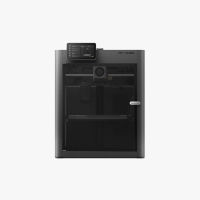
Bambu Lab X2D Dual Extruder 3D Printer - Unit Only / AMS 2 Combo
$1,149.00
Buy on Lazada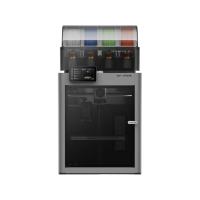
Bambu Lab P2S 3D Printer - Unit Only/Combo
$1,249.00
Buy on Lazada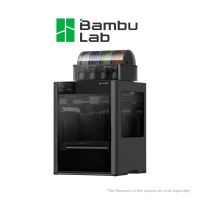
Bambu Lab H2C Multi Material 3D Printer with Vortek Interchangeable Nozzle System - Combo/10w/40w Laser Combo - Installation NOT Included
$3,099.00$3,499.00
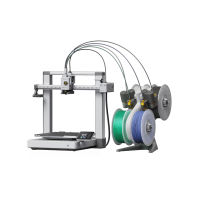
Bambu Lab A1 3D Printer - Unit Only/A1 Combo
$639.00
Buy on Lazada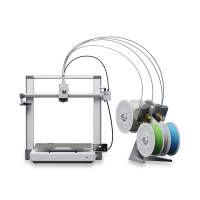
Bambu Lab A2L 3D Printer - Unit Only/A2L Combo
$799.00
Buy on Lazada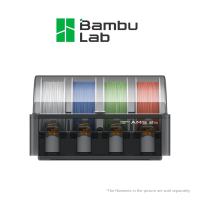
Bambu Lab AMS 2 Pro
$508.00
Buy on Lazada
Bambu Lab PLA Basic
$20.69$31.90
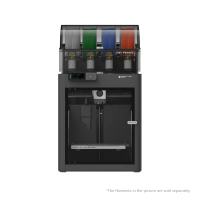
Bambu Lab P1S 3D Printer - Unit Only / P1S Combo / P1S AMS2 Combo
$899.00
Buy on LazadaAbout Bambu Lab
Bambu Lab (Chinese: 拓竹, Tuozhu) is a Chinese consumer technology company specialising in desktop FDM (Fused Deposition Modeling) 3D printers, filaments, and an integrated hardware-software ecosystem. Since its public launch in 2022, the brand has grown rapidly within the consumer and prosumer 3D printing sectors by prioritising high-speed printing, automation, multi-material capabilities, and ease of use.1
Overview
| Attribute | Details |
|---|---|
| Company | Bambu Lab (BAMBULAB LIMITED) |
| Chinese Name | 拓竹 (Tuozhu) |
| Industry | Consumer Technology / 3D Printing |
| Founded | August 2020 |
| Headquarters | Shenzhen, Guangdong, China |
| Founder | Ye Tao and a team of former DJI engineers |
| Products | Desktop 3D printers, filaments, accessories, software |
| Parent/Investor | Backed in part by IDG Capital |
| Website | Official Website |
History
Bambu Lab was established in 2020 by a group of engineers formerly employed at DJI, the world’s largest drone manufacturer. The founding team comprised experts in robotics, artificial intelligence, computer vision, materials science, consumer electronics, and manufacturing. The company was formed with the objective of making professional-quality 3D printing accessible to general users whilst reducing the complexity traditionally associated with FDM printing.1
Unlike many 3D printing startups that began by modifying existing open-source designs, Bambu Lab invested significantly in developing a proprietary integrated ecosystem encompassing hardware, firmware, slicing software, mobile applications, cloud services, and material management systems.
Mission
The company states that its mission is to “break the barriers between the digital and physical worlds by making advanced desktop manufacturing simple, fast, and reliable”. Bambu Lab emphasises innovation, automation, accessibility, high production quality, community collaboration, and sustainable manufacturing in its operations.2
Product Ecosystem
Rather than focusing solely on individual printers, Bambu Lab develops a comprehensive product ecosystem.
X Series
The X Series targets professionals, engineers, product designers, and advanced makers. Key features include high-speed CoreXY motion systems, LiDAR-assisted calibration on select models, AI monitoring, hardened components for abrasive materials, and multi-material printing capabilities.
P Series
Designed for enthusiasts, small businesses, and print farms, the P Series focuses on performance and reliability at a lower price point than the X Series.
A Series
The A Series comprises entry-level consumer printers aimed at beginners. These models prioritise easy setup, quiet operation, and affordable pricing.3
Automatic Material System (AMS)
A signature innovation of Bambu Lab is the Automatic Material System (AMS). This unit enables multi-colour and multi-material printing, automatic filament switching, RFID recognition for supported Bambu filaments, and dry storage of filament spools. The AMS is considered a significant competitive advantage as it simplifies multi-material workflows for consumer users.1
Software
Bambu Lab provides a suite of software tools to support its hardware:
- Bambu Studio: A desktop slicer based on the open-source slicer ecosystem (derived from projects such as PrusaSlicer), enhanced with features tailored specifically for Bambu hardware.4
- Bambu Handy: A mobile application facilitating remote monitoring, print management, notifications, and camera viewing.
- Cloud Platform: Enables remote printing, printer synchronisation, file management, and firmware updates.
- MakerWorld: A community platform where users share printable models, earn rewards, discover projects, and download print profiles.3
Materials
The company manufactures branded filaments including PLA, PLA Matte, PLA Silk, PETG, ABS, ASA, TPU, PA (Nylon), PC, and carbon fibre and glass fibre composites. Many official filaments contain RFID tags that allow compatible printers equipped with AMS to automatically identify the material type and apply appropriate settings.2
Key Technologies
Bambu Lab printers integrate several advanced technologies to reduce the need for manual tuning compared to earlier consumer 3D printers. These include CoreXY motion systems, automatic bed levelling, vibration compensation, pressure advance calibration, AI-assisted print monitoring, high-speed motion control, automatic filament loading, remote cloud management, multi-material automation, and integrated camera monitoring.5
Business Strategy
Bambu Lab employs an integrated ecosystem strategy similar to that of major consumer electronics companies. Its business model encompasses hardware sales, filament sales, accessories, replacement parts, a software ecosystem, and a community platform. Unlike traditional printer manufacturers, the company places significant emphasis on user experience and end-to-end integration.2
Market Impact
Prior to Bambu Lab’s market entry, desktop FDM printing frequently required substantial manual tuning. The 2022 launch of the X1 series accelerated industry-wide adoption of high-speed printing, automatic calibration, AI-assisted monitoring, multi-colour printing, and consumer-friendly setup processes. Competitors subsequently introduced similar features, intensifying competition across the consumer 3D printing sector.1
Community
Bambu Lab maintains an active global user community through MakerWorld, official forums, Discord, Reddit, GitHub (for specific software components), and social media channels. The company regularly publishes firmware updates, tutorials, and community stories.3
Criticism and Controversies
As with many rapidly growing technology firms, Bambu Lab has faced criticism regarding specific aspects of its ecosystem.
Cloud Dependence
Some users have raised concerns about the reliance on cloud services for certain workflows and remote functionalities.
Open-Source Debate
Although Bambu Studio builds upon open-source software, the company has faced scrutiny from sections of the community regarding software licensing, third-party integrations, and the balance between open-source collaboration and cloud infrastructure. Bambu Lab has stated that it supports legitimate open-source forks whilst seeking to protect its cloud services from unauthorised access.3
Proprietary Ecosystem
Users preferring fully open hardware and software ecosystems have criticised Bambu Lab’s use of proprietary features, such as RFID-enabled filament integration and specific cloud services. Conversely, other users value the convenience and integration these features provide.
Strengths
Bambu Lab is widely recognised for excellent print quality, fast printing speeds, easy setup, reliable first layers, strong software integration, advanced automation, a beginner-friendly experience, and multi-colour printing capabilities.
Product Families
| Series | Target User |
|---|---|
| X Series | Professional users |
| P Series | Enthusiasts and small businesses |
| A Series | Beginners and hobbyists |
| AMS | Multi-material printing system |
Company Philosophy
Bambu Lab’s philosophy centres on making advanced manufacturing accessible through integrated design. The company aims to combine hardware, software, materials, and cloud services into a cohesive user experience whilst encouraging creativity and community participation.2
See also
- DJI
- Prusa Research
- Creality
- Ultimaker
- Raise3D
- Fused Deposition Modeling (FDM)
References
- Bambu Lab
- Shop 3D printers, filaments and accessories | Bambu Lab US store
- Bambu Lab Blog
- ‘Bambu Labs, go f*** yourself’: 3D printing company currently under fire for reportedly blocking 3rd parties from its software, legal threats and drama aplenty
- I finally got a Bambu Lab X1 Carbon 3D printer, and I’m never going back