Shop on Lazada
Birkenstock products
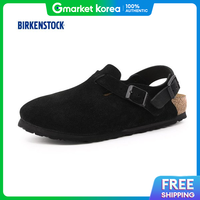
Birkenstock | Birkenstock Tokio Ii Suede Black Regular
$198.75$370.95
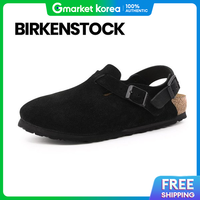
Birkenstock | Birkenstock Tokio Ii Suede Black Regular (1028337)
$200.73$374.67
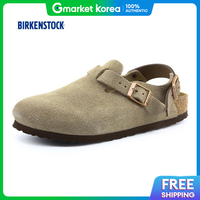
Birkenstock | Birkenstock Tokio Ii Suede Taupe Regular (1028287)
$207.76$387.49
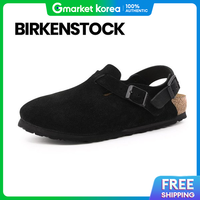
Birkenstock | Birkenstock Tokio Ii Suede Black Narrow (1028348)
$204.28$379.87
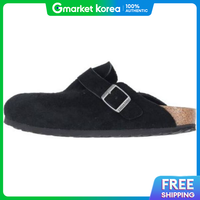
Birkenstock | 270918 Birkenstock 26Ss Boston Bs Black (1027067) (Boston Bs Black)
$297.28$561.49
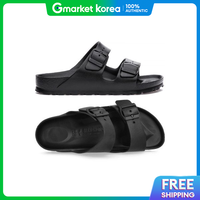
Birkenstock | 26Ss Arizona Eva Regular Fit Sandals Black 0129421 Black
$126.94$269.67

Birkenstock | Birkenstock Tokio Ii Suede Taupe Regular
$210.01$391.67
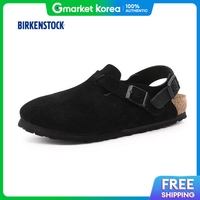
Birkenstock | Birkenstock Tokio Ii Suede Black Narrow (1028348)
$202.43$377.74
About Birkenstock
Birkenstock (officially Birkenstock Holding plc) is a German premium footwear brand best known for its anatomically shaped cork-latex footbeds, orthopaedic-inspired sandals, clogs, shoes, and foot care products. Founded on centuries of shoemaking tradition dating back to 1774, Birkenstock has evolved from a family-run German shoemaking business into one of the world’s most recognised footwear brands.1 The company is widely associated with comfort, durability, craftsmanship, and minimalist design.
Overview
- Brand: Birkenstock
- Founded: 1774 (shoemaking tradition)
- Founder: Johann Adam Birkenstock (shoemaking family)
- Industry: Footwear
- Headquarters: Linz am Rhein, Germany
- Products: Sandals, clogs, shoes, boots, insoles, socks, skincare
- Known for: Cork-latex footbed, orthopaedic comfort, timeless designs
- Markets: More than 100 countries worldwide1
History
Origins (1774–1896)
The history of Birkenstock began in 1774, when Johann Adam Birkenstock was recorded in church archives in Hesse, Germany, as a shoemaker.12 The Birkenstock family continued the shoemaking trade through several generations, building expertise in crafting footwear that emphasised healthy foot support.2
Innovation in Foot Health (1896–1925)
A major turning point came with Konrad Birkenstock, Johann Adam’s great-grandson. Konrad believed that conventional shoes failed to support the natural shape of the human foot. Between 1896 and 1902, he developed flexible orthopaedic insoles and introduced the concept of anatomically shaped footbeds for custom footwear.2 His innovations gained recognition among shoemakers and orthopaedic professionals, laying the foundation for Birkenstock’s identity as a comfort-focused footwear company.2
Development of the Footbed
Konrad’s son, Carl Birkenstock, expanded the company’s orthopaedic philosophy. He trained shoe retailers and craftsmen on proper foot support and continued improving the footbed concept.1 The company’s philosophy centred on the principle that healthy feet contribute to overall health, which remains central to Birkenstock’s product development today.1
Birth of the Modern Sandal (1963)
In 1963, Karl Birkenstock created what became the company’s signature product:1
Madrid
The Madrid was the world’s first fitness sandal featuring the now-famous contoured cork footbed. Its design included a deep heel cup, longitudinal arch support, transverse arch support, a raised toe bar, and a spacious toe box.1 Although initially intended as a health sandal, it eventually became a fashion icon.1
Expansion
Entry into the United States
Birkenstock entered the U.S. market in the 1960s. Initially, its sandals were sold primarily in health food stores and specialty shops.1 The brand became especially popular among medical professionals, teachers, artists, environmentalists, and hippie communities.1 Over time, Birkenstock shifted from being seen as purely functional footwear to becoming a mainstream lifestyle and fashion brand.1
Rise as a Fashion Icon
Beginning in the 2010s, Birkenstock experienced a major resurgence. Luxury fashion houses and designers collaborated with the brand, helping transform it into a premium fashion label while maintaining its emphasis on comfort.3 The sandals appeared on runways and in fashion magazines, and were worn by celebrities including Steve Jobs, Kate Moss, Kendall Jenner, Gigi Hadid, and Margot Robbie.3 Despite its fashion success, Birkenstock continues to market itself primarily as a function-first footwear company.3
Footbed Technology
Birkenstock’s signature feature is its anatomically shaped footbed, designed to mimic the impression of a healthy foot walking naturally in sand.1 A traditional Birkenstock footbed consists of several layers:
- Jute fibres
- Cork-latex core
- Natural latex
- Suede lining
- EVA outsole
Key benefits include arch support, even weight distribution, shock absorption, improved posture, and long-term comfort.1 This construction remains one of the brand’s defining innovations.
Popular Product Lines
Some of Birkenstock’s best-known products include:
Arizona
The iconic two-strap sandal introduced in 1973.1
Boston
A closed-toe clog popular for year-round wear.1
Gizeh
A minimalist thong sandal with a contoured footbed.1
Madrid
The original one-strap fitness sandal.1
Zürich
A closed-sided sandal offering greater foot coverage.1
Kyoto
A modern sandal inspired by Japanese design.1
Manufacturing
Sustainability
Birkenstock places strong emphasis on sustainability through the use of natural cork, natural latex, leather sourced to company standards, repairable construction, durable products designed for long-term use, and European manufacturing.1 Its philosophy encourages buying fewer, longer-lasting products rather than frequently replacing footwear.
Corporate Development
For much of its history, Birkenstock remained family-owned. In 2021, investment firm L Catterton, backed by Financière Agache (the Arnault family holding company), acquired a majority stake in the business.1 In 2023, Birkenstock became a publicly traded company through an initial public offering (IPO) on the New York Stock Exchange, marking a significant milestone in its corporate history.1
Cultural Impact
Birkenstock has influenced multiple areas of culture, including orthopaedic footwear, minimalist fashion, sustainable design, luxury collaborations, streetwear, and workwear.3 The brand has become synonymous with the concept of “comfort meets style”. Its products have appeared in films, fashion editorials, and celebrity wardrobes while retaining a loyal customer base focused on foot health.3
Brand Philosophy
Birkenstock’s philosophy centres on creating footwear that supports natural foot movement rather than forcing the foot into an artificial shape. Its guiding principles include function before fashion, anatomical design, quality craftsmanship, durability, comfort, and sustainability.1
Legacy
With over 250 years of shoemaking heritage, Birkenstock is one of the oldest footwear brands in the world.1 What began as a family craft in 18th-century Germany has grown into a globally recognised premium brand whose signature footbed and minimalist designs have become enduring icons of both comfort and style.1