Shop on Lazada
Hotwind products
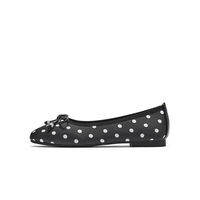
Hotwind | Polka Dot Low Top Flat Soft Sole Loafers
$60.48$68.73
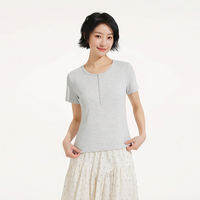
Hotwind | American Style Henry Neck T-Shirt for Petite Women Short Sleeve
$23.82$38.37
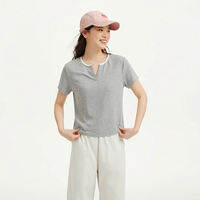
Hotwind | New Summer Letter Printed K Fashion Girl Versatile T-Shirt
$24.60$39.16
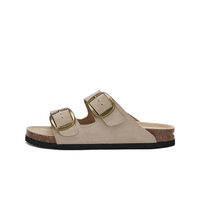
Outdoor Stylish BIRKENSTOCK-style Mens Casual Slip-on Sandals
$37.89$48.11
About Hotwind
Overview
Hotwind (热风) is a Chinese fashion retail chain established in Shanghai in 1996. Originally founded as a footwear retailer, the brand has since expanded its product range to include apparel, bags, accessories and selected lifestyle items, operating under a “selected fashion retail” business model.1 As Hotwind is not a publicly listed company, publicly available statistics regarding store counts and geographic coverage vary by source and reporting year; figures cited in this article are therefore attributed to specific timeframes.
Founder Chen Xin has described Hotwind as a consumer-oriented fashion retail business that prioritises product quality and customer experience.2
Key facts
| Item | Details |
|---|---|
| Brand name | Hotwind / 热风 |
| Founded | 1996 |
| Place of origin | Shanghai, China |
| Founder | Chen Xin |
| Parent entity | Shanghai Hotwind Fashion Enterprise Development Co., Ltd. and affiliated entities |
| Industry | Fashion retail; footwear, apparel and lifestyle retail |
| Primary market | Mainland China |
| Product categories | Footwear, apparel, bags, accessories, selected lifestyle goods |
| Business model | Design and merchandising combined with direct-operated retail chain |
| Brand positioning | Mass-market, fashionable, casual, value-oriented |
History
Founding and early years (1996–2001)
Hotwind was established in Shanghai in 1996. The first store, then named “Hotwind Footwear”, opened at 131 Ruijin Yi Road on 10 October 1996, marking the brand’s origins as a specialist shoe retailer rather than a comprehensive fashion label.3
In 1997, Hotwind received its first media coverage from fashion publications including Harper’s Bazaar. By 2000, the brand had opened a store at Grand Gateway Shanghai and began formalising its customer service philosophy, introducing policies such as no-questions-asked returns and lifetime repair services.3
National expansion (2002–2005)
Hotwind entered the Beijing market in 2002, followed by expansions into Shenzhen and Nanjing. By around 2005, the brand had further extended its footprint to cities including Wuhan, Hangzhou, Chengdu and Guangzhou. This period marked Hotwind’s transition from a local Shanghai shoe retailer to a national retail chain.4
Shopping centre era (2006–2010)
In 2006, Hotwind opened a store at Wanda Plaza in Wujiaochang, Shanghai, establishing a long-term partnership with major commercial property developers such as Wanda. The brand subsequently secured tenancies in numerous shopping centres and large-scale commercial projects, while progressively upgrading its store formats. This phase solidified the business model that would come to define Hotwind: large-format stores in major shopping malls, offering multiple product categories through a proprietary retail system.
Scaling and flagship concepts (2011–2015)
Shanghai Hotwind Fashion Enterprise Development Co., Ltd. was incorporated in Jiading Industrial Zone, Shanghai, in 2011, becoming a key operating entity within the Hotwind group. Founder Chen Xin has stated in interviews that the brand adheres to a direct-operated chain model centred on consumer needs.5
Hotwind was named among the “Top 100 Chinese Fashion Brands” in 2012. In 2013, the brand launched a new generation of large-format stores, with some locations exceeding 1,000 square metres. By 2014, Hotwind had further developed its integrated flagship store concept, incorporating experiential elements such as café and leisure zones into selected outlets.5
International expansion (2016–2018)
The year 2016 marked Hotwind’s 20th anniversary and its entry into Singapore with the opening of its first overseas store, coinciding with the rollout of its fifth-generation store design. The brand expanded into Malaysia in 2017 and introduced its sixth-generation store format in 2018.6
Digital transformation and omnichannel retail (2020s)
From around 2020, Hotwind continued to upgrade its physical store image while placing greater emphasis on online-to-offline integration. Corporate interview materials from 2022 indicated that the Hotwind network comprised nearly 600 directly operated stores across more than 30 provinces and municipalities, with a membership base exceeding 30 million and an e-commerce presence on platforms including Alibaba, JD.com and Vipshop.7
Store count statistics have varied across different official and recruitment sources. For example, 2024 recruitment materials stated that the brand’s sales network covered 165 large and medium-sized cities. Figures from different years should not be directly compared without accounting for differing definitions and reporting periods.8
Products and categories
Hotwind has evolved from a specialist footwear retailer into a comprehensive fashion retail destination. Its principal product categories include:
Footwear
Footwear remains a core category for Hotwind. The range encompasses casual shoes, sports-inspired footwear, skate shoes, canvas shoes, loafers, boots, sandals, and dedicated men’s and women’s collections.
Apparel
Apparel has grown to become a significant product line, comprising T-shirts, shirts, outerwear, knitwear, trousers, denim, dresses and casual wear.
Bags and accessories
The accessories assortment includes backpacks, handbags, waist bags, hats, socks, belts, jewellery and other fashion accessories.
Lifestyle products
Hotwind also retails selected lifestyle goods aimed at younger consumers, reflecting the brand’s evolution from a traditional footwear and apparel store towards a broader lifestyle retail space. Corporate materials describe the overall merchandise mix as spanning footwear, apparel, bags, accessories and selected fashion lifestyle products.9
Brand positioning
Hotwind is positioned neither as a luxury brand nor as a specialist sportswear label, but rather as a mass-market fashion and lifestyle retail brand. Its identity is built around the pillars of fashion, comfort, everyday living, value for money and individuality.
The brand’s target consumers are typically characterised as style-conscious individuals who value personal expression and product quality while remaining price-sensitive. Hotwind’s competitive proposition lies less in any single hero product than in enabling customers to complete a full outfit and lifestyle purchase within a single store visit.10
Selected fashion retail model
A defining characteristic of Hotwind is its “selected fashion retail” model. Unlike traditional department stores that aggregate third-party brands, Hotwind participates across the entire value chain—from product design and merchandising through supply chain management, visual merchandising, retail operations and after-sales service. The brand thus occupies a hybrid position between branded manufacturer, buyer-led retailer and specialty chain operator.
This model enables rapid adjustment of the product assortment in response to shifting consumer preferences and trend cycles. Founder Chen Xin has emphasised that physical stores and frontline staff serve not only as points of sale but also as primary touchpoints for observing consumer demand and emerging fashion trends.10
Multi-brand portfolio
Historical records indicate that the Hotwind group previously operated multiple proprietary brands alongside the flagship Hotwind label:
- Hotwind: Natural, comfortable and casually fashionable
- ned.nedy: Urban, elegant and feminine
- lando.rode: Minimalist and refined
- offcos: Energetic, trend-driven and expressive11
These sub-brands catered to distinct stylistic segments, indicating that the group at one stage maintained a structured multi-brand retail system rather than operating solely as a single-label business.
Store format and location strategy
Physical stores are central to Hotwind’s brand identity and commercial strategy. Key characteristics include:
Large floor area
Compared to conventional shoe shops, Hotwind stores typically occupy larger retail spaces, with some flagship locations exceeding 1,000 square metres.12
Multi-category merchandising
Stores present footwear, apparel, bags and accessories within a unified environment, functioning as integrated fashion destinations rather than single-category specialists.
Experiential focus
Hotwind promotes an approachable shopping atmosphere, deliberately avoiding the formality associated with luxury retail. Founder Chen Xin has noted that overly immaculate visual merchandising can create psychological distance; the brand instead favours displays that feel accessible and inviting.13
Shopping centre tenancy
Hotwind maintains a strong presence in major commercial developments operated by landlords including Wanda, Hang Lung, Joy City, CapitaLand, Raffles City and Hualian. For many consumers, the brand is primarily associated with its large-format mall locations.13
Business model
Hotwind operates a direct-operated retail chain, distinguishing it from brands that rely heavily on franchising or wholesale distribution. In a 2022 interview, founder Chen Xin described Hotwind as one of relatively few Chinese brands to maintain a fully direct-operated store network, noting that this structure facilitates closer engagement with end consumers.9
The operational logic follows a closed-loop cycle: headquarters-led design and merchandising feed into supply chain coordination; products are sold through directly operated stores and e-commerce channels; consumer feedback is collected at point of sale; and insights inform subsequent product development. This model is particularly suited to the fast-changing dynamics of the mass fashion retail sector.
Consumer profile
Hotwind’s core customer base comprises young, urban, mass-market consumers who seek fashionable products without paying premium prices for brand logos. The brand intersects with demand segments including fast fashion, casual wear, everyday footwear and apparel, youth-oriented daily styling and value-conscious consumption.
Corporate culture
Hotwind’s corporate culture places strong emphasis on customer orientation and service quality. Founder Chen Xin has summarised the company’s operating principle as “reverence for the customer”, identifying product quality and consumer experience as top management priorities.14
Recent recruitment communications reinforce this ethos, stating that the brand aims to make consumers feel confident, comfortable, reassured and delighted through friendly and energetic service environments.2
Comparison with international peers
Within the global footwear and apparel retail landscape, Hotwind occupies a distinct position:
| Brand type | Examples | Distinction from Hotwind |
|---|---|---|
| Fast fashion | ZARA, H&M | Hotwind originated as a footwear brand and operates a curated multi-category model |
| Sportswear | Nike, adidas | Hotwind is not a performance sportswear brand |
| Casual footwear | Skechers | Hotwind offers a significantly broader product range |
| Mass-market basics | Uniqlo | Hotwind places greater emphasis on trend-led curation and multi-category combination |
| Department store | Traditional department stores | Hotwind possesses stronger proprietary branding and product control |
| Luxury | Gucci, Prada | Entirely different positioning, pricing and target demographic |
Hotwind is most accurately understood not as a Chinese analogue of any single foreign brand, but as a domestically developed comprehensive fashion retail chain with its own distinct trajectory.21
Scale and growth
Hotwind has undergone significant expansion over three decades, though reported figures vary depending on source and metric:
- 2011: Approximately 240 shared-brand retail units.15
- c. 2016: Recruitment materials cited nearly 800 shared-brand retail units covering over 100 large and medium-sized cities.16
- 2022: Corporate interview sources reported nearly 600 directly operated stores across 35 provincial-level divisions and a membership base exceeding 30 million.17
- 2024: Recruitment materials stated coverage of 165 large and medium-sized cities.19
Terms such as “shared-brand retail unit”, “store” and “directly operated chain store” reflect different counting methodologies and should not be treated as interchangeable metrics.
Overseas markets
While mainland China remains Hotwind’s primary market, the brand has undertaken selective international expansion:
- 2016: First overseas store opened in Singapore
- 2017: Entry into Malaysia18
These moves represented an initial phase of overseas market exploration, though the brand’s core revenue base continues to be concentrated in China.
Timeline
| Year | Milestone |
|---|---|
| 1996 | Hotwind founded in Shanghai |
| 1996.10.10 | First store opens at Ruijin Yi Road, Shanghai |
| 1997 | First media coverage in Harper’s Bazaar and other publications |
| 2000 | Grand Gateway Shanghai store opens |
| 2002 | Market entry in Beijing |
| 2003 | Market entry in Shenzhen |
| 2004 | Market entry in Nanjing |
| 2005 | Expansion to Wuhan, Hangzhou, Chengdu and Guangzhou |
| 2006 | Wujiaochang Wanda Plaza store opens; major mall partnerships begin |
| 2007–2011 | Rapid expansion across Chinese cities |
| 2012 | Named among “Top 100 Chinese Fashion Brands” |
| 2013 | Fourth-generation large-format store launched |
| 2014 | Integrated flagship stores enhanced with experiential elements |
| 2016 | 20th anniversary; first overseas store in Singapore |
| 2017 | Market entry in Malaysia |
| 2018 | Sixth-generation store format introduced |
| 2020 | Seventh-generation store upgrade |
| 2022 | Corporate sources report ~600 directly operated stores and 30M+ members |
| 2024 | Recruitment materials cite coverage of 165 large and medium-sized cities19 |
Competitive advantages
Hotwind’s sustained operation in the Chinese market for approximately three decades can be attributed to several structural factors:
- Localisation: The brand is calibrated to Chinese consumers’ pricing expectations, aesthetic preferences and shopping habits rather than replicating Western models.
- Product breadth: Expansion beyond footwear into apparel, bags, accessories and lifestyle goods increases average transaction value and visit frequency.
- Value positioning: The core customer segment values both quality and affordability; the brand does not depend on high margin premiums.
- Store scale: Large-format stores enable more complete merchandise presentation and a richer shopping experience than traditional specialty shops.
- Direct operation: A directly operated chain allows headquarters to capture unfiltered consumer feedback and maintain consistent service and visual standards.20
- Mall partnerships: Long-standing relationships with major shopping centre operators provide access to high-volume foot traffic.
Brand summary
Hotwind is a Chinese domestic brand that originated as a Shanghai shoe shop and developed into a nationwide comprehensive fashion retail chain. Its positioning sits at the intersection of fast fashion, casual style and mass-market lifestyle retail, offering everyday consumers fashionable, comfortable and affordable products. Over its thirty-year history, the brand has progressed through four broadly defined phases: specialist footwear retailer (1996–2001), national footwear and apparel chain (2002–2010), integrated fashion retail brand (2011–2019), and omnichannel fashion retailer (2020s). This trajectory reflects broader developments in China’s shopping centre ecosystem and mass fashion retail industry over the past three decades.21
References
- 从“外贸库存”到“品牌经营”的蜕变之路——对话HOTWIND(热风) 品牌创始人总裁陈鑫_上海交大零售总裁班_新浪博客
- 风起时,由你领潮—hotwind 热风集团2025 届校园招聘简章
- 熱風(hotwind):經營模式,特色服務,經營理念,榮譽報導,發展歷史,店鋪信息_中文百科全書
- 热风海淘商城入口_hotwind是什么牌子
- 热风品牌介绍_热风是哪个公司品牌?-百强排行网
- 上海热风时尚企业发展有限公司 | LinkedIn
- 热风投资有限公司
- Glosspp
- hotwind_简介_电话_门店分布_选址标准_开店计划_手机赢商网
- 「深圳市热风时尚贸易有限公司招聘」-BOSS直聘
- 「湖南省热风贸易有限责任公司第十三分公司招聘」-BOSS直聘
- 风起时,由你领潮—hotwind热风集团2026届校园招聘
- 宣讲会详情
- Hotwind
- 上海热风时尚企业发展有限公司 | 领英
- 热风时尚贸易有限公司招聘简章-四川农业大学管理学院
- 热风时尚贸易有限公司校园宣讲会安排-四川农业大学管理学院
- 〖上海市〗上海热风时尚企业发展有限公司——2019年“3·15”产品和服务质量诚信承诺雷竞技raybet网站即时_raybet雷竞技入口 – 雷竞技网
- 企业主页|天津热风商贸有限公司|天津商业大学就业信息网
- 热风hotwind简介-热风快时尚-十大品牌网CNPP
- HOTWIND是什么牌子_热风品牌是什么档次?-百强排行网