Shop on Lazada
Carrefour products
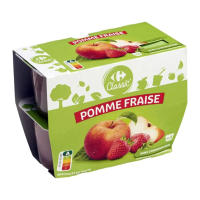
Carrefour Apple And Strawberry Compote By Le Petit Depot
$4.66$5.82
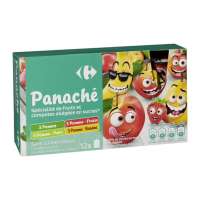
Carrefour LPD -MIXED FRUITS POUCH 90G
$10.83$13.54
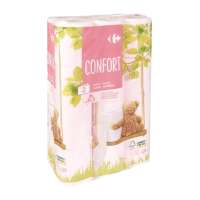
Carrefour Soft 2-Ply Toilet Paper - By Le Petit Depot
$12.14$15.18
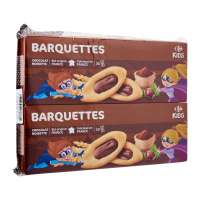
Carrefour Barquette Boat Shape Biscuits Filled With Chocolate By Le Petit Depot
$8.58$10.73
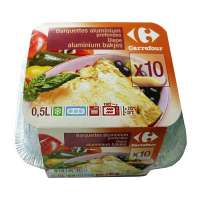
Carrefour Deep Aluminum Tray - 0.5 L
$5.59$6.99
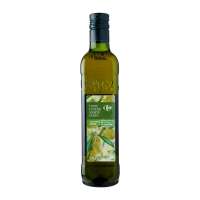
Carrefour Extra Virgin Olive Oil
$12.42$15.53
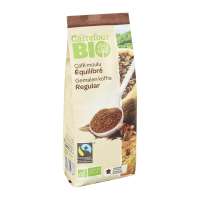
Carrefour Organic Balanced Ground Coffee
$14.48$18.10
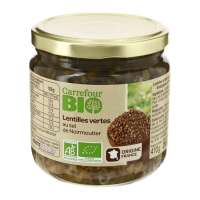
Carrefour Organic Green Lentils
$7.37$9.21
About Carrefour
Carrefour is a major French multinational retail and supermarket group recognised for its hypermarkets, supermarkets, convenience stores, cash-and-carry businesses, private-label products and e-commerce operations. Founded in France in 1959, the company became a pioneer of the modern hypermarket format and has since developed into one of the world’s largest food-retail groups.1
Corporate overview
| Item | Details |
|---|---|
| Company | Carrefour S.A. |
| Brand | Carrefour |
| Founded | 1959 |
| Country of origin | France |
| Industry | Retail / Food retail / E-commerce |
| Headquarters | Massy, France |
| Founder figures | Marcel Fournier, Denis Defforey and Jacques Defforey |
| Chairman & CEO | Alexandre Bompard |
| Main business | Food and general retail |
| Business model | Integrated stores, franchising and partnerships |
| Store formats | Hypermarkets, supermarkets, convenience, cash & carry and other formats |
| International presence | More than 40 countries through stores, franchises and partners |
| Stores under Carrefour banners | 15,719 at the end of 2025 |
| Employees | Nearly 300,000 in directly operated countries; additional staff via wider network |
| 2025 sales | €91.484 billion including VAT, before IAS 29 |
| Stock exchange | Euronext Paris |
The 2025 Universal Registration Document reports 15,719 stores operating under Carrefour banners in more than 40 countries. The group employs nearly 300,000 people across its seven directly operated markets: France, Spain, Belgium, Romania, Poland, Brazil and Argentina.2
Origin of the name
The French word “carrefour” translates to “crossroads”. This name reflected the location of the company’s first supermarket, which opened near a crossroads in Annecy. The corporate logo, introduced in 1966, features a stylised “C” formed by negative space within a diamond shape and remains one of the most recognisable symbols in European retail.3
Foundation and early history
Carrefour traces its origins to 1959 when entrepreneur Marcel Fournier, who ran a shop in Annecy, partnered with the Badin-Defforey family, food wholesalers based in Lagnieu. After experimenting with self-service retail, the founders opened the first Carrefour supermarket in Annecy in June 1960. The store offered approximately 850 m² of selling space, which was unusually large for the French market at that time.4
The hypermarket concept
A significant innovation occurred on 15 June 1963, when Carrefour opened its first hypermarket in Sainte-Geneviève-des-Bois, near Paris. This outlet featured around 2,500 m² of self-service selling space and 400 parking spaces. As the first hypermarket in France, it combined the attributes of a supermarket and a department store, allowing customers to purchase a vast array of food and non-food products in a single trip.5 This format subsequently became the foundation of Carrefour’s identity and international expansion.
International development
Throughout the 1970s and 1980s, Carrefour expanded beyond France. Key milestones in this period included listing on the Paris stock exchange in 1970, entering Spain in 1973, expanding into Brazil in 1975 and entering Argentina in 1982. Further growth followed with expansion into Italy and other markets in 1993, entry into China in 1995 and expansion into Poland in 1997.6
In 1999, Carrefour merged with Promodès, creating what was then the world’s second-largest retailer with approximately 240,000 employees and 9,000 stores. This merger significantly strengthened Carrefour’s position within the European retail sector.6
Business model and formats
Carrefour operates a multi-format, omnichannel retail model rather than functioning solely as a supermarket chain.
Hypermarkets
The traditional Carrefour hypermarket is the company’s largest format, designed for major shopping trips. These stores typically carry tens of thousands of product references, ranging from fresh food, groceries and beverages to electronics, clothing and seasonal merchandise. Depending on the specific location, hypermarkets may stock between 20,000 and 80,000 product references.7
Supermarkets
Operating primarily under the Carrefour Market banner, these stores are smaller than hypermarkets and cater to regular grocery shopping in both urban and rural areas. They typically focus on fresh food, groceries and locally relevant products.8
Convenience stores
The group operates numerous neighbourhood formats including Carrefour City, Carrefour Express, Carrefour Contact and Carrefour Proxi. These outlets emphasise convenience and proximity, enabling customers to purchase everyday necessities close to home.
Cash & Carry
Carrefour operates cash-and-carry businesses serving professional clients such as restaurants, caterers and independent retailers. In Brazil, the Atacadão business is a major component of the group’s Latin American operations.9
E-commerce and omnichannel retail
The company has integrated physical retail with online shopping through an omnichannel ecosystem. This includes online grocery shopping, home delivery, click-and-collect services, digital loyalty programmes, mobile applications and online marketplaces.10
Private-label products
Private-label products represent a key competitive advantage for Carrefour. In 1976, the company began selling own-brand products under a generic-style concept, offering simple packaging as lower-cost alternatives to national brands.11 Today, these ranges cover basic groceries, fresh and frozen food, household goods, personal care, organic items, baby products and premium lines. This strategy allows Carrefour to compete on price, quality and differentiation while reducing dependence on external suppliers.
Food transition strategy
Carrefour has positioned itself around the concept of “food transition”, aiming to make healthier, more sustainable and accessible food available to a wider population. Priorities include promoting organic and local products, supporting sustainable agriculture, expanding plant-based options, reducing food waste and packaging, ensuring responsible sourcing and improving affordability.
The group has developed Carrefour Quality Lines, which involve farmers and producers adhering to defined quality, environmental and sourcing standards. There are currently 726 Quality Lines involving approximately 28,000 farmers globally.12 This approach is central to the Carrefour 2022 and Carrefour 2026 transformation plans, with the stated ambition of leading the food transition for all.13
Brands and banners
The Carrefour ecosystem comprises numerous banners and businesses, although the exact portfolio varies by country due to the use of franchises, joint ventures and local partners.14 Prominent formats include:
- Carrefour: Flagship hypermarket and general retail brand.
- Carrefour Market: Supermarket format.
- Carrefour City: Urban convenience stores.
- Carrefour Express: Small convenience stores.
- Carrefour Contact: Local and community-oriented stores.
- Supeco: Discount-oriented format.
- Atacadão: Large cash-and-carry and wholesale business, particularly significant in Brazil.
- Promocash: Cash-and-carry format serving professionals in France.
Global presence
At the end of 2025, Carrefour operated 15,719 stores under its banners in more than 40 countries.15 However, the level of direct ownership varies considerably. The most important directly operated markets are France, Spain, Belgium, Romania, Poland, Brazil and Argentina. In other territories, Carrefour operates through franchisees, licensing arrangements and local partners.16 Consequently, the presence of Carrefour stores in over 40 countries does not imply direct ownership or management of all locations.
Latin America
Latin America is a critical region for Carrefour. Brazil has become one of the largest markets outside France, comprising the extensive Atacadão cash-and-carry network alongside supermarkets, hypermarkets and convenience formats. Argentina also serves as an important directly operated market.
Europe
France remains the historical home and a primary market, with 6,766 stores under Carrefour banners at the end of 2025, including hypermarkets, Carrefour Market supermarkets and thousands of convenience stores.17 Spain, Belgium, Romania and Poland are also significant European operations. While Carrefour has historically operated in Italy, the international portfolio continues to evolve; in 2025, the company announced exclusive negotiations to sell its Italian operations to NewPrinces Group as part of a broader strategic review.18
Leadership
As of 2026, Alexandre Bompard serves as Chairman and Chief Executive Officer (CEO). Appointed in 2017, he has led a major transformation focused on digitalisation, cost efficiency, private labels, food transition and omnichannel retail. Current governance information lists his term as extending to 2029.19
Carrefour 2026 strategic plan
Launched in 2022, the Carrefour 2026 strategic plan centres on transforming the group into a digitally integrated “Digital Retail Company”.20 Key themes include:
- Making quality and affordable food accessible.
- Increasing the importance of private-label products.
- Developing convenience stores.
- Strengthening e-commerce capabilities.
- Improving hypermarket competitiveness.
- Expanding cash-and-carry operations.
- Increasing operational efficiency.
- Accelerating environmental and food-transition initiatives.
Financial performance
Carrefour ranks among the world’s largest food retailers by sales. For 2025, the company reported approximately €91.484 billion in sales including VAT, before the impact of IAS 29, with comparable sales growth of 2.8%. Recurring operating income was approximately €2.158 billion.21 This scale reflects millions of customers purchasing products through both physical stores and digital channels.
Workforce and economic impact
Operations in the seven directly operated countries employ nearly 300,000 people. When considering the broader ecosystem of franchised and partner stores, more than 500,000 people work under the Carrefour brand worldwide.22 Beyond retail, the group acts as a major employer, purchaser from agricultural producers, logistics operator and participant in national food-supply chains.
Visual identity
The Carrefour logo consists of a red and blue diamond-like shape containing a white negative-space “C”. Created in 1966, the design uses negative space between coloured shapes to form the letter.23 Despite subsequent visual updates, it remains highly recognisable across international markets.
Historical significance
Carrefour helped popularise several fundamental retail concepts:
- The hypermarket: The 1963 store demonstrated the viability of combining food and extensive non-food assortments in a single large-format location.
- Large-scale self-service: The company advanced the shift from traditional counter service to independent product selection from extensive assortments.
- One-stop shopping: The hypermarket model integrated shopping, parking, variety and competitive pricing into a single destination.
- International expansion: Carrefour was among the early European retailers to systematically expand across national borders.
- Private labels: Its own-brand strategy established private-label products as serious alternatives to national brands.
Competitive landscape
Depending on the country and format, Carrefour competes with retailers such as Walmart, Tesco, Aldi, Lidl, Auchan, E.Leclerc, Intermarché, Mercadona and Casino Group. The competitive environment differs significantly across markets.
Strengths
Key strengths supporting Carrefour’s market position include:
- Global scale: An extensive store network providing purchasing power and operational leverage.
- Brand recognition: Status as one of the best-known French retail brands internationally.
- Multi-format capability: Ability to serve customers through hypermarkets, supermarkets, convenience stores and online channels.
- Private labels: Own-brand products offering differentiation and pricing flexibility.
- Food expertise: Central focus on fresh food, groceries and agricultural sourcing.
- Omnichannel infrastructure: Integration of stores, apps, websites, delivery and pickup services.
- Franchising: Partnerships enabling expansion without direct ownership of every store.
Challenges
Like other major retailers, Carrefour faces significant challenges including intense price competition, pressure from discounters such as Aldi and Lidl, changing consumer habits, the growth of online grocery shopping, inflation impacting household purchasing power, high operating costs, evolving food preferences, environmental regulations, local competition and the complexity of managing a vast international network. Recent strategy has therefore emphasised simplification, digital transformation, private labels, convenience formats and operational efficiency.24
Summary
Carrefour has evolved from a French hypermarket pioneer into a global omnichannel food-retail group. Its identity combines French origins, hypermarket innovation, international expansion, private labels, convenience retail, e-commerce and food transition. The company remains particularly significant in France, Europe and Latin America, while maintaining a presence in numerous other markets through franchise and partnership arrangements. At the end of 2025, its banners covered 15,719 stores across more than 40 countries.25
Historically, Carrefour’s significance lies not merely in building supermarkets but in helping to popularise the hypermarket format itself, which subsequently spread globally. Carrefour S.A. is a French multinational food-retail group founded in 1959, famous for pioneering the hypermarket in 1963 and now operating a large international network of hypermarkets, supermarkets, convenience stores, cash-and-carry businesses and digital commerce channels.26
References
- History | Carrefour Group
- Group | Carrefour Group
- UniversalRegistrationDocumentAnnual Financial R
- Carrefour URD 2025 FR & EN – fr_FR
- untitled
- Stores | Carrefour Group
- UniversalRegistrationDocumentAnnual Financial R
- UniversalRegistrationDocumentAnnual Financial R
- Carrefour 2026 strategic plan
- La Franchise chez Carrefour | Groupe Carrefour
- Press release – Carrefour announces the sale of Carrefour Italy to NewPrinces Group | Carrefour Group
- Governance | Carrefour Group
- Carrefour 2026 strategic plan
- cce-20251231
- Carrefour – Annual Report 2025 | FinancialReports.eu
- Carrefour : Financial document (Carrefour FY 2025 Presentation 0) | MarketScreener
- Concordis EN | Carrefour Group
- CARREFOUR URD 2024 FR & EN – fr_FR
- CARREFOUR URD 2024 FR & EN – fr_FR
- CARREFOUR_URD2023_FR&EN_EOL NG – fr_FR
- carrefour.com
- Entretien avec le 1er collaborateur de Carrefour | Carrefour Recrute
- Histoire | Groupe Carrefour
- Carrefour Plan stratégique 2026 | Carrefour Group
- Finance | Carrefour Group
- Groupe | Groupe Carrefour