Shop on Lazada
Charlotte Tilbury products
![CHARLOTTE TILBURY Airbrush Flawless Finish Powder Nourish Soft-focus effects Lightweight (8g / 100ml + 8g) [CT]](https://sg-test-11.slatic.net/p/235b33a023e4f1771a1c07280b37f318.jpg_200x200q80.jpg)
CHARLOTTE TILBURY Airbrush Flawless Finish Powder Nourish Soft-focus effects Lightweight (8g / 100ml + 8g) [CT]
$121.99$268.00
![Charlotte Tilbury Airbrush Flawless Setting Spray [100ml x1 / x2 200ml x1 34ml x2/x1 Matte 100ml x1]](https://sg-live.slatic.net/p/f7d503d32e5653abd0c6af3dcdc92d03.jpg_200x200q80.jpg)
Charlotte Tilbury Airbrush Flawless Setting Spray [100ml x1 / x2 200ml x1 34ml x2/x1 Matte 100ml x1]
$93.90$132.00
![Charlotte Tilbury Airbrush Flawless Finish Loose Powder [#1 FAIR 8g #2 MEDIUM 8g #Brightening 01 FAIR - MEDIUM 9g]](https://sg-live.slatic.net/p/b175cd37ffc448bac1ca82ae2553d0b1.jpg_200x200q80.jpg)
Charlotte Tilbury Airbrush Flawless Finish Loose Powder [#1 FAIR 8g #2 MEDIUM 8g #Brightening 01 FAIR - MEDIUM 9g]
$59.90$81.00
![CHARLOTTE TILBURY Airbrush Flawless Setting Spray Long‑Lasting Lightweight Hydrating Makeup Finishing Spray (100ml / 100ml + 16g) [CT]](https://my-live-01.slatic.net/p/c32f2ea9a00bb0c73d48ff7de873df24.jpg_200x200q80.jpg)
CHARLOTTE TILBURY Airbrush Flawless Setting Spray Long‑Lasting Lightweight Hydrating Makeup Finishing Spray (100ml / 100ml + 16g) [CT]
$75.99$166.00
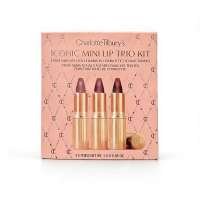
Charlotte Tilbury Matte Revolution Lipstick 1.5g 3 piece set (EPX/2028)
$22.00$50.00
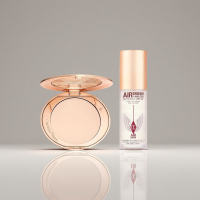
Latest Arrival Charlotte Tilbury CT Classic 2-piece set Airbrush Flawless Setting Spray 34ml+Pressed Powder 8g 1 FAIR#2 MEDIUM#
$34.10$59.79
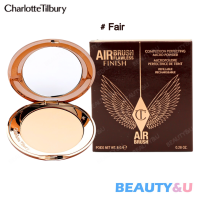
CHARLOTTE TILBURY Airbrush Flawless Finish Powder 8g (New Version)
$65.50$90.00
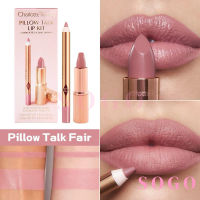
Charlotte Tilbury Mini Pillow Talk Lipstick & Liner Set (Lipstick 1.5g& Liner 0.8g)
$47.67$65.57
About Charlotte Tilbury
Charlotte Tilbury Beauty is a British luxury beauty company specialising in makeup, skincare, and fragrance. Founded in 2013 by British makeup artist and entrepreneur Charlotte Tilbury MBE, the company was established based on her professional experience in fashion, editorial, runway, couture, and red-carpet makeup. The brand is particularly noted for combining professional makeup artistry with user-friendly products, distinctive packaging, glamorous branding, and robust digital marketing.
Charlotte Tilbury launched in the United Kingdom in September 2013, initially introducing a collection of makeup and skincare products through luxury retail channels. The brand expanded rapidly internationally, becoming one of Britain’s most recognised modern beauty brands.1
Today, Charlotte Tilbury operates as part of Puig, the Spanish family-owned luxury fashion and beauty group. Puig acquired a majority stake in the company in 2020, while Charlotte Tilbury retained a significant minority stake and continued to play a central role in the company’s creative and strategic direction.2 In 2024, the partnership was extended through 2030, with Puig expected to progressively assume full ownership by the beginning of 2031.3
Quick facts
| Category | Information |
|---|---|
| Brand name | Charlotte Tilbury Beauty |
| Founded | 2013 |
| Founder | Charlotte Tilbury MBE |
| Origin | United Kingdom |
| Headquarters | London, United Kingdom |
| Industry | Luxury beauty and cosmetics |
| Main categories | Makeup, skincare, fragrance |
| Parent company | Puig |
| Founder’s role | President, Chairman & Chief Creative Officer |
| Positioning | Luxury / prestige beauty |
| Signature aesthetic | Glamorous, sophisticated, British luxury |
| Best-known franchises | Pillow Talk, Charlotte’s Magic Cream, Airbrush Flawless |
History
Before the brand
Charlotte Tilbury established her reputation long before creating her namesake company. She worked for decades as a professional makeup artist across fashion editorials, advertising campaigns, runway shows, couture, and celebrity red carpets.
Her professional experience became the foundation of the brand. Rather than approaching cosmetics solely as a traditional beauty company, Tilbury translated techniques and products from professional makeup artistry into products intended for everyday consumers.
A core concept behind the company was to make professional beauty techniques more accessible. Charlotte Tilbury has described this approach through the idea of a “beauty wardrobe”—products and routines designed to work together as cohesive looks rather than as isolated cosmetic items.1
2013: Launch
Charlotte Tilbury Beauty officially launched in the UK in September 2013. Its initial collection was introduced through luxury retail and quickly attracted attention for its distinctive rose-gold-and-burgundy visual identity, celebrity associations, and makeup-artist positioning.
The company subsequently expanded into markets including the United States, Canada, Ireland, Germany, the Netherlands, and numerous other international territories. Its online-first and digitally oriented approach also helped the company reach customers beyond the physical stores where it was initially distributed.1
International expansion
During the 2010s, Charlotte Tilbury evolved from a British makeup label into an international prestige beauty company.
Key elements of its growth included:
- Luxury department-store distribution
- E-commerce
- Social media engagement
- Celebrity and influencer marketing
- Makeup tutorials
- Professional artistry credentials
- Highly recognisable product packaging
- Hero products and repeatable product franchises
This combination helped the company establish a particularly strong presence among younger luxury-beauty consumers.
2020: Puig partnership
A significant turning point occurred in 2020, when Puig acquired a majority stake in Charlotte Tilbury. Charlotte Tilbury remained involved in the business as Chairman, President, and Chief Creative Officer, while Demetra Pinsent remained CEO at the time of the transaction. BDT Capital Partners also invested as a minority partner.2
The deal provided Charlotte Tilbury with access to Puig’s international infrastructure and luxury-brand portfolio whilst allowing the founder to continue shaping the brand’s identity.
2024–2031: Extended Puig partnership
In December 2024, Puig and Charlotte Tilbury announced an extension of their strategic partnership through the end of 2030.
Under the agreement, Charlotte Tilbury retained a minority stake, while Puig planned to progressively increase its ownership, with the company expected to become fully owned by Puig around the beginning of 2031, subject to the agreement’s options and conditions.3
Puig stated that Charlotte Tilbury’s net revenue had more than tripled since its 2020 acquisition, highlighting the scale of the company’s growth during the partnership.3
Founder: Charlotte Tilbury
Charlotte Tilbury MBE is a British makeup artist, beauty entrepreneur, and the founder of Charlotte Tilbury Beauty.
Her career as a makeup artist is central to the brand’s identity. Rather than separating the founder from the company, Charlotte Tilbury uses her personal expertise, name, image, and professional authority as fundamental elements of its branding.
Her philosophy centres on the idea that makeup and skincare can help people feel more confident. This philosophy is reflected in the company’s messaging around “empowering everyone, everywhere” through beauty.1
Tilbury was appointed an MBE in 2018 for services to the beauty and cosmetics industry. She has also received recognition within the fashion industry, including a Special Recognition Award at The Fashion Awards in 2023.1
Brand identity
Charlotte Tilbury occupies the luxury/prestige beauty segment rather than the mass-market cosmetics category.
Its identity can be summarised through several characteristics:
Old Hollywood glamour
The brand draws heavily on glamorous beauty imagery associated with Hollywood, red carpets, and fashion photography. Products are often presented as tools for creating polished, glamorous looks rather than deliberately unconventional or minimalist makeup.
British luxury
Although the brand has a highly international customer base, it strongly emphasises its British origins. The visual language combines British luxury cues with contemporary fashion and celebrity culture.
Makeup artistry
Charlotte Tilbury’s strongest differentiation is its connection to professional makeup artistry. Products are frequently introduced through demonstrations, tutorials, and specific application techniques, allowing customers to replicate looks associated with professional makeup artists.
“Easy-to-choose, easy-to-use”
The brand attempts to simplify the often-confusing world of cosmetics. Products are commonly organised into recognisable collections, routines, and “looks”, making it easier for customers to understand which products are intended to be used together.
Digital-first marketing
Charlotte Tilbury was described by Puig as a digitally native makeup and skincare brand when the company entered its 2020 partnership.3
Digital content remains a vital part of the brand’s strategy, including tutorials, virtual consultations, shade-matching technology, virtual try-on experiences, and other beauty-tech features.1
Product categories
Charlotte Tilbury’s product portfolio is primarily divided into three major areas.
Makeup
Makeup remains the brand’s most recognisable category. It includes:
- Foundation
- Concealer
- Powder
- Blush
- Bronzer
- Highlighter
- Eyeshadow
- Eyeliner
- Mascara
- Eyebrow products
- Lipstick
- Lip liner
- Lip gloss
- Setting products
- Makeup brushes and accessories
The company is particularly known for building product franchises rather than treating individual products as standalone launches.
Skincare
Charlotte Tilbury also operates a substantial skincare business. Its range includes:
- Moisturisers
- Serums
- Eye creams
- Cleansers
- Masks
- Facial treatments
- Primers with skincare positioning
- Body and beauty treatments
Skincare is closely integrated with the brand’s makeup philosophy: preparing the skin is presented as part of achieving a polished makeup result.
Fragrance
Fragrance represents another area of the company’s expansion. Charlotte Tilbury has developed perfumes and fragrance collections that extend the brand’s luxury positioning beyond cosmetics and skincare.
Best-known products and franchises
Pillow Talk
Pillow Talk is arguably Charlotte Tilbury’s most recognisable product franchise. It began with the Pillow Talk lip liner and lipstick concept and developed into a broader collection spanning multiple beauty categories.
Its popularity helped demonstrate the company’s strategy of turning a successful shade or product concept into an entire branded franchise. The broader Pillow Talk collection is now regarded by Puig as one of the brand’s signature product families.3
Charlotte’s Magic Cream
Charlotte’s Magic Cream is one of the company’s signature skincare products. The product is closely connected to Tilbury’s career as a makeup artist; the brand’s storytelling positions it as a moisturiser developed from the type of skincare preparation Tilbury used in her professional work.
It has subsequently become one of the company’s most recognisable products and a central part of the Charlotte Tilbury skincare identity.3
Airbrush Flawless
The Airbrush Flawless franchise focuses on complexion products and the creation of a smooth, polished appearance. The franchise has expanded beyond foundation into multiple complexion-related products and has become one of the company’s major product families.1
Hollywood
The Hollywood franchise is another major Charlotte Tilbury family, particularly associated with complexion, glow, and sculpting products. Together with Pillow Talk and Airbrush Flawless, it illustrates the company’s strategy of creating recognisable, expandable product franchises.1
Packaging and visual identity
One of the most recognisable features of Charlotte Tilbury is its packaging. The brand frequently uses:
- Rose gold
- Burgundy
- Cream
- Metallic finishes
- Elegant typography
- Art Deco-inspired visual elements
- Luxury-looking compacts and tubes
The packaging deliberately communicates a premium positioning. This consistency is important because Charlotte Tilbury products are designed to be recognisable even when displayed alongside products from competing luxury beauty brands.
Marketing strategy
Charlotte Tilbury’s marketing model is a primary driver of its rapid growth.
Celebrity culture
The founder’s professional connections to celebrities, models, and fashion personalities have been incorporated into the brand’s image. Rather than simply selling cosmetics, Charlotte Tilbury frequently sells the idea of a celebrity or red-carpet beauty look that consumers can reproduce themselves.
Tutorials
Educational content is central to the company. Instead of merely explaining what a product does, Charlotte Tilbury frequently demonstrates:
what the product does + how to apply it + what overall look it creates
This makes professional makeup techniques accessible to consumers.
Product storytelling
Many launches are given distinctive names and narratives. This helps turn otherwise ordinary cosmetic categories—such as lipstick, moisturiser, or foundation—into recognisable brand concepts.
Influencer marketing
The brand has developed a substantial presence among beauty creators and influencers. Puig stated in 2024 that Charlotte Tilbury ranked as the #1 beauty brand globally for influencer advocacy according to its cited measurement.3
Retail strategy
Charlotte Tilbury uses a combination of distribution channels:
Direct-to-consumer
- Official website
- Digital beauty services
- Online consultations
Luxury retail
- Department stores
- Specialty beauty retailers
- Travel retail
- Standalone stores
Technology
- Virtual try-on
- Shade matching
- Beauty consultations
- Skin analysis
- Digital tutorials
The company describes its current business as having a presence across dozens of global markets and thousands of distribution points. Its corporate narrative states that the brand operates in 57 global markets with more than 5,000 distribution points, although such figures may change as the company expands.1
Business model
Charlotte Tilbury’s business model can be understood as a combination of luxury branding + professional expertise + mass digital reach.
Unlike a traditional exclusive luxury cosmetics house, the company attempts to make luxury beauty relatively approachable. The products are premium-priced, but the brand communicates them through easy-to-understand routines and highly visible hero products.
This produces a distinctive positioning:
Professional makeup artistry
↓
Luxury product design
↓
Easy-to-understand beauty routines
↓
Digital/social-media distribution
↓
Global consumer audience
Corporate ownership
Charlotte Tilbury is part of Puig, the Barcelona-based luxury fashion and beauty group whose portfolio also includes brands in fragrance, fashion, and cosmetics.
Puig acquired a majority stake in Charlotte Tilbury in 2020. The subsequent partnership allowed the company to retain the founder’s creative involvement while gaining access to Puig’s global resources.2
The 2024 agreement established a longer-term transition toward Puig ownership, while Charlotte Tilbury remained actively involved in the brand.3
Technology and innovation
Technology has become an increasingly important part of Charlotte Tilbury’s strategy. The company has invested in technologies including:
- Virtual makeup try-on
- Augmented-reality beauty experiences
- Virtual consultations
- Digital shade matching
- Skin analysis
- Fragrance-finding tools
- Personalised beauty recommendations
- 3D virtual stores
According to the company’s current founder biography, Charlotte Tilbury employs an internal technology team of more than 200 experts and has used technology to pursue large-scale personalisation.1
This is significant because the brand is no longer simply a traditional cosmetics company; it increasingly combines beauty, retail, data, and technology.
Brand philosophy
At the heart of Charlotte Tilbury is a relatively simple proposition: Beauty should increase confidence.
The company presents makeup and skincare not merely as products but as tools that can help people feel more confident and express themselves. The founder’s philosophy is reflected in the brand’s broader mission of empowering people through beauty.1
This also explains the company’s emphasis on transformation—before-and-after demonstrations, beauty routines, “looks”, tutorials, and products designed around specific desired effects.
Philanthropy and social initiatives
Charlotte Tilbury’s activities extend beyond commercial beauty. The brand has supported organisations and causes including Women for Women International, The King’s Trust, and the Clooney Foundation for Justice. The company has also highlighted initiatives supporting women’s empowerment and entrepreneurship.1
In 2024, Charlotte Tilbury became the first beauty brand and female-founded brand to sponsor F1 Academy, a racing series focused on developing female drivers. In 2025, the brand also announced a North American sports sponsorship involving the Dallas Cowboys Cheerleaders.1
These initiatives illustrate an expansion of the brand beyond traditional cosmetics advertising into broader cultural and lifestyle partnerships.
Market position
Charlotte Tilbury is generally considered a prestige/luxury beauty brand. Its competitors vary by product category but can include major prestige houses such as:
- Dior Beauty
- Chanel Beauty
- Estée Lauder
- Lancôme
- NARS
- Pat McGrath Labs
- Rare Beauty
However, Charlotte Tilbury holds a distinctive position because its identity is unusually closely tied to its founder’s personal career as a makeup artist.
Why Charlotte Tilbury became successful
Several factors help explain the brand’s rise:
Founder credibility
Charlotte Tilbury already had substantial authority within professional makeup and fashion before launching the company.
Strong hero products
Products such as Pillow Talk, Charlotte’s Magic Cream, and Airbrush Flawless give consumers easily recognisable entry points into the brand.
Consistent branding
The rose-gold, burgundy, and glamorous aesthetic makes the products immediately identifiable.
Simplified beauty
The brand turns complicated professional makeup techniques into relatively simple consumer routines.
Digital marketing
Charlotte Tilbury built a strong relationship with online beauty culture, tutorials, influencers, and social media.
Global luxury distribution
Its partnership with Puig has helped provide infrastructure for international expansion.
Product franchises
Instead of constantly creating unrelated products, the company expands successful concepts into broader collections.
Significance in the beauty industry
Charlotte Tilbury is an important example of the modern founder-led beauty brand. Traditional luxury cosmetics companies often originated from large fashion houses, pharmaceutical companies, or established consumer-goods corporations. Charlotte Tilbury represents a different model: a famous creative professional creates a personal brand, builds a direct relationship with consumers, develops hero products, and then scales the company internationally.
Its success helped reinforce a broader trend in the beauty industry toward:
- Celebrity/founder-led brands
- Makeup-artist brands
- Social-commerce-driven beauty
- Hero-product franchises
- Luxury products with accessible storytelling
- Personalised digital beauty services
- Beauty-tech integration
The brand’s growth also demonstrates how a personal reputation can be transformed into a global consumer business.
Current status
As of 2026, Charlotte Tilbury remains a major international prestige beauty company. Its current corporate story describes the brand as the #1 prestige makeup brand in the UK, with operations in 57 markets and more than 5,000 distribution points worldwide.1
Its portfolio spans makeup, skincare, and fragrance, while its most recognisable franchises include Pillow Talk, Charlotte’s Magic Cream, and Airbrush Flawless.3
The company remains closely associated with its founder while operating within Puig’s wider luxury-beauty structure. Under the extended partnership announced in 2024, Puig is scheduled to progressively move toward full ownership around the beginning of 2031.3