Shop on Lazada
Daphne products
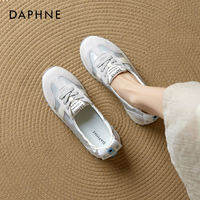
Daphne | Ballet Style Summer Slip-On Shoes Silver Soft Sole
$69.70$157.39
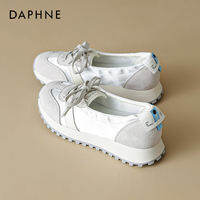
Daphne | Soft Bottomed Ballet Training Shoes
$67.67$154.14
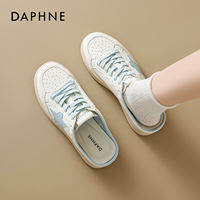
Daphne | Thick-soled Light Closed-toe Mules
$69.23$81.76
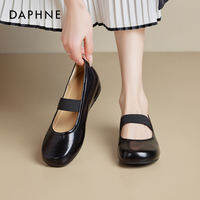
Daphne | French Mary Jane Style Summer Thick Sole Slip-On Ballet Flats
$68.84$81.26
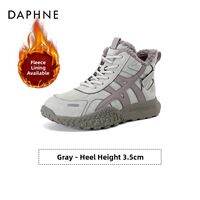
Daphne | Non-slip Plush Warm Snow Boots High Ankle
$70.86$83.38
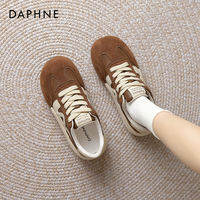
Daphne | Thick Soled Round Toe Flat Versatile Fall Casual Canvas Shoes
$70.05$82.60
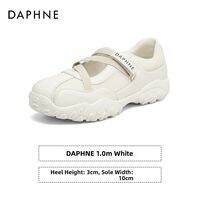
Daphne | Silver Mary Jane Ballet Flats
$69.40$81.94
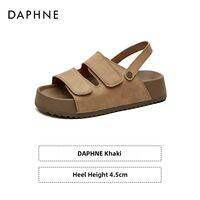
Daphne | Female Summer Wear Outside Flat Sandals Dress Match Anti-slip
$65.10$107.75
About Daphne
Overview
DAPHNE is a Chinese women’s footwear and fashion brand associated with Daphne International Holdings Limited, a group listed on the Hong Kong Stock Exchange. From the 1990s through the 2010s, it was one of mainland China’s most recognisable domestic shoe brands, distinguished by an extensive network of proprietary retail stores.1 In recent years, the brand has shifted its positioning towards a broader fashion and lifestyle identity that emphasises female empowerment, comfort, contemporary design and younger consumers.1
The group’s current portfolio includes DAPHNE, DAPHNE.LAB, AEE and SHOEBOX.1 While historically defined by mass-market women’s footwear, the modern brand focuses on cultural relevance and self-expression alongside its core product categories.
Corporate Profile
| Item | Information |
|---|---|
| Brand name | DAPHNE / 达芙妮 |
| Chinese name | 达芙妮 |
| Industry | Fashion, footwear, apparel and accessories |
| Core category (historical) | Women’s footwear |
| Associated group | Daphne International Holdings Limited |
| Parent/group stock code | Hong Kong Stock Exchange: 0210 |
| Group origin | 1987 |
| Major market | Mainland China |
| Brand launched in mainland China | c. 1990 |
| Current positioning | Women’s fashion/lifestyle and footwear |
| Group brands | DAPHNE, DAPHNE.LAB, AEE, SHOEBOX |
Daphne International Holdings Limited traces its origins to 1987, initially operating primarily as an original equipment manufacturer (OEM) for overseas clients before developing proprietary brands for the Chinese consumer market.23
It is necessary to distinguish between DAPHNE as a consumer-facing fashion brand and Daphne International Holdings Limited as the corporate entity. The latter operates a multi-brand strategy spanning footwear, apparel, bags and accessories, rather than relying exclusively on the original DAPHNE label.1
Etymology and Brand Philosophy
The name Daphne references the figure from Greek mythology whose story is recounted in Ovid’s Metamorphoses. According to the brand’s interpretation, Daphne rejected Apollo’s pursuit and was transformed into a laurel tree, symbolising resilience, independence and the courage to remain oneself.1
This mythological narrative underpins the brand’s modern identity. Rather than treating the name merely as a European-sounding feminine label, the company uses the story as a metaphor for female strength and self-determination. The group’s stated mission is to accompany women so they may walk more freely and comfortably, while asserting that women’s stories and power can inspire others.1
The current philosophy rests on three pillars:
- Women: Emphasising female experiences, stories and strength.
- Freedom: Enabling comfortable and unrestricted movement.
- Self-expression: Interpreting the Daphne myth as a refusal to surrender identity to external forces.1
Consequently, the brand has evolved from selling “fashionable women’s shoes” to offering fashion products intended to accompany independent contemporary women.
History
1987–1990: Manufacturing Origins
The company behind DAPHNE was established in 1987, with early operations focused on OEM manufacturing for markets including the United States, Europe and Japan.3 This background provided essential expertise in footwear production, supply-chain management, product development and large-scale manufacturing. Recognising the potential of China’s growing consumer market, the company began developing the DAPHNE brand for mainland China around 1990.4 This marked a strategic transition from contract manufacturing to proprietary branding and national retail distribution.
1990s–2000s: Market Expansion
During the 1990s and 2000s, DAPHNE expanded rapidly across mainland China by offering fashionable women’s shoes at accessible prices through a vast network of branded stores. This model resonated strongly with the expanding middle class. By mid-2005, sales had increased 49% year-on-year compared to the first half of 2004, and points of sale grew from over 1,500 in 2004 to more than 1,800 by June 2005.5 In 2004 alone, DAPHNE accounted for approximately 55% of group turnover.5
A defining feature of this era was the segmentation of products into two distinct lines:
- D28: Targeted women aged approximately 20–45 with fashion shoes, high heels, sandals and professional footwear.
- D18: Targeted a younger demographic aged 15–30 with casual, commuting and sports-inspired styles.
These lines were consolidated in 2010, after which products were reorganised around fashion, casual and sports categories.1 This segmentation demonstrated an attempt to cover different life stages within the female consumer market rather than simply selling generic footwear.
Retail Network and Marketing
Unlike competitors reliant on department store concessions, DAPHNE built a massive proprietary retail network. Historical records indicate approximately 2,800 DAPHNE stores in mainland China by 2008, alongside roughly 300 SHOEBOX outlets.5 For many consumers who came of age during this period, DAPHNE stores were ubiquitous fixtures in commercial centres.
The brand invested heavily in celebrity endorsements to cultivate an aspirational image of femininity and urban life. Key partnerships included the Taiwanese pop group S.H.E, who represented the younger D18 line, as well as entertainers Ren Xianqi and Liu Ruoying.5 These collaborations extended beyond traditional advertising to include limited-edition products and entertainment events.
International Expansion
DAPHNE attempted to replicate its domestic success overseas, entering Taiwan as its first international market with a store opening in April 2006.5 The company planned to establish approximately 30 stores there that year as an initial step toward broader expansion. However, it never achieved the global presence of major international footwear groups, and mainland China remained its overwhelming commercial focus.
Peak and Decline
The brand’s peak occurred during the 2000s and early 2010s, characterised by thousands of retail outlets, substantial manufacturing capacity and strong domestic recognition. Listed on the Hong Kong Stock Exchange under code 0210, DAPHNE was a significant player in Chinese consumer fashion.2
From the mid-2010s, however, structural changes in Chinese retail precipitated a decline. The rise of e-commerce platforms such as Taobao and Tmall eroded the advantage of physical retail networks. Simultaneously, younger consumers shifted their preferences toward sneakers, sportswear, international brands and fast fashion, making DAPHNE’s traditional image less compelling. The extensive store network, once an asset, became a liability as foot traffic patterns changed, leading to substantial closures and financial losses.5
2020 Onwards: Transformation
In 2020, DAPHNE announced its withdrawal from traditional mainland physical retail, effectively ending the era defined by thousands of conventional stores.5 This pivot marked an attempt to rebuild the brand around a new business model targeting a new generation of consumers. The current strategy employs a multi-brand approach encompassing footwear, apparel, bags and accessories, with a focus on fashion, culture and female identity rather than mass-market shoe retailing.1
Contemporary Brand Portfolio
DAPHNE.LAB
DAPHNE.LAB represents the group’s newer concept aimed at next-generation female consumers. Positioned as a pioneering design brand, its philosophy centres on the motto “DARE TO BE.” It encourages young women to break conventional rules, avoid stereotypes, experiment with style and prioritise personal satisfaction.1 Consequently, DAPHNE.LAB is significantly more experimental and fashion-forward than the traditional DAPHNE positioning.
Design Evolution
Historically, DAPHNE prioritised accessible fashion, comfort, practicality and value over avant-garde luxury.1 More recently, the group has incorporated original Chinese design elements, including traditional patterns, calligraphy and embroidery, as part of a “China-Chic” strategy.5 This evolution reflects a broader shift toward contemporary interpretations of culture, younger silhouettes and designer collaborations.
Target Demographics and Market Position
Historically, DAPHNE’s core customers were urban Chinese women seeking fashionable yet affordable footwear, particularly young professionals, office workers and university students. The D18/D28 segmentation explicitly targeted different age cohorts.1 Today, newer brands like DAPHNE.LAB suggest a stronger emphasis on younger, digitally connected and individualistic consumers.
In terms of market positioning, DAPHNE occupies the space between basic mass-market footwear and international premium brands. Its historical competitive advantage lay in combining fashion, accessibility, convenience and wide distribution—a model that thrived during China’s physical retail expansion but faced challenges from e-commerce and sneaker culture.
Cultural Significance
DAPHNE serves as a case study in the transformation of Chinese retail and domestic branding. Its trajectory mirrors broader industry shifts:
- 1987–1990: OEM manufacturing.
- 1990s–2000s: Domestic brand building.
- 2000s–early 2010s: Nationwide retail dominance.
- Mid-2010s–2020: Decline of traditional physical retail.
- 2020s: Brand reinvention and digital transformation.
This evolution illustrates the journey of China’s domestic women’s footwear industry from manufacturing-led growth through mass-market retail expansion to e-commerce disruption and contemporary brand revitalisation.
Timeline
| Year | Event |
|---|---|
| 1987 | Group founded; early business focused on OEM footwear manufacturing |
| c. 1990 | DAPHNE brand enters the mainland Chinese women’s footwear market |
| 1990s | Rapid expansion in China |
| 1995 | Company listed on the Hong Kong Stock Exchange |
| 2004 | More than 1,500 DAPHNE points of sale |
| 2005 | More than 1,800 points of sale; DAPHNE becomes the group’s dominant brand |
| 2006 | First DAPHNE store opens in Taiwan |
| 2008 | Historical records cite about 2,800 DAPHNE stores in mainland China |
| 2010 | D18 and D28 product structures consolidated |
| 2010s | E-commerce and changing consumer preferences increasingly pressure the business |
| 2015–2019 | Major store closures and financial deterioration |
| 2020 | Traditional physical-retail business substantially exited |
| 2020s | Brand repositioning, new design concepts and multi-brand strategy |
| Today | DAPHNE Group focuses on DAPHNE plus newer brands including DAPHNE.LAB, AEE and SHOEBOX |
Historical figures and dates are drawn primarily from company filings, HKEX materials and historical records.5