Shop on Lazada
Dermalogica products
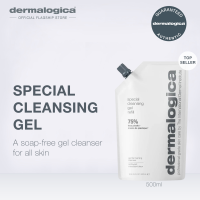
Dermalogica Special Cleansing Gel Refill 500ml - cleanses away impurities without compromising skin barrier
$109.00
Buy on Lazada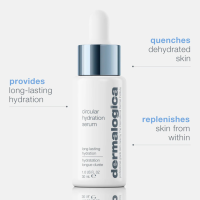
Dermalogica Circular Hydration Serum with Hyaluronic Acid 30ml - deeply hydrates and replenishes skin from within
$119.00
Buy on Lazada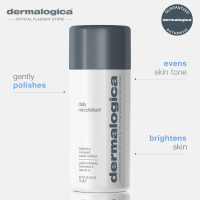
Dermalogica daily Microfoliant exfoliator - #1 selling powder exfoliant smooths and brightens dull uneven skin for a radiant glow
$119.00
Buy on Lazada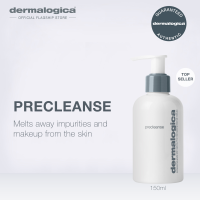
Dermalogica Precleanse 150ml - Oil-busting emulsifyer deep-cleansing oil - melts make up and cleanses deep impurities
$89.00
Buy on Lazada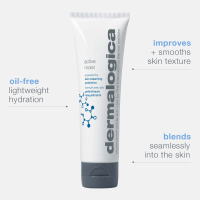
Dermalogica Active Moist 50ml - Moisturizer - provides oil free hydration for normal combination and oily skin
$89.00
Buy on Lazada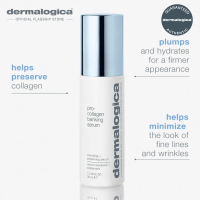
Dermalogica Pro-Collagen Banking Serum 30ml - serum that protects and preserves skin’s collagen for plumper fuller skin
$139.00
Buy on Lazada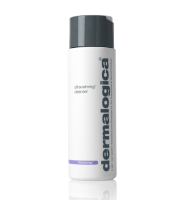
Dermalogica Ultracalming Cleanser Refill 500ml - calms and cools sensitized skin for dry + sensitive skin
$109.00
Buy on Lazada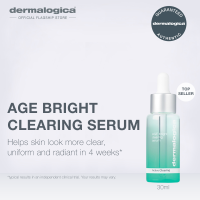
Dermalogica Age Bright Clearing Serum 30ml - clears and prevents breakout
$133.00
Buy on LazadaAbout Dermalogica
Dermalogica is an American professional skincare brand established in 1986 by skin therapist Jane Wurwand and her husband, Ray Wurwand. The brand is distinguished by its integration of professional skin therapy, education, skin analysis, and science-oriented skincare products. Originally developed as a professional salon line, it has evolved into a global prestige skincare business serving both professional skin therapists and consumers 1.
Dermalogica currently operates within Unilever’s Beauty & Wellbeing division, where it is classified as a Prestige Beauty Power Brand. Unilever acquired the company in 2015 2.
Basic information
| Attribute | Information |
|---|---|
| Brand | Dermalogica |
| Industry | Skincare / professional beauty |
| Founded | 1986 |
| Founders | Jane Wurwand and Raymond Wurwand |
| Origin | United States |
| Headquarters | Carson, California, USA |
| Parent company | Unilever |
| Business division | Beauty & Wellbeing → Prestige Beauty |
| Core positioning | Professional-grade, education-led skincare |
| Main customers | Consumers, professional skin therapists, salons, spas and clinics |
| Global reach | More than 100 countries according to Dermalogica |
| Key philosophy | Education + personalization + human touch |
Dermalogica defines itself as a professional-grade skincare brand with a mission to empower skin therapists to achieve optimal skin health for their clients 3.
History
Origins: The International Dermal Institute
The origins of Dermalogica predate the launch of the product line itself. In 1983, Jane Wurwand founded the International Dermal Institute (IDI), a postgraduate education institution created to provide advanced training for professional skin therapists. This approach was unconventional for the beauty industry at the time; rather than launching a consumer cosmetic brand first, Wurwand prioritised professional education and technical expertise 4.
This educational foundation became central to the brand’s identity. Wurwand believed that professional skin therapists required products formulated specifically for skin health and professional treatment, distinct from conventional cosmetics designed primarily around fragrance, luxury or aesthetic appeal.
1986: Launch of Dermalogica
Dermalogica was introduced as a skincare product line in 1986. The original concept focused on creating products that supported healthy skin while avoiding ingredients considered unnecessary or potentially problematic for professional treatments. Historical accounts from the brand describe the initial line as being formulated to improve skin health without common irritants or ingredients that could contribute to breakouts 3.
This established a fundamental distinction between Dermalogica and traditional beauty brands, prioritising skin health over cosmetic beauty.
Brand philosophy
Dermalogica’s philosophy is built upon three core concepts:
Education
Education is a defining element of the Dermalogica business model. Rather than simply selling products to consumers, the brand developed an ecosystem centred on professional skin therapists, encompassing training, treatment protocols, product education and business support. Dermalogica states that its products originated from a desire to provide therapists with high-quality tools and education, and it continues to deliver skills-based training to a global professional community 4.
Personalisation
Dermalogica does not promote a universal skincare routine. Instead, it emphasises that individuals have unique skin conditions, lifestyles, environments and concerns. Consequently, the brand advocates for customised product recommendations and professional skin analysis 5. This philosophy is operationalised through its professional Face Mapping approach, skin consultations and bespoke treatment programmes.
Human touch
The third pillar focuses on the relationship between the client and the professional skin therapist. The brand describes its philosophy as a progression from Education to Personalisation to Human Touch. Professional consultation and physical treatment are therefore integral to the brand experience, extending beyond the retail sale of skincare products 5.
Market positioning
Dermalogica occupies a distinct position across several categories:
- Professional skincare
- Prestige skincare
- Science and education-oriented skincare
- Salon and spa treatments
- Direct-to-consumer skincare
It differs from traditional luxury skincare houses and mass-market companies alike. Its identity is best characterised as a combination of professional expertise, skin health, education and treatment. Unilever has described Dermalogica as the #1 professional skincare brand and lists it among its Beauty & Wellbeing Power Brands in corporate reporting 6.
Product portfolio
Dermalogica maintains a comprehensive skincare portfolio covering both daily care and professional treatments. Major product categories include:
- Cleansers
- Exfoliants
- Toners
- Serums
- Moisturisers
- Masks
- Facial oils
- Eye treatments
- Sunscreens
- Acne treatments
- Body skincare
- Professional-use products
The official portfolio is organised by skin concern as well as product category. Current concerns addressed include acne, uneven skin tone, dryness and dehydration, fine lines and wrinkles, oiliness, sensitivity and redness, and hyperpigmentation 7.
Major product lines
Dermalogica has developed several recognisable franchise lines:
Daily Skin Health
This is the brand’s core everyday skincare platform, featuring foundational products for cleansing, exfoliating, moisturising and maintaining general skin health.
Active Clearing
Focused primarily on breakouts and adult acne, this line also addresses signs associated with premature skin ageing 8.
Clear Start
Clear Start targets younger consumers and those with breakout-prone skin.
AGE Smart
AGE Smart focuses on visible signs of skin ageing, including lines, wrinkles, loss of firmness and related concerns.
UltraCalming
Designed for sensitive and reactive skin, this line emphasises reducing the appearance and triggers of sensitivity and inflammation 9.
PowerBright
Focused on uneven skin tone and pigmentation.
BioLumin-C
A vitamin C-focused range designed to brighten and support firmer-looking skin.
Phyto Nature
A premium anti-ageing franchise within the Dermalogica portfolio.
Iconic products
Several Dermalogica products have become synonymous with the brand:
Daily Microfoliant
Perhaps the brand’s most recognisable consumer product, this powder exfoliant activates with water and is designed for regular use. Launched in 2001, it remains one of Dermalogica’s best-known offerings 10.
PreCleanse
Introduced in 2007, PreCleanse became a cornerstone of Dermalogica’s Double Cleanse concept. It is used as the first cleansing step to dissolve oil-based impurities, sunscreen and makeup before a water-based cleanser is applied 11.
Special Cleansing Gel
A classic cleansing product that exemplifies the brand’s focus on straightforward skin-health routines.
Dynamic Skin Recovery SPF 50
A moisturiser and sunscreen hybrid positioned around hydration, skin ageing concerns and daily UV protection.
BioLumin-C Serum
A prominent vitamin C product focused on brightening and antioxidant skincare.
Professional skincare business
A key differentiator for Dermalogica is its substantial professional business, which distinguishes it from exclusively retail skincare companies. Professional partners receive:
- Professional-only products
- Professional treatment protocols
- Product education
- Skin therapy training
- Business and marketing support
- Professional pricing
- Online ordering
- Continuing education
Dermalogica reports that its professional network has reached more than 100,000 professional skin therapists in over 100 countries 12. This creates a distinctive business model wherein Dermalogica trains professionals, who then recommend and use Dermalogica products and treatments, driving consumer purchases and repeat visits.
Professional treatments
Dermalogica operates as a treatment brand as well as a product manufacturer. Its professional ecosystem includes customised treatments such as:
- ProSkin treatments
- Chemical exfoliation and peels
- Advanced skin treatments
- Microneedling-related services
- Dermaplaning
- Other professional modalities depending on market and practitioner qualifications
The brand introduced customised ProSkin 30 and ProSkin 60 treatments in 2017 and has subsequently expanded its advanced treatment offerings 12. Strategically, this positions Dermalogica as a combination of product, education, diagnosis and professional treatment.
Skin analysis
Skin analysis is integral to the brand’s methodology. Rather than categorising skin simply as “dry” or “oily”, Dermalogica’s professional philosophy emphasises assessing individual skin conditions to create customised recommendations.
The company has historically promoted Face Mapping, a method of analysing different zones of the face to identify visible concerns and develop personalised advice. Dermalogica later digitised Face Mapping as part of its professional technology ecosystem 13. This supports the brand’s central tenet that there is no universal skincare routine.
Ingredient and formulation philosophy
Dermalogica markets itself around a “clean” approach to formulation. According to current official information, formulas are made without artificial colours and fragrances, mineral oil, lanolin, S.D. alcohol, parabens and microplastics. The company also states that its products are cruelty-free and that the brand is vegan and gluten-free, subject to specific product-level qualifications in some markets 14.
It should be noted that “clean beauty” is not a universally standardised scientific or regulatory category. Dermalogica’s terminology describes its own formulation philosophy rather than an independently standardised definition.
Sustainability
Dermalogica has increasingly incorporated environmental considerations into its product and packaging strategy. Initiatives include:
- Recycled plastic in packaging
- Recyclable packaging systems
- Refill pouches
- Reduced-plastic packaging
- FSC-certified cartons
- More sustainably sourced ingredients
- Plant-based alternatives to petroleum-derived ingredients
Dermalogica states that some refill pouches use substantially less plastic than conventional bottle formats and reports ongoing initiatives involving recycled plastic and mono-material systems 9. The brand frames these efforts around the concept of “Healthy Skin, Healthy Planet” 15.
Cruelty-free and vegan positioning
Dermalogica states that it is cruelty-free, vegan and gluten-free. Its cruelty-free status is recognised by PETA and Leaping Bunny 16.
However, “vegan brand” does not necessarily imply that every historical or market-specific product has always had identical formulation status. Regional pages have noted exceptions for particular products, so consumers are advised to verify the vegan status of individual items where this is a priority 16.
Acquisition by Unilever
In 2015, Unilever acquired Dermalogica as part of its strategy to build a larger Prestige Beauty business. Unilever’s 2015 annual report identified Dermalogica, alongside Murad, Kate Somerville and REN, as acquisitions used to construct this premium skincare portfolio 17.
Unilever described Dermalogica as having a strong international footprint and being a leading global salon skincare brand rooted in skin-health treatments 18. The acquisition provided Dermalogica with access to greater global distribution, corporate resources, international marketing capabilities, supply-chain scale, digital commerce infrastructure and a broader prestige-beauty portfolio.
Despite this, Dermalogica has retained a distinct professional-skincare identity rather than being repositioned as a mass-market brand. As of Unilever’s 2025 annual reporting, Dermalogica remains a Beauty & Wellbeing Power Brand under Prestige Beauty 14.
Corporate structure and consumer identity
The relationship between Dermalogica’s corporate ownership and its consumer-facing identity is distinct:
- Corporate level: Unilever → Beauty & Wellbeing → Prestige Beauty → Dermalogica
- Consumer level: Dermalogica → professional skin health → skin therapists → customised skincare
Unilever’s 2025 report continues to identify Dermalogica as a Beauty & Wellbeing Power Brand, confirming its ongoing place within the group’s portfolio 14.
Brand identity
Dermalogica’s branding is characterised by several key attributes:
- Clinical and professional: Packaging and communication historically emphasise expertise, ingredients, skin concerns and treatment over traditional luxury imagery.
- Educational: The brand invests heavily in explaining skin conditions, ingredients and treatment techniques.
- Gender-neutral: While skincare has historically been marketed towards women, Dermalogica’s positioning focuses on skin health regardless of gender.
- Results-oriented: Communication emphasises measurable or visible skin outcomes rather than sensory experiences alone.
- Professional authority: The skin therapist is central to the brand’s credibility.
Target customers
Dermalogica serves two interconnected customer groups:
Professional customers
These include estheticians, skin therapists, beauty therapists, salons, spas, skin clinics and professional treatment businesses. These customers are strategically vital as they recommend products and perform Dermalogica treatments.
Consumers
The consumer audience includes individuals concerned with acne, ageing, hyperpigmentation, sensitivity, dehydration, oiliness, uneven skin tone and general skin health. The brand appeals particularly to consumers seeking a more professional and treatment-oriented alternative to conventional drugstore skincare.
Competitive landscape
Dermalogica competes across multiple segments:
Professional skincare competitors
Brands such as SkinCeuticals, Obagi, Environ, IMAGE Skincare, PCA Skin, Jan Marini and Circadia.
Prestige and clinical skincare
Overlap exists with Clinique, Estée Lauder, Shiseido, Murad, Kiehl’s and SkinCeuticals.
Modern science-led skincare
Competition has increased from brands including Paula’s Choice, The Ordinary, Drunk Elephant, Skinfix and Medik8.
The primary competitive challenge for Dermalogica is maintaining its professional credibility while competing in an increasingly crowded direct-to-consumer skincare market.
Distinctive characteristics
| Dimension | Dermalogica |
|---|---|
| Origin | Professional skin therapy |
| Core expertise | Skin health |
| Distribution heritage | Salons, spas & professionals |
| Consumer model | Professional recommendation + retail |
| Brand philosophy | Education and personalisation |
| Product philosophy | Results-driven, professional-grade |
| Treatment ecosystem | Strong |
| Education ecosystem | Very strong |
| Luxury emphasis | Moderate |
| Clinical/professional emphasis | Very strong |
| Parent company | Unilever |
| Current strategic category | Prestige Beauty |
Key milestones
| Year | Milestone |
|---|---|
| 1983 | Jane Wurwand establishes the International Dermal Institute |
| 1986 | Dermalogica skincare line is launched |
| 1998 | MultiVitamin Power Exfoliant launches |
| 2001 | Daily Microfoliant launches |
| 2007 | PreCleanse launches |
| 2013 | International Dermal Institute reaches 30 years and has trained 100,000+ professionals |
| 2015 | Unilever acquires Dermalogica |
| 2017 | ProSkin 30 and ProSkin 60 treatments launch |
| 2018 | Pro Power Peel and digital Face Mapping expand the professional ecosystem |
| 2019 | Advanced treatments including microneedling and dermaplaning are introduced |
| 2020 | Clean Touch certification is introduced |
| 2022 | Pro Pen and Pro Restore are introduced |
| 2025–26 | Dermalogica remains a Unilever Beauty & Wellbeing/Prestige Beauty Power Brand |
Historical milestones are based primarily on Dermalogica’s own chronology 19.
Business model
Dermalogica functions as more than a skincare product company. Its ecosystem operates as follows:
- Education
- Professional skin therapist
- Skin analysis and consultation
- Customised treatment
- Dermalogica professional products
- At-home skincare regimen
- Repeat professional consultation
This creates a robust professional-to-consumer flywheel. A consumer may first encounter Dermalogica through a facial or skin therapist, receive a skin analysis, be recommended products for home use, and return to the professional for further treatments. This model has historically served as a significant competitive advantage.
Strengths and challenges
Strengths
- Professional credibility: Long-standing relationships with skin therapists and professional education.
- Global recognition: Products and education reach more than 100 countries 20.
- Broad portfolio: Addresses multiple major skincare concerns.
- Hero products: Recognisable anchors such as Daily Microfoliant and PreCleanse.
- Education-led differentiation: Decades of professional education infrastructure are difficult to replicate.
- Integrated revenue streams: Generates income from both professional environments and direct consumer sales.
Challenges
- Premium pricing: Professional positioning entails higher prices than mass-market alternatives.
- Market saturation: Consumers face an abundance of science-led and dermatologist-oriented brands.
- Maintaining differentiation: Increasing direct-to-consumer availability requires sustained professional authority.
- Evolving expectations: Consumers demand ingredient transparency, clinical evidence, sustainability, ethical sourcing, personalisation and engaging digital experiences.
- Corporate complexity: Operating within Unilever provides resources but also necessitates alignment with multinational strategic priorities.
Recent developments
In the 2020s, Dermalogica has combined its traditional professional identity with new technology, sustainability and digital commerce. Investments continue in advanced professional treatments, digital skin analysis, professional education, new active ingredients, sustainable packaging, refills, direct-to-consumer commerce and personalised skincare.
At the corporate level, Unilever’s 2025 reporting continued to classify Dermalogica as a Beauty & Wellbeing Power Brand and reported that Dermalogica returned to growth in the second half of 2025 14.
Summary of brand positioning
Dermalogica is a professional, education-led skincare brand that combines skin-therapist expertise, personalised skin analysis, professional treatments and science-oriented products. It now operates as a prestige beauty brand within Unilever. This core identity—professional skincare, education, personalisation and treatment—has remained consistent since the brand’s launch in 1986.
Evolution of the Dermalogica DNA
- 1983 (Education): Establishment of the International Dermal Institute.
- 1986 (Professional Skincare): Launch of Dermalogica.
- 1990s–2000s (Product Authority): Development of professional formulations and recognisable hero products.
- 2000s–2010s (Global Network): Expansion into salons, spas and skin therapist networks globally.
- 2015 (Unilever): Integration into the global Prestige Beauty portfolio.
- 2017–2020s (Advanced Treatments & Digital): Introduction of ProSkin, Face Mapping, peels and advanced professional services.
- 2020s (Science, Personalisation & Sustainability): Focus on digital commerce, new technologies, personalised skincare and sustainable packaging.
Conclusion
Dermalogica is not merely a premium skincare brand; its historical significance lies in building a business around the professional skin therapist before the modern “clinical skincare” category gained widespread popularity. Its key differentiator remains the combination of professional education, skin expertise, personalised analysis, professional treatments, at-home products and global professional distribution.
This heritage explains why Dermalogica has maintained a distinct identity even after becoming part of Unilever. Today, the brand sits at the intersection of professional skincare, prestige beauty, cosmetic science and consumer skincare, with Unilever continuing to position it as a major Power Brand within Beauty & Wellbeing 21.
References
- About Us – Dermalogica PRO
- Our Story | Professional-Grade Skin Care Since 1986 | Dermalogica®
- Our Story – Dermalogica Vietnam
- for professionals
- our common purpose
- Dermalogica® Skin Care | Official Site
- Products Services – Product Segments – Dermalogica PRO
- Mission – Dermalogica PRO
- Sustainability | Dermalogica®
- sustainability – Dermalogica Vietnam
- Ủy Ban Chứng Khoán Hoa Kỳ
- Inside Dermalogica’s big innovation plans: longevity science, AI and biotechnology
- Who Owns Dermalogica and How Unilever Acquired It – LegalClarity
- ul-20251231
- DERMALOGICA’S ICONIC FOUNDING COMPANY INTERNATIONAL DERMAL INSTITUTE (IDI) GOES VIRTUAL, BRINGING COMMUNITY AND WORLD-CLASS SKINCARE EDUCATION TO EVERY CORNER OF THE GLOBE
- Dermalogica Inc. – Wikidata
- sec.gov
- Unilever Acquiring Top Skin Care Brand | News | Consumer Goods Technology
- Unilever Acquires Dermalogica | Modern Salon
- Unilever acquires Dermalogica as it targets professional skin care success
- ユニリーバが「ダーマロジカ」を買収 – WWDJAPAN