Shop on Lazada
Dolce & Gabbana products
![Dolce & Gabbana The One Pour Homme Eau de Parfum Spray 100ml [TESTER PACKAGING] - Eclat Parfum](https://sg-live.slatic.net/p/7a82a3f6bae4fd1c322cf15271e4d809.jpg_200x200q80.jpg)
Dolce & Gabbana The One Pour Homme Eau de Parfum Spray 100ml [TESTER PACKAGING] - Eclat Parfum
$99.00$215.00
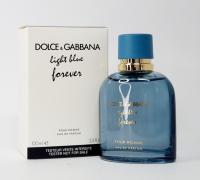
Dolce & Gabbana Light Blue Forever Men eau de parfum spray 100ml TESTER packaging
$90.00$142.00
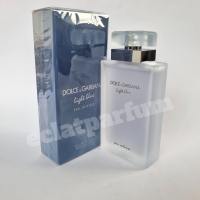
Dolce and Gabbana Light Blue Eau Intense (W) Spray 100ml - Eclat Parfum - Brand New 100% Authentic
$108.00$199.00
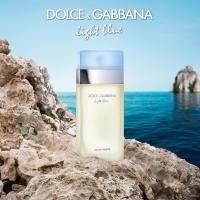
Dolce & Gabbana Light Blue Eau De Toilette For Women 100ml
$32.36$120.00
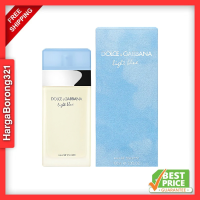
Dolce & Gabbana Light Blue EDT 100ml
$37.62$76.00
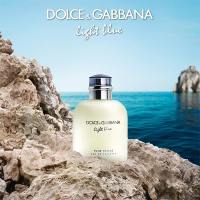
Dolce & Gabbana Light Blue Pour Homme EDT 125ml
$32.36$120.00
![Dolce & Gabbana Light Blue Eau de Toilette Spray 125ml [TESTER PACKAGING] - Eclat Parfum](https://sg-live.slatic.net/p/8048d3253c15c8d1697fa8ac1a24d840.jpg_200x200q80.jpg)
Dolce & Gabbana Light Blue Eau de Toilette Spray 125ml [TESTER PACKAGING] - Eclat Parfum
$59.00$180.00
![Dolce and Gabbana The One Men Eau de Toilette spray 100ml [TESTER PACKAGING] - Eclat Parfum](https://sg-live.slatic.net/p/93ed2c9c918b083bff69ee6cacf5acd8.jpg_200x200q80.jpg)
Dolce and Gabbana The One Men Eau de Toilette spray 100ml [TESTER PACKAGING] - Eclat Parfum
$65.00$195.00
About Dolce & Gabbana
Dolce & Gabbana (often styled as Dolce&Gabbana and abbreviated D&G or DG) is an Italian luxury fashion house established in 1985 by designers Domenico Dolce and Stefano Gabbana. Headquartered in Milan, Italy, the maison is internationally recognised for its ready-to-wear clothing, leather goods, footwear, handbags, jewellery, watches, eyewear, fragrances, cosmetics, home products, and high-end Alta Moda creations.1
The brand’s identity is intrinsically linked to Italian craftsmanship, Sicilian culture, Mediterranean imagery, sensuality, theatrical glamour, tailoring, and highly decorative design. In contrast to luxury houses that prioritise restrained minimalism, Dolce & Gabbana has historically embraced a more expressive aesthetic characterised by black lace, leopard print, corsetry, florals, religious iconography, gold ornamentation, Sicilian motifs, and body-conscious silhouettes.
Basic information
| Category | Details |
|---|---|
| Full name | Dolce & Gabbana / Dolce&Gabbana |
| Industry | Luxury fashion, beauty, lifestyle |
| Founded | 1985 |
| Founders | Domenico Dolce and Stefano Gabbana |
| Origin | Italy |
| Headquarters | Milan, Italy |
| Core identity | Italian luxury, Sicilian heritage, sensuality, craftsmanship |
| Main products | Ready-to-wear, couture, leather goods, footwear, jewellery, watches, beauty, eyewear, home |
| High fashion | Alta Moda, Alta Sartoria, Alta Gioielleria |
| Website | Dolce&Gabbana |
The company states it was founded in 1985 and confirms that Dolce and Gabbana remain the central creative and stylistic forces behind the brand. The group directly creates, produces, and distributes clothing, leather goods, footwear, jewellery, watches, and beauty products, whilst categories such as eyewear are managed through licensing partners.2
Founders
Domenico Dolce
Domenico Dolce was born in Sicily and raised within his family’s tailoring business. His early exposure to traditional tailoring became fundamental to the Dolce&Gabbana philosophy of craftsmanship and Italian-made clothing. His design sensibility is generally associated with traditional Italian tailoring, Sicilian culture, structured silhouettes, corsetry, lingerie-inspired clothing, craftsmanship, and historical references. His Sicilian background is particularly significant, as Sicily became one of the defining cultural references of the house.
Stefano Gabbana
Stefano Gabbana was born in Milan and studied graphic design before entering the fashion industry. He met Dolce whilst working at the same fashion studio. Gabbana has described learning fashion design partly by studying Dolce’s sketches and working alongside him.3 His creative contribution is often associated with visual communication, advertising, photography, glamorous imagery, theatrical presentation, pop culture, and provocative fashion. Together, the pair developed a distinctive design language combining Dolce’s tailoring tradition with Gabbana’s visual and cultural sensibility.
Origins and history
Dolce and Gabbana met in the early 1980s whilst working in Milan’s fashion industry. They subsequently began designing collections together and established their own design operation. Their breakthrough occurred in October 1985, when they presented their first women’s collection during Milan Fashion Week’s emerging-designer programme. Gabbana’s historical account describes the pair having limited financial resources at the time but receiving crucial support from fashion organiser Beppe Modenese.4
In the following years, the company developed rapidly, establishing its own retail presence and expanding from women’s clothing into a broader luxury business.
Brand name and identity
The name comprises the surnames of the two founders: DOLCE + GABBANA. The modern official styling is generally Dolce&Gabbana, with the ampersand forming an integral part of the visual identity.
It is important to distinguish Dolce&Gabbana from the historical D&G label. D&G was created as a younger, more accessible diffusion line and operated separately from the main luxury line for many years. The D&G line was eventually discontinued, with the company consolidating its products under the primary Dolce&Gabbana identity.
Italian heritage
Italian identity is arguably the single most important foundation of Dolce&Gabbana. The brand does not merely use “Made in Italy” as a commercial positioning; it frequently builds entire collections around Italian history and regional culture. The strongest influence is Sicily. Common references include Sicilian women, Mediterranean landscapes, Catholic iconography, Sicilian baroque architecture, traditional religious processions, Carretto Siciliano carts, black lace, Mediterranean flowers, citrus, ceramics, traditional tailoring, Italian family life, and Southern Italian food and culture. This distinct cultural focus allows Dolce&Gabbana to be recognised immediately even without visible branding.
Aesthetic and visual codes
The Dolce&Gabbana aesthetic can be understood as Italian luxury at maximum intensity. It frequently combines opposites: traditional and provocative, religious and sensual, masculine and feminine, old-world and contemporary, minimal tailoring and maximal decoration, and Italian heritage and celebrity pop culture. This tension is fundamental to the brand.
Key visual signatures
- Black: One of the most recognisable colours associated with the house, particularly in women’s fashion.
- Lace: Black lace is a major signature, connecting lingerie, Catholic imagery, mourning clothes, and traditional Italian femininity.
- Leopard: Animal print is frequently used to create an intentionally sensual and glamorous aesthetic.
- Corsetry: Corset-inspired construction emphasises the female form and connects modern fashion with historical Italian dress.
- Gold: Embroidery, jewellery, and ornamentation reinforce the house’s maximalist luxury aesthetic.
- Sicilian motifs: Mediterranean and Sicilian imagery are repeatedly incorporated into clothing, accessories, and home products.
Fashion collections
Women’s fashion
Women’s fashion was the foundation of Dolce&Gabbana and remains central to its identity. The typical Dolce&Gabbana woman is portrayed as confident, sensual, glamorous, highly feminine, sophisticated, and dramatic. The house became famous for emphasising the female silhouette. Important recurring elements include fitted black dresses, corsets, pencil skirts, lingerie-inspired dresses, lace, transparent fabrics, floral prints, leopard print, dramatic evening wear, exaggerated shoulders, and sculpted tailoring. The underlying philosophy is essentially that “the body is part of the design.”
Men’s fashion
Dolce&Gabbana’s men’s fashion possesses a distinct yet equally recognisable identity. Collections combine Italian tailoring, sharp suits, Mediterranean references, black, decorative embroidery, silk, fitted silhouettes, military influences, baroque ornamentation, and contemporary streetwear. Current collections continue to emphasise tailoring whilst mixing traditional craftsmanship with contemporary styling.5 A Dolce&Gabbana suit is generally more visually expressive than the understated tailoring associated with brands such as Brioni or Loro Piana.
Alta Moda and haute couture
A pivotal development in the company’s history was its expansion into Alta Moda, Dolce&Gabbana’s interpretation of haute couture, introduced in 2012. Rather than presenting couture in Paris according to the traditional calendar, the house developed a personalised model centred on Italian craftsmanship and spectacular locations. Alta Moda pieces involve extensive hand embroidery, couture construction, precious materials, elaborate decoration, one-of-a-kind designs, and significant artisanal labour. The house describes Alta Moda as the highest expression of its creativity and craftsmanship.6
The haute couture division subsequently expanded to include:
- Alta Moda: Women’s haute couture.
- Alta Sartoria: High-end men’s tailoring.
- Alta Gioielleria: High jewellery.
- Alta Orologeria: High watchmaking.
These activities represent the extreme luxury end of the brand. In 2026, the house continues to stage major Alta Moda, Alta Sartoria, and Alta Gioielleria events in locations such as Taormina and Sicily, reinforcing the connection between its couture business and Italian cultural heritage.7
Accessories
Accessories constitute a major portion of the business.
Handbags
Dolce&Gabbana handbags often feature the DG logo, leather, ornate hardware, Sicilian motifs, floral designs, structured silhouettes, and decorative embellishment. The use of the DG initials as both hardware and branding is a particularly recognisable design language.
Footwear
The footwear range includes stilettos, pumps, sandals, sneakers, boots, loafers, and men’s dress shoes. Shoes often carry the same visual codes as the clothing: gold hardware, leopard print, floral motifs, crystals, and Mediterranean references.
Jewellery and watches
The company offers both commercial jewellery and extremely high-end Alta Gioielleria. The latter involves one-of-a-kind pieces and extensive artisanal production.8
Beauty and fragrances
Beauty has become an increasingly significant component of the Dolce&Gabbana universe. The brand is renowned for several key fragrance families:
- Light Blue: Arguably the most recognisable fragrance family, strongly associated with Mediterranean summer, Italy, the sea, citrus, and youthful sensuality. The brand describes Light Blue as an olfactory journey inspired by the Mediterranean summer.9
- The One: A major franchise positioned around glamour, sensuality, and sophistication.
- Dolce: A fragrance family centred on femininity and floral themes.
- Devotion: A recent fragrance universe connected to the brand’s romantic and sensual storytelling.
Direct management of beauty
A significant corporate development occurred in 2023, when Dolce&Gabbana took direct operational control of its beauty business effective 1 January 2023, having previously operated through licensing arrangements. Corporate documentation confirms that beauty products became part of the directly managed portfolio from that date.10 Today, the beauty division encompasses perfume, makeup, skincare, beauty boutiques, and digital experiences. The company increasingly treats beauty as an integral part of the broader Dolce&Gabbana universe rather than a separate licensed entity.11
Lifestyle and diversification
Dolce&Gabbana Casa
The brand has expanded into interior and lifestyle products through Dolce&Gabbana Casa. The collection includes items for dining, tableware, living spaces, bathrooms, decorative objects, furniture, and home accessories. Fashion codes are transferred directly into interiors, with collections such as Carretto Siciliano (inspired by traditional carts), Blu Mediterraneo (Mediterranean colours), Leopardo (iconic leopard motif), and Zebra (graphic contrast). Dolce&Gabbana describes Casa as an extension of its lifestyle philosophy, combining craftsmanship, Fatto a Mano (“made by hand”), tradition, and innovation.12
Food and hospitality
Dolce&Gabbana has moved beyond conventional fashion and beauty into food and beverage and experiential retail, aiming to transform the fashion brand into a broader Italian lifestyle universe. Initiatives include cafés, restaurants, branded food products, hospitality concepts, events, and immersive stores. The official platform currently integrates fashion, beauty, Casa, and food & beverage as components of this holistic universe.13
Marketing and cultural impact
Celebrity culture and advertising
Celebrity culture has always played a major role in the brand’s image. The house has dressed and collaborated with numerous international figures across film, music, television, sport, and entertainment. This strategy is effective because Dolce&Gabbana clothing is visually dramatic and photographs exceptionally well. Its red-carpet aesthetic typically favours tight silhouettes, black, lace, jewellery, dramatic makeup, and Mediterranean glamour, creating a recognisable celebrity image even without visible logos.
Fashion shows as spectacle
Dolce&Gabbana is renowned for treating fashion shows as spectacles rather than simple presentations. The company frequently utilises historical Italian locations and incorporates architecture, opera, music, celebrities, local culture, artisans, food, photography, and theatrical production. Couture presentations, in particular, have evolved into cultural events. This approach reflects the founders’ desire to present Italian culture as a living entity rather than a historical artefact.
Design philosophy
The brand’s philosophy can be summarised as Italian heritage + sensuality + craftsmanship + spectacle. Unlike the “quiet luxury” approach associated with brands like The Row or Loro Piana, Dolce&Gabbana operates as “statement luxury,” intending for the wearer to be immediately recognisable.
The DG logo
The DG monogram (Dolce Gabbana) is a primary visual identifier found on handbags, belts, shoes, jewellery, sunglasses, clothing, and accessories. Beyond corporate identification, the monogram has evolved into a fashion motif in its own right.
Business operations
Independence and structure
Dolce&Gabbana is unusual among major luxury groups for remaining historically independent, rather than joining conglomerates such as LVMH or Kering. This independence allows direct control over creative direction, brand identity, product development, manufacturing, distribution, communication, and category expansion. Corporate documentation emphasises direct value chain control and long-term relationships with specialist suppliers and artisans.14
Craftsmanship and “Fatto a Mano”
A key concept in the Dolce&Gabbana universe is Fatto a Mano (“made by hand”), reflecting the emphasis on traditional craftsmanship and specialised Italian production. This is critical for couture, embroidery, jewellery, tailoring, leather goods, and decorative objects. The company positions innovation as coexisting with traditional techniques rather than replacing them.
Global positioning
Dolce&Gabbana is positioned at the very high end of the international luxury market. Competitors vary by category but broadly include Gucci, Prada, Versace, Valentino, Fendi, Armani, Saint Laurent, and Dior. However, its positioning is distinct due to the centrality of Sicilian and Mediterranean identity within its brand DNA.
Distinction from D&G
It is important to distinguish the primary luxury brand Dolce&Gabbana (high fashion, premium ready-to-wear, couture, luxury accessories) from the former diffusion label D&G. Created in the 1990s for a younger market, D&G was discontinued in 2012 when the company consolidated its fashion business. Modern products branded simply Dolce&Gabbana belong to the main house.
Controversies
Dolce&Gabbana has experienced significant controversies. The most internationally prominent occurred in 2018, when an advertising campaign for China was criticised as culturally insensitive. The situation escalated after offensive comments attributed to an account associated with Stefano Gabbana circulated online, leading to the cancellation of a Shanghai fashion show. The incident caused substantial reputational damage in China and highlighted the risks of culturally provocative marketing in the global luxury sector. The company has also faced criticism regarding advertising imagery and cultural representation. These events illustrate the dual nature of the brand’s strategy: provocation and strong cultural imagery create differentiation but also carry reputational risk.
Current status and significance
As of 2026, Dolce&Gabbana remains centred on the original creative identity established by Domenico Dolce and Stefano Gabbana. The company operates across:
- Fashion: Women’s, Men’s, Children’s, Accessories, Couture.
- Luxury: Alta Moda, Alta Sartoria, Alta Gioielleria, Alta Orologeria.
- Beauty: Fragrances, Makeup, Skincare.
- Lifestyle: Casa, Food & Beverage, Special projects.
Current collections continue to utilise recognisable house codes including leopard print, Mediterranean imagery, Sicilian references, and Italian craftsmanship.15
Historical importance
Dolce&Gabbana’s significance extends beyond commercial success. During the late 1980s and 1990s, the house helped establish a vision of modern Italian femininity and sexuality, popularising lingerie as outerwear, visible corsetry, black lace, fitted silhouettes, Mediterranean glamour, and provocative advertising. It demonstrated how regional cultural identity could be transformed into a globally recognisable luxury brand, making Italian and Sicilian references the centre of its international identity rather than concealing them.
Brand DNA
| Element | Dolce&Gabbana interpretation |
|---|---|
| 🇮🇹 Italy | National identity and craftsmanship |
| 🇮🇹 Sicily | The strongest cultural reference |
| 🖤 Black | Sensuality, elegance, drama |
| 🐆 Leopard | Boldness and sexuality |
| 🧵 Lace | Femininity and tradition |
| ⛪ Catholic imagery | History, drama, Southern Italian culture |
| 🌹 Flowers | Romance and femininity |
| 💎 Gold | Opulence |
| 👗 Corsetry | Body-conscious femininity |
| ✂️ Tailoring | Italian craftsmanship |
| ☀️ Mediterranean | Lifestyle, sensuality and summer |
| 🎭 Theatricality | Fashion as spectacle |
| 👐 Fatto a Mano | Handmade craftsmanship |
If Prada represents intellectual Italian minimalism, Armani understated elegance, and Loro Piana quiet luxury, then Dolce&Gabbana represents the flamboyant, sensual, and theatrical side of Italian luxury. Its core message posits that Italy is not merely where luxury is made, but the story that luxury tells—a narrative built from Sicily, Mediterranean life, craftsmanship, sexuality, family, religion, glamour, and the art of making an entrance.
References
- Dolce&Gabbana Code of Ethics
- Dolce & Gabbana
- Dolce&Gabbana® menswear and accessories | DG®
- MODERN SLAVERY
- WORLD DOLCE&GABBANA: discover all the latest news
- Dolce&Gabbana® Beauty | Perfumes for Men, Women & Makeup
- Beauty – Dolce&Gabbana – World
- The new Dolce&Gabbana Casa Collection | World Dolce&Gabbana
- Dolce&Gabbana® Clothing, Beauty, Casa and Food & Beverage
- Dolce&Gabbana® Clothing, Beauty, Casa and Food & Beverage
- History of Italian luxury Brand | Dolce&Gabbana World
- Dolce & Gabbana S.r.l.: fatturato 2025 e P.IVA 09297890155
- Who Owns Dolce & Gabbana: The 40/40/20 Split – LegalClarity
- The Value of Handmade Craftsmanship for Dolce&Gabbana Casa
- Revenue Dolce & Gabbana 2011-2024| Statista