Shop on Lazada
DUSTO products
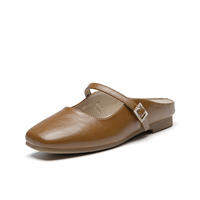
DUSTO | New Summer Elegant Rhinestone French Style Half Slipper Flat Mary Jane Sandals
$41.85$217.79
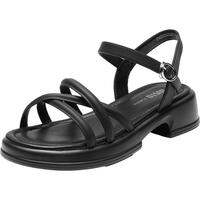
DUSTO | Thick and Soft Base Ladies Sandals
$40.10$66.69
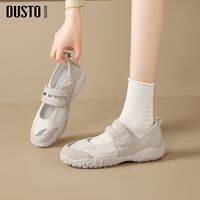
DUSTO | Mary Jane Trainer Magic Tape Soft Sole Women Shoes
$49.75$218.77
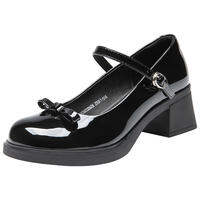
DUSTO | French Style Bow Mary Jane High-Heel Shoes
$43.50$70.09
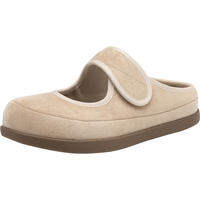
DUSTO | Thick-soled Birkenstock-style Slip-on Shoes Soft-bottom
$41.38$67.39
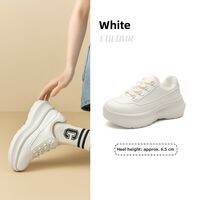
DUSTO | Black Thick-Heel Fall Season Womens Shoes
$49.82$76.43
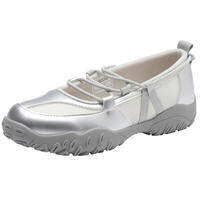
DUSTO | New Autumn Breathable Perforated Derby Shoe
$45.12$71.56
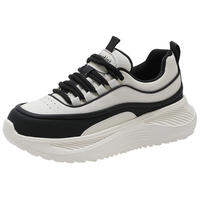
DUSTO | Thick Sole Height-Increasing Shoes Fall 2026 New Arrivals Casual and Sporty for Short Statured
$47.32$73.94
About DUSTO
Overview
DUSTO (Chinese: 大东) is a mass-market fashion brand originating from Wenzhou, Zhejiang Province, China. Originally established as a women’s footwear manufacturer, the brand has since expanded into men’s and children’s shoes, leather goods, bags, apparel, and accessories. The company behind the brand is Zhejiang Dadong Shoes Co., Ltd. Public records generally cite its founding date as either 1995 or 1996.2 Unlike many contemporary fashion labels that rely entirely on outsourcing, DUSTO maintains significant in-house manufacturing and supply chain capabilities, operating production bases in Wenzhou, Huizhou, and Chengdu.13
The name “DUSTO” does not carry a specific meaning in English or other foreign languages; it functions solely as a proprietary brand identifier.2 In the Chinese market, DUSTO is positioned as a fast-fashion retailer offering high product variety, rapid inventory turnover, and accessible pricing rather than luxury status or exclusive design.3
History and development
Origins in Wenzhou
DUSTO’s history is closely tied to Wenzhou, one of China’s most prominent footwear manufacturing hubs. The predecessor to its current parent company was originally known as Zhejiang Kangfeng Shoes Co., Ltd. Sources differ on the exact founding year: recruitment materials archived by Sichuan University state the predecessor was established in Wenzhou in 1995, while most brand publications record the founding of DUSTO as 1996.13
In its early years, the business operated as a traditional workshop focused on handmade shoe production for wholesale markets. Within a few years of establishment, the company transitioned to mechanised assembly-line production, investing in equipment and beginning research into shoe lasts and ergonomic comfort. This evolution from artisanal workshop to modern factory mirrors the broader industrial trajectory of the Wenzhou footwear sector during that era.13
Expansion beyond women’s footwear
Women’s shoes remain DUSTO’s core category and historical foundation. Early brand positioning emphasised fashionable designs, daily wearability, comfort, and affordability for female consumers.1 By 2019, however, corporate profiles indicated that DUSTO had developed a comprehensive product matrix encompassing women’s shoes, men’s shoes, children’s shoes, leather goods, bags, and accessories, characterising itself as an innovative fast-fashion brand with high cost-performance value.3 Some corporate materials also list apparel within its product ecosystem.4
This expansion reflects a strategic shift from a single-category women’s shoe manufacturer to a multi-category fast-fashion lifestyle brand serving broader family consumption needs.
Business model and operations
Fast fashion strategy
DUSTO operates under a mass-market fast-fashion model defined by rapid product renewal, extensive SKU variety, and competitive pricing.3 Corporate strategy documents reference a “7-day fast fashion” target, which denotes an operational philosophy aimed at drastically shortening the cycle between trend identification, product development, manufacturing, and retail availability.14 This approach contrasts with traditional seasonal footwear planning and enables the brand to offer a high volume of new styles continuously.
Vertical integration
A distinguishing feature of DUSTO compared to many pure-play fashion brands is its vertical integration. The company owns and operates research, development, and manufacturing facilities in Wenzhou (Zhejiang), Huizhou (Guangdong), and Chengdu (Sichuan), along with standardised production lines.13 This integrated model—combining R&D, manufacturing, branding, and retail—provides greater control over production speed, cost, and quality, forming a critical component of its fast-fashion competitiveness.
Marketing and endorsements
During the 2000s, DUSTO employed celebrity endorsement strategies common in China’s mass-market footwear industry at the time. Notably, the brand partnered with Taiwanese entertainer Barbie Hsu (大S) to promote its women’s fashion footwear line, aiming to reposition the brand from a traditional shoe manufacturer to a youthful, trend-oriented consumer label.9 Brand slogans have included phrases emphasising beauty, shared lifestyle experiences, and emotional connection with consumers, reflecting a focus on accessible fashion rather than prestige.11
Products and design
Footwear
Women’s footwear remains the brand’s most representative category. Product lines include high heels, flats, Mary Janes, loafers, sandals, slippers, mules, ballet shoes, white sneakers, casual shoes, athleisure footwear, and boots.5 Men’s footwear offerings cover casual shoes, sports shoes, skate shoes, sandals, and leather shoes. Children’s footwear has also been developed as a distinct category, with US trademark filings explicitly listing children’s clothing, infant headwear, and footwear among registered goods.8
Bags and leather goods
DUSTO has significantly expanded into bags and leather accessories. Its US trademark registration in Class 18 covers backpacks, purses, rucksacks, suitcases, sports bags, leather bags, school bags, travelling bags, trunks, and umbrellas, confirming that bags and travel goods now form an integral part of its product portfolio.612
Design philosophy
DUSTO’s design approach prioritises wearability and trend responsiveness over avant-garde aesthetics. Products typically balance current fashion trends with everyday practicality, incorporating styles such as French, British, preppy, athletic, casual, and minimalist influences.7 Although brand literature historically references a fusion of “Eastern culture and modern fashion,”11 actual product design predominantly employs international, mainstream fashion vernacular rather than traditional Chinese motifs. The brand is more accurately described as a Chinese label executing modern global fast-fashion design rather than a heritage or culturally themed brand.
Market positioning
DUSTO occupies the mass-market to mid-range segment of the fashion footwear and apparel industry. It is not positioned as a luxury, designer, professional performance sports, or artisanal craft brand.3 Its primary value proposition is offering current-season fashion at accessible price points, supported by efficient supply chain management and economies of scale.
The brand’s target demographic centres on young urban women, including office workers, students, and budget-conscious fashion consumers seeking versatile daily footwear. With the expansion into men’s, children’s, and accessory categories, DUSTO has broadened its appeal to include family-oriented, multi-category shoppers.
Intellectual property
Trademark registrations
Zhejiang Dadong Shoes Co., Ltd. is the registered owner of the DUSTO trademark in multiple jurisdictions. In the United States, the brand holds registrations in both Class 25 (clothing, footwear, headgear, socks, sports shoes, slippers)15 and Class 18 (backpacks, handbags, luggage, travel bags, leather goods, umbrellas).6 Relevant US trademarks were registered on 18 June 2024.10 These registrations confirm the brand’s intellectual property protection extends across both footwear/apparel and bags/leather goods categories in key international markets.
Name disambiguation
The name “DUSTO” is not unique to this Chinese fashion brand. Historical US trademark records show a “DUSTO” mark for vacuum cleaner filter bags, registered in 1961 and cancelled in 2002 for non-renewal.16 Additionally, an unrelated Russian cleaning technology project has used the name “Dusto.”17 Consumers and researchers should distinguish these entities from the Chinese footwear and apparel brand operated by Zhejiang Dadong Shoes Co., Ltd.
Data notes
Publicly available information regarding DUSTO contains inconsistencies in founding dates and operational metrics. Some sources cite 1995 as the establishment year, while others state 1996. Similarly, figures for employee count, factory floor area, and store numbers found in older corporate profiles reflect specific historical snapshots and should not be assumed to represent current operational scale.13 Readers are advised to treat such statistics as period-specific data rather than definitive present-day facts.
References
- 大东DUSTO女鞋怎么样/品牌介绍-大东DUSTO联系方式-品牌100网
- DUSTO Trademark of ZHEJIANG DADONG SHOES CO., LTD – Registration Number 5267211 – Serial Number 87040844 :: Justia Trademarks
- DUSTO是什么牌子_大东品牌是什么档次?-百强排行网
- (DUSTO)大东官网 _大东女鞋加盟_全球时尚品牌网
- DUSTO/大东
- DUSTO Trademark (USPTO Serial 98016537) | USPTO Record | TrademarkElite
- 大东(DUSTO)标志图片及品牌介绍_标志网
- TEAS Plus New Application for Dusto
- 大东鞋业DUSTO品牌介绍-大东女鞋_鞋店-买购APP
- From Guesswork to AI: How DUSTO Reinvented Fast-Fashion Forecasting – Alibaba Cloud Community
- 大东(DUSTO)标志Logo设计含义,品牌策划vi设计介绍 – 德启广告
- DUSTO Trademark | Trademarkia
- 企业主页|浙江大东鞋业有限公司|河北工业大学就业指导中心
- 鞋企大东十年内如何冲千亿?_手机新浪网
- DUSTO Trademark of ZHEJIANG DADONG SHOES CO., LTD – Registration Number 5267212 – Serial Number 87040845 :: Justia Trademarks
- Vacuum Cleaner Bags Inc. Trademarks :: Justia Trademarks
- nnsld.com