Shop on Lazada
Elle products
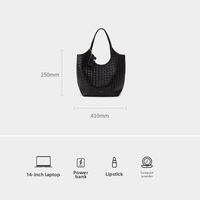
Elle | Summer Travel Large Capacity Tote Basket
$151.37$159.50
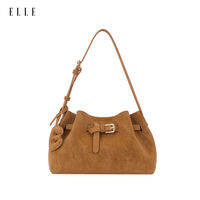
Elle | Luxury Tote Handbag
$83.79
Buy on Lazada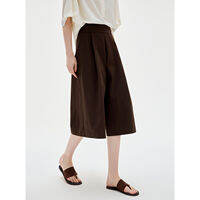
Elle | French Elegant Design Pleated Casual Shorts
$75.61$118.63
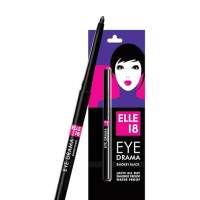
Elle 18 Eye drama Black Kajal 0.35g
$3.50$5.68
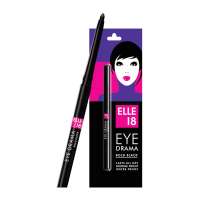
Elle 18 Eye Drama Kajal Black - 0.35G - Lakme
$5.00
Buy on LazadaAbout Elle
Elle is an international fashion, beauty, culture and lifestyle media brand of French origin, best known for its flagship women’s magazine. Founded in 1945 by Hélène Lazareff, Elle began as a post-war French publication intended to present a modern vision of women’s lives. Over eight decades, it has evolved from a single magazine into a global brand encompassing print publishing, digital media, social platforms, events, fashion and beauty licensing, home and design, hospitality and other lifestyle businesses.1
Today, the Elle brand is owned internationally by Lagardère, while many individual national editions are operated by local publishing partners under licence. Lagardère describes Elle as a global fashion and lifestyle brand with operations extending into both media and non-media licensing.2
Overview
| Attribute | Information |
|---|---|
| Brand name | Elle |
| Founded | 1945 |
| Country of origin | France |
| Founder | Hélène Lazareff |
| Original medium | Women’s magazine |
| Headquarters of international brand | Paris, France |
| Owner of Elle brand | Lagardère |
| Industry | Media, fashion, beauty, lifestyle, publishing |
| Core subjects | Fashion, beauty, culture, lifestyle, women’s issues |
| International model | Local editions operated largely through licensing partnerships |
| Major extensions | Elle Decoration, Elle à Table, Elle Men, Elle Girl, digital platforms, licensing, hospitality |
| International presence | Dozens of countries and more than 80 countries for broader brand licensing |
Lagardère currently describes the brand as having 50 Elle editions and 25 Elle Decoration editions, alongside other spin-offs and licensed activities. Its non-media licensing programme operates with partners in around 80 countries.
History
Foundation: 1945
Elle was launched in France on 21 November 1945, shortly after the end of the Second World War. Its founder, Hélène Gordon-Lazareff, envisioned a magazine that would address women as modern individuals rather than simply as consumers of traditional domestic advice.
The founding concept combined fashion and practical lifestyle coverage with broader social and cultural subjects. Lagardère’s historical account describes the original Elle as deliberately modern in both its editorial approach and tone.3
Lazareff’s philosophy became strongly associated with the magazine: serious subjects could be discussed in an accessible and stylish publication, while fashion and beauty could be treated as culturally meaningful rather than merely frivolous.
Post-war growth
During the following decades, Elle became an influential part of French popular culture. It covered:
- Fashion and haute couture
- Beauty
- Relationships and family
- Work
- Sexuality
- Politics and society
- Culture and entertainment
- Women’s rights and changing social roles
This mixture was central to the magazine’s identity. Rather than separating “women’s interests” from politics and society, Elle increasingly treated them as interconnected.
Lagardère’s retrospective history characterises the magazine as a reflection of major transformations in French society, particularly the changing position and expectations of women.4
International expansion
Elle’s most significant transformation occurred when the French magazine concept was exported internationally.
Instead of publishing every edition directly from France, the brand developed a licensing model. Local publishers could create national versions of Elle while adhering to the overall brand identity and editorial framework.
This allowed Elle to combine global identity with local interpretation. For example, an Elle edition in France, Japan, the United States, Thailand or Brazil can cover the same broad themes—fashion, beauty, culture and women’s lives—while featuring local designers, celebrities, cultural issues and consumer preferences.
Lagardère’s international advertising division describes this as a central principle of Elle’s global success: its core pillars are maintained while content is adapted to individual markets.4
The international network expanded dramatically during the late 20th and early 21st centuries. By the 2010s, Elle had become one of the world’s most widely distributed fashion-media brands. In 2013, for example, the launch of Elle Australia was announced as the brand’s 44th edition worldwide.5
Ownership and corporate structure
The corporate history of Elle is more complex than a single company publishing every magazine under the masthead.
Lagardère
The Lagardère Group owns the Elle and Elle Decoration trademarks internationally. Within Lagardère, dedicated organisations manage the international development, licensing and commercial extensions of the brand.6
The group’s Elle activities broadly include:
- Media and publishing
- International licensing
- Advertising
- Brand management
- Content syndication
- Fashion and accessories
- Beauty
- Home and decoration
- Services and hospitality
Hearst and other publishing partners
National editions may be operated by other publishing companies.
A particularly important relationship is with Hearst, which operates Elle editions in several major markets. Historically, Lagardère licensed the Elle trademark to Hearst in a number of countries when Lagardère sold its international magazine business.7
This explains why an Elle magazine in one country can have a different corporate publisher from Elle in another country, even though they belong to the same international brand family.
Editorial identity
Elle’s editorial identity is generally built around four major areas:
Fashion
Fashion remains the heart of the brand. Elle covers:
- Designer collections
- Fashion weeks
- Emerging designers
- Celebrity style
- Street style
- Shopping
- Accessories
- Styling
- Trends
- Fashion photography
The brand positions itself between high fashion and accessible personal style. It can feature major luxury houses while also discussing how ordinary readers can interpret trends in their own wardrobes.
Beauty
Beauty is another major pillar. Coverage commonly includes:
- Skincare
- Makeup
- Hair
- Fragrance
- Wellness
- Beauty trends
- Product launches
- Celebrity beauty
- Professional beauty advice
Culture and lifestyle
Modern Elle extends considerably beyond fashion. Its editorial universe includes:
- Film
- Television
- Music
- Books
- Art
- Travel
- Food
- Relationships
- Careers
- Technology
- Popular culture
Women’s issues and empowerment
Elle has historically addressed changing ideas about women’s lives and social position. This can include discussions of:
- Equality
- Work and careers
- Relationships
- Sexuality
- Identity
- Representation
- Politics
- Social change
The international brand currently explicitly presents women’s empowerment as one of its core pillars.8
Target audience
Traditionally, Elle has been positioned towards women interested in fashion, beauty and contemporary culture, but its audience has broadened considerably as the brand has expanded digitally.
The typical Elle consumer can be described as fashion-conscious, culturally curious, independent and interested in contemporary lifestyles.
Importantly, Elle does not position its reader exclusively as a luxury consumer. The editorial proposition combines aspiration with practicality: readers can encounter haute couture alongside styling advice, beauty recommendations, career stories and everyday lifestyle content.
Hearst describes the Elle audience as the “original thinker”—someone who explores culture, develops an independent perspective and is interested in both style and ideas.9
Visual identity
Elle has one of the most recognisable names and wordmarks in international fashion publishing.
The brand name is simply Elle. The word is French for “she” or “her”, making the name particularly appropriate for a publication historically centred on women.
Its visual identity has generally emphasised:
- Elegant typography
- Strong editorial photography
- Fashion-forward layouts
- Prominent cover portraits
- Sophisticated colour palettes
- A combination of luxury and modernity
The simplicity of the name is also a major advantage internationally: it is short, memorable and strongly associated with women’s fashion media.
Magazine covers
Elle’s covers are an important part of its cultural influence.
Over the decades, the magazine has photographed and featured major figures from:
- Fashion
- Film
- Television
- Music
- Art
- Politics
- Business
- Popular culture
The cover functions not merely as a product advertisement but as a statement about who represents contemporary culture and femininity. This has helped make Elle covers collectible and culturally recognisable.
Digital transformation
Elle has evolved from a traditional print magazine into a multi-platform media network.
Its content now appears through:
- Websites
- Social media
- Video
- Digital magazines
- Newsletters
- Mobile experiences
- Branded content
- Events
- E-commerce-related content
Lagardère reports that the Elle network includes dozens of digital platforms and reaches a large global audience through websites and social media.10
This transformation is significant because Elle is no longer simply competing with other magazines. It competes with fashion websites, influencers, TikTok and Instagram creators, YouTube, online retailers, streaming culture, celebrity media and independent fashion publications.
Consequently, modern Elle operates more like a global media brand than a conventional magazine.
Brand extensions
One of Elle’s defining characteristics is the enormous expansion of the brand beyond the original magazine.
Elle Decoration
Elle Decoration is the major home and interior-design extension. It covers:
- Interior design
- Architecture
- Furniture
- Home decoration
- Lifestyle
- Design trends
It has its own international network of editions and operates under the broader Elle brand architecture.11
Elle à Table
Elle à Table extends the brand into food and cooking. Its content includes:
- Recipes
- Restaurants
- Food trends
- Cooking
- Entertaining
- Gastronomy
Elle Men
Elle Men extends the Elle concept towards male fashion and lifestyle audiences.
Elle Girl
Elle Girl has been used for younger audiences, particularly around youth fashion, beauty and culture.
These extensions demonstrate that Elle’s underlying proposition is broader than women’s fashion alone: it is essentially a lifestyle ecosystem.12
Fashion and consumer products
Elle has also been used as a commercial trademark for consumer products.
Its licensing activities have included areas such as:
- Clothing
- Accessories
- Footwear
- Handbags
- Beauty
- Home furnishings
- Decoration
- Services
Historically, Elle created Elle Creation, a fashion and accessories label that expanded the magazine’s identity into ready-to-wear and related products.13
The modern licensing strategy is much broader, with Lagardère describing partnerships covering fashion, beauty, home, services and other categories.14
Elle Hospitality
The brand has also entered the hospitality sector.
In 2022, Elle announced Elle Hospitality, including concepts such as Maison Elle and Elle Hotel. The initiative represents a shift from selling media and licensed products towards offering a complete branded lifestyle experience.9
This is significant from a branding perspective: a reader can potentially encounter Elle not just on a magazine cover or website, but in a hotel, café, beauty service or other physical environment.
Global presence
Elle is now a genuinely international brand.
Lagardère’s current figures describe a network encompassing:
- 50 Elle editions
- 25 Elle Decoration editions
- Additional spin-offs
- More than 60 digital platforms
- Licensing partnerships across approximately 80 countries
- Around 200 non-media licensing partners15
The international brand’s own website similarly describes Elle as being present in 80 countries, with 45 Elle editions in its particular media-network accounting. The difference in figures reflects different definitions of editions, licensed publications and the wider brand network rather than necessarily a contradiction.16
Elle in Singapore and Southeast Asia
Singapore falls within Elle’s broader international network in Southeast Asia. While specific operational details for a standalone Singapore edition vary over time, the brand maintains a significant regional presence through neighbouring markets and digital platforms accessible to Singaporean audiences.
Elle’s global partner listings include markets across the region, such as Thailand and Malaysia.17 The launch of Elle Malaysia, for instance, was announced as the 45th edition worldwide, reinforcing the brand’s commitment to Southeast Asian markets.16
Like other national editions, regional versions typically combine the international Elle identity with local:
- Fashion designers
- Celebrities
- Beauty products
- Cultural trends
- Shopping habits
- Events
- Social issues
This localisation is fundamental to Elle’s international strategy, ensuring relevance for readers in diverse markets including Singapore.
Relationship with the fashion industry
Elle occupies an influential position between fashion journalism and the fashion business.
Its role includes discovering, interpreting, popularising and commercialising trends. For example, a designer collection may first appear on a runway. Fashion editors then interpret the collection, celebrities and influencers may popularise particular looks, and Elle can translate those trends into accessible editorial and shopping content.
This gives fashion magazines an important intermediary role between designers and consumers.
Cultural significance
Elle’s significance goes beyond fashion.
Because it has existed since 1945, the magazine has documented changing ideas about women’s identities and social roles over several generations.
Its archive reflects transformations involving:
- Women’s employment
- Marriage and relationships
- Contraception
- Sexuality
- Family structures
- Beauty standards
- Fashion
- Popular culture
- Political participation
- Women’s rights
Lagardère has explicitly characterised the magazine as a record of women’s history and changing society.18
This makes Elle both a fashion institution and a cultural archive.
Business model
Elle’s modern business model is considerably more diversified than that of a traditional magazine.
Media
Revenue can come from:
- Print advertising
- Digital advertising
- Subscriptions and circulation
- Branded content
- Events
- Digital partnerships
Licensing
The Elle trademark is licensed to partners for products and services. Categories can include:
- Fashion
- Accessories
- Beauty
- Home
- Hospitality
- Services
International publishing
Local publishers operate editions under licence, allowing Elle to scale internationally without directly owning every national publication.
Brand experiences
The brand increasingly extends into physical experiences, including hospitality and other consumer-facing environments.19
Competitive position
Elle belongs to a group of globally influential fashion and lifestyle publications that includes brands such as:
- Vogue
- Harper’s Bazaar
- Marie Claire
- Cosmopolitan
- Glamour
- InStyle
Its particular positioning is a combination of fashion authority, accessible style, women’s culture and lifestyle journalism.
Compared with a purely luxury-fashion publication, Elle traditionally has a broader lifestyle orientation. At the same time, it retains enough fashion authority to operate within the luxury and designer ecosystem.
Brand philosophy
At its simplest, Elle can be understood through four interconnected ideas:
Fashion
Style, designers, trends and personal expression.
Beauty
Personal care, cosmetics, hair, skincare and wellness.
Lifestyle
Culture, relationships, travel, food, work and everyday life.
Empowerment
Women’s voices, independence, identity and social change.
These themes are explicitly reflected in the international brand’s stated editorial pillars.20
Elle today
As of 2026, Elle is best understood not simply as a magazine but as a global fashion and lifestyle brand originating from French women’s publishing.
Its evolution can be summarised as:
- 1945: French women’s magazine
- 1950s–1980s: Major French cultural and fashion institution
- 1980s–2000s: International expansion
- 2000s–2010s: Global licensing and multimedia development
- 2010s–2020s: Digital and social transformation
- Today: Global fashion, beauty, lifestyle and experience brand
Lagardère currently describes Elle as a worldwide brand reaching hundreds of millions of people through its media and licensed activities, while its international operations span publishing, digital media, advertising, licensing and physical experiences.21
References
- LES ANNEES ELLE 1945-2000, le livre album de toutes les femmes – Lagardère – Lagardere.com – Groupe
- ELLE International – Lagardère – Lagardere.com – Groupe
- ELLE 1945-2005 : une histoire des femmes – Lagardère – Lagardere.com – Groupe
- ELLE – International
- Launch of ELLE AUSTRALIA: The 44th edition worldwide – Lagardère – Lagardere.com – Groupe
- Elle | Hearst Global Solutions
- Home – Elle Around The World
- ELLE CREATION : Making trends come alive – Lagardère – Lagardere.com – Groupe
- ELLE Announces the debut of “ELLE Hospitality”, a new global hotel venture | Hearst Global Solutions
- Happy birthd’ELLE ! – Lagardère – Lagardere.com – Groupe
- ELLE INTERNATIONAL CELEBRATES
- ELLE International launches an exclusive capsule collection to celebrate its 80th anniversary – Lagardère – Lagardere.com – Groupe
- Happy birthd’ELLE ! – Lagardère – Lagardere.com – Groupe
- Cette année, ELLE a 70 ans… – Lagardère – Lagardere.com – Groupe
- Novembre 2015, ELLE a 70 ans – Lagardère – Lagardere.com – Groupe
- Launch of ELLE Malaysia, the 45th Edition worldwide – Lagardère – Lagardere.com – Groupe
- Lancement de ELLE Malaisie la 45ème édition dans le monde – Lagardère – Lagardere.com – Groupe
- FAQs
- ELLE International – Lagardère – Lagardere.com – Groupe
- ELLE | Hearst
- Om oss ELLE | ELLE