Shop on Lazada
Versace products
![Versace Bright Crystal Absolu Eau de Parfum sp 90ml [TESTER PACKAGING] - Eclat Parfum](https://sg-live.slatic.net/p/3b2fe68e19b17cc013c616e5733bed46.jpg_200x200q80.jpg)
Versace Bright Crystal Absolu Eau de Parfum sp 90ml [TESTER PACKAGING] - Eclat Parfum
$80.00$175.00
![Versace Pour Homme Eau de Toilette Spray 100ml [TESTER PACKAGING] - Eclat Parfum](https://sg-live.slatic.net/p/231cd52db6efc7be897479a18400334e.jpg_200x200q80.jpg)
Versace Pour Homme Eau de Toilette Spray 100ml [TESTER PACKAGING] - Eclat Parfum
$59.00$165.00
![Versace Eros Flame Eau de Parfum sp 100ml [TESTER PACKAGING] - Eclat Parfum](https://sg-live.slatic.net/p/b3f2c14d4a643bf4c47addc3e4331224.jpg_200x200q80.jpg)
Versace Eros Flame Eau de Parfum sp 100ml [TESTER PACKAGING] - Eclat Parfum
$88.00$165.00
![Versace Eros Energy Eau de Parfum Spray 100ml [TESTER PACKAGING] - Eclat Parfum](https://sg-live.slatic.net/p/baf8b135373abf724803ca4a284508a9.jpg_200x200q80.jpg)
Versace Eros Energy Eau de Parfum Spray 100ml [TESTER PACKAGING] - Eclat Parfum
$95.00$155.00
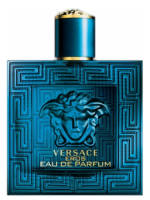
Versace Eros Men edp sp 100ml TESTER packaging
$88.00$155.00
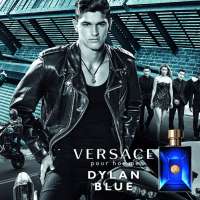
Versace PH Dylan Blue edt sp 100ml TESTER Pack
$68.00$145.00
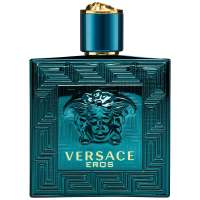
Versace Eros PH edt sp 100ml TESTER Pack with cap
$72.00$145.00
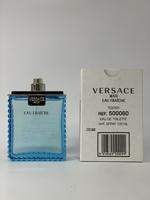
Versace Man Eau Fraiche edt Spray TESTER 100ml - Eclat Parfum
$59.90$135.00
About Versace
Versace is an Italian luxury fashion house founded by designer Gianni Versace in Milan in 1978. The brand is distinguished by a bold, sensual and highly decorative aesthetic that fuses Italian craftsmanship with references to Greek mythology, ancient Rome, Mediterranean culture, pop art and contemporary celebrity culture.1
Today, Versace operates across fashion, accessories, footwear, eyewear, watches, jewellery, fragrances, home furnishings and hospitality. Since 2 December 2025, it has been owned by Prada Group, following the group’s acquisition of Versace from Capri Holdings.2
Basic information
| Field | Information |
|---|---|
| Brand name | Versace |
| Founder | Gianni Versace |
| Founded | 1978 |
| Founded in | Milan, Italy |
| Industry | Luxury fashion |
| Parent company | Prada Group |
| Previous parent company | Capri Holdings |
| Current Chief Creative Officer | Pieter Mulier |
| Current CEO | Emmanuel Gintzburger |
| Executive Chairman | Lorenzo Bertelli |
| Signature symbol | Medusa head |
| Signature motif | Greek Key / La Greca |
| Major categories | Ready-to-wear, leather goods, footwear, accessories, jewellery, watches, eyewear, fragrance, home |
| Positioning | Italian luxury / high fashion |
| Aesthetic | Glamorous, sensual, maximalist, provocative, Mediterranean |
Prada Group’s 2025 reporting lists Versace as one of its owned brands and records 220 directly operated Versace stores as of 31 December 2025, although Versace was consolidated only from 2 December of that year.2
Foundation and Gianni Versace
The origins of Versace lie with Gianni Versace, who was born in 1946 in Reggio Calabria, southern Italy. His mother, Francesca, worked as a dressmaker, and Gianni became familiar with clothing construction and tailoring from an early age. In 1972, he relocated to Milan, then the centre of Italy’s fashion industry, and began designing collections for other companies. His work attracted significant attention, eventually enabling him to establish his own label.3
In 1978, Gianni presented his first collection under his own name and opened his inaugural Milan boutique. This event is generally regarded as the formal foundation of the Versace fashion house.1
From its inception, Versace diverged from many traditional Italian luxury houses. Rather than relying primarily on understated elegance, Gianni embraced vivid colours, provocative silhouettes, body-conscious tailoring, elaborate prints, metallic materials, historical references, sexuality, theatrical presentation and celebrity culture. This approach helped redefine the parameters of luxury fashion during the 1980s and 1990s.
The Versace family
During its formative decades, Versace was fundamentally a family business.
Gianni Versace
Gianni Versace was the founder and principal creative force, establishing the visual language that would become synonymous with the brand. He was particularly interested in combining seemingly contradictory elements: antiquity and modernity, luxury and street culture, masculinity and sensuality, classical beauty and provocation. The Metropolitan Museum of Art has described his work as drawing heavily on historical periods including classicism, Byzantium, the 18th century, and the 1920s–30s, whilst transforming these historical references into highly contemporary fashion.4
Donatella Versace
Donatella Versace, Gianni’s younger sister, was one of his closest creative collaborators. She worked with Gianni on styling, accessories, image and brand development, later becoming the central creative figure of the house following his death.
Santo Versace
Santo Versace, Gianni’s older brother, played a vital role in business and management. The three siblings therefore represented distinct pillars of the company: Gianni provided the creative vision; Donatella oversaw image and creative development; and Santo managed business operations. This family structure was integral to Versace’s identity.
Gianni’s design philosophy
Gianni Versace’s contribution to fashion extended beyond the creation of extravagant garments; his broader achievement was dismantling the traditional boundaries of luxury fashion. He synthesised classical art, pop culture, sexuality, tailoring and glamour. For example, he might juxtapose an element from ancient Greek or Roman culture with leather, metal mesh, bright colours or provocative cuts, creating an unmistakable visual tension.
Major influences included:
- Ancient Greece and Rome: Classical sculpture, mythology, architecture and ornamentation served as recurring sources of inspiration.
- Byzantine art: Gold, mosaics and ornamental decoration influenced numerous designs.
- Mediterranean culture: His southern Italian background strongly informed the house’s use of colour, sensuality and historical imagery.
- Pop art: Gianni incorporated imagery associated with artists such as Andy Warhol and Roy Lichtenstein into fashion.5
- Contemporary celebrity culture: Versace became closely associated with musicians, actors, supermodels and entertainers.
The Medusa logo
The Medusa head is arguably the most recognisable element of Versace’s identity. It represents a figure from Greek mythology whose gaze was traditionally said to turn onlookers to stone. Gianni selected Medusa for its combination of beauty, power, danger and fascination, viewing the symbol as an ideal representation of the provocative character he sought for the house.6
Notably, the Medusa was not the original Versace logo; the company initially employed a primarily typographic identity, with the Medusa becoming the defining emblem later in the brand’s development.3 The logo consequently communicates multiple concepts simultaneously: beauty (attraction), power (strength), danger (rebellion), mystery (mythology) and seduction (glamour). This multifaceted symbolism contributes to its effectiveness as a luxury-brand identifier.
The Greek Key / La Greca
The other primary visual code of Versace is the Greek Key, also known as La Greca. This geometric pattern, inspired by classical Greek decorative motifs, became associated with Versace during the late 1980s and has subsequently appeared on clothing, handbags, footwear, belts, jewellery, underwear, accessories, packaging and interiors. Versace describes the Greek Key as a symbol of continuity and infinity, connecting contemporary collections with the heritage established by the founders.7
Together, the Medusa, Greek Key and gold ornamentation form one of the most potent visual combinations in luxury fashion.
The signature Versace aesthetic
Traditional Versace can be summarised as maximalist Italian glamour. The brand generally rejects the notion that luxury must be quiet or restrained. Instead, its classic aesthetic embraces boldness, sensuality, opulence, confidence, sexuality, colour, ornamentation, drama and individuality. The brand itself describes its philosophy as centred on freedom and fearless self-expression, emphasising the tension between classicism and innovation, strength and sensuality, and restraint and maximum volume.1
This distinction is fundamental. Where minimalist luxury might suggest “look at the quality”, traditional Versace asserts “look at me”. That visibility is intrinsic to the brand’s identity.
Famous Versace design elements
- Medusa: The house’s primary emblem.
- Greek Key / La Greca: A geometric classical pattern used extensively throughout the brand.
- Baroque prints: Highly ornate prints featuring scrolls, flourishes, gold, architectural elements and elaborate decoration.
- Gold: Gold-coloured hardware, prints and embellishment have historically been central to the Versace image.
- Animal prints: Leopard and other animal-inspired patterns became part of the brand’s glamorous, provocative vocabulary.
- Safety pins: The famous Versace safety-pin dress remains one of the defining examples of the house’s provocative approach to fashion.
- Metallic materials: Gianni Versace became renowned for experimenting with materials and techniques that created a highly revealing, body-conscious effect. His development and use of Oroton, a lightweight metallic mesh, became particularly associated with his work.5
The supermodel era
Versace played a pivotal role in establishing the cultural phenomenon of the supermodel. During the late 1980s and 1990s, the house became strongly associated with internationally famous models and highly stylised advertising campaigns. Gianni understood that fashion could transcend clothing to become entertainment. The Versace runway functioned as a stage, whilst its advertising campaigns became significant cultural images. The house collaborated with major photographers including Richard Avedon, Helmut Newton and Irving Penn, helping to establish fashion photography as a core component of the Versace identity.8
Versace and celebrity culture
Few traditional Italian luxury houses have become as strongly associated with popular culture and celebrities as Versace. The brand cultivated relationships with supermodels, musicians, actors, television personalities, athletes, royalty and international entertainers. This was strategically significant because Versace did not present luxury fashion as distant from popular culture; rather, it placed luxury directly within it. The result was a distinctive feedback loop—fashion influencing celebrity, media, pop culture and back to fashion—which helped render the Medusa logo recognisable even among those who did not regularly follow high fashion.
The death of Gianni Versace
On 15 July 1997, Gianni Versace was murdered outside his Miami Beach home at the age of 50. His death sent shockwaves through the fashion industry. Subsequently, Donatella Versace became the central creative figure of the house, whilst Santo continued to play an important business role. This marked the beginning of the second major chapter in Versace’s history.
Donatella Versace’s era
Donatella inherited an extremely recognisable yet challenging legacy, needing to preserve the elements that made Versace famous whilst rendering the house relevant to a new generation. Under her leadership, Versace continued to emphasise sexuality, celebrity, powerful women, bold prints, provocative fashion, Italian craftsmanship and pop culture. However, she also developed her own aesthetic language, becoming particularly associated with the image of the strong, glamorous, modern woman. She expanded the brand’s cultural influence through collaborations, celebrities, music and contemporary fashion, ultimately keeping Versace relevant for decades after Gianni’s death.
Versace as a luxury lifestyle brand
Versace has evolved beyond a clothing company into a broad lifestyle universe.
- Fashion: Women’s ready-to-wear, men’s ready-to-wear, special collections and couture/Atelier Versace.
- Accessories: Handbags, shoes, belts, wallets and small leather goods.
- Jewellery: Necklaces, earrings, rings and bracelets.
- Watches: Versace-branded watches occupy a more accessible luxury segment than the house’s core runway fashion.
- Fragrance: Numerous perfumes for both women and men.
- Eyewear: Sunglasses and optical products.
- Home: A significant presence in luxury home furnishings and interior design.
- Hospitality: The Versace name has been utilised in luxury hospitality, most notably through Palazzo Versace projects.7
This expansion reflects a broader strategy of translating the Versace aesthetic into an entire lifestyle rather than limiting it to apparel.
Versace and Atelier Versace
Atelier Versace represents the house’s haute couture tradition. Established by Gianni Versace in 1989 and later relaunched on the Paris haute couture calendar, the line focuses on highly elaborate, custom-oriented fashion and represents the most exclusive tier of the Versace universe.8 It is particularly associated with red-carpet gowns, hand embellishment, sculptural silhouettes, elaborate construction, luxury materials and celebrity dressing.
Business evolution
The company remained family-controlled for many years until a major turning point in 2018, when Michael Kors Holdings announced the acquisition of Versace for approximately $2.12 billion. The acquisition was completed later that year, and Michael Kors Holdings subsequently became Capri Holdings.6 Versace thus transitioned from a family-controlled independent Italian fashion house to part of a larger international luxury group.
A further significant change occurred in April 2025, when Prada announced an agreement to acquire 100% of Versace from Capri Holdings for an enterprise value of €1.25 billion. The transaction was completed on 2 December 2025.2
Versace under Prada Group
As of 2026, Versace is part of Prada Group alongside brands including Prada, Miu Miu, Church’s and Car Shoe.2 This is historically significant because Versace and Prada represent two distinct but complementary visions of Italian luxury.
| Versace | Prada |
|---|---|
| Maximalist | Often intellectual/minimalist |
| Sensual | Conceptual |
| Glamorous | Experimental |
| Loud | Restrained |
| Mediterranean | Milanese |
| Pop-cultural | Art/intellectual culture |
| Ornamentation | Material/conceptual innovation |
Prada has stated that Versace will retain its creative DNA and cultural authenticity whilst benefiting from the group’s industrial, retail and operational infrastructure.2
Current creative leadership
The creative leadership of Versace changed rapidly during the period surrounding the Prada acquisition. Dario Vitale succeeded Donatella Versace as creative director in 2025 but departed later that year after a short tenure. In 2026, Pieter Mulier was appointed Chief Creative Officer of Versace, effective 1 July 2026. Prior to joining Versace, Mulier held senior positions at Jil Sander, Dior and Calvin Klein and served as creative director of Alaïa.9
Prada Group’s 2025 results identify the current leadership structure as:
- Pieter Mulier: Chief Creative Officer
- Emmanuel Gintzburger: CEO
- Lorenzo Bertelli: Executive Chairman2
This marks the beginning of another important chapter for the house: maintaining the recognisable Versace identity whilst potentially redefining it for a new generation.
Competitive advantage and brand language
Versace’s competitive advantage extends beyond Italian craftsmanship; its strongest asset is arguably its extremely recognisable brand language. A Versace design can often be identified through combinations of the Medusa, Greek Key, gold, bold print, sensual silhouette, high contrast and glamour. This is powerful from a branding perspective because, whilst many luxury brands deliberately minimise visible logos, Versace has historically made its identity highly visible. The house therefore sells not only a product but an attitude, with customers purchasing associations such as confidence, sexuality, glamour, wealth, celebrity, rebellion and the assurance of being noticed.
Place in fashion history
Versace’s historical importance transcends commercial success. Gianni Versace helped transform the relationship between fashion and celebrity, sexuality, popular culture, entertainment and historical imagery. He demonstrated that luxury fashion did not need to be conservative to be prestigious; it could be loud, sexy, colourful and provocative whilst still being associated with sophisticated craftsmanship. This realisation became one of the foundations of modern luxury fashion.
Brand identity
Versace can be defined as an Italian luxury fashion house built around fearless self-expression, combining Mediterranean sensuality, classical mythology, glamour, craftsmanship and provocative maximalism. This description aligns with Versace’s own current positioning around freedom, fearless self-expression, Italian craftsmanship and the tension between classicism and rebellion.1
Timeline
- 1946: Gianni Versace is born in Reggio Calabria, Italy.
- 1972: Gianni moves to Milan and begins working as a designer for fashion companies.3
- 1978: The Versace label is established and the first collection is presented in Milan.1
- 1980s: Versace becomes internationally recognised for bold prints, colour, sensuality and innovative materials.
- 1982: Gianni develops the lightweight metallic material known as Oroton.5
- 1989: Atelier Versace is established as the house’s haute couture line.8
- 1990s: Versace becomes one of the defining brands of the supermodel and celebrity era.
- 1997: Gianni Versace is murdered in Miami; Donatella assumes the principal creative role.
- 1997 onward: Donatella leads the brand through its post-Gianni era.
- 2018: Michael Kors Holdings acquires Versace for approximately $2.12 billion; the parent company later becomes Capri Holdings.6
- 2025: Prada agrees to acquire Versace from Capri Holdings.2
- 2 December 2025: Prada Group completes the acquisition.2
- 2026: Pieter Mulier becomes Versace’s Chief Creative Officer, beginning a new creative chapter under Prada Group.9
The Versace formula
The brand can be understood through the formula: Classical heritage + Mediterranean culture + sexuality + glamour + maximalism + celebrity + Italian craftsmanship. Its historical success stemmed from transforming these ingredients into an immediately recognisable visual language. Where some luxury houses communicate quiet wealth, Versace traditionally communicates visible confidence. Where some brands conceal their branding, Versace often turns branding itself into decoration. Whilst some designers look solely forward, Gianni Versace famously looked backward and forward simultaneously, taking mythology, art and historical clothing and transforming them into contemporary fashion.4 The ability to make ancient references feel modern and provocative is arguably the central idea behind Versace.
Overall assessment
Versace is one of the defining names in modern Italian luxury fashion. Its legacy can be divided into three major eras:
- Gianni Versace (1978–1997): The creation of the brand’s revolutionary aesthetic and international identity.
- Donatella Versace (1997–2025): The preservation and modernisation of the house after Gianni’s death, characterised by an especially strong relationship with celebrity and contemporary pop culture.
- Prada Group / Pieter Mulier (2025–present): A new corporate and creative chapter aimed at revitalising Versace whilst preserving its distinctive heritage.2
Ultimately, Versace is less about understated luxury and more about the performance of luxury. Its clothes, accessories and visual identity are designed to be seen. The Medusa, gold ornamentation, Greek motifs, dramatic silhouettes and provocative styling all contribute to the same fundamental message: luxury should be bold, beautiful, sensual and fearless.
References
- Versace Company Profile | Official Website
- Prada Group completes the acquisition of Versace | Prada Group
- VERSACE – Museo del Marchio Italiano
- GIANNI VERSACE
- Gianni Versace
- Versace — Google Arts & Culture
- About Palazzo Versace Macau
- Versace – Enciclopedia – Treccani
- Pieter Mulier Is Versace’s New Chief Creative Officer