Shop on Lazada
Fairtex products
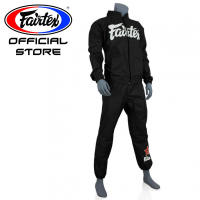
Fairtex Vinyl Sauna Sweat Suit Black
$160.00$167.00
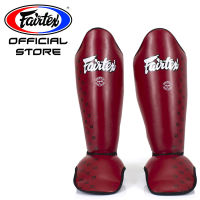
Fairtex Competition Muay Thai Shin Guards SP5
$148.00$155.00
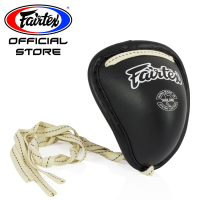
Fairtex Muay Thai Steel Cups GC-2
$68.00$71.00
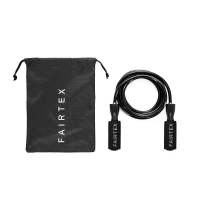
Fairtex Ball Bearing Skipping Rope ROPE3
$56.00$59.00
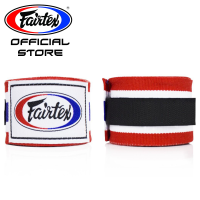
Fairtex MuayThai/ Boxing HandWraps
$33.00$35.00
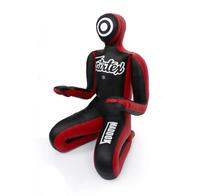
Fairtex Maddox Grappling Dummy for MMA BJJ Brazilian Jiu Jitsu
$846.34$988.00
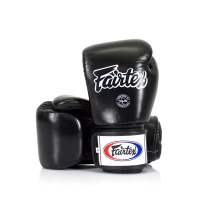
Fairtex Gloves Boxing Muay Thai MMA Sparring Full Leather
$126.76$140.00
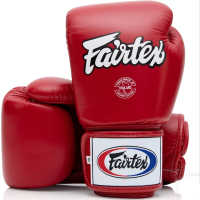
Fairtex BGV1 Single Colour Full Leather Boxing Muay Thai Gloves
$125.00
Buy on LazadaAbout Fairtex
Fairtex is a Thai combat-sports brand best known for Muay Thai equipment, training gear, fightwear, and apparel, with a strong presence in boxing, kickboxing, and mixed martial arts (MMA). The company is particularly associated with the development and international promotion of modern Muay Thai equipment. Fairtex states that its products are manufactured in Thailand and distributed through authorised dealers in more than 50 countries.1
Note on the founding date: Fairtex’s own materials distinguish between the 1958 registration of the Fairtex name/trademark and the establishment of Fairtex Garments Factory in 1971. Some references therefore describe Fairtex as founded in 1958, while others use 1971 for the operating company/brand business.2
Basic information
| Field | Information |
|---|---|
| Brand | Fairtex |
| Country of origin | Thailand 🇹🇭 |
| Industry | Combat sports / sporting goods |
| Main sports | Muay Thai, boxing, kickboxing, MMA |
| Trademark registered | 1958 |
| Fairtex Garments Factory established | 1971 |
| Founder | Banjong “Philip/Phillip” Wong Busarakamwong |
| Manufacturing | Thailand |
| Known for | Gloves, shorts, shin guards, pads, bags, apparel and training equipment |
| Original martial-arts identity | Muay Thai |
| Global reach | 50+ countries through official distributors |
| Training center | Fairtex Training Center, Thailand |
Fairtex’s company profile identifies Philip Wong as its founder and gives Bangplee, Samutprakan, Thailand, as its headquarters, while other Fairtex materials emphasise its manufacturing operations in Thailand.3
History
1958 — The Fairtex name
The history of Fairtex begins with the Fairtex name being registered as a trademark in Thailand in 1958. This is the date often cited as Fairtex’s founding date.
The founder was Banjong Busarakamwong, better known internationally as Philip/Phillip Wong. He originally operated in the textile and garment business rather than starting Fairtex as a combat-sports-equipment company from day one.4
1971 — Fairtex Garments Factory
In 1971, Wong established Fairtex Garments Factory Company Limited, which became the foundation of the Fairtex Group. The company initially focused heavily on textiles and garments and eventually developed Fairtex-branded products for the Thai market and international customers.5
During the 1970s, Fairtex became particularly successful with branded T-shirts in Thailand. According to Fairtex’s historical account, the brand reached a position as one of the country’s leading apparel brands before its identity became overwhelmingly associated with combat sports.6
From clothing company to Muay Thai brand
The transformation into the Fairtex most people know today came from Philip Wong’s interest in Muay Thai.
Wong practised Muay Thai as a hobby and eventually established a Fairtex Muay Thai training camp in 1975. The camp was initially in Bangkok before being moved to Bangplee, outside Bangkok.7
The motivation was not purely commercial. Fairtex’s history describes the camp as a way for Wong to provide young Thai men, including disadvantaged youths, with an alternative through Muay Thai training.8
This created an important feedback loop:
Factory → equipment → training camp → fighters → equipment testing → product improvement
Rather than designing equipment solely from a manufacturing perspective, Fairtex could test its products in an actual Muay Thai environment. That philosophy remains central to the brand.
The Fairtex Training Center
The Fairtex Training Center became an important part of the company’s identity.
The camp was not simply a place where people bought Fairtex products. It became a place where fighters trained, competed, and helped develop the equipment itself.
Fairtex says many of its product innovations resulted from decades of testing in its own training environment and through sponsored fighters and champions.
This is one of the key things that differentiates Fairtex from a generic sports-equipment company: Fairtex has historically been both a manufacturer and a fight camp. That means its brand is closely connected to actual fighters rather than only to retail sportswear.
Fairtex and professional fighters
Fairtex has historically sponsored and developed professional fighters in Muay Thai, kickboxing, and MMA.
The company describes its equipment as being used by athletes and organisations associated with competitions such as K-1, WBC Muay Thai, WEC, Strikeforce, Pancrase, Thai Fight, and others.9
The Fairtex training system has also produced and supported numerous champions. Some particularly recognisable names associated with the broader Fairtex fighting legacy include:
- Yodsanklai Fairtex — one of the most famous Muay Thai fighters associated with the Fairtex name.
- Jongsanan Fairtex — legendary Muay Thai fighter known as “The Woodenman.”
- Stamp Fairtex — major contemporary female Muay Thai, kickboxing, and MMA star.
- Smilla Sundell — world-class Muay Thai fighter associated with Fairtex’s modern athlete roster.
Fairtex itself highlights fighters such as Stamp and Smilla as examples of the brand’s modern global fighter presence.10
Fairtex’s connection with ONE Championship
One of Fairtex’s most important modern relationships is with ONE Championship.
Fairtex has become extremely visible through ONE’s international broadcasts, particularly because Muay Thai has become one of the organisation’s major sports. This has had a significant effect on Fairtex’s international profile.
For many newer fans outside Thailand, the combination of ONE Championship + Muay Thai + Fairtex fighters + Fairtex equipment has made Fairtex one of the most recognisable Thai combat-sports brands globally.
Fairtex itself describes its relationship with ONE Championship as part of its international combat-sports presence.11
Product range
Fairtex has a very broad product range.
Gloves
Perhaps the company’s most famous products are its Muay Thai gloves. Its glove lineup includes different models designed around different proportions, padding arrangements, and intended uses.
The BGV1 is particularly iconic and is widely associated with the classic Fairtex look and feel. Fairtex’s philosophy emphasises proprietary padding and construction designs rather than simply copying conventional Western boxing gloves.12
Shin guards
Fairtex produces shin and instep protection for Muay Thai, kickboxing, MMA, sparring, and pad work. The company is particularly known for compact, relatively low-profile Muay Thai equipment.
Muay Thai shorts
Fairtex Muay Thai shorts are another signature product. They traditionally feature short athletic cuts, wide waistbands, Thai-style construction, embroidered graphics, bright colours and elaborate designs, and relatively short legs compared with conventional boxing trunks. The shorts are strongly connected to traditional Thai fightwear aesthetics.
Boxing and focus pads
Fairtex also manufactures focus mitts, kick pads, belly pads, Thai pads, punching bags, and body shields. Some of these designs are distinctive Fairtex products rather than generic equipment categories.
The company specifically points to products such as its Leg Kick Pad, KPLC Curved Kick Pads, and FMV11 Aero Focus Mitts as examples of proprietary Fairtex designs.13
MMA equipment
Although Muay Thai is Fairtex’s historical foundation, the company has expanded substantially into MMA. Its range includes MMA gloves, grappling gloves, shin protection, training apparel, protective equipment, and bags and accessories.
Fairtex explicitly describes MMA as an important part of its business and says it has been involved with the MMA industry for many years.14
Apparel
The company’s original history in garments remains visible today. Fairtex sells T-shirts, hoodies, training shirts, fight shorts, casual clothing, lifestyle apparel, and accessories. Consequently, Fairtex today is simultaneously a combat-equipment manufacturer and a combat-sports lifestyle brand.
Manufacturing philosophy
One of Fairtex’s strongest selling points is that it emphasises Thai manufacturing and craftsmanship.
Fairtex says its products are manufactured at its own factory in Thailand and that it selects high-grade materials and components.15 The company also emphasises skilled manual craftsmanship.
According to Fairtex, its products rely heavily on trained workers rather than being entirely automated, with attention paid to stitching, shape, finishing, and other details.16 This is important because the Fairtex brand is partly built around the idea of “Made in Thailand” rather than simply “designed in Thailand.” For Muay Thai enthusiasts, that Thai manufacturing heritage carries considerable cultural and sporting significance.
Distinctive characteristics
Fairtex occupies a somewhat unusual position in combat sports. It is not simply a sports-equipment company. Its identity comes from the combination of:
- Thai heritage: Fairtex grew alongside the Thai Muay Thai ecosystem.
- Manufacturing: It has historically manufactured its own equipment rather than functioning solely as a marketing label.
- Fighter testing: Its equipment is tested by fighters and training camps.
- Training camps: The company operates a combat-sports training ecosystem.
- Fighter sponsorship: Fairtex has supported professional fighters for decades.
- Globalisation of Muay Thai: Fairtex has helped carry Thai-style equipment and fightwear into international markets.
That combination gives Fairtex a very different identity from brands that primarily entered combat sports through Western boxing or general fitness.
Design philosophy
Fairtex equipment tends to have a recognisable design language. A typical Fairtex product emphasises compactness, mobility, durability, and Thai-style construction.
For example, Fairtex Muay Thai gloves generally have a shape that allows the wearer to punch, clinch, catch kicks, block, and perform traditional Muay Thai movements. This is one reason Muay Thai practitioners often distinguish between Muay Thai gloves and conventional Western boxing gloves.
Fairtex’s designs are developed around the requirements of a sport where participants use fists, elbows, knees, shins, and the clinch, rather than punches alone.
Position in Muay Thai
Within Muay Thai, Fairtex is generally regarded as one of the major Thai equipment brands. It sits in the same broad competitive landscape as brands such as Twins Special, Top King, Yokkao, Boon, Raja, and Windy. Each has its own design characteristics and following.
Fairtex’s particular strength is the combination of equipment + training camp + professional fighters + international brand recognition. That makes it one of the brands most closely associated with contemporary Muay Thai culture.
Comparison with conventional sports brands
A useful way to understand Fairtex is to compare it with a conventional sports brand. A conventional sports company might follow a linear path: design shoe → manufacture shoe → advertise shoe → sell shoe.
Fairtex’s traditional model is closer to: train fighters → manufacture equipment → let fighters use it → collect feedback → redesign equipment → manufacture again. This is why Fairtex frequently talks about equipment being tested by fighters.17 The training camp effectively becomes part of the company’s product-development ecosystem.
Global expansion
Although Fairtex is deeply Thai in origin, it is now a global brand. Fairtex states that it has official distributors in more than 50 countries, with retail locations and training centres extending beyond Thailand.
Its products can now be found throughout Southeast Asia, East Asia, Europe, North America, Australia, South America, and other international combat-sports markets. The growth of international Muay Thai, kickboxing, and MMA has naturally expanded the market for Fairtex.
Fairtex and the globalisation of Muay Thai
Fairtex’s history parallels the globalisation of Muay Thai itself. For much of the 20th century, Muay Thai was primarily understood as a Thai national sport. Today, Muay Thai is practised in gyms throughout the world.
Fairtex has benefited from—and contributed to—that transformation. The company argues that when international audiences became increasingly exposed to Muay Thai through organisations such as ONE Championship, they also discovered Fairtex, a brand that had already been operating within Thai combat sports for decades.18 In that sense, Fairtex is more than an equipment company; it is also a vehicle for exporting Thai combat-sports culture.
Brand image
Fairtex’s brand identity can roughly be summarised as authentic Thai combat sports, professional performance, craftsmanship, and fighter culture. Its visual identity frequently uses Thai-inspired graphics, bold colours, traditional Muay Thai aesthetics, embroidered logos, fighter imagery, and competition-oriented designs.
The brand therefore appeals to two overlapping audiences:
- Professional/practical audience: fighters, coaches, gyms, and serious practitioners.
- Lifestyle audience: Muay Thai fans, streetwear consumers, martial-arts enthusiasts, and people attracted to Thai fight culture.
Cultural significance
Fairtex has become recognisable beyond the people who actually fight. Someone wearing Fairtex shorts or gloves can immediately signal “I train Muay Thai.” That is similar to how certain football jerseys or basketball shoes can communicate membership in a particular sporting culture. The Fairtex logo has consequently become a cultural marker within the global Muay Thai community.
Quality and reputation
Fairtex’s reputation is primarily built around durability, craftsmanship, and authentic Thai construction. The company says it uses Grade A materials and selects components from specialist suppliers, while its products are tested by its own camp and sponsored athletes.19
Of course, “best” is subjective. Some fighters prefer Fairtex, Twins, Top King, Yokkao, Boon, or Raja depending on their hand shape, glove preference, padding preference, and fighting style. Fairtex should not necessarily be thought of as objectively superior to every competing brand. Its importance comes from its combination of history, Thai manufacturing, product design, and fighter ecosystem.
Notable products
Among the products most strongly associated with Fairtex are:
| Product | Importance |
|---|---|
| BGV1 Gloves | One of the brand’s signature glove designs |
| Muay Thai Shorts | Classic Fairtex fightwear |
| Shin Guards | Major part of its protective-equipment lineup |
| Thai Pads | Widely used for Muay Thai training |
| Focus Mitts | Boxing/Muay Thai striking training |
| Kick Pads | Core professional gym equipment |
| Punching Bags | Heavy-bag and training equipment |
| MMA Gloves | Expansion beyond traditional Muay Thai |
| Apparel | Lifestyle extension of the brand |
Fairtex highlights several of its own designs as proprietary innovations, including particular kick pads, shin pads, focus mitts, and gloves.
Fairtex today
As of 2026, Fairtex is best understood as a global Thai combat-sports company, rather than simply a Muay Thai glove manufacturer. Its activities span:
- Manufacturing: gloves, pads, shorts, protection, bags, and apparel.
- Training: Muay Thai and combat-sports training.
- Athletes: fighter sponsorship and development.
- Competition: involvement with major combat-sports organisations.
- Retail: international distribution.
- Culture: promotion and preservation of Muay Thai.
Fairtex’s own company profile describes its broader vision as promoting Muay Thai and martial arts worldwide through equipment and training programmes.
Timeline
1958
Fairtex name registered as a Thai trademark.
1971
Philip Wong establishes Fairtex Garments Factory, laying the foundation for the modern Fairtex business.
Mid-1970s
Fairtex becomes an important Thai apparel brand while increasingly developing combat-sports equipment.
1975
Fairtex establishes its Muay Thai training camp, initially in Bangkok and later in Bangplee.
1980s–1990s
The Fairtex training and fighter-development system grows, strengthening the relationship between the brand, professional fighters, and equipment development.
2000s
Fairtex expands internationally into broader combat sports, including MMA, while becoming increasingly recognised outside Thailand.
2010s
Global growth of MMA and kickboxing—and later the rapid international growth of ONE Championship—gives Fairtex substantially greater international exposure.
2020s
Fairtex becomes one of the most recognisable Thai combat-sports brands worldwide, with distribution in 50+ countries and a major presence in international Muay Thai.
References
- About Fairtex – Fairtex Global
- เกี่ยวกับเรา – Fairtex Thailand
- Fairtex Company Profile – Fairtex Global
- о фабрике Fairtex – fairtex
- The Fairtex Saga: Muay Thai History & Quality
- Authentic Thai Boxing Gear: The Professional Guide to Muay Thai Equipm – Fairtex Global
- About Fairtex – Fairtex Europe
- Be Inspired. The Story of Mr. Phillip Wong and the Spirit of Fairtex – Fairtex Global
- Muay Thai Gloves 16oz: The Professional Reference for Sparring and Saf – Fairtex Global
- Shop Muay Thai T-Shirts | Fairtex Training Tees – Fairtex Global
- Best Boxing Headgear & Muay Thai Head Guards (2026) – Fairtex Global
- History of Muay Thai: From Battlefield to Ring Legends – Fairtex Global
- History of Muay Thai: From Battlefield to Ring Legends – Fairtex Global
- Best Muay Thai Brands in 2025: A Complete Guide to Quality Gear – Fairtex Global
- Be Inspired. The Story of Mr. Phillip Wong and the Spirit of Fairtex – Fairtex Thailand
- Be Inspired. The Story of Mr. Phillip Wong and the Spirit of Fairtex – Fairtex Europe
- About Us | Fairtex Muay Thai Shop Singapore
- About Fairtex Thailand | Fairtex Thailand
- Fairtex History