Shop on Lazada
Helena Rubinstein products
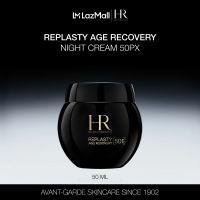
Helena Rubinstein Replasty Age Recovery Night Cream 50PX
$645.00
Buy on Lazada![Helena Rubinstein Replasty Age Recovery Day [GR]](https://sg-live.slatic.net/p/efb2f113a94b9cc85e4eebfd45308b9b.jpg_200x200q80.jpg)
Helena Rubinstein Replasty Age Recovery Day [GR]
$595.00
Buy on Lazada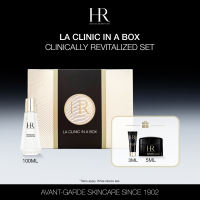
Helena Rubinstein Clinically Revitalized Set - Prodigy Cellglow The Rich Dewy Essence 100ml
$160.00
Buy on Lazada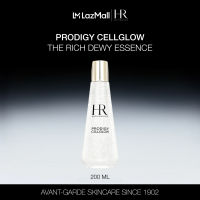
Helena Rubinstein Prodigy Cellglow The Rich Dewy Essence
$270.00
Buy on Lazada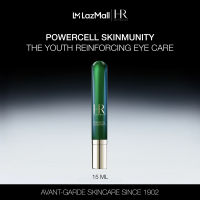
Helena Rubinstein Powercell Skinmunity The Youth Reinforcing Eye Care
$145.00
Buy on Lazada![HELENA RUBINSTEIN Replasty Age Recovery Day and Night Cream Set (50ml+50ml) [HR]](https://sg-test-11.slatic.net/p/878a8daf0a80c08b311651d5a027f869.jpg_200x200q80.jpg)
HELENA RUBINSTEIN Replasty Age Recovery Day and Night Cream Set (50ml+50ml) [HR]
$994.99$2,189.00
![HELENA RUBINSTEIN Re-Plasty Age Recovery Night Cream (100ml) [HR]](https://sg-test-11.slatic.net/p/b88279536883bcdd6b27c898ab936064.jpg_200x200q80.jpg)
HELENA RUBINSTEIN Re-Plasty Age Recovery Night Cream (100ml) [HR]
$804.99$1,770.00
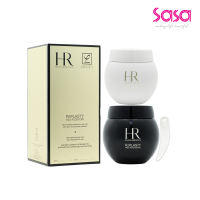
HELENA RUBINSTEIN Age Recovery Day & Night Cream Set
$842.99$1,854.00
About Helena Rubinstein
Helena Rubinstein is a French luxury skincare and beauty brand established in 1902 by Helena Rubinstein, a Polish-born entrepreneur, cosmetician, art collector and philanthropist. The brand holds significant historical importance as Rubinstein was instrumental in transforming beauty care from an informal practice into a professional, science-oriented industry. Today, Helena Rubinstein operates within the L’Oréal Luxe portfolio and is positioned primarily as an ultra-premium, science-driven skincare house.1
Basic information
| Category | Information |
|---|---|
| Brand | Helena Rubinstein |
| Founder | Helena Rubinstein |
| Founded | 1902 |
| Place of origin | Melbourne, Australia |
| Industry | Luxury cosmetics & skincare |
| Parent company | L’Oréal |
| Current positioning | Avant-garde luxury skincare |
| Key philosophy | Science + beauty + innovation |
| Best known for | High-end anti-aging and treatment skincare |
| Founder’s lifespan | c. 1870/1872–1965 |
| Major markets today | Europe, Asia and selected international luxury-beauty markets |
Historical sources differ on the exact year of Rubinstein’s birth: the Metropolitan Museum of Art and L’Oréal generally cite 1872, whilst the Australian Dictionary of Biography suggests approximately 1870.2
Who was Helena Rubinstein?
Helena Rubinstein was among the most influential female entrepreneurs in the early 20th-century beauty industry.
Born Chaja Rubinstein in Kraków, then part of the Austro-Hungarian sphere, she was the eldest daughter in a large Jewish family. As a young woman, she resisted an arranged marriage and eventually left Europe for Australia.3
Her relocation to Australia laid the foundation for her business career. She arrived with bottles of a skincare cream associated with her family. After local women noticed her complexion and expressed interest in the product, Rubinstein began developing it commercially. This product eventually became Crème Valaze, which launched her beauty empire.4
Rather than merely selling cosmetics, Rubinstein created a comprehensive beauty system that encompassed:
- Skincare products
- Beauty salons
- Skin consultations
- Professional estheticians
- Beauty education
- Scientific research
- Luxury retail environments
This holistic approach became one of the cornerstones of the modern beauty industry.
The beginning: Australia
Rubinstein established her first major beauty business in Melbourne in 1902. Her original concept was far more sophisticated than simply retailing face cream; she combined products with personal consultations and beauty treatments, effectively creating an early iteration of the modern skincare clinic.5
Her signature product was Valaze, a moisturising and treatment cream. Its success enabled her to expand beyond Melbourne, subsequently developing businesses in Sydney and New Zealand before turning her attention towards Europe.6
This Australian period is particularly significant to the brand’s history as it established the central tenet that remains associated with Helena Rubinstein: beauty should be treated with knowledge, expertise and science, rather than relying solely on cosmetics.
Expansion into Europe
In the late 1900s, Rubinstein moved to Europe to expand her business and study contemporary approaches to skincare. She established a salon in London, followed by operations in Paris.7
These salons were pivotal because they integrated several elements into a cohesive model: consultation, diagnosis, treatment, skincare products and professional advice. This framework helped establish skincare as an individualised discipline.
Rubinstein also developed a reputation for collaborating with specialists and incorporating scientific concepts into cosmetics. Her business increasingly presented beauty as a subject that could be studied, measured and improved.
The American expansion
Helena Rubinstein entered the United States during the period surrounding World War I. She established a New York salon and subsequently expanded throughout the country. Her products also entered department stores, evolving the business from a network of salons into a much larger cosmetics operation.8
By the 1920s, the Helena Rubinstein business had become an international cosmetics empire. A critical aspect of her American strategy was professionalisation. Rubinstein insisted that staff selling her products possess specialised cosmetic training. Harvard Business School notes that her department-store business became particularly significant as professionally trained women sold her products.9
This helped forge a lasting connection between luxury, expertise and professional beauty advice, which remains central to prestige skincare today.
Helena Rubinstein vs. Elizabeth Arden
One of the most renowned rivalries in beauty history existed between Helena Rubinstein and Elizabeth Arden. Both women built enormous cosmetics businesses at a time when relatively few women controlled international companies.
They competed across multiple fronts:
- Skincare
- Cosmetics
- Salons
- Luxury packaging
- Advertising
- Beauty treatments
- Celebrity culture
- Department-store distribution
Rubinstein’s approach leaned heavily towards scientific skincare and treatment, whilst the broader beauty industry increasingly combined cosmetics with lifestyle and luxury. Their rivalry became symbolic of the emergence of the modern beauty entrepreneur.
Obsession with science
Science is arguably the most vital component of the Helena Rubinstein legacy. Rubinstein surrounded herself with doctors, dermatologists and other specialists, striving to give her products a rigorous scientific foundation. L’Oréal describes her philosophy through the concept that beauty owes its progress to science.10
One of her most significant innovations was the introduction of a classification of skin types. Around 1910, she promoted the idea that skin could be categorised according to characteristics such as dry, oily and combination, and that different skin types required distinct treatments.
Whilst this seems obvious today, it represented a major conceptual shift at the time. Instead of advocating “one cream for everyone”, Rubinstein promoted the principle that different skin requires different care. This fundamental concept underpins modern skincare marketing and consultation.
A brand built around “firsts”
Helena Rubinstein’s historical reputation is strongly linked to cosmetic innovation. Innovations attributed to her company include:
- Early professional beauty institutes
- Systematic skin-type classification
- Scientifically oriented skincare
- Specialised beauty treatments
- Waterproof mascara
- Innovations in mascara packaging and application
- Professional training for beauty specialists
- Advanced anti-aging treatments
L’Oréal’s historical material describes Rubinstein as a pioneer who introduced numerous innovations across skincare and makeup.11
In 1939, Rubinstein acquired the patent for a waterproof mascara and famously demonstrated its effectiveness in conjunction with an aquatic ballet.12 The company later continued innovating in mascara technology, including refillable and automatic formats.13
Luxury and the “Helena Rubinstein woman”
Rubinstein understood a principle that would become fundamental to luxury beauty: the product itself was only part of the experience. She paid meticulous attention to packaging, store design, beauty consultants, salons, uniforms, presentation, personalised service and exclusivity.
Her retail spaces were designed to make purchasing cosmetics feel like a sophisticated beauty ritual rather than an ordinary shopping transaction. Her 1915 New York operation is particularly notable because Rubinstein helped transform the cosmetics department into a more luxurious and experiential retail environment.14
This approach closely mirrors how modern luxury skincare brands operate today.
Helena Rubinstein and art
A distinctive characteristic of Rubinstein was her profound passion for art. She became a major collector of African art, Oceanic art, modern art, European furniture, sculpture, paintings and decorative arts.
The Metropolitan Museum of Art describes her collection as including modern art, French furniture, murals by Salvador Dalí, sculpture and one of the early encyclopedic collections of African art.15 Her homes in New York and Paris were essentially highly curated art environments.
Her relationship with artists also became part of her public image. Consequently, the brand inherited an unusual combination of beauty, science, luxury and art, a blend that remains important to understanding Helena Rubinstein’s identity.
Philanthropy
Rubinstein also became a significant philanthropist. In 1953, she established the Helena Rubinstein Foundation, which supported areas including health, medical research and rehabilitation.16 She also supported various artistic and educational institutions, demonstrating that her interests extended well beyond cosmetics.
Death and autobiography
Helena Rubinstein died in New York in 1965. She remained closely associated with the company until the end of her life, leaving behind one of the most important beauty businesses created by an individual entrepreneur.
Her autobiography, My Life for Beauty, was published posthumously in 1966.17
Acquisition by L’Oréal
The Helena Rubinstein company eventually became part of L’Oréal. L’Oréal identifies Helena Rubinstein among the important luxury and beauty brands acquired during its expansion, with the acquisition process beginning in 1984.18
This integration changed the brand’s scale and provided access to L’Oréal’s global research and distribution infrastructure whilst preserving Helena Rubinstein as a distinct luxury entity. Today, it belongs to the L’Oréal Luxe division.19
Helena Rubinstein today
The modern Helena Rubinstein brand is substantially more focused than the original company. Whilst the historical brand covered makeup, skincare, salons and beauty services, the contemporary brand is positioned primarily around luxury skincare.
L’Oréal currently describes it as “Avant-Garde Skincare”. Its philosophy combines high concentrations of active ingredients, scientific research, clinical expertise and luxury sensory experiences.
The brand emphasises collaboration with scientists and medical or clinical experts, describing its approach as Cellular Skin Science.
Major modern product families
Key contemporary skincare platforms include:
REPLASTY
REPLASTY is associated with advanced recovery and anti-aging skincare. The line maintains a particularly strong connection to clinical expertise, including the brand’s partnership with Laclinic-Montreux.
POWERcell SKINMUNITY
This line focuses on the skin barrier and the use of plant-derived/native vegetal cells within the brand’s research methodology.
PRODIGY CELLGLOW
PRODIGY CELLGLOW is positioned around concerns including radiance, skin uniformity and signs of aging, incorporating research connected with Professor Jean-Marc Lemaitre and cellular biology.20
These products illustrate how the contemporary brand has evolved from the original beauty-salon model towards high-end, research-intensive skincare.
Meaning of “avant-garde”
For Helena Rubinstein, “avant-garde” is not merely a marketing adjective; it refers to the historical personality of the founder herself. She repeatedly attempted to introduce ideas that were unusual for her era:
- 1902: Professional beauty salon
- 1910: Skin-type classification
- 1930s: Increasingly science-oriented skincare
- 1939: Waterproof mascara
- 1950s: Men’s cosmetics and other experimental concepts
- Today: Cellular science, clinical partnerships and advanced anti-aging skincare
The brand uses the term avant-garde to connect its present identity with Rubinstein’s original willingness to challenge established beauty conventions.
Brand philosophy
Helena Rubinstein’s philosophy can be understood through four pillars:
Science
Scientific research is at the heart of the brand.
Innovation
The company has historically positioned itself around technological and cosmetic “firsts”.
Luxury
High-end formulations, packaging, service and selective distribution contribute to its prestige positioning.
Empowerment
Rubinstein’s original business philosophy connected beauty with independence and personal confidence. The modern brand continues to describe its mission in terms of empowering women through beauty.
Brand identity
Helena Rubinstein’s identity can be summarised as scientific luxury skincare with an avant-garde heritage. It sits at the intersection of several dimensions:
| Dimension | Helena Rubinstein |
|---|---|
| Luxury | Very high |
| Science | Core identity |
| Skincare | Primary category |
| Anti-aging | Major focus |
| Makeup | Historically important, less central today |
| Art | Strong founder heritage |
| Clinical positioning | Very strong |
| Mass-market appeal | Low |
| Exclusivity | High |
| Heritage | Since 1902 |
Historical significance
Helena Rubinstein is important not simply because she created an expensive cosmetics brand. Her larger historical significance lies in helping to establish the modern concept of skincare as a professional and scientific discipline.
Before her influence, beauty products were often treated primarily as cosmetics or household preparations. Rubinstein helped introduce a different model: skin analysis, personalised treatment, specialised products, professional expertise and scientific explanation. This model eventually became standard throughout the prestige skincare industry.
Harvard Business School describes Rubinstein as a major 20th-century business leader whose company grew from a Melbourne skincare salon into an international personal-care business.
Comparison with other luxury brands
What makes Helena Rubinstein distinctive is its heritage of expertise. A simplified comparison with other major houses illustrates this:
- Chanel Beauty: Fashion + beauty + cultural luxury
- Dior Beauty: Fashion + couture + beauty
- Estée Lauder: Prestige beauty + skincare + cosmetics
- La Mer: Luxury skincare + proprietary formulation mythology
- SK-II: Skincare + biotechnology/science
- Helena Rubinstein: Luxury skincare + scientific heritage + clinical expertise + avant-garde innovation
This distinction explains why Helena Rubinstein tends to occupy a relatively specialised position within the luxury beauty market.
The legacy of “Madame”
The brand continues to refer to its founder as “Madame Helena Rubinstein” or simply “Madame”. This is not merely a historical nickname but part of the brand’s mythology.
Rubinstein represented a particular type of early modern businesswoman: independent, ambitious, demanding, scientifically curious, commercially aggressive and deeply interested in beauty and art. She built an international company at a time when women had far fewer opportunities to become major corporate entrepreneurs. Her personal story is therefore inseparable from the brand itself.
Summary
Helena Rubinstein is a luxury skincare brand founded in Melbourne in 1902 by Polish-born entrepreneur Helena Rubinstein. From its beginnings with the Valaze treatment cream and a pioneering beauty salon, the company developed an international business based on personalised skincare, professional beauty expertise and scientific innovation. Rubinstein subsequently expanded into Europe and the United States and became one of the most influential figures in 20th-century cosmetics, famously competing with Elizabeth Arden and introducing innovations such as systematic skin-type classification and waterproof mascara. A passionate art collector and philanthropist, she also built a cultural legacy beyond cosmetics. The company later became part of L’Oréal and today operates within L’Oréal Luxe, where it is positioned as an avant-garde, ultra-premium skincare house centred on cellular science, clinical expertise, advanced anti-aging research and personalised luxury service.
References
- Helena Rubinstein
- Helena Rubinstein
- Helena Rubinstein – The Metropolitan Museum of Art
- Biography – Helena Rubinstein – Australian Dictionary of Biography
- Helena Rubinstein, National Portrait Gallery
- Helena Rubinstein – Leadership – Harvard Business School
- Helena Rubinstein – Brand, Makeup & Life
- Helena Rubinstein
- ヘレナ ルビンスタインについて – ヘレナ ルビンスタイン公式オンラインストア
- Helena Rubinstein Incorporated
- Avant-Garde Luxury Skincare & Makeup Since 1902 | HR
- The Brand
- Meet the Family: Helena Rubinstein | Muzeum Historii Żydów Polskich POLIN w Warszawie
- For Helena Rubinstein, Beauty was Power – Yale University Press
- Helena Rubinstein
- The Jewish Museum’s “Beauty Is Power” Exhibition Celebrates Helena Rubinstein | Vogue
- Helena Rubinstein, A Champion of the Beauty Industry
- HELENA RUBINSTEIN,
- Brand Heritage
- Marque cosmétique de luxe : soin et maquillage | HR