Shop on Lazada
Ingersoll products
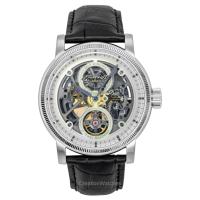
Ingersoll The Guy Leather Strap Grey Skeleton Dial Automatic I17501 Mens Watch
$213.74$643.00
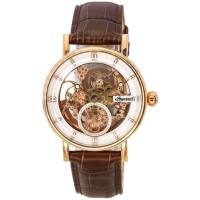
Ingersoll The Herald Leather Strap Rose Gold Skeleton Dial Automatic I00401B Mens Watch
$303.78$695.00
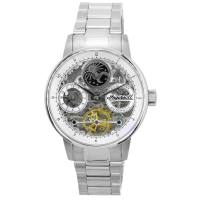
Ingersoll The Jazz Sun and Moon Phase Stainless Steel Skeleton Silver Dial Automatic I07703 Mens Watch
$269.41$789.00
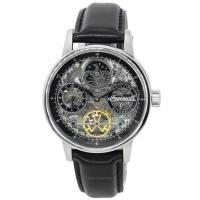
Ingersoll The Jazz Sun and Moon Phase Leather Strap Skeleton Silver Dial Automatic I07701 Mens Watch
$217.68$752.00
About Ingersoll
Ingersoll is an American-origin watch brand with a history dating to the late 19th century. It is best known historically for pioneering the low-cost mass-produced “Dollar Watch”, helping make mechanical timekeeping affordable to a much broader public. Founded by brothers Robert Hawley Ingersoll and Charles Henry Ingersoll, the business evolved from a New York mail-order company into an internationally recognised watch name.1
Today, Ingersoll 1892 operates as a heritage-oriented watch brand, with its modern collections centred heavily on automatic and mechanical watches, including skeleton designs. The brand emphasises its long history, accessible pricing and mechanical-watch aesthetics rather than competing directly with high-end Swiss luxury manufacturers. Its current UK corporate entity, Ingersoll Limited, is controlled by Zeon Ltd, according to UK Companies House records.2
Basic information
| Field | Information |
|---|---|
| Brand | Ingersoll / Ingersoll 1892 |
| Industry | Watchmaking |
| Founded | 1892 as a watch business; roots in the Ingersoll brothers’ mail-order business date to the 1880s |
| Founders | Robert Hawley Ingersoll and Charles Henry Ingersoll |
| Origin | New York, United States |
| Historical specialty | Affordable mass-produced mechanical watches |
| Most famous historical product | Ingersoll Yankee “Dollar Watch” |
| Notable historical partnerships | Waterbury Clock Company, Disney |
| Modern positioning | Accessible/mid-market mechanical and automatic watches |
| Current corporate connection | Ingersoll Limited is controlled by Zeon Ltd |
| Modern brand name | Ingersoll 1892 |
| Website | ingersoll1892.com |
The distinction between 1880/1882 and 1892 is significant. The Ingersoll brothers began their New York mail-order business in the early 1880s, initially selling inexpensive goods such as rubber stamps. Watches entered the business in 1892, which is why the modern brand uses “Ingersoll 1892” as its historical reference point.3
Founding and early history
The story of Ingersoll begins with two brothers:
- Robert Hawley Ingersoll (1859–1928)
- Charles Henry Ingersoll (1865–1948)
The brothers established a mail-order business in New York during the early 1880s. Their business model was built around selling inexpensive products directly to consumers, an approach that would later become extremely important to Ingersoll’s watch business.4
At the time, a reliable personal watch was still relatively expensive. European watches could be costly, while American manufacturers were experimenting with ways to reduce manufacturing costs through standardisation and mechanisation.
The Ingersolls recognised a major commercial opportunity: to make a functional watch cheap enough for ordinary people to own. Rather than attempting to compete with prestigious Swiss watches, the brothers concentrated on volume, affordability, standardised production and distribution.
Their early watch supplier was the Waterbury Clock Company in Connecticut. The first Ingersoll watches appeared in 1892 and included the Universal. These early watches were unusual because they were essentially small clock movements placed into watch-style cases.5
The Dollar Watch
The single most important chapter in Ingersoll’s history is the Dollar Watch.
In 1896, Ingersoll introduced the Yankee, which was sold for approximately US$1. At the time, one dollar represented roughly a day’s wages for many workers, making the watch extraordinarily inexpensive.6
This became known as the “Dollar Watch”. The significance was not simply the price; Ingersoll helped demonstrate that a mechanical watch could be manufactured, distributed and marketed on a huge scale as a relatively inexpensive consumer product.
The watches used simplified construction and mass-production techniques. Rather than using expensive hand-finishing and numerous jewels like traditional high-end watches, the objective was to create a practical timekeeper at the lowest possible cost.
The strategy worked spectacularly. By the end of the 1890s, production had reached thousands of watches per day, and historical sources report that tens of millions of Dollar Watches were ultimately sold.7
Ingersoll’s famous advertising phrase became: “The Watch That Made the Dollar Famous.”
The Smithsonian describes the Dollar Watch as a breakthrough in making functional personal watches available at an unprecedented price.
Relationship with Waterbury
The history of Ingersoll cannot be separated from Waterbury Clock Company.
Waterbury was responsible for much of the actual watch manufacturing behind Ingersoll’s early products. Ingersoll, meanwhile, brought marketing, distribution and direct-to-consumer sales.
This combination was extremely powerful:
- Waterbury: Manufacturing expertise
- Ingersoll: Marketing, distribution and mass-market positioning
The partnership allowed Ingersoll watches to be sold through mail-order catalogues and an expanding dealer network.
By 1899, historical records indicate that Waterbury was producing around 8,000 Ingersoll watches per day. By 1910, production of Dollar Watches had reached millions per year.8
This makes Ingersoll a notable case in watch history: its historical importance was based not solely on movement invention, but on the industrialisation and commercialisation of watchmaking.
Expansion in the early 20th century
Ingersoll expanded rapidly during the first decades of the 20th century.
The company introduced and marketed numerous models and acquired watchmaking businesses, including:
- Trenton Watch Company in 1908
- New England Watch Company in 1914
By 1916, the company was reportedly producing around 16,000 watches per day across multiple models.9
Ingersoll also expanded internationally. A British operation was established in London in the early 20th century. The British business marketed watches including the Crown, which was positioned as an affordable equivalent to the American Dollar Watch.10
This helped turn Ingersoll from an American mass-market brand into an international watch name.
Radiolite
Another important historical Ingersoll innovation was Radiolite.
Introduced in the 1910s, Radiolite watches used luminous material to make the dial and hands visible in low-light conditions. The brand’s own historical account describes Radiolite as an early glow-in-the-dark watch and notes its use during the First World War.11
The historical significance is considerable because nighttime readability became an important practical feature in military and professional watches. Modern Ingersoll continues to reference this part of its history through its heritage storytelling and collections.
Military watches
Ingersoll also became associated with military-oriented watches.
The company produced watches designed for military use, continuing its historical emphasis on practicality, affordability and legibility.
This is another important part of the brand’s identity: historically, Ingersoll was not primarily about luxury. Its watches were intended to be useful, accessible instruments.
That heritage continues to influence the visual language of some modern models, particularly watches with rugged cases, military-inspired dials and tool-watch styling.
Mickey Mouse and Disney
Perhaps Ingersoll’s most famous pop-culture connection came through Disney.
In the early 1930s, Ingersoll developed one of the earliest commercially successful Mickey Mouse watches. The watch featured Mickey Mouse on the dial and became an enormous commercial success.12
The partnership was particularly significant because it helped establish the idea of the watch as not merely a timekeeping instrument but also a character and fashion product.
According to Ingersoll’s historical account, the 25-millionth Mickey Mouse Watch was presented to Walt Disney in 1957.13
This places Ingersoll at an interesting intersection of watchmaking, mass production, popular culture and licensing.
Theodore Roosevelt connection
Ingersoll’s history also includes a famous association with Theodore Roosevelt.
During Roosevelt’s African expedition, he reportedly became associated with the phrase describing him as “the man from the country where Ingersoll watches are made”.
The story became an important part of Ingersoll’s advertising mythology and illustrates just how widely recognised the brand had become internationally by the early 20th century.14
Financial difficulties and bankruptcy
Despite its enormous success, the original Ingersoll business eventually encountered serious financial problems.
The company expanded aggressively during and after World War I, and the post-war economic environment proved difficult.
In 1921, the Ingersoll company went bankrupt. Its assets were subsequently acquired by the Waterbury Clock Company in 1922 for approximately $1.5 million.
This marked a major transition in Ingersoll’s history. The original Ingersoll brothers’ business no longer existed as an independent enterprise in the same form, but the Ingersoll name continued to be used for watches.
Waterbury later became part of the corporate lineage that eventually led to Timex.
The British Ingersoll
The British history of Ingersoll is particularly complicated.
The London operation eventually became independently controlled from the American business. In 1930, Waterbury Clock sold the British Ingersoll operation to its board of directors, making it a British-owned enterprise.15
The British business continued producing Ingersoll-branded watches and later became associated with other British watchmaking organisations.
Consequently, the historical Ingersoll name developed different corporate histories in the United States and Britain. This is one reason modern descriptions of Ingersoll can sometimes appear contradictory: “Ingersoll” is a brand with a long and complicated succession of companies, rather than a single continuously independent corporation.
Modern Ingersoll
The modern brand is generally presented as Ingersoll 1892.
Rather than attempting to recreate the original Dollar Watch literally, the modern company uses the historical heritage as a foundation for contemporary mechanical watches.
The brand relaunched in 2016, according to its own historical timeline, with the stated intention of maintaining the ethos of the Ingersoll brothers while producing modern precision timepieces.16
Modern collections are substantially different from the original inexpensive pocket watches. Current models include:
- Automatic watches
- Mechanical watches
- Skeleton watches
- Dual-time watches
- Chronograph-style designs
- Sporty watches
- Dress-oriented watches
- Heritage-inspired models
The current official catalogue contains dozens of models and places particular emphasis on automatic movements and skeletonised designs.17
Modern design philosophy
The contemporary Ingersoll aesthetic can broadly be described as follows:
Mechanical
The brand puts considerable emphasis on visible mechanical movements, particularly through skeleton watches.
Traditional
Many models use classical watchmaking elements such as Roman numerals, exhibition casebacks, mechanical movements and traditional dial layouts.
Bold
Some collections use relatively large cases, openworked dials and prominent mechanical components.
Accessible
The brand sits far below traditional Swiss haute horlogerie in price. Current US retail listings commonly fall in roughly the US$300–600 range, depending on the model.18
This makes Ingersoll particularly attractive to those who want the appearance and experience of a mechanical watch without entering the luxury-watch price bracket.
Skeleton watches
Skeleton watches are particularly important to the current Ingersoll identity.
The official website describes the Skeleton collection as the “heart of the brand”, emphasising watches designed to expose the mechanical movement and its components.19
A skeleton watch removes or opens portions of the dial and/or movement bridges so that the wearer can see elements such as:
- Balance wheel
- Gears
- Bridges
- Mainspring/barrel components
- Escapement
- Rotating automatic rotor, depending on construction
This fits Ingersoll’s modern marketing particularly well because the mechanical movement itself becomes part of the visual design.
Movements
Modern Ingersoll is primarily associated with mechanical and automatic movements.
An automatic movement is a mechanical movement that winds itself through the motion of the wearer’s wrist, normally using a rotating rotor.
This is fundamentally different from:
- Quartz: Battery-powered electronic timekeeping.
- Manual mechanical: The wearer periodically winds the watch by turning the crown.
- Automatic mechanical: The watch winds itself through wrist movement, although it can normally also be manually wound.
The modern Ingersoll catalogue contains numerous models explicitly identified as automatic, as well as some mechanical models.20
Price positioning
One of the most interesting aspects of modern Ingersoll is how dramatically its price positioning differs from its historical origins.
Historical Ingersoll
$1 → mass-market revolutionary watch
Modern Ingersoll
Roughly $300–600 → affordable mechanical/automatic watch
For example, current US listings include models around:
- US$370
- US$400
- US$445
- US$485
- US$535
- US$580
…depending on collection and configuration.
Therefore, today’s Ingersoll is best understood as an affordable mechanical-watch brand, rather than a true luxury manufacturer.
Is Ingersoll a Swiss brand?
No. This is an important distinction.
Ingersoll’s historical roots are American, specifically New York and the American watchmaking industry of the late 19th century.
It should not be confused with traditional Swiss maisons such as Rolex, Omega, Longines, Tissot or Patek Philippe.
Its historical identity is much closer to American industrial watchmaking, mass production and affordable mechanical watches.
The modern brand uses its American heritage as an important part of its identity, even though its contemporary corporate and manufacturing arrangements are part of a much more international watch industry.
Is Ingersoll a luxury watch brand?
Generally, no. It is better categorised as an entry-level to mid-range mechanical/automatic watch brand.
That does not mean the watches are necessarily poor quality. It simply describes their position within the watch market.
A simplified hierarchy would look something like:
| Segment | Examples |
|---|---|
| Haute horlogerie | Patek Philippe, Vacheron Constantin, Audemars Piguet |
| Luxury | Rolex, Omega, Cartier |
| Premium/mid-high | Longines, Oris, TAG Heuer |
| Accessible mechanical | Ingersoll, Orient, some Tissot/Hamilton models |
| Fashion/entry quartz | Numerous fashion-watch brands |
The comparison is not perfectly exact because brands span multiple price categories, but it gives a useful idea of where Ingersoll sits.
Brand strengths
Exceptional historical heritage
Few affordable watch brands can claim a genuine role in the development of mass-market mechanical watches. The Dollar Watch is a major chapter in American industrial and horological history.21
Strong mechanical-watch identity
Modern Ingersoll focuses heavily on automatic and skeleton watches rather than relying primarily on quartz fashion watches.
Distinctive designs
The skeletonised models give the brand a recognisable visual identity.
Accessible pricing
The watches are considerably more affordable than most traditional luxury mechanical watches.
Interesting historical associations
The brand has connections with Henry Ford, Theodore Roosevelt, Disney, Mickey Mouse, Waterbury Clock Company, American industrialisation and early military watches.
Potential weaknesses
Ingersoll’s heritage should also be viewed realistically.
Not an independent 19th-century company today
The modern brand is the continuation of a historical name and legacy through multiple corporate transitions.
Not haute horlogerie
Modern Ingersoll watches should not be evaluated using the same criteria as high-end Swiss manufacturers.
Heritage marketing is important
The current brand places considerable emphasis on its historical story, particularly the 1892, Dollar Watch, Radiolite and Disney connections.22
Movement prestige differs from luxury brands
For enthusiasts who prioritise proprietary movements, exceptional finishing, chronometric certification or high levels of hand craftsmanship, brands higher up the traditional watchmaking hierarchy will generally be more relevant.
Important historical timeline
| Year | Event |
|---|---|
| 1880s | Robert and Charles Ingersoll establish their New York mail-order business |
| 1892 | Ingersoll begins selling watches |
| 1893 | Columbus watch introduced |
| 1896 | Yankee introduced at approximately $1 |
| 1896 onward | “Dollar Watch” becomes a major mass-market success |
| 1904 | Ingersoll establishes a London presence |
| 1905 | Crown watch marketed in Britain |
| 1908 | Trenton Watch Company acquired |
| 1914 | New England Watch Company acquired |
| 1916 | Radiolite introduced |
| 1921 | Original Ingersoll company enters bankruptcy |
| 1922 | Waterbury Clock Company acquires the business |
| 1930s | Mickey Mouse watches become major products |
| 1940s–50s | Ingersoll name continues through changing corporate structures |
| 1957 | 25-millionth Mickey Mouse Watch milestone cited by Ingersoll |
| 2012 | Brand celebrates 120 years |
| 2016 | Modern brand relaunch |
| Today | Ingersoll 1892 focuses heavily on automatic/mechanical watches |
Historical dates and milestones are compiled primarily from Ingersoll’s own history and historical watchmaking sources.23
Corporate ownership today
The corporate history is complicated, but there is a useful modern reference point.
Ingersoll Limited, the UK company associated with the brand, is an active private company incorporated in 1990 and registered in London. Its stated business activity is wholesale of watches and jewellery. UK Companies House records show Zeon Ltd as the active person with significant control, holding 75% or more of the shares.24
Zeon is a major British watch company associated with numerous watch brands.
Therefore, it is more accurate to describe modern Ingersoll as an American-origin heritage watch brand operating under modern international corporate ownership, rather than saying that it remains an independent American watch manufacturer.
Ingersoll’s place in watch history
From a horological-history perspective, Ingersoll is arguably more interesting than its current price segment might initially suggest.
Its greatest contribution was not the creation of an exotic complication or an exceptionally sophisticated movement. Its contribution was democratisation.
The basic idea was that a watch should not be a luxury reserved for wealthy people.
Through inexpensive manufacturing, standardised production, mail-order distribution and aggressive marketing, Ingersoll helped transform the watch from an expensive personal possession into a mass consumer product.
The Dollar Watch therefore belongs to the broader story of American industrialisation, alongside developments in mass production, standardised parts, mail-order retail and consumer marketing. The National Park Service’s historical documentation of Waterbury’s development specifically recognises the Dollar Watch’s contribution to the growth of the Waterbury watch industry.25
Ingersoll vs. other affordable mechanical brands
If considering purchasing one today, the most useful comparisons are probably:
Ingersoll vs. Orient
Orient generally has a stronger reputation among watch enthusiasts for its mechanical movements and Japanese watchmaking heritage. Ingersoll tends to emphasise larger, more decorative designs and skeleton aesthetics.
Ingersoll vs. Seiko
Seiko has an enormous manufacturing history and broad movement ecosystem, with particularly strong recognition among enthusiasts. Ingersoll is more niche and heritage-driven.
Ingersoll vs. Tissot
Tissot generally occupies a more established Swiss mid-market position and has a stronger connection to mainstream Swiss watchmaking. Ingersoll is more unusual because of its American historical identity and skeleton-heavy designs.
Ingersoll vs. Fossil
Fossil is primarily perceived as a fashion/lifestyle watch company, whereas Ingersoll’s modern identity is much more explicitly centred on mechanical watchmaking.
Distinctive characteristics
If reduced to a few concepts, the brand’s identity comprises:
- 1892 origins
- American watchmaking
- Mass production
- Dollar Watch legacy
- Affordable timekeeping
- Radiolite and military watches
- Mickey Mouse / Disney association
- International heritage
- Modern automatic watches
- Skeletonised mechanical designs
Ingersoll is not a luxury brand whose primary selling point is centuries of hand finishing. It is a brand whose historical significance comes from making mechanical watches accessible to ordinary consumers, and whose modern identity translates that heritage into relatively affordable automatic watches.
Summary
Ingersoll is best understood as a historic American-origin watch brand rather than simply another inexpensive watch label.
Its importance comes from the Dollar Watch, which helped establish a model for mass-produced, affordable personal timepieces at the end of the 19th century. The company subsequently expanded internationally, produced military-oriented and luminous watches, became famous for Mickey Mouse watches, went through bankruptcy and multiple corporate transformations, and ultimately survived as a brand rather than as the same continuously independent company founded by the Ingersoll brothers.26
Today, Ingersoll 1892 uses that heritage to sell primarily automatic and mechanical watches, with skeleton watches forming a particularly important part of its contemporary identity. Current official collections show a broad selection of automatic models generally positioned in the several-hundred-dollar range.27
In summary, Ingersoll is a historic American-origin watch brand founded around the idea of making mechanical timekeeping affordable, famous for the Dollar Watch and Mickey Mouse watches, and today repositioned as an accessible mechanical/automatic watch brand built around its 1892 heritage.
References
- History – Ingersoll 1892
- Ingersoll Watch Company
- Designer Mens & Ladies Watches | Ingersoll Watches Online – Ingersoll 1892 – US
- INGERSOLL LIMITED persons with significant control – Find and update company information – GOV.UK
- Ingersoll/en – Watch-Wiki – Das Uhrenlexikon
- Robert H. Ingersoll
- Ingersoll Watch Company: History, Serial Numbers, Production Dates
- Ingersoll (Uhrenmarke)
- Timex Group USA
- Ingersoll Watch Collections Shop | Designer Mens & Ladies Watches – Ingersoll 1892
- SS26 – Ingersoll 1892 – US
- Mens – Ingersoll 1892 – US
- Products – Ingersoll 1892 – US
- SS26 – Ingersoll 1892 – US
- INGERSOLL LIMITED overview – Find and update company information – GOV.UK
- Ingersoll Watches: History and Reviews. Are They Good? | Relojes.Wiki
- EDGAR Filing Documents for 0001140361-26-016734
- Company:Ingersoll Watch Company – HandWiki
- Ingersoll – Watch-Wiki – Das Uhrenlexikon
- TIMEX Group Enters Into License And Distribution Agreement For Ingersoll® Brand Watches In The USA, Canada And Mexico
- Ingersoll Watch History – Ingersoll Watch Repair
- History of Ingersoll
- Geschichte von Ingersoll
- Ingersoll Watches: A Timeless Classic
- Stories – Ingersoll 1892 – US
- FAQ – Ingersoll 1892 – US
- Collections – Ingersoll 1892 – US