Shop on Lazada
Josiny products
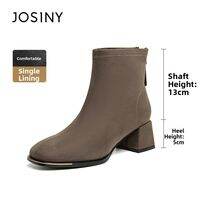
Josiny | Womens Short Boots Rough Heel Stretch Velvet Slimming
$112.82
Buy on Lazada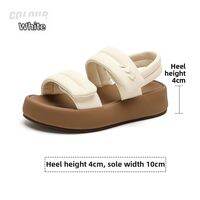
Josiny | Thick Soled Non-slip Soft Beach Sandals
$98.23
Buy on Lazada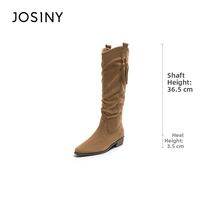
Josiny | Vintage Tassel Boots for Women Coarse Heel Not Tiring to Wear Below Knee
$119.87
Buy on Lazada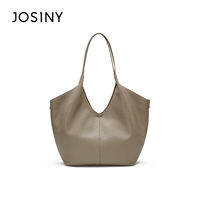
Josiny | Minimalist Genuine Leather Tote Bag
$67.52$86.25
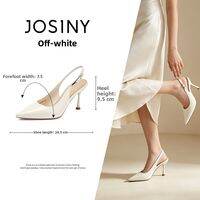
Josiny | French Pointed Toe Back Open Heels
$95.59
Buy on Lazada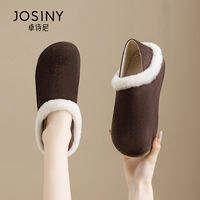
Josiny | Furry Warm Two-way Wearable Slippers
$145.52$148.18
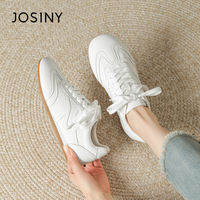
Josiny | Breathable Soft Sole Leisure Sports Shoes 2026 Summer New Multifunctional Style
$112.90$121.01
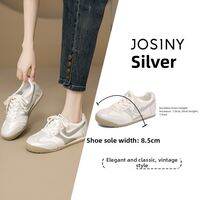
Josiny | Breathable Lightweight Soft-bottom Womens Sneakers
$111.28
Buy on LazadaAbout Josiny
Josiny (Chinese: 卓诗尼) is a Chinese fashion footwear brand established in 1998 in Wenzhou, Zhejiang Province. Originally focused on women’s shoes, the company has evolved over two decades into a comprehensive enterprise encompassing design, research and development, manufacturing, retail, brand management, and multi-category fashion products 1. Its primary consumer base consists of young urban women seeking fashionable, comfortable, and value-oriented footwear.
The brand operates under Zhejiang Josiny Holding Co., Ltd., with its headquarters and main industrial base located in Wenzhou, a major hub for China’s shoe manufacturing industry 3. While historically positioned as a mainstream fashion label, Josiny announced a strategic pivot in 2026 to establish itself as a “leading Chinese comfortable women’s shoe brand,” integrating comfort aesthetics with contemporary design 1.
Corporate Profile
| Item | Details |
|---|---|
| Chinese Name | 卓诗尼 |
| English Name | Josiny / JOSINY |
| Industry | Footwear, Fashion, Retail |
| Core Category | Women’s Shoes |
| Founded | 1998 |
| Place of Origin | Wenzhou, Zhejiang Province |
| Parent Company | Zhejiang Josiny Holding Co., Ltd. |
| Primary Market | Mainland China |
| Brand Tier | Mass to Mid-range Fashion |
| Target Demographic | Young Urban Women |
| Core Philosophy | Fashion Design, Comfort, Youthfulness |
| Official Website | josiny.com |
Note: While some third-party sources cite 1997 as the founding year, official Josiny documentation consistently identifies 1998 as the establishment date. This article adheres to the official record 1.
History
Josiny was founded in Wenzhou, leveraging the region’s extensive shoe manufacturing cluster and supply chain infrastructure. Since its inception in 1998, the company has transitioned from a traditional shoemaking factory to a modern fashion enterprise with integrated capabilities in branding, design, production, and retail 1.
Development Timeline
- 1998: The Josiny brand is established in Wenzhou, Zhejiang 1.
- 2007: The first dedicated retail store opens in Kunming, marking the expansion of its offline retail network 2.
- 2010: An e-commerce centre is established to strengthen online sales and digital retail operations 2.
- 2014–2015: The company implements user-driven strategies and upgrades its information management systems, including SAP integration 2.
- 2017: Chinese actress Dilraba Dilmurat is appointed as brand ambassador; previous collaborations included Cecilia Cheung 2.
- 2018: A comprehensive visual identity and strategic upgrade is launched 2.
- 2019: Regional bases are established in Shanghai and Guangzhou, and the brand receives recognition as a China Well-Known Trademark 2.
- 2020s: Continued focus on youth-oriented fashion, omnichannel retailing, and logistics digitisation.
- 2026: A new five-year plan is unveiled, repositioning the brand around “comfortable women’s shoes” and outlining growth through product innovation and a multi-brand matrix.
Brand Identity and Philosophy
In its corporate narrative, the name “Josiny” is associated with concepts of freedom, dreams, and female independence, often summarised by the motto “Freedom, Progress, Dreams.” Marketing materials have historically featured a fictional European persona named Josiny to embody these themes, though this is a storytelling device distinct from the brand’s actual origins in Wenzhou.
The company’s stated mission in recent years has been “Innovating for Fashion.” As of 2026, the strategic vision has expanded to becoming a preferred fashion lifestyle group for consumers 1.
Products
Women’s footwear remains the core business of Josiny. Key product categories include:
- Flats and single shoes
- High heels
- Loafers
- Sandals and slippers
- Ankle boots
- Insulated winter shoes
- Casual and commuter shoes
- Trend-led fashion styles
The company has also diversified into related accessories, including handbags, small leather goods, and other fashion items. Despite this diversification, women’s shoes continue to constitute the primary revenue stream 1.
Market Positioning
Josiny operates in the mass-to-mid-range segment rather than the luxury or high-end designer market. Its competitive proposition combines fashionable design, daily wearability, comfort, and accessible pricing. The target demographic is generally defined as young urban women and white-collar workers. While earlier materials described the target age range as 25–38, more recent third-party analyses place the core audience between 18 and 35, reflecting the brand’s ongoing rejuvenation strategy 2.
Product usage scenarios span daily leisure, commuting, dating, social events, and general fashion occasions. This distinguishes Josiny from specialist athletic brands or luxury houses.
Comfort Strategy
A significant strategic shift occurred leading up to 2026, when Josiny formally adopted the positioning of “China’s Leading Comfortable Women’s Shoe Brand.” Moving beyond competition based solely on trend cycles, the brand began integrating foot feel, last design, functional ergonomics, and aesthetic appeal. This pivot aims to differentiate Josiny in a market characterised by product homogenisation and price competition, effectively upgrading its identity from “young fashion footwear” to “young, fashionable, and comfortable footwear.”
Design Approach
Josiny’s design philosophy is best described as commercial fashion. Characteristics include femininity, youthfulness, versatility, and the incorporation of current trends such as specific heel shapes, toe caps, bows, metal hardware, and seasonal colour palettes. The emphasis is on wearable, easy-to-style products suitable for everyday life rather than avant-garde or experimental artistry.
Manufacturing and Supply Chain
Josiny maintains a vertically integrated business model spanning design, R&D, manufacturing, logistics, and retail. Official industrial tourism data indicates that the company operates a modern production facility in Wenzhou equipped with Italian technology, capable of producing over 20 million pairs of leather shoes annually 1.
The broader industrial footprint includes bases in Wenzhou, Shanghai, and Guangzhou, supported by a nationwide logistics network. Figures regarding employee count and production capacity vary across different reporting periods and should be understood as snapshots of specific operational phases rather than static metrics 1.
Retail and Distribution
Historically reliant on physical retail, Josiny has progressively developed an omnichannel ecosystem. Early distribution channels included department stores, shopping mall counters, branded boutiques, and high-street shops. Following the establishment of its e-commerce centre in 2010, online sales became increasingly significant 2. By 2026, the strategic roadmap explicitly identified a fully integrated omnichannel system—combining offline stores, digital platforms, and data-driven operations—as a critical driver of future growth.
Corporate Structure
Josiny is currently owned and operated by Zhejiang Josiny Holding Co., Ltd. 3. Older references to entities such as “Zhejiang Nature Shoes Co., Ltd.” reflect historical corporate restructuring and should not be confused with the current parent company. The group has evolved from a single-brand shoe manufacturer into a multi-brand, multi-category fashion entity, with product lines extending to bags and leather goods.
Marketing
Marketing efforts have traditionally combined celebrity endorsements, retail presence, product launches, and digital campaigns. Notable partnerships include:
- Cecilia Cheung: Early brand ambassador.
- Dilraba Dilmurat: Appointed circa 2017 to reinforce a youthful, feminine image 2.
These collaborations have supported the brand’s transition from traditional advertising to digital and omnichannel engagement strategies.
International Intellectual Property
The JOSINY trademark has been registered in jurisdictions outside China. United States trademark records show applications filed by Zhejiang Josiny-related entities covering footwear, boots, sandals, sports shoes, clothing, and accessories 4. While these registrations demonstrate international IP protection efforts, they do not necessarily indicate overseas sales volumes comparable to the domestic market.
Enterprise Scale
Publicly available industrial data has previously cited the following operational metrics:
- Over 1,800 employees
- 28 modern production lines
- Annual output exceeding 20 million pairs of leather shoes
- Integrated R&D and manufacturing base in Wenzhou
These figures represent specific historical periods. Looking forward, the 2026 corporate strategy articulated long-term ambitions of achieving “ten billion yuan in brand value and one hundred billion yuan in enterprise scale,” signalling intentions for significant expansion.
Evolution of Brand Positioning
Josiny’s development can be categorised into four distinct phases:
Phase 1: Traditional Footwear Brand (c. 1998–2000s)
Focus on establishing product quality and building an offline sales network.
Phase 2: National Fashion Brand (2007–2010s)
Expansion via specialty stores, department stores, e-commerce, and celebrity marketing to build national awareness.
Phase 3: Youth and Fast Fashion (2010s–Early 2020s)
Emphasis on trend responsiveness, rapid product development, and online-offline integration targeting younger demographics.
Phase 4: Comfort Aesthetics (2026–Present)
Strategic pivot integrating fashion, comfort, scenario-based design, and product technology, formalising the “comfortable women’s shoes” positioning.
Market Context
Within the Chinese footwear landscape, Josiny occupies the domestic mass-market segment. It differs fundamentally from international luxury brands and performance-focused sportswear labels like Nike or Adidas. Its primary value proposition addresses three concurrent consumer needs: aesthetic relevance to current trends, functional comfort for daily wear, and price accessibility. This triad underpins the brand’s strategic emphasis on comfort as a key differentiator in a competitive market.
Nomenclature
The brand is referred to using several conventions:
- JOSINY: Uppercase stylisation used in logos and commercial signage.
- Josiny: Standard English capitalisation.
- 卓诗尼: Chinese trade name, commonly used by consumers in Mandarin-speaking markets.