Shop on Lazada
Keen products
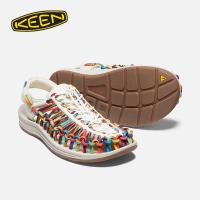
2026 Original Keen UNEEK Mens Quick Drying Outdoor Sports Sandals Mens Beach Sandals Breathable Casual Shoes Sandals Woven Rope Shoes Hiking Shoes
$47.84$157.00
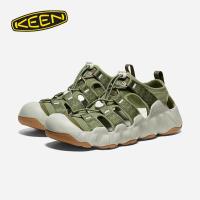
Original Keen HYPERPORT H2 Anti Collision Toe Sports Sandals Outdoor Hiking Sandals for Men Water Sandals for Women Beach Casual Sandals 2025
$61.71$169.00
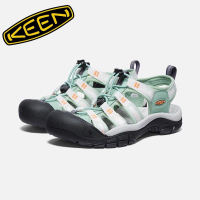
Original Keen newport h2 Womens Outdoor Hiking Creek Shoes Soft Soled Closed Toe Sandals Summer Hiking Sandals Womens Beach Shoes
$40.60$128.00
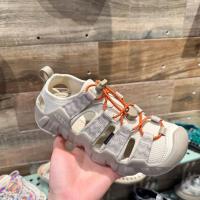
2026 Original Keen hyperport h2 Anti Collision Toe Sports Sandals Outdoor Hiking Sandals for Men Water Sandals for Women Beach Casual Sandals Mens Height Increasing Sports Sandals
$60.61$188.00
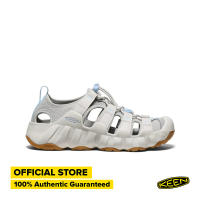
KEEN Womens Hyperport H2 Sandal - Alloy/Skyway
$169.00
Buy on Lazada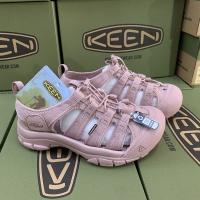
2025 Original Keen NEWPORT H2 Hiking Shoes for Women Non Slip Beach Sandals Outdoor Sports Anti Kick Sandals
$42.34$128.00
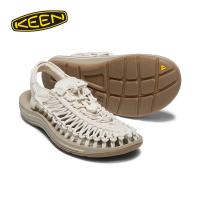
Original Keen uneek Mens Outdoor Hiking Shoes Sandals Mens Woven Casual Beach Slippers Womens Thai Outdoor Water Wading Non Slip Creek Shoes Sandals
$45.74$218.00
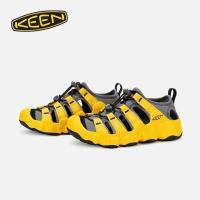
Original Keen hyperport h2 Ladies Hiking Sandals Outdoor Non Slip Sports Sandals Camping Quick Drying Sandals Ladies Non Slip Beach Sandals
$61.74$158.00
About Keen
Overview
KEEN (stylised KEEN) is an American outdoor footwear and accessories brand established in 2003. The company is best known for its distinctive protective-toe sandals, hiking footwear, trail shoes, work boots, and casual outdoor shoes. Its philosophy combines outdoor performance, comfort, durability, and environmental responsibility.
KEEN is particularly notable for challenging conventional footwear design. Its original product, the Newport sandal, combined the openness of a sandal with the toe protection of a shoe, a design that became the foundation of the brand.1
Basic information
| Details | |
|---|---|
| Brand | KEEN |
| Company | KEEN, Inc. |
| Founded | 2003 |
| Founders | Martin Keen and Rory Fuerst |
| Origin | United States |
| Headquarters | Portland, Oregon |
| Industry | Footwear and outdoor products |
| Main categories | Sandals, hiking shoes, trail footwear, work boots, casual shoes, kids’ footwear, accessories |
| Best known for | Protective-toe sandals, especially Newport |
| Ownership | Privately held / family-owned |
| Current positioning | Outdoor, adventure, utility and lifestyle footwear |
KEEN describes itself as family-owned and values-led, with a focus on comfortable, versatile, and durable footwear.2
Origins
The story of KEEN begins with the question: “Can a sandal protect your toes?” This inquiry led to the creation of the Newport, KEEN’s first major product.
Before KEEN formally launched, founder Martin Keen developed the concept for a sandal suitable for water activities that also protected the toes. Rather than accepting the traditional trade-off between an open sandal and a closed shoe, KEEN attempted to combine both concepts. The resulting design featured a prominent protective rubber toe bumper, which remains one of the brand’s most recognisable characteristics.3
KEEN officially launched in 2003, debuting the Newport at a fall/winter sports trade show. Despite the product being a sandal, the company intentionally positioned itself at this event to signal a willingness to take a different approach to conventional outdoor footwear.4
The Newport sandal
The Newport sandal is arguably the most important product in KEEN’s history. It combined sandal-like ventilation, a closed protective toe, outdoor traction, water-friendly construction, relatively casual styling, and all-day comfort. These features made the Newport suitable for activities such as kayaking, boating, hiking, camping, travelling, walking around town, and beach or river activities.
The concept was sufficiently unusual that the Newport became a distinct product category rather than simply another outdoor sandal. KEEN states that the Newport remains its #1 bestseller more than two decades after its introduction.5 By the model’s 20th anniversary, the company reported that the sandal had been part of more than 50 million adventures, illustrating its centrality to the brand’s identity.6
Hybrid footwear philosophy
KEEN’s identity is based on the idea of hybrid footwear. While traditional categories separate products into sandals, shoes, hiking boots, and work boots, KEEN frequently blurs these boundaries. The Newport, for example, functions simultaneously as a sandal, water shoe, outdoor shoe, and casual lifestyle product.
This hybrid philosophy appears throughout the company’s range, which generally emphasises several key characteristics:
Protective design
The most famous example is the protective toe bumper, which distinguishes KEEN sandals from conventional open-toe designs.
Comfort
KEEN tends to use relatively roomy, supportive shapes rather than extremely narrow fashion-oriented silhouettes.
Outdoor functionality
Traction, water resistance, durability, cushioning, and weather protection are recurring themes across the product line.
Versatility
Products are often designed to function across multiple environments rather than being optimised for a single activity.
Durability
The company emphasises manufacturing products that remain in use for a long time, rather than encouraging frequent replacement.7
Expansion beyond sandals
After establishing itself with the Newport, KEEN expanded into other outdoor categories, most notably hiking footwear.
Targhee
The Targhee hiking collection was introduced in 2005 and became one of KEEN’s signature hiking families. Over the following two decades, Targhee developed into a broad collection covering different versions and generations of hiking footwear. KEEN describes Targhee as a product that evolved beyond traditional mountain hiking into activities spanning outdoor recreation, waterfront environments, and everyday urban life.8 This line helped transform KEEN from a maker of unusual sandals into a broader outdoor footwear brand.
Major product categories
Today, KEEN’s range extends considerably beyond its original sandals.
Sandals
This remains one of the brand’s defining categories. Notable families include the Newport, Uneek, Clearwater, and other adventure and water sandals. The Uneek is particularly distinctive due to its unusual two-cord construction, which gives it a markedly different appearance from conventional sandals.
Hiking footwear
KEEN produces hiking shoes and boots designed for day hiking, trekking, backpacking, wet environments, and mixed terrain. The Targhee is the best-known family in this category.
Trail and outdoor footwear
The brand has expanded into athletic outdoor footwear, including trail-oriented shoes and newer trail-running products.
Work footwear
KEEN Utility is the company’s work-footwear division. Products include safety-toe boots, waterproof work boots, jobsite footwear, work shoes, and industrial footwear. The company has invested heavily in its own manufacturing capabilities for this category.9
Casual footwear
KEEN manufactures shoes intended for everyday urban use, travelling, and casual wear. This category represents an important evolution, as KEEN footwear is no longer restricted to serious outdoor enthusiasts.
Kids’ footwear
The company also produces outdoor and casual footwear for children.
KEEN Utility
KEEN’s work-footwear business applies the brand’s outdoor philosophy to industrial environments. KEEN Utility products commonly emphasise toe protection, waterproofing, traction, durability, cushioning, worksite safety, and long-term comfort. The company has developed proprietary manufacturing technologies specifically for these products.
Manufacturing
An unusual characteristic of KEEN is that the company owns some of its manufacturing facilities. KEEN states that many of its shoes are produced in its own factories in the United States, Dominican Republic, and Thailand, making it relatively unusual among global footwear brands.10 While KEEN uses a global manufacturing and sourcing network, specific product lines are produced in KEEN-owned facilities.
American manufacturing
KEEN began manufacturing footwear in the United States in 2010. Originally located in Portland, Oregon, the U.S. footwear manufacturing operation moved to Shepherdsville, Kentucky in 2025. This relocation allows the company to increase production capacity and consolidate manufacturing with distribution.11 The Kentucky operation is particularly important to KEEN’s American Built collection.
KEEN.FUSION technology
One of KEEN’s notable manufacturing technologies is KEEN.FUSION. Instead of relying primarily on conventional glue-based bonding between the upper and sole, KEEN.FUSION uses heat and pressure to mechanically bond the components. This construction method is intended to improve durability, reduce delamination, increase flexibility, and reduce reliance on adhesives and solvents. The technology is used prominently in KEEN’s American-built footwear.12
Environmental philosophy
Environmental responsibility is a central part of KEEN’s brand identity. The company refers to its approach as “Consciously Created”, a philosophy asserting that footwear should be designed with consideration for people, materials, manufacturing, durability, and environmental impact.
Recycled materials
The company uses materials derived from recycled waste, including post-consumer plastic bottles for certain webbing and components. It has also experimented with materials derived from manufacturing and agricultural waste.13
Durability as sustainability
KEEN’s environmental philosophy extends beyond recycled materials. The company argues that longer product life leads to fewer replacements and reduced resource consumption. Consequently, durability is presented as an integral part of KEEN’s sustainability strategy.14
PFAS-free footwear
A significant environmental initiative is KEEN’s policy concerning PFAS (per- and polyfluoroalkyl substances), a family of persistent chemicals commonly associated with water, stain, and grease resistance. KEEN began working to eliminate these chemicals in the 2010s and states it has been PFAS-free since 2018.15 The company maintains this policy through chemical restrictions, supplier requirements, and testing.
Supply-chain responsibility
KEEN emphasises oversight of its manufacturing partners. According to its supply-chain policy, the company pre-screens Tier 1 manufacturers, conducts supplier audits, maintains a supplier Code of Conduct, prohibits forced or involuntary labour through manufacturing agreements, evaluates chemical-management practices, conducts PFAS testing, and monitors supplier compliance. KEEN states its supply-chain programme was most recently updated in June 2026.16
Brand philosophy and design language
KEEN is not positioned as an ultra-premium fashion brand. Its identity sits between outdoor equipment, lifestyle footwear, and utility footwear. Its core philosophy can be summarised as: “Go outside, be comfortable, protect your feet, and minimise your impact.” This explains why KEEN products often appear unconventional; they are designed to solve practical problems while remaining wearable in everyday life.
The brand has developed a recognisable visual identity characterised by:
- Protective toe bumper: The single most recognisable KEEN feature.
- Wide, substantial silhouette: Footwear often appears more robust than minimalist outdoor shoes.
- Outdoor-oriented materials: Common use of mesh, rubber, leather, webbing, and technical synthetics.
- Bold proportions: Many products feature large soles and visually substantial toe areas.
- Functional details: Laces, webbing, hooks, eyelets, and protective components serve obvious functional purposes rather than purely decorative ones.
Market positioning
KEEN occupies a distinct position in the outdoor market compared to traditional brands.
| Brand type | Typical emphasis |
|---|---|
| Traditional hiking brand | Hiking performance |
| Trail-running brand | Weight, speed and athletic performance |
| Work-boot brand | Protection and durability |
| Lifestyle sneaker brand | Fashion and everyday wear |
| KEEN | Outdoor function + comfort + versatility + lifestyle |
This positioning appeals to consumers who do not require highly specialised equipment. A user might wear the same KEEN shoes while travelling, hiking, walking around town, visiting a beach, or camping. This versatility is central to the brand’s appeal.
Customer base
KEEN’s customer base extends beyond hardcore hikers. Typical users include campers, travellers, kayakers, outdoor enthusiasts, gardeners, people who work on their feet, construction and industrial workers, parents buying durable children’s footwear, and those who prefer roomy, comfortable shoes. The brand also has a significant following among people who appreciate its distinctive aesthetic.
Travel and fashion
Travel is particularly compatible with KEEN’s product philosophy. A Newport or similar hybrid sandal can function as a walking shoe, water shoe, casual shoe, and travel shoe, contributing to the brand’s popularity among travellers.
Although KEEN originated as an outdoor brand, its products have increasingly crossed into fashion and streetwear. Models such as the Uneek, Jasper, and Newport have gained traction in this space. KEEN has collaborated with designers, fashion labels, retailers, and cultural organisations, including Snow Peak, Fuji Rock, emmi, Open YY, Henrik Vibskov, and Space Available.17 These collaborations have helped KEEN become recognisable outside the conventional hiking market.
Current status
As of 2026, KEEN remains a privately held, family-owned outdoor footwear company with a broad international presence. Its product portfolio spans sandals, hiking, trail, casual, work, kids’, and running footwear. The company continues to emphasise its Consciously Created philosophy and PFAS-free policy.18 Simultaneously, the brand is expanding its American-made products through the Kentucky factory, including American-built work boots and newer casual sneakers.19
Major products
| Product/family | Category | Significance |
|---|---|---|
| Newport | Sandal | Original iconic KEEN product |
| Targhee | Hiking | Flagship hiking family |
| Uneek | Sandal/casual | Distinctive cord-based design |
| Jasper | Casual/outdoor | Lifestyle-oriented footwear |
| Clearwater | Sandal | Lightweight outdoor/water sandal |
| KEEN Utility | Work | Safety and industrial footwear |
| American Built | Work/casual | Products manufactured in the U.S. |
| KEEN Kids | Children’s | Outdoor and everyday footwear |
Significance
KEEN’s significance lies not in inventing hiking shoes or sandals, but in recombining existing categories in unusual ways. The Newport asked why a sandal must leave toes exposed, creating a new category between sandals and shoes. The company subsequently applied this philosophy more broadly, questioning why hiking shoes cannot be comfortable everyday shoes, why outdoor footwear cannot be lifestyle footwear, why work boots cannot combine safety with everyday comfort, and why environmental considerations cannot be built into the product rather than treated as marketing. These questions form the core of the company’s identity.
References
- KEEN Archives: 20 Wild Years of the Newport Sandal | KEEN Footwear
- HISTORY|KEEN TARGHEE 20TH|Built for beyond. その先の未来のために|スペシャルサイト | KEEN公式オンラインストア
- Official KEEN® Site – Consciously Created Footwear for a Better Planet | KEEN Footwear
- About Us – Official KEEN® Site – Consciously Created Footwear for a Better Planet | KEEN Footwear
- What’s Your Best Newport Story? | KEEN Footwear
- Consciously Created | KEEN Footwear
- American Built | How It’s Made Matters | KEEN Footwear
- How It’s Made Matters | KEEN Footwear
- Built in Kentucky for a Lighter Footprint | KEEN Footwear
- KEEN Made | KEEN Footwear
- Supply Chain Transparency | KEEN Footwear
- Impact | KEEN Footwear
- Taking Action to Reduce Our Climate Footprint | KEEN Footwear
- Behind the Design: UNEEK Goes Huarache | KEEN Footwear
- Consciously Created: The Choices We Make to Make Shoes | KEEN Footwear
- Building Shoes in America | KEEN Footwear
- COVID Pivot: From Making Boots to Making Masks | KEEN Footwear
- The Tsunami That Started It All | KEEN Footwear
- More Than a Job | KEEN Footwear