Shop on Lazada
L’Oréal Paris products
![[TACKLE DRY HAIR] LOreal Paris Extraordinary Oil Shampoo + Conditioner Value set (440ml x 2)](https://sg-live.slatic.net/p/1b7e2b0b9799d7aebcfeb8be96855878.jpg_200x200q80.jpg)
[TACKLE DRY HAIR] LOreal Paris Extraordinary Oil Shampoo + Conditioner Value set (440ml x 2)
$27.58$39.40
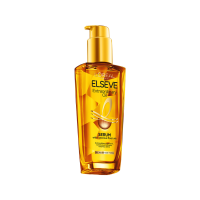
L’Oréal Paris ELSEVE Extraordinary Oil Gold 4x Shine Hair Serum Hair Treatment for All Hair Types 30ml / 100ml
$23.25$30.20
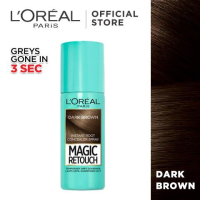
LOreal Paris Magic Retouch Instant Root Concealer Spray Cover Greys Roots (Hair Colouring & Hair Care)
$15.17$19.70
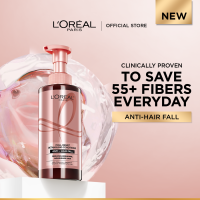
LOreal Paris Elseve Full Resist Conditioner | For Anti Hair Loss Anti Dandruff Hair Fall Control 440ml
$15.17$19.70
![L’Oréal Paris Glycolic Bright 8% [Melasyl™+ Glycolic + Niacinamide] Face Serum for Dark Spot & Brightening 30ml](https://sg-live.slatic.net/p/e3e48317f0ec619bb7e18dc4be7cc607.jpg_200x200q80.jpg)
L’Oréal Paris Glycolic Bright 8% [Melasyl™+ Glycolic + Niacinamide] Face Serum for Dark Spot & Brightening 30ml
$47.74$62.00
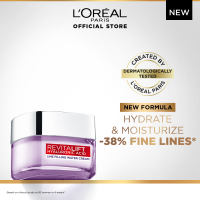
L’Oréal Paris Revitalift Hyaluronic Acid Line Filling Water Face Cream Moisturizer for Hydrates and Plumps Skin 50ml
$43.20$54.00
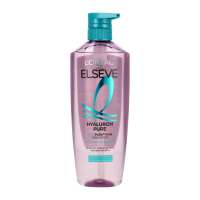
LOréal Paris Elseve Hyaluron Pure Shampoo - By Beauty Language
$11.90
Buy on Lazada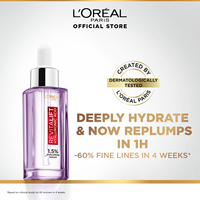
LOréal Paris Revitalift 1.5% Hyaluronic Acid Face Serum for Hydrated & Replump Skin Reduces Fine Lines 30ml
$46.05$59.80
About L’Oréal Paris
Overview
L’Oréal Paris is a French-origin global beauty brand owned by L’Oréal Groupe. Recognised as one of the world’s most prominent mass-market beauty brands, it offers an extensive portfolio spanning skincare, makeup, haircare, hair colour, and men’s grooming. The brand strategically combines the prestige of French beauty with mass-market accessibility, positioning itself at the intersection of everyday cosmetics and luxury-inspired formulations. 1
L’Oréal describes L’Oréal Paris as the No. 1 beauty brand in the world, although this designation is a corporate claim rather than an independent ranking. 2
Key Facts
| Category | Information |
|---|---|
| Brand | L’Oréal Paris |
| Parent company | L’Oréal Groupe |
| Country of origin | France |
| Industry | Cosmetics and personal care |
| Main categories | Skincare, makeup, haircare, hair colour, men’s grooming |
| Distribution | Mass-market, drugstores, supermarkets, specialty retailers, e-commerce |
| Global presence | Approximately 150 countries |
| Famous slogan | “Because You’re Worth It” / “Because I’m Worth It” |
| Original slogan created | 1971 |
| Current global president | Laetitia Toupet |
| Parent-group division | Consumer Products Division |
| Brand positioning | Accessible, science-driven, luxury-inspired beauty |
Origins and Corporate History
The history of L’Oréal Paris is intrinsically linked to L’Oréal Groupe, which traces its roots to French chemist Eugène Schueller. In 1909, Schueller established the company that would eventually become L’Oréal, achieving early success with a scientifically developed hair-colour formula designed as a safer alternative to existing dyes. This innovation laid the foundation for the company’s enduring focus on hair colour. 3
This scientific heritage remains central to the identity of L’Oréal Paris today, which emphasises products developed through research, formulation expertise, and technological innovation. It is important to distinguish between L’Oréal as the corporate group and L’Oréal Paris as a consumer brand; while the group dates to 1909, the modern consumer identity and market positioning of L’Oréal Paris evolved progressively throughout the 20th century.
Development of the Brand Identity
During the mid-20th century, L’Oréal expanded beyond professional hair colour to target a broader consumer base. The 1960s and 1970s were pivotal decades; shifting hairstyles and evolving social expectations regarding women influenced both product development and advertising strategies. The introduction of home hair-colour kits facilitated the transition of sophisticated beauty technology from salons to domestic use. 4
A landmark product in this era was Préférence, a home hair-colour line that served as the catalyst for the brand’s most significant communication milestone.
“Because You’re Worth It”
The phrase “Because I’m Worth It” is widely regarded as the defining element of the L’Oréal Paris identity. Created in 1971 by Ilon Specht, a 23-year-old copywriter at McCann in Manhattan, the tagline was originally developed for the Préférence hair-colour campaign. 5
At a time when beauty advertising typically framed female appearance in terms of pleasing others, Specht’s concept presented beauty as a choice a woman could make for herself. This distinction rendered the advertisement historically significant, establishing a narrative of female self-confidence and empowerment that the brand continues to champion. The slogan has since been translated into approximately 40 languages and adapted for diverse markets. 6
Variations used globally include:
- “Because I’m Worth It”
- “Because You’re Worth It”
- French: “Parce que je le vaux bien” / “Parce que vous le valez bien”
- Indonesian: “Karena Anda begitu berharga”
Today, the company regards “Worth It” not merely as an advertising tagline but as a core component of its brand mission. 7
Portfolio Expansion
While hair colour was fundamental to its origins, L’Oréal Paris has evolved into a comprehensive beauty brand. By the 1980s and 1990s, the portfolio had expanded significantly across multiple categories.
Skincare
Products address concerns including hydration, anti-ageing, wrinkles, firmness, pigmentation, sun protection, cleansing, and skin renewal.
Makeup
The makeup range encompasses foundation, concealer, mascara, eyeliner, lipstick, lip gloss, blush, and other complexion and eye products.
Haircare
Shampoos, conditioners, treatments, and styling products are formulated for various hair types and specific concerns.
Hair Colour
Remaining a historically vital category, hair colour has evolved from traditional permanent dyes to include solutions for grey coverage, highlights, gloss, and other at-home needs.
Men’s Grooming
The brand also offers skincare and grooming products specifically marketed towards men.
The company states that its current portfolio comprehensively spans makeup, skincare, haircare, hair colour, and men’s grooming. 8
Brand Philosophy
The identity of L’Oréal Paris is anchored by three interconnected pillars:
Beauty
The brand aims to democratise advanced cosmetic and personal-care technologies, making them accessible to everyday consumers.
Science
L’Oréal Paris leverages the research and development infrastructure of the wider group. The company cites a scientific heritage spanning over a century, utilising advanced research, active ingredients, green chemistry, and biotechnology in product development.
Self-Worth
The “Worth It” philosophy reframes beauty as a matter of personal confidence rather than solely physical attractiveness. This creates a distinctive positioning where commercial beauty products are presented alongside a narrative of personal empowerment.
Science and Innovation
Scientific credibility is integral to the brand’s market positioning. L’Oréal Paris draws upon the broader L’Oréal research organisation, which comprises 4,200 researchers across 21 research centres and holds access to 18,000 active patents. These figures represent the collective scientific resources available to the brand rather than a standalone L’Oréal Paris laboratory. 12
Key technologies and ingredients associated with the brand include:
- Pro-Xylane in anti-ageing skincare
- Mexoryl UV-filter technology
- Ceramide-based technologies in haircare
- Advanced hair-colour chemistry
- Reconstructed-skin research via Episkin
Notably, the company states that Episkin enabled it to pioneer alternative methods to animal testing starting in 1989, predating regulatory requirements in several markets.
Major Product Families
While portfolios vary by country, several product families are internationally recognised:
Revitalift
A primary skincare range focused on anti-ageing and firmness, often featuring Pro-Xylane and other active ingredients.
Glycolic Bright
Skincare products targeting uneven skin tone and pigmentation.
Age Perfect
A skincare and makeup range designed specifically for mature consumers.
Elseve / Elvive
Haircare products including shampoo, conditioner, masks, and treatments. Naming conventions vary by market, with Elseve used in many regions and Elvive in others.
Préférence
A historically significant hair-colour line associated with the origin of the “Because I’m Worth It” campaign.
Excellence
A prominent at-home hair-colour range.
True Match
A makeup line renowned for foundation and complexion matching.
Infallible
Makeup products emphasising long-wear performance and durability.
Telescopic
A widely recognised mascara line.
Lash Paradise
A major mascara franchise marketed for volumising effects.
Men Expert
The dedicated men’s grooming and skincare range.
Availability and specific formulations for these ranges differ considerably between markets.
Global Identity and Representation
A key strength of L’Oréal Paris is its ability to merge French heritage with international relevance. The inclusion of “Paris” in the brand name signals associations with French beauty, fashion, sophistication, cosmetics expertise, elegance, and modern femininity. However, the brand operates as a global entity rather than a domestic French label, adapting products and communications for local contexts across approximately 150 countries. 9
Modern marketing places significant emphasis on representation. The brand develops products for diverse ages, skin tones, ethnic backgrounds, hair types, and cultures. Advertising campaigns feature a broad spectrum of celebrities and public figures rather than a singular beauty ideal, reflecting the varied needs of consumers in categories like makeup and skincare. This approach seeks to balance traditional French beauty imagery with a contemporary commitment to inclusive beauty. 10
Brand Ambassadors
High-profile ambassadors have historically been central to communicating the brand’s identity. Representatives from film, music, fashion, and television have included:
- Viola Davis
- Helen Mirren
- Kate Winslet
- Eva Longoria
- Camila Cabello
- Andie MacDowell
- Elle Fanning
- Aja Naomi King
- Katherine Langford
The company describes these ambassadors as representing different generations, cultures, and backgrounds. 18 This strategy underscores that L’Oréal Paris sells an identity and attitude towards beauty alongside functional product benefits.
Women’s Empowerment and Social Initiatives
Women’s empowerment is a distinctive corporate social theme for the brand, rooted in the “Worth It” philosophy established in 1971. L’Oréal Paris states its aim is to encourage women to define their own identities and ambitions. 11
Contemporary initiatives include Stand Up, a programme addressing street harassment as part of broader efforts to support women and challenge societal barriers. This represents an evolution in the brand’s narrative:
1970s: “Because I’m Worth It” as an advertising breakthrough.
Today: “Worth It” as a holistic mission encompassing confidence, representation, and empowerment.
Sustainability
Sustainability has been integrated into the brand’s strategic framework, covering product formulation, packaging, responsible sourcing, environmental impact reduction, green science, circular economy principles, and social initiatives. These efforts align with the wider L’Oréal for the Future framework, integrating sustainability throughout the product lifecycle from design to consumer use.
As with major cosmetics companies, these commitments represent ongoing targets and initiatives rather than confirmation that the entire portfolio is environmentally neutral.
Relationship with L’Oréal Groupe
L’Oréal Paris is not an independent corporation but a brand within L’Oréal Groupe, which also owns Lancôme, Maybelline New York, Garnier, Kérastase, La Roche-Posay, CeraVe, and NYX Professional Makeup. It sits within the group’s Consumer Products Division. In 2025 reporting, the Consumer Products Division generated €16.1 billion in sales, while L’Oréal Groupe reported total sales of €44.05 billion. 12
These figures reflect group and divisional performance, not sales attributable solely to L’Oréal Paris.
Market Positioning
L’Oréal Paris occupies a distinct niche characterised as mass-market in distribution but premium-inspired in image. Its positioning bridges the gap between luxury beauty (high price, selective distribution) and basic mass-market beauty (lower price, functional positioning), offering relatively accessible pricing combined with sophisticated branding and scientific credibility. This allows the brand to compete simultaneously on accessibility, innovation, and perceived quality. L’Oréal describes the brand as making “luxury beauty” accessible to everyone. 13
Advertising and Cultural Influence
The brand holds a significant place in advertising history due to the cultural impact of “Because I’m Worth It.” The tagline shifted industry narratives from external validation (“look beautiful for someone else”) to internal agency (“choose beauty for yourself”). Used for over five decades, L’Oréal describes it as a cultural and feminist manifesto rather than a conventional tagline. 14
In 2025, the brand released The Final Copy of Ilon Specht, a documentary exploring the creator of the original phrase and her lasting cultural legacy.
Strategy in the 2020s
The contemporary strategy integrates previously distinct elements: French heritage, scientific research, accessible products, digital marketing, diversity, women’s empowerment, and sustainability. This holistic approach has broadened the brand’s scope beyond its historical association with hair dye.
L’Oréal’s 2025 results indicated that L’Oréal Paris remained one of four global brands in the Consumer Products Division with strong performance, driven particularly by innovation in haircare and makeup. 15
Leadership
As of 2026, Laetitia Toupet serves as Global President of L’Oréal Paris, leading the brand’s global mission regarding beauty, innovation, and women’s empowerment. 17 This role is distinct from the leadership of the parent entity, L’Oréal Groupe.
Significance
L’Oréal Paris is notable for several key contributions to the industry:
- Democratisation of Beauty Technology: Transitioning salon-grade products to home use.
- Transformation of Advertising: Establishing “Because I’m Worth It” as a culturally resonant message.
- Integration of Science and Consumer Beauty: Leveraging R&D capabilities as a primary credibility marker.
- Global Beauty Identity: Creating a distinctive positioning combining Parisian heritage, science, accessibility, and empowerment.
- Social Platform: Expanding beyond cosmetics to engage with confidence, representation, and social issues via the “Worth It” platform.
Timeline
| Year | Event |
|---|---|
| 1909 | Eugène Schueller establishes the company that becomes L’Oréal, focusing on innovative hair-colour chemistry. |
| 20th century | Expansion from hair colour into broader cosmetics and beauty products. |
| 1960s–70s | Evolving beauty trends drive further product and hair-colour innovation. |
| 1971 | Ilon Specht creates “Because I’m Worth It” for Préférence hair colour. |
| 1980s–90s | Significant expansion into makeup and skincare categories. |
| 1989 | Adoption of alternative methods to animal testing via scientific research, including Episkin. |
| 2000s | Accelerated international expansion and digital engagement. |
| 2010s | Increased focus on diversity, digital beauty, and broader consumer engagement. |
| 2021 | 50th anniversary of “Because I’m Worth It”. |
| 2025 | Continued global expansion and innovation; release of The Final Copy of Ilon Specht. |
| 2026 | Remains a flagship brand within L’Oréal Groupe’s Consumer Products Division. |
References
- L’ORÉAL PARIS
- Tentang L’Oréal Paris – L’Oréal Paris
- Our History – L’Oréal Paris
- Sejarah Kami – L’Oréal Paris
- Because You’re Worth It – L’Oréal Paris
- 50 Tahun Merayakan Perempuan – L’Oréal Paris
- About us – L’Oréal Paris
- INSIDE THE WORLD OF L’ORÉAL PARIS – L’Oréal Paris
- About us – L’Oréal Paris
- Ilon Specht: Because I’m Worth It | L’Oréal Paris
- L’Oréal Paris Celebrates 50th Anniversary Of “Because You’re Worth It” Slogan – L’Oréal Paris
- About Us – A century of history & committments | L’Oréal Paris UK
- Venez vite découvrir nos exclusivités : 50 ans auprès des femmes
- L’ORÉAL PARIS
- L’Oréal Paris Brand Overview – L’Oréal Paris
- Discover Our Full Brand History – Learn More – L’Oréal Paris ME
- O nas – nasza misja | L’Oreal Paris
- Hakkımızda | L’Oréal Paris