Shop on Lazada
Maxi-Cash products
![Petite Ingot (Gold Bean) in 999 Gold (1gm) [Bundle Deal Available]](https://sg-live.slatic.net/p/7943e8663b65474677d982ec2b25ccd6.jpg_200x200q80.jpg)
Petite Ingot (Gold Bean) in 999 Gold (1gm) [Bundle Deal Available]
$1,458.00$2,690.00
![Petite Heart (Gold Bean) in 999 Gold (1gm) [Bundle Deal Available]](https://sg-live.slatic.net/p/a190be0a372e4b2f133aa1a3ec7362c2.jpg_200x200q80.jpg)
Petite Heart (Gold Bean) in 999 Gold (1gm) [Bundle Deal Available]
$1,458.00$2,690.00
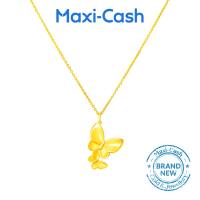
Flutters of Love Necklace in 916 Gold
$1,989.30$2,094.00
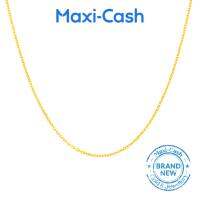
Wan Zi Chain in 916 Gold (40cm)
$1,193.20$1,256.00
Cable Chain in 916 Gold (50cm)
$2,190.70$2,306.00
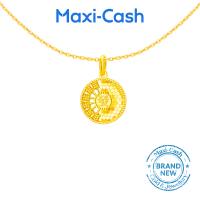
Prosperity Abacus Pendant in 916 Gold
$908.20$956.00
![Petite Star (Gold Bean) in 999 Gold (1gm) [Bundle Deal Available]](https://sg-live.slatic.net/p/fcf8a085fb7c28f02801f0e9ff1594d4.jpg_200x200q80.jpg)
Petite Star (Gold Bean) in 999 Gold (1gm) [Bundle Deal Available]
$1,458.00$2,690.00
![Petite Crane (Gold Bean) in 999 Gold (1gm) [Bundle Deal Available]](https://sg-live.slatic.net/p/e460e0670e502cfaceaed4b1be58d011.jpg_200x200q80.jpg)
Petite Crane (Gold Bean) in 999 Gold (1gm) [Bundle Deal Available]
$1,458.00$2,690.00
About Maxi-Cash
Maxi-Cash is a Singapore-based pawnbroking and retail brand best known for its network of modern pawnshops, gold and jewellery retail, and pre-owned branded merchandise. The brand is part of Aspial Lifestyle Limited, a Singapore-listed consumer-lifestyle group that also owns the Lee Hwa Jewellery and Goldheart Jewelry brands.1
Unlike traditional pawnshop imagery, Maxi-Cash has positioned itself as a modern, professional and customer-oriented financial-services retailer, combining collateral-based short-term lending with jewellery and luxury-goods retail.
Overview
| Category | Information |
|---|---|
| Brand | Maxi-Cash |
| Industry | Pawnbroking, financial services, jewellery & luxury retail |
| Country of origin | Singapore |
| Founded | 2008 |
| First outlet | Ang Mo Kio Central, February 2009 |
| Parent group | Aspial Lifestyle Limited |
| Former listed company name | Maxi-Cash Financial Services Corporation Ltd. |
| Stock-market history | Listed on SGX Catalist in 2012; parent later moved to SGX Mainboard in 2026 |
| Main market | Singapore |
| Other markets/business interests | Malaysia and regional operations |
| Core services | Pawnbroking, buying/selling gold and jewellery, branded watches, luxury bags and related merchandise |
| Digital services | Online valuation, PayNow cash payout, online payments and e-commerce |
| Corporate positioning | Modern, professional and customer-focused pawnbroking |
Maxi-Cash states that it currently operates more than 48 retail stores in Singapore and the region.
History
2008 — Establishment
Maxi-Cash traces its origins to 2008, when Aspial Corporation entered the financial-services sector. The company that became Maxi-Cash Financial Services Corporation was incorporated in Singapore on 10 April 2008.2
The original corporate entity was initially called World Class Financial Services Pte. Ltd. It was renamed Maxi-Cash Financial Services Corporation Pte. Ltd. in May 2011 and subsequently became a public company.
2009 — First pawnshop
Maxi-Cash opened its first pawnshop at Ang Mo Kio Central in February 2009.3 Later that year, it opened a pawnshop on Orchard Road, marking an important step in establishing pawnbroking as a more mainstream retail service.
The company expanded rapidly, adding nine more pawnshops during 2009 and another six in 2010.4
2012 — Public listing
On 22 June 2012, Maxi-Cash Financial Services Corporation Ltd. was listed on the Catalist board of the Singapore Exchange (SGX). This made Maxi-Cash the first publicly listed pawnbroker in Singapore.20
The listing was significant because it gave a traditionally small, fragmented financial-services sector a publicly traded corporate representative.
2013 — Island-wide renewal
Maxi-Cash subsequently introduced an island-wide pawn renewal service, allowing customers to renew their pledges and pay interest at any Maxi-Cash outlet rather than necessarily returning to the original shop.
2019 — Overseas expansion
Maxi-Cash expanded outside Singapore, entering Malaysia and Australia.5
The group’s corporate structure subsequently included pawnbroking and related entities in Malaysia and other regional operations.6
2022 — Corporate name change
A major change occurred in 2022. The listed company formerly known as Maxi-Cash Financial Services Corporation Ltd. changed its corporate name to Aspial Lifestyle Limited on 3 October 2022.7
The change reflected the group’s expansion beyond pawnbroking into a broader consumer-lifestyle portfolio, particularly following the acquisition of Aspial-Lee Hwa Jewellery Singapore and related businesses. Maxi-Cash remained one of the group’s principal consumer brands.
2026 — Mainboard listing
The corporate parent, Aspial Lifestyle Limited, moved from the SGX Catalist board to the SGX Mainboard on 4 May 2026.27
This distinction is important: Maxi-Cash itself is now a brand and business within Aspial Lifestyle; it is not a separately listed company under the Maxi-Cash name.
Business activities
Maxi-Cash essentially combines three related businesses:
Pawnbroking
Pawnbroking is the company’s traditional core business. A customer brings an item of value—such as gold jewellery, a watch or another eligible valuable—to a Maxi-Cash outlet. The item is assessed and used as collateral for a short-term loan.
The customer receives cash and keeps the right to redeem the pledged item by repaying the loan and applicable charges according to the terms of the pledge. In Singapore, pawnbroking is a regulated activity under the Pawnbrokers Act 2015. SGX documentation describes pawnbroking as a form of collateralised micro-loan.11
This makes Maxi-Cash somewhat different from a conventional bank: the lending decision is primarily based on the value of pledged collateral, rather than the conventional unsecured-credit model.
Jewellery and gold retail
Maxi-Cash is also a jewellery retailer. Its product range includes gold jewellery, fine jewellery, rings, necklaces, bracelets, earrings, chains, pendants, charms and other precious-metal products.5
The company’s current website positions Maxi-Cash as a jewellery retailer offering both traditional and contemporary designs. This creates a natural relationship between its pawnbroking and retail operations: jewellery can enter the business through pawnbroking transactions and subsequently become part of its retail inventory.
Pre-owned branded merchandise
Another important part of the Maxi-Cash proposition is the buying and selling of pre-owned luxury and branded goods. Its “Sell to Us” business specifically advertises valuation and purchasing of gold, fine jewellery, branded watches and luxury bags.6
The company says its valuation team has more than a decade of industry experience and thousands of transactions behind it. This gives Maxi-Cash characteristics of both a pawnshop and a second-hand luxury retailer.
Business model
A simplified version of the Maxi-Cash business model operates as follows:
- Customer owns valuable item
- Maxi-Cash evaluates item
- Option 1: Pawn – Customer receives a collateral-backed loan.
- Option 2: Sell – Maxi-Cash purchases the item from the customer.
- Maxi-Cash obtains inventory/collateral – Items that are not redeemed or are purchased can potentially enter the company’s merchandise business.
- Retail / resale to another customer
This creates a circular business model in which financial services and retail merchandise complement one another.16
Brand positioning and significance
One of Maxi-Cash’s biggest contributions to Singapore’s pawnbroking industry has been its attempt to change the public perception of pawnshops. Historically, pawnbroking could be associated with small traditional shops and emergency borrowing. Maxi-Cash deliberately developed a more polished retail environment, describing its model as a modern, professional and even “bank-like” customer experience.15
The company has emphasised transparency, reliability, professional valuation, convenient locations, modern store design, customer service and digital transactions. This positioning helped make pawnbroking more visible as a legitimate mainstream financial service rather than simply a last-resort source of money.
Its official corporate profile explicitly identifies reliability, quality and transparency as hallmarks of the business.25
Digital transformation
Maxi-Cash has invested heavily in digital services. According to the company, it was the first pawnbroking chain in Singapore to pioneer online and digital services. Its digital ecosystem includes:
- E-Valuation: Customers can obtain an online valuation before visiting a store.
- PayNow cash payout: The company offers instant and secure cash payouts through PayNow.
- iPayment: Customers can make payments digitally.
- Maxi-Cash App: The app brings together payment, valuation and shopping functions.1314
- E-Shop: Customers can browse and purchase merchandise online.
This is strategically important because traditional pawnbroking is fundamentally physical: customers normally need to bring collateral to a store. Digital services therefore do not completely replace physical branches, but instead make the valuation, payment and customer-relationship portions of the business more convenient.
Store network
Singapore remains the heart of the Maxi-Cash business. The company’s stores are deliberately located in places with significant everyday foot traffic, including locations near MRT stations, bus interchanges, shopping malls, HDB town centres and major neighbourhood commercial areas.
Its official store directory currently lists outlets including Boon Keng, Bugis, Bukit Merah, HarbourFront, Holland Drive, Sengkang, NEX, Toa Payoh, Punggol, Yishun, Boon Lay, Bukit Batok, Bukit Panjang, Clementi and Jurong, among others.7
The company describes itself as having the largest network of pawnshops and retail outlets in Singapore. The Ministry of Law’s registered-pawnbroker lists also contain numerous Maxi-Cash operating entities and outlets, reflecting its substantial presence in Singapore’s regulated pawnbroking sector.1121222324
Corporate ownership
Original structure
Maxi-Cash was developed by Aspial Corporation, a Singapore business group with longstanding interests in jewellery and other consumer businesses. Aspial’s own corporate history records its entry into financial services through Maxi-Cash in 2008.8910
Listed company
The company behind the original Maxi-Cash listing was Maxi-Cash Financial Services Corporation Ltd., which was listed on SGX in 2012.
Current structure
In 2022, that listed company changed its name to Aspial Lifestyle Limited. Today, Aspial Lifestyle describes itself as a consumer-lifestyle group with three major retail brands:26
- Maxi-Cash
- Lee Hwa Jewellery
- Goldheart Jewelry
The corporate structure is as follows:
- Aspial Corporation / Aspial group
- Aspial Lifestyle Limited
- Maxi-Cash
- Pawnbroking + jewellery + pre-owned branded merchandise
Aspial Lifestyle’s financial statements also show wholly owned Maxi-Cash entities covering areas such as investment holding, jewellery trading and retail, property and related activities.28
International operations
Although Singapore is Maxi-Cash’s primary market, the group has pursued regional expansion. Its corporate history records expansion into Malaysia and Australia in 2019.5
More recent corporate disclosures show Maxi-Cash-related subsidiaries operating in Malaysia, including entities whose principal activities include pawn brokerage.6
The corporate group’s historical disclosures have also referred to operations or entities in Australia and Hong Kong, although the status of individual overseas entities has changed over time. For example, the 2024 financial statements identified certain Hong Kong Maxi-Cash entities as inactive.171819
Therefore, it is more accurate to describe Maxi-Cash as a Singapore-centred brand with regional operations and corporate interests, rather than simply a Singapore-only pawnshop chain.
Regulation
Pawnbroking is a regulated financial activity in Singapore. The relevant legislation is the Pawnbrokers Act 2015, and pawnshops must operate under the applicable licensing framework.
This matters because Maxi-Cash is not simply buying and selling second-hand goods. Its lending operation is part of Singapore’s regulated pawnbroking industry. The company’s historical SGX documentation specifically describes its Singapore pawnbroking operations as licensed and regulated under the Pawnbrokers Act.11
The Ministry of Law also publishes official lists of valid registered pawnbrokers in Singapore, which include Maxi-Cash entities.21222324
Comparison with traditional banks
Maxi-Cash occupies a different niche from a bank.
| Maxi-Cash pawnbroking | Traditional bank |
|---|---|
| Secured by pledged valuables | Often based on credit/income assessment |
| Physical collateral is central | Collateral may or may not be required |
| Short-term financing | Wide range of short- and long-term products |
| Jewellery/watches/etc. can be used as collateral | Usually not the primary lending collateral for consumers |
| Fast valuation and transaction | More formal application process for many products |
| Pawnshop/retail environment | Banking environment |
| Also buys and sells merchandise | Primarily provides financial products |
The two are not necessarily direct substitutes. Pawnbroking can serve customers who want rapid liquidity against an asset without going through the same process as conventional bank borrowing.
Relationship with the jewellery industry
Maxi-Cash has an unusually strong relationship with jewellery compared with many conventional pawnbrokers. That is partly a consequence of its parent group’s history.
Aspial has been involved in Singapore’s jewellery industry for decades. Its corporate milestones include the history of Lee Hwa Goldsmiths and Jewellers, the acquisition of Goldheart Jewelry, and later the development of Maxi-Cash.25
Consequently, Maxi-Cash benefits from an ecosystem that includes jewellery manufacturing and sourcing, retail, pawnbroking, and resale of pre-owned merchandise. This helps explain why gold and jewellery are so central to the brand.
Employment and corporate recognition
Maxi-Cash has attempted to position itself as a modern employer rather than simply a traditional pawnshop operator. The company states that it received The Straits Times Singapore’s Best Employers recognition for two consecutive years, in 2022 and 2023, citing its sustainability and workplace initiatives.12
Its corporate career infrastructure is now connected with the wider Aspial group.
Financial-market significance
Maxi-Cash’s history is particularly interesting from a Singapore capital-markets perspective. When it listed in 2012, it became Singapore’s first publicly listed pawnbroker.20
The significance goes beyond the brand itself: the listing demonstrated that a traditional financial-services business such as pawnbroking could be structured as a sizeable corporate operation and accessed through public capital markets.
Today, however, investors interested in the business look at Aspial Lifestyle Limited, rather than a separate Maxi-Cash listed company. As of 2026, SGX records Aspial Lifestyle as a Mainboard-listed company, following its transfer from Catalist on 4 May 2026.27
Current corporate identity
As of 2026, Maxi-Cash is defined as a Singapore-origin pawnbroking and value-retail brand owned by Aspial Lifestyle Limited, offering collateral-backed short-term financing together with gold and jewellery retail and the buying and selling of pre-owned branded merchandise.
The important distinction is that Maxi-Cash is not synonymous with Aspial Lifestyle. Rather, Aspial Lifestyle Limited is the listed parent and consumer-lifestyle group, while Maxi-Cash is one of its major brands. Alongside Maxi-Cash, the group operates Lee Hwa Jewellery and Goldheart Jewelry.26
Key milestones
| Year | Milestone |
|---|---|
| 2008 | Maxi-Cash business established under Aspial |
| 2009 | First pawnshop opened at Ang Mo Kio Central |
| 2009 | First Orchard Road pawnshop opened |
| 2010 | Continued rapid Singapore expansion |
| 2012 | Maxi-Cash Financial Services Corporation listed on SGX Catalist |
| 2013 | Island-wide pledge-renewal service introduced |
| 2019 | Overseas expansion into Malaysia and Australia |
| 2022 | Listed company renamed Aspial Lifestyle Limited |
| 2022–23 | Maxi-Cash recognized by The Straits Times Best Employers programme |
| 2026 | Aspial Lifestyle transferred from SGX Catalist to Mainboard |
References
- Company Profile
- IPO – MAXI-CASH FINANCIAL SERVICES CORPORATION LTD
- IMPORTANT NOTICE
- MAXI-CASH FINANCIAL SERVICES CORPORATION LTD
- Jewellery – Maxi-Cash
- Sell to us
- Contact Us
- MAXI-CASH (CENTRAL) PTE. LTD. (200820799W) – Singapore Company
- MAXI-CASH JEWELLERY GROUP PTE. LTD. (200903686N) – Singapore Company
- MAXI-CASH RETAIL PTE. LTD. (200412533G) – Singapore Company
- fcfs-20251231
- fcfs-20250425
- Maxi-Cash App – App Store
- Maxi-Cash App – App Store
- Quick Guide: Understanding Maxi-Cash Pawn Shop Singapore – Licensed Money Lender Singapore
- Maxi-Cash to beef up local retail offerings; sees growth in secured lending segment – Aspial Lifestyle
- Annual Reports and Related Documents::
- Annual Reports and Related Documents::
- Annual Reports and Related Documents::
- SGX Welcomes Maxi-Cash To Catalist
- MAXI-CASH (CLEMENTI) PTE. LTD.
- MAXI-CASH (CENTRAL) PTE. LTD.
- MAXI-CASH (CLEMENTI) PTE. LTD. (200912860N) – Pawnbrokerage – Singapore Company
- MAXI-CASH GROUP PTE. LTD. (200807271K) – Pawnbrokerage – Singapore Company
- Maxi-Cash – Aspial Lifestyle
- Aspial Lifestyle
- ASPIAL LIFESTYLE LIMITED (200806968Z)
- MAXI-CASH JEWELLERY GROUP PTE. LTD. (200903686N)