Shop on Lazada
MIU MIU products
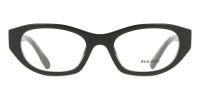
Miu Miu MU03WV 16K1O1 New Women Eyeglasses
$348.00
Buy on LazadaOriginal Authentic Luxury MiuMiu Woven Large Bag For Women Same Style As Dilraba Milk Tea Color Lazy Vacation Style Large Capacity Singapore
$185.13$187.00
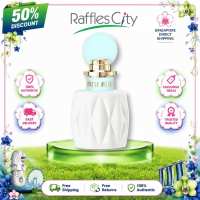
Miu Miu Fleur De Lait EDP 100ml
$37.62$80.00
Original Authentic Luxury Miu Miu HoboUnderarm Crossbody Bag For Women Genuine Leather Grain Leather Retro Style Foldable Packing Singapore
$196.41$205.00
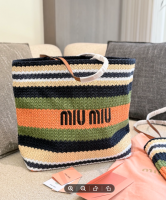
Original Authentic Luxury MiuMiu Woven Large Bag For Women Same Style As Dilraba Milk Tea Color Lazy Vacation Style Large Capacity Singapore
$185.13$187.00
Original Authentic Luxury MiuMiu Woven Large Bag For Women Same Style As Dilraba Milk Tea Color Lazy Vacation Style Large Capacity Singapore
$185.13$187.00
Original Authentic Luxury MiuMiu 11W Eyeglasses For Women Cat Eye Design Comes With Glasses Case & Pouch Face Slimming Effect Trendy Style Singapore
$122.66$128.00
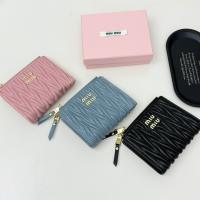
Original Authentic Luxury MiuMiu 790 Bag For Women Top Imported Lambskin Embossed Jacquard Pattern Black Pink Blue Counter Hot Style Singapore New Arrival
$85.33$99.00
About MIU MIU
MIU MIU is an Italian luxury fashion house established in 1993 by designer Miuccia Prada. Operating under the Prada Group, it sits alongside sister brands such as Prada, Church’s, Car Shoe, Versace, Marchesi 1824 and Luna Rossa. Headquartered within the group’s Italian corporate structure, MIU MIU is primarily recognised for its women’s ready-to-wear collections, handbags, footwear and accessories.1 Although frequently characterised as a more playful, rebellious and experimental counterpart to Prada, the label has evolved into a highly independent luxury house with a distinct visual identity, clientele and cultural presence. Vogue has described its original positioning as an “anti-fashion” line that subsequently matured into a stand-alone brand.2 The official website is miumiu.com.
Basic information
| Category | Information |
|---|---|
| Brand | MIU MIU |
| Founded | 1993 |
| Founder / Creative force | Miuccia Prada |
| Parent company | Prada Group |
| Country of origin | Italy |
| Industry | Luxury fashion |
| Main categories | Ready-to-wear, handbags, footwear, accessories, eyewear, fragrance |
| Current creative director | Miuccia Prada |
| Fashion identity | Feminine, youthful, intellectual, playful, subversive |
| Major fashion city | Paris |
| Parent group | Prada Group |
Prada Group officially states that MIU MIU was born in 1993 from Miuccia Prada’s “independent and unconventional spirit.”2
Origin of the name
The name MIU MIU derives directly from Miuccia Prada’s childhood nickname. The repetitive, childlike sound was chosen to reflect a personality that is more intimate, mischievous, youthful and unconventional than the main Prada house.3 This distinction is fundamental to understanding the brand’s positioning.
While Prada traditionally communicates concepts such as intellectual luxury, minimalism, modernism, seriousness and conceptual design, MIU MIU leans towards youth, femininity, irony, sensuality, playfulness, contradiction and experimentation. Consequently, while both brands share the same creative DNA, they express it through noticeably different voices.
Founder: Miuccia Prada
Miuccia Prada remains the central figure behind MIU MIU. She is the granddaughter of Mario Prada, who founded the original business in Milan in 1913. After becoming involved in the family company during the 1970s, her creative partnership with entrepreneur Patrizio Bertelli was instrumental in transforming Prada into an international luxury group.4
Unlike many modern luxury brands where the founder eventually separates from the label, MIU MIU continues to serve as an ongoing expression of Miuccia Prada’s personal creative interests. Prada Group describes it as the “most unrestrained portrayal” of her creativity.5 As of 2026, she continues to serve as Creative Director; for instance, official credits for the Fall/Winter 2026 collection list her in this role.6
Relationship with Prada
MIU MIU is often understood as Prada’s “other soul.” The group’s own history describes the brand as a laboratory for new stylistic expressions rather than merely a secondary line.5 Describing it simply as a “younger Prada” can be misleading, as each brand explores distinct thematic territories.
Prada
Prada tends to explore intellectualism, architecture, minimalism, technology, industrial materials, social commentary, deliberate ugliness and sophisticated restraint.
MIU MIU
Conversely, MIU MIU frequently investigates femininity, youth, sexuality, nostalgia, schoolgirl references, vintage clothing, bourgeois codes, irony, imperfection, spontaneity and playful styling.
Despite these differences, both brands are built around the same fundamental philosophy: taking familiar things and making them strange.
Founding and early aesthetic
MIU MIU officially emerged in 1993, coinciding with the launch of Prada’s first men’s collection and the establishment of Fondazione Prada.6 Rather than extending Prada’s existing aesthetic, Miuccia Prada created a separate fashion language to explore more personal, youthful and eccentric ideas. Early collections featured feminine dresses, patchwork, suede, prairie and Western references, playful prints, unconventional proportions, vintage-inspired clothing and deliberately awkward combinations. This established a reputation for “pretty but strange” fashion. Vogue notes that the brand began as an accessories-rich, “anti-fashion” alternative before progressively developing into an independent entity.7
The early MIU MIU woman was not necessarily the stereotypical glamorous luxury customer. Instead, she could appear simultaneously eccentric, intellectual, innocent, sexy, awkward, rebellious, feminine and deliberately unfashionable. Outfits often combined contrasting elements, such as a delicate dress with an oversized coat and flat shoes, or a school-uniform reference paired with a glamorous handbag and exposed legs. This tension between innocence and sexuality became a defining characteristic.
Design philosophy and codes
Ugly-chic and intentional awkwardness
MIU MIU embodies Miuccia Prada’s broader design philosophy that beauty does not have to be conventionally perfect. Objects considered ordinary, unfashionable, old-fashioned, childish, awkward or overly feminine are placed within a luxury context. This creates a sense of “wrongness” that becomes fashionable precisely because it lacks polish, contributing to the brand’s association with the “not-quite-right” look.8
The MIU MIU girl
The concept of the MIU MIU girl is central to the brand’s identity. Defined by attitude rather than age, she represents a blend of curiosity, independence, femininity, mischief and self-awareness. Styling often mixes tiny skirts, oversized jackets, ballet flats, loafers, Mary Janes, vintage-looking handbags, cardigans, lingerie-inspired pieces, glasses and socks. This deliberate mixing of innocence and sexuality remains one of the brand’s most recognisable signatures.
Recurring design codes
Although the aesthetic constantly evolves, several codes recur throughout the brand’s history:
- Femininity: Traditional elements like skirts, dresses, lace, satin and bows are frequently used but deliberately disrupted.
- Youth: References to school uniforms, teenage wardrobes, ballet, college clothing and sportswear create a youthful atmosphere without targeting only teenagers.
- Vintage: Collections often reference the 1940s through to the early 2000s, reinterpreting historical clothing through contemporary styling rather than reproducing it exactly.
- Contradiction: Perhaps the most important code, combining sweet with aggressive, luxurious with ordinary, innocent with sexual, retro with futuristic, elegant with awkward, and feminine with masculine. Prada Group describes the brand as combining a “naïf” spirit with sophistication, rebellion and a carefree attitude.9
Key product categories
Handbags
Handbags have become increasingly vital to the brand. Notable styles include the Matelassé, Arcadie, Wander, Aventure, Vivant, Beau and Utilitaire. The Matelassé treatment, in particular, is strongly associated with the house. Current strategy combines recognisable codes with frequent reinvention; the Spring/Summer 2026 collection, for example, featured the Vivant, Aventure, Utilitaire, Beau and Wander families.10
Footwear
Footwear is another pillar of the brand’s identity, encompassing ballet flats, Mary Janes, loafers, sandals, boots, sneakers, platform shoes and embellished heels. Shoes are often used to exaggerate the personality of an outfit, contributing to a reputation for creating trends through styling rather than merely individual garments. The revival of the ballet flat, reinterpreted with ribbons, satin, mesh and buckles, stands as a clear example of the brand’s influence on wider contemporary fashion.
Micro-skirt and underwear aesthetic
In the early 2020s, MIU MIU gained significant influence through provocative reinterpretations of everyday clothing. The extremely short micro-mini skirt, styled with button-down shirts, knitwear, low-rise silhouettes, loafers and socks, became iconic. The brand also helped popularise showing underwear or underwear-like garments as outerwear. Vogue specifically identified the runway styling of underwear, cardigans and flat shoes as a major cultural fashion moment.10
Cultural resurgence in the 2020s
MIU MIU experienced a major cultural resurgence in the early 2020s driven by several converging factors. Fashion’s growing interest in 1990s aesthetics, Y2K, balletcore and schoolgirl themes aligned perfectly with the brand’s existing vocabulary. Its distinctive styling translated exceptionally well to social media platforms like Instagram and TikTok. Furthermore, increased visibility on celebrities and high-profile figures amplified its reach.
Crucially, the brand successfully occupied a space between high fashion and internet culture, appearing simultaneously at Paris Fashion Week, in luxury retail, on TikTok and in Gen Z fashion discussions. This combination significantly enhanced its cultural visibility and desirability.
Celebrity campaigns and casting
Celebrity casting has long been integral to the brand’s communication. Historically featuring figures such as Chloë Sevigny, recent campaigns have showcased a diverse mix of actors, musicians, models and cultural personalities including Olivia Rodrigo, Joey King, Kylie Jenner, Myha’la, Towa Bird, Liu Haocun, Suzanne Lindon, Li Gengxi and Hailey Bieber.11 For Spring/Summer 2026, the campaign included Olivia Rodrigo alongside Sateen Besson, Li Gengxi, Suzanne Lindon, Rachel Agbonze and Amelie Sante.12 This strategy reflects a broader approach where the brand builds a cultural world around different personalities rather than simply selling clothes.
Cinema, literature and cultural projects
Women’s Tales
One of the brand’s best-known cultural initiatives is Women’s Tales, which invites female filmmakers to create short films connected to the MIU MIU universe. Rather than producing conventional advertising, these films explore themes of women, identity, desire, culture and contemporary life, treating fashion as part of broader culture.
Miu Miu Literary Club
The Miu Miu Literary Club brings writers and cultural figures together to discuss literature, gender, identity and contemporary culture. Prada Group identifies this initiative alongside Women’s Tales as part of the brand’s continuing cultural positioning.13 Both projects differentiate MIU MIU from brands whose communication is primarily product-focused.
Upcycled by Miu Miu
The Upcycled by Miu Miu project involves sourcing vintage garments and reworking them into new pieces. This initiative aligns with the brand’s fascination with vintage clothing, memory, personal wardrobes, imperfection and reinterpretation, turning old clothing into new luxury objects rather than treating the past as something to copy.1011
Collaborations and expansions
New Balance collaboration
Collaborations have been used strategically to reach different cultural communities. The partnership with New Balance connected the brand’s luxury aesthetic with athletic and sneaker culture. Prada Group reported that this relationship continued through 2025, including products associated with American tennis champion Coco Gauff.14 This allows MIU MIU to reinterpret sportswear through a luxury-fashion lens without becoming a sportswear brand.
Fragrance and beauty
Beyond clothing and accessories, the brand operates in fragrance, eyewear and beauty-related licensing. Prada Group’s 2025 reporting highlighted Miutine, described as the first fragrance created in collaboration with L’Oréal.15 These categories extend the visual identity into a broader lifestyle universe.
Recent developments (2025–2026)
By 2025–2026, MIU MIU had become one of the strongest cultural assets within Prada Group. The FY2025 presentation described the brand as having strong desirability and cultural positioning, supported by fashion shows, special projects, innovative retail concepts and collaborations.15 Campaigns in this period emphasised diverse forms of femininity and individuality. The Fall/Winter 2025 campaign featured Kylie Jenner, Myha’la, Towa Bird, Lou Doillon, Rila Fukushima, Yura Romaniuk and Cortisa Star,12 while Spring/Summer 2026 continued this multidisciplinary approach.16
Fall/Winter 2026: Mindful Intimacy
As of August 2026, creative direction remains under Miuccia Prada. The Fall/Winter 2026 collection, titled “Mindful Intimacy,” focused on the human body, personal agency, intimacy, sensuality, self-worth, softness, simplicity, vulnerability and strength. Official descriptions emphasised clothing that stays close to the body, treating it as worthy of attention and care.6 The accompanying campaign featured Hailey Bieber and Xiao Wen Ju, photographed by Zoe Ghertner with creative direction from Christopher Simmonds and styling by Lotta Volkova.5 Core themes of femininity, contradiction, sensuality and experimentation remained evident.
Visual identity
Colours
The palette frequently includes pastel pink, powder blue, cream, white, brown, burgundy, black, red and muted vintage tones, though the brand is not restricted to any specific spectrum.
Materials
Common materials and treatments include leather, satin, lace, cotton, cashmere, denim, suede, technical fabrics, embroidered textiles and knitwear.
Styling
Typical styling combines disparate elements, such as a mini skirt with a cardigan, socks and loafers; a vintage dress with an oversized coat; or lingerie references with everyday knitwear. The significance usually lies in the combination rather than any single item.
Comparison with Prada
| Prada | MIU MIU | |
|---|---|---|
| Founded | 1913 | 1993 |
| Creative force | Miuccia Prada | Miuccia Prada |
| Position | Main luxury house | Independent sister brand |
| Mood | Intellectual, conceptual | Playful, provocative |
| Typical impression | Sophisticated | Mischievous |
| Aesthetic | Minimal / experimental | Feminine / experimental |
| Age perception | More mature | More youthful |
| Key idea | Reinterpretation | Contradiction |
| Cultural references | Art, architecture, society | Youth, cinema, femininity, nostalgia |
| Styling | Controlled | Deliberately unexpected |
Both brands are intellectually driven; the difference lies in how that intelligence is expressed. While Prada questions what fashion means, MIU MIU questions what femininity is supposed to look like.18
Luxury positioning and significance
MIU MIU belongs to the luxury ecosystem of Prada Group, which designs, manufactures and distributes luxury goods internationally across more than 70 countries.17 Its luxury status is derived from Italian fashion heritage, high-end manufacturing, premium materials, designer authorship, controlled distribution, boutique presence, fashion-week participation and strong brand recognition.
What distinguishes the brand is its ability to make “imperfection” desirable. While possessing traditional craftsmanship and heritage, its creative strategy incorporates awkwardness, irony, youth, nostalgia, sexuality and contradiction. This makes its offerings feel less like traditional “luxury costumes” and more like high-fashion interpretations of real wardrobes, appealing particularly to younger consumers.
Historically, luxury fashion often dictated how an elegant woman should look. MIU MIU instead asks what if elegance could be contradictory, strange, personal and playful. Its success has normalised combinations once considered “wrong,” such as underwear with outerwear, tiny skirts with oversized jackets, or socks with luxury shoes. In this sense, the brand frequently turns formerly unfashionable references into luxury-fashion signals.
Timeline
- 1913: Prada is founded in Milan.19
- 1970s: Miuccia Prada becomes a key creative force within the family business and begins working with Patrizio Bertelli.20
- 1993: MIU MIU is launched as Miuccia Prada’s alternative creative expression.20
- 1990s: The brand develops its playful, feminine and unconventional identity, gaining international visibility.21
- 2003: Licensing agreements covering MIU MIU eyewear are recorded.22
- 2006: The fashion show moves from Milan to Paris, strengthening its independent identity.23
- 2020: Upcycled by Miu Miu launches as a sustainability and vintage-reinterpretation initiative.
- 2020s: Major resurgence occurs via micro-skirts, ballet flats, youthful styling, celebrity culture and social media.24
- 2025: Cultural presence expands through campaigns, Women’s Tales, Literary Club, collaborations and new retail concepts.25
- 2026: Miuccia Prada remains Creative Director; collections continue to emphasise experimentation, femininity and cultural dialogue.25
References
- Miu Miu: a Brand of Prada Group | Prada Group
- Miu Miu News, Collections, Fashion Shows, Fashion Week Reviews, and More | Vogue
- Miu Miu’s secret sauce | Vogue
- Miu Miu Spring 1996 Ready-to-Wear Collection | Vogue
- MIU MIU FALL/WINTER 2026 CAMPAIGN | Prada Group
- Miu Miu Fall/Winter 2026 Show: Mindful Intimacy | Prada Group
- Miu Miu Fall 2006 Ready-to-Wear Collection | Vogue
- Miu Miu Spring/Summer 2026 Campaign: On cloud nine | Prada Group
- Miu Miu Fall/Winter 2025 campaign: Femininities | Prada Group
- Miu Miu Upcycled 2026 | Prada Group
- Miu Miu Upcycled 2026 | Miu Miu
- ミュウミュウ 2025年秋冬広告キャンペーン:「Femininities」 | Prada Group
- Miu Miu Spring/Summer 2025 Campaign: “Duets” | Prada Group
- ミュウミュウ 2025年春夏キャンペーン:「Duets」 | Prada Group
- 「成功に関心はない。志を持ち、いい人でありたい」。ミウッチャ・プラダのこれまでの軌跡と心の内、15,000字インタビュー | Vogue Japan
- Miu Miu Fall 1995 Ready-to-Wear Collection | Vogue
- Miu Miu : 29 ans après sa création, cette marque est la plus prisée du moment | Vogue France
- Miu Miu : de 1993 à aujourd’hui, l’histoire de la petite soeur de la maison Prada | Vogue France
- Company Info | Miu Miu – China
- 〖ミュウミュウ公式オンラインストア〗会社概要 |MIU MIU – 日本
- Miu Miu Spring 2006 Ready-to-Wear Collection | Vogue
- Miu Miu News, Collections, Fashion Shows, Fashion Week Reviews, and More | Vogue
- The Purpose of Prada Group: Drivers Of Change | Prada Group
- Miu Miu:Prada集团旗下品牌 | Prada Group
- ミュウミュウ:プラダ・グループのブランド | Prada Group