Shop on Lazada
Nikka products
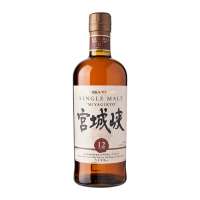
Nikka Miyagikyo Single Malt Whisky 12 Years Old - By The Liquor Shop Singapore
$2,100.00
Buy on Lazada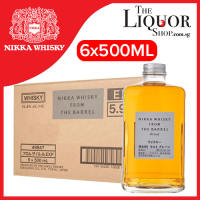
Bundle of 6 Bottles Nikka From The Barrel 500ml (With Box) (Standard delivery: 3–5 working days. Please expect slight delays during campaign periods.)
$418.99$533.99
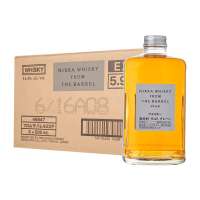
Nikka From The Barrel
$396.99
Buy on Lazada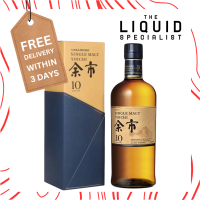
Nikka Yoichi 10 Years Japanese Whisky - 70cl
$242.00$298.00

Nikka from the Barrel Japanese Whisky - 6 x 50cl
$398.00$840.00
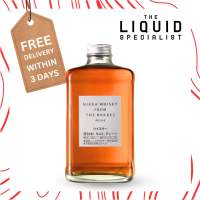
Nikka from the Barrel - 50cl
$68.88$94.00
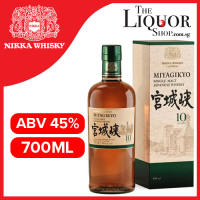
Nikka Miyagikyo 10 Year Old Japanese Single Malt Whisky ABV 45% 700ml (Standard delivery: 3–5 working days. Please expect slight delays during campaign periods.)
$251.99$350.00
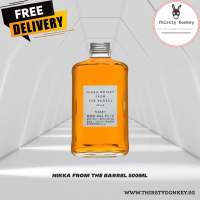
Nikka from the Barrel 500ML
$71.82$71.92
About Nikka
Overview
Nikka Whisky, commonly referred to as Nikka, is a Japanese whisky producer established in 1934 by Masataka Taketsuru, a pivotal figure in the development of the Japanese whisky industry. The company is renowned for its Yoichi and Miyagikyo distilleries, its adherence to traditional production methods, and signature brands including Nikka From The Barrel, Taketsuru, Nikka Coffey Grain, Nikka Coffey Malt, and Black Nikka.1 Nikka’s identity remains intrinsically linked to Taketsuru’s ambition to produce authentic whisky in Japan using knowledge acquired in Scotland. Today, Nikka operates as part of the Asahi Group, with its products distributed both domestically and internationally.2
| Field | Information |
|---|---|
| Brand name | Nikka Whisky / NIKKA |
| Japanese | ニッカウヰスキー |
| Company | The Nikka Whisky Distilling Co., Ltd. |
| Founded | 2 July 1934 |
| Founder | Masataka Taketsuru |
| Headquarters | Sumida, Tokyo, Japan |
| Origin | Yoichi, Hokkaido |
| Industry | Whisky, spirits and alcoholic beverages |
| Parent group | Asahi Group |
| Best known for | Japanese whisky, malt whisky, blended whisky, Coffey Grain |
| Major distilleries | Yoichi and Miyagikyo |
| Signature brands | Taketsuru, Yoichi, From The Barrel, Coffey Grain, Coffey Malt, Super Nikka, Black Nikka |
The company lists its current corporate name as THE NIKKA WHISKY DISTILLING CO., LTD. and traces its establishment to 1934. Its production network comprises seven facilities, including those at Yoichi, Miyagikyo, Hirosaki, Tochigi, and Kashiwa.3
The Founder: Masataka Taketsuru
The origins of Nikka are inseparable from Masataka Taketsuru (1894–1979), frequently cited as the “Father of Japanese Whisky”. Born in Hiroshima into a family with a long sake-brewing tradition, Taketsuru diverged from this path due to a fascination with Western spirits. In 1916, he joined Settsu Shuzo, a Japanese firm interested in domestic whisky production, and was subsequently sent to Scotland in 1918 to study whisky manufacturing.4
Scotland
During his time in Scotland, Taketsuru studied chemistry and gained practical experience at distilleries such as Longmorn. He also investigated grain whisky production using the Coffey still. His observations were meticulously recorded in notebooks later known as the “Taketsuru Notes”, which covered malt whisky production, distillation, pot stills, grain whisky, blending, working practices, taxation, and equipment. This Scottish education provided the technical foundation for his subsequent career in Japan.5
Masataka and Rita Taketsuru
A significant element of the Nikka narrative is Rita Taketsuru, Masataka’s Scottish wife. Born Jessie Roberta “Rita” Cowan, she met Masataka in Scotland in 1919; they married in January 1920 and returned to Japan together. Rita supported Masataka throughout his career and became an integral figure in the company’s history.6 Their lives were later dramatised in the 2014–2015 television series Massan, which renewed public interest in Nikka’s heritage.
Before Nikka: Yamazaki and Suntory
Upon returning from Scotland, Taketsuru did not immediately establish his own company. In 1923, he joined Kotobukiya (now Suntory), founded by Shinjiro Torii. There, he contributed to the establishment of the Yamazaki Distillery, which commenced production in 1924 as Japan’s first commercial malt whisky distillery. After ten years, differences in vision led Taketsuru to leave and pursue his own whisky-making ambitions.7 Consequently, Taketsuru is a central figure in the histories of both major Japanese whisky traditions: Suntory and Nikka.
Foundation of Nikka
In 1934, Taketsuru founded Dai Nippon Kaju Co., Ltd. in Yoichi, Hokkaido. Initially involved with apple products as well as whisky, the location was selected because Taketsuru believed its climate, water, and environment mirrored conditions suitable for whisky production in Scotland.8 The Yoichi Distillery was completed in October 1934. As whisky requires years of maturation, the young company sustained itself by producing apple juice, apple wine, and other products while waiting for its spirit to mature.
Origin of the Name “Nikka”
The name Nikka is derived from the company’s original Japanese name, Nippon Kaju (日本果汁). The first syllables, Ni and Ka, were combined to form “Nikka”. The first Nikka Whisky was released in 1940, six years after the company’s founding.9 Thus, the brand name originates from the corporate name rather than the founder’s surname.
Yoichi Distillery
The Yoichi Distillery is considered the spiritual home of Nikka. Located in Hokkaido, it was chosen for its cool northern climate, clean water, and natural environment. A defining characteristic is the continued use of traditional coal-fired direct heating for its pot stills, which Nikka regards as essential to Yoichi’s character.11
Yoichi Style
Yoichi whisky is typically associated with rich malt character, smoky notes, peat, a robust body, maritime or saline impressions, and powerful flavours. This profile contrasts markedly with the softer style of Miyagikyo, and the interplay between these two distilleries is central to Nikka’s blending philosophy.
Miyagikyo Distillery
Nikka’s second major distillery, Miyagikyo, was established in 1969 in Miyagi Prefecture. Unlike the rugged northern environment of Yoichi, Miyagikyo was selected for its forests, streams, and gentler surroundings.10 It produces whisky with a distinctly different character: softer, lighter, more delicate, fruity, floral, and elegant. This provides Nikka with two contrasting malt profiles for blending.
The Coffey Still
A key technical distinction of Nikka is its historic use of Coffey stills. In the early 1960s, Taketsuru arranged the acquisition of a Coffey still from Scotland, which was installed at the Nishinomiya facility in 1963–1964.11 Developed by Aeneas Coffey, this continuous column still can produce grain spirit continuously. Taketsuru retained this equipment because he believed it could yield flavourful grain whisky rather than merely neutral alcohol, making it a defining element of Nikka’s identity.
Blending Philosophy
Nikka’s approach centres on producing diverse whisky components in-house and blending them. This philosophy, deeply influenced by Taketsuru’s Scottish training, utilises the distinct characteristics of each distillery and still type:
- Yoichi malt: Rich, smoky, powerful
- Miyagikyo malt: Soft, fruity, elegant
- Coffey Grain: Sweet, smooth, mellow
Rather than aiming for uniformity, Nikka maintains different distillation styles and uses their differences as tools for blending.
Major Brands
Nikka’s portfolio has expanded significantly over the decades to include malt, grain, and blended whiskies, as well as gin and vodka.12
Taketsuru
Taketsuru is a pure malt whisky named after the founder. Produced by blending malts from Yoichi and Miyagikyo, it embodies Nikka’s two-distillery philosophy.13 It is generally characterised by elegance, malt sweetness, fruit, subtle complexity, and balance.
Yoichi Single Malt
Yoichi represents the character of the Hokkaido distillery and is typically the more powerful and smoky expression in the Nikka range. Common tasting notes include peat, smoke, malt, spice, oak, and maritime character. Historically, it was the first distillery established by Taketsuru after becoming independent.14
Miyagikyo Single Malt
Miyagikyo represents the softer side of Nikka. Compared to Yoichi, its style tends towards fruit, flowers, sweetness, softer malt, and delicate aromas. It provides a crucial second malt profile for the company’s blends.15
Nikka From The Barrel
From The Barrel is one of Nikka’s most internationally recognisable modern products. Bottled at 51% ABV, this blended whisky is described as bold and full-bodied, undergoing a secondary maturation or “marriage” after blending.16 Its distinctive features include high strength, a compact rectangular bottle, rich flavour, concentrated texture, and powerful aroma.
Nikka Coffey Grain
Nikka Coffey Grain showcases the company’s Coffey-still tradition. The name refers to the Coffey still, not coffee. It is characterised by honey-like sweetness, a light body, smoothness, mellow flavour, and a clean finish.19 This product illustrates how Nikka differentiates itself technically from producers focusing primarily on pot-still malt whisky.
Nikka Coffey Malt
Nikka Coffey Malt demonstrates the use of the Coffey still for malt-based spirits, extending beyond traditional grain whisky applications.17
Black Nikka
Launched in 1956, Black Nikka is a long-running mass-market Japanese whisky brand that helped make Nikka accessible to a wider Japanese audience.18
Super Nikka
Introduced in 1962, Super Nikka holds a special connection to Masataka Taketsuru and represents an important period in Nikka’s post-war development.21
Whisky Categories
Nikka’s portfolio can be broadly categorised as follows:
- Malt whisky: Made primarily from malted barley (e.g., Yoichi, Miyagikyo).
- Pure Malt / Blended Malt: Combinations of malt whiskies from different distilleries (e.g., Taketsuru).5
- Grain whisky: Made from grains using column/continuous distillation (e.g., Nikka Coffey Grain).19
- Blended whisky: A combination of malt and grain whiskies (e.g., From The Barrel, Nikka Days, Super Nikka, Black Nikka).
The official portfolio also includes Coffey Gin and Coffey Vodka, demonstrating expertise beyond whisky.20
Relationship with Asahi Group
Nikka became part of Asahi Breweries in 2001 and now operates within the broader Asahi Group.21 Its corporate role encompasses the manufacture of whisky and other spirits, as well as domestic and international marketing and overseas business development.22 This relationship provides access to the resources of a major beverage group while allowing Nikka to retain its historical identity and traditions.
International Recognition
Although originally focused on the domestic market, Nikka’s reputation has grown internationally. A significant milestone occurred in 2001 when Yoichi Single Cask 10 Years Old won top honours at a world whisky competition, an achievement Nikka describes as a landmark for Japanese whisky.23 Since the 2000s, Nikka has become one of the most visible Japanese producers overseas.
Scottish Connection
Nikka’s Scottish connection is fundamental rather than superficial. Taketsuru studied malt and grain whisky production and blending in Scotland, brought this technical knowledge to Japan, established his own distillery, and adapted Scottish concepts to Japanese geography and materials. Consequently, Nikka is best understood as a Japanese interpretation of Scotch whisky tradition rather than a direct imitation.
Distinctive Characteristics
Several factors distinguish Nikka from other Japanese whisky producers:
- Two contrasting malt distilleries: Yoichi and Miyagikyo produce markedly different styles.
- In-house grain whisky: Historic emphasis on Coffey-still grain production.
- Traditional equipment: Retention of historic Coffey stills and coal-fired distillation at Yoichi.24
- Strong Scottish influence: Origins rooted in Taketsuru’s Scottish training.
- Blending expertise: Focus on creating complementary components rather than a single house style.
- Founder-centred identity: Masataka Taketsuru remains central to the brand story.
Visual Identity
Nikka possesses a highly recognisable visual identity. The classic emblem features a stern-looking man in formal attire, often interpreted as embodying the founder and the traditional image of the whisky maker. This imagery communicates craftsmanship, heritage, seriousness, attention to detail, and Scottish-inspired tradition, reinforcing Nikka’s positioning as a craft-oriented house despite its substantial scale.
Timeline
| Year | Event |
|---|---|
| 1894 | Masataka Taketsuru is born |
| 1916 | Taketsuru joins Settsu Shuzo |
| 1918 | Travels to Scotland to study whisky |
| 1919 | Studies practical whisky production |
| 1920 | Marries Rita and returns to Japan |
| 1923 | Joins Kotobukiya |
| 1924 | Yamazaki Distillery completed |
| 1934 | Dai Nippon Kaju founded; Yoichi Distillery completed |
| 1936 | Whisky and brandy production begins |
| 1940 | First Nikka Whisky released |
| 1952 | Company becomes Nikka Whisky Distilling Co. |
| 1956 | Black Nikka launched |
| 1962 | Super Nikka launched |
| 1963–64 | Coffey still introduced |
| 1965 | Coffey Grain incorporated into Nikka whisky |
| 1969 | Miyagikyo Distillery completed |
| 1979 | Masataka Taketsuru dies |
| 1984 | Pure Malt launched |
| 1985 | From The Barrel launched |
| 1989 | Ben Nevis Distillery joins Nikka |
| 2001 | Nikka joins Asahi Breweries |
| 2001 | Yoichi Single Cask 10 Years wins major international recognition |
| 2014–15 | Massan TV drama renews interest in Taketsuru and Rita |
| 2022 | Yoichi Distillery buildings designated Important Cultural Properties of Japan |
Comparison with Suntory
For students of Japanese whisky, the comparison between Nikka and Suntory is instructive.
| Nikka | Suntory | |
|---|---|---|
| Founder | Masataka Taketsuru | Shinjiro Torii |
| Scottish connection | Extremely strong | Developed Japanese whisky independently with Taketsuru’s involvement |
| First major distillery | Yoichi | Yamazaki |
| Major malt styles | Yoichi + Miyagikyo | Yamazaki + Hakushu |
| Major grain component | Coffey still | Various grain whisky production |
| Famous brands | Nikka, Taketsuru, Yoichi, From The Barrel | Hibiki, Yamazaki, Hakushu, Toki |
| Corporate group | Asahi | Suntory |
| General image | Robust, technical, blending-oriented | Elegant, refined, highly polished |
Historically, the two companies are intertwined, as Taketsuru worked at Yamazaki before founding Nikka.26
Legacy
Nikka’s significance extends beyond individual bottles. Masataka Taketsuru helped establish the technical foundations of Japanese whisky by combining Scottish knowledge with Japanese craftsmanship, ingredients, climate, long-term maturation, and blending expertise. The result was a distinct Japanese whisky tradition. Today, Nikka continues to emphasise Taketsuru’s philosophy that quality whisky arises from respect for nature, careful production, and persistence.27
References
- THE FOUNDER|STORY|NIKKA WHISKY
- HISTORY|STORY|NIKKA WHISKY
- ABOUT US|NIKKA WHISKY
- BRANDS|NIKKA WHISKY
- Taketsuru Pure Malt|NIKKA WHISKY
- Nikka Whisky Launches NIKKA FRONTIER for Global Markets | Newsroom|ASAHI GROUP HOLDINGS
- NIKKA WHISKY
- NIKKA WHISKY
- NIKKA WHISKY
- STANDARDS FOR LABELING “JAPANESE WHISKY”|BRANDS|NIKKA WHISKY
- STORY|NIKKA WHISKY
- ストーリー|NIKKA WHISKY
- ニッカウヰスキーの歴史|ストーリー|NIKKA WHISKY
- NIKKA WHISKY
- MIYAGIKYO SINGLE MALT | Brands | NIKKA WHISKY – English
- 商品紹介|NIKKA WHISKY
- ニッカ カフェモルト|商品紹介|NIKKA WHISKY
- トップページ| ニッカウヰスキー 公式オンラインストア|NIKKA WHISKY OFFICIAL ONLINE STORE
- ニッカ カフェグレーン|商品紹介|NIKKA WHISKY
- PEATED(WHOLE BEAN / 100g): NIKKA BARREL AGED COFFEE| ニッカウヰスキー 公式オンラインストア|NIKKA WHISKY OFFICIAL ONLINE STORE
- NIKKA WHISKY
- 会社概要 | NIKKA WHISKY
- 日本のウイスキーの父 竹鶴政孝 | ニッカウヰスキー80周年 | NIKKA WHISKY
- ニッカウヰスキー 会社案内 | NIKKA WHISKY
- ニッカウヰスキー|NIKKA WHISKY
- Whisky Development | Product Development | R&D | ASAHI GROUP HOLDINGS
- NIKKA STORY – Nikka Whisky Europe